
Two software professionals in Telangana lost more than ₹3.5 crore in an investment that looked completely genuine.
It didn’t start with anything unusual. One of them got in touch with someone who introduced herself as a financial advisor.
The conversation felt normal, and over time, she suggested using a trading platform called the Century Finance app.
The app showed profits. Everything seemed to work the way a real platform would. That’s exactly why there was no reason to doubt it in the beginning.
The problem only started when they tried to take their money out.
What looks like a normal investment in cases like this is often part of a much larger impersonation setup.
What is Century Finance App?
The name “Century Finance” might sound familiar, and that’s where the confusion starts.
There isn’t just one company or platform with this name.
Different entities across countries use similar variations, and not all of them operate in the same way.
For an average user, it becomes difficult to tell which one is genuine and which one isn’t.
This lack of clarity creates space for misuse.
In fact, even the original company has warned users about scammers using its name to promote fake investment schemes.
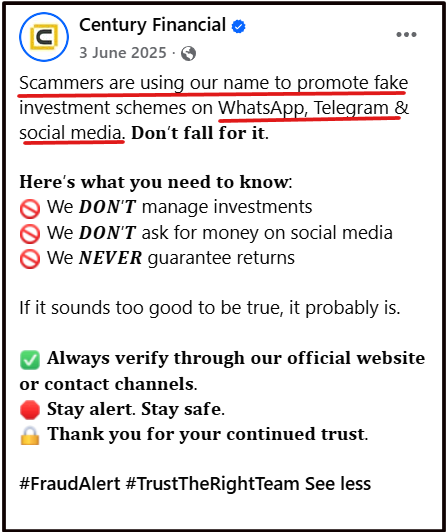
After this, it becomes easier to understand what’s happening.
Scammers don’t need to create a new identity from scratch.
They simply pick a name that already sounds credible, build a similar-looking platform around it, and approach people as if they are part of that company.
For someone on the receiving end, everything looks aligned: the name, the platform, and the guidance.
And that’s exactly where the trap begins.
A recent case shows how this plays out in real life, and how quickly things can escalate once trust is established.
Real Case Study: How ₹3.54 Crore Was Lost Through a Fake Trading App?
A recent case from Telangana shows how these scams play out in real life.
What makes it more concerning is that the victims were not new to the digital world.
They were working professionals who believed they were making a calculated investment decision.
The situation didn’t unfold all at once. It developed gradually, with each step feeling reasonable at the time.
That’s what makes this case worth understanding in detail.
1. How the Scam Came to Light?
The case first came into focus through a news report highlighting the scale of the loss and the background of the victims.
Before going into how the interaction started, it helps to look at how the incident was presented publicly.
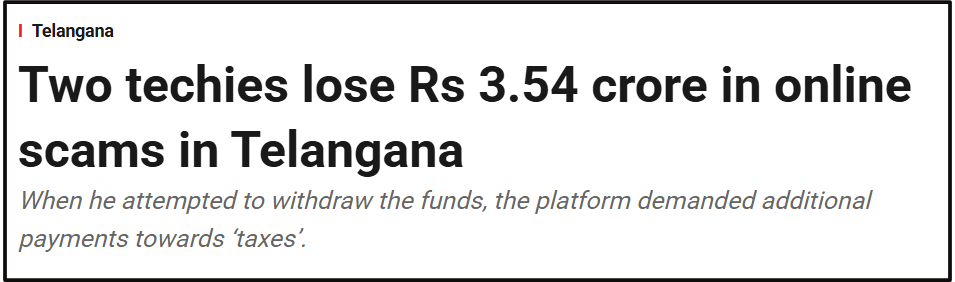
The screenshot shows the news headline reporting that two software professionals lost over ₹3.5 crore in an online scam.
It sets the context clearly; this was not a small or isolated incident.
What stands out here is not just the amount, but the fact that the victims were educated individuals.
This immediately challenges the assumption that only inexperienced users fall for such setups.
From here, the natural question is how something like this even begins.
2. How the Victim Was Contacted?
In this case, the interaction started in a way that didn’t raise any immediate concern.
One of the victims was connected with a woman who introduced herself as a financial advisor.
The conversation didn’t revolve around money right away.
It developed gradually, which made it easier to trust. Over time, the discussion shifted towards investment opportunities, and the communication moved to WhatsApp.
At this stage, nothing felt out of place. There was no pressure, no urgency, just a sense of guidance.
This is usually where impersonation works best. It doesn’t force trust; it builds trust.
As the conversation progressed, the next step was introduced.
3. How the Century Finance App Built Trust?
After establishing some level of comfort, the advisor suggested using a trading platform called the Century Finance app.
To understand how the app was positioned, it helps to look at how it was mentioned in the report.

In this part of the report, the app is directly linked to the interaction between the victim and the so-called advisor.
It shows how the platform was introduced as a legitimate tool for trading.
Once the app was installed, the experience seemed convincing.
The interface appeared normal, and the initial results showed profits. These early outcomes played a crucial role in building confidence.
When someone sees returns, even small ones, the hesitation naturally reduces. That’s what led to further investment.
Over time, the involvement increased, and so did the financial commitment.
4. How the Victim Lost ₹2.14 Crore?
As the investment grew, the situation started to shift. The victim added more funds and even arranged additional money when encouraged to scale up the investment.
The turning point came when he tried to withdraw the funds.
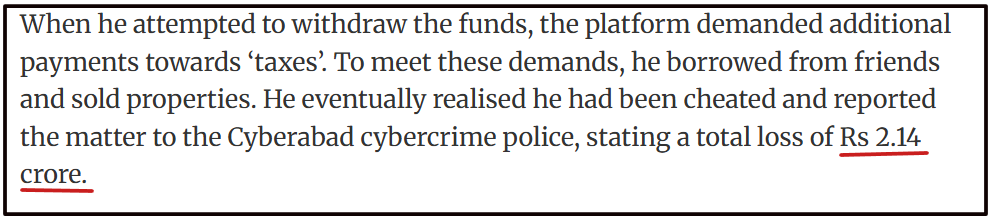
This part of the report highlights the total amount lost of over ₹2.14 crore by one victim alone. It reflects how far the situation had escalated before the issue became clear.
What followed was a series of complications. Withdrawals did not go through smoothly, and additional payments were requested for different reasons.
By the time the pattern became clear, a significant amount had already been transferred.
This case shows how quickly things can escalate once trust is established.
Nothing in the early stages appears suspicious, and that’s exactly what allows the scam to continue for longer than expected.
To understand why this pattern repeats so often, it helps to look at how impersonation scams are structured from the ground up.
How Impersonation Scams Work?
Impersonation scam follows a clear structure. Scammers don’t rely on a single trick. They build trust step by step and guide the victim through the entire process.
Once you understand this flow, you can recognise similar setups much earlier.
Step 1: Scammers create a believable identity
Scammers present themselves as financial advisors or company representatives.
They use professional profiles, real-looking names, and confident communication to appear genuine.
They focus on credibility first, not money.
Step 2: Scammers build trust through conversation
Scammers start normal conversations and keep them going without pushing any investment immediately.
They share insights, talk casually, and slowly position themselves as someone reliable.
Step 3: Scammers introduce a platform or app
Once trust is built, scammers introduce a trading app or platform.
They guide the user step by step, which makes the process feel safe and controlled.
Step 4: Scammers show early profits
The platform displays profits in the beginning.
The numbers look realistic, and everything appears to work smoothly.
This reduces doubt and increases confidence.
Step 5: Scammers push for higher investment
After gaining trust, scammers encourage users to invest more money.
They use logic, timing, and sometimes urgency to justify larger investments.
Step 6: Scammers block withdrawals
When the user tries to withdraw money, scammers create obstacles.
They introduce fees, taxes, or verification steps that they never mentioned earlier.
Step 7: Scammers extend the trap
Even at this stage, scammers continue the conversation and push for additional payments.
By now, the user has already invested a significant amount, which makes it harder to stop.
Scammers design this entire flow to feel natural at every step. By the time the user recognises the pattern, the money has already been transferred.
Once you understand how this works, the next step is learning how to identify these signs early.
How to Identify Impersonation Scams?
Most impersonation scams don’t look suspicious in the beginning. They feel normal, which is why people don’t question them early.
But if you look closely, certain signs keep repeating.
1. Contact that comes out of nowhere
Scammers usually reach out through unknown messages or casual connections and then move the conversation to WhatsApp.
The conversation feels normal, and that’s exactly why it works.
2. A platform you can’t verify on your own
The app or website may look genuine, but you won’t find clear, reliable information about it on your own.
If everything depends on what one person tells you, take a step back.
3. Apps shared as APK files instead of official stores
In some cases, scammers share a link or file and ask you to install the app manually instead of using the Play Store or App Store.
These APK apps can look real, but they don’t go through any checks.
Scammers can control what the app shows, including fake balances or profits.
4. Profits that look too smooth
The platform shows steady and predictable profits in the beginning.
Real markets don’t behave like this all the time, so this pattern should raise questions.
5. Problems only when you try to withdraw
Everything works until you try to take your money out.
At that point, scammers introduce new conditions; fees, taxes, or extra steps that they never mentioned earlier.
6. A push to keep going
Even when something feels off, scammers push you to invest more or complete one last step. At that point, it becomes harder to step back.
These signs may seem small individually, but together they form a pattern.
Noticing that pattern early can make a big difference.
If you come across something like this, the next step is knowing where to report it and what actions you can take immediately.
What To Do In Such Cases?
If you come across something like this, act quickly. The sooner you respond, the better you can limit the damage.
1. File Cybercrime Complaint
Visit the official cybercrime portal and file a complaint with all the details.
Add:
- Transaction details
- Screenshots
- Contact information used by the scammer
Clear and complete information helps authorities track the issue faster.
2. Inform your bank immediately
Contact your bank as soon as you notice any suspicious transactions.
Your bank can flag or hold transactions if you report them in time.
Even a small delay can reduce your chances of recovery.
3. Preserve all evidence
Save everything related to the interaction.
Keep:
- Chat conversations
- Payment receipts
- App screenshots
Don’t delete anything, even if it seems unimportant. These details often help investigators understand the full picture.
Acting quickly can make a real difference. Even if you don’t recover the money, your report can help prevent similar cases.
If you’re unsure about your situation or want clarity before taking action, you can look at the next section for support.
Need Help?
If you’re unsure about a platform or investment opportunity, it’s always better to check before you go ahead.
In many cases, people only realise the issue after they have already invested money. By then, the situation becomes harder to handle.
If you’re dealing with something similar or just want clarity, you can go through our online fraud response plan to get more clarity.
It will help you in understand what steps you should take next.
Even if you haven’t invested yet and something feels off, getting a second opinion can help you avoid unnecessary loss.
Conclusion
The Century Finance app, in this case, didn’t act as a real investment platform. Scammers used it as a tool to build trust and control the entire experience.
They didn’t rush the process. They started with a simple conversation, built confidence over time, and then used the platform to make everything look genuine.
That’s what makes impersonation scams difficult to spot. Nothing feels wrong in the beginning.
If you pay attention to how these setups work, you can recognise the pattern much earlier. A quick check at the right time can prevent a much bigger problem later.
Staying cautious doesn’t mean avoiding opportunities. It means understanding what you’re dealing with before you move forward.