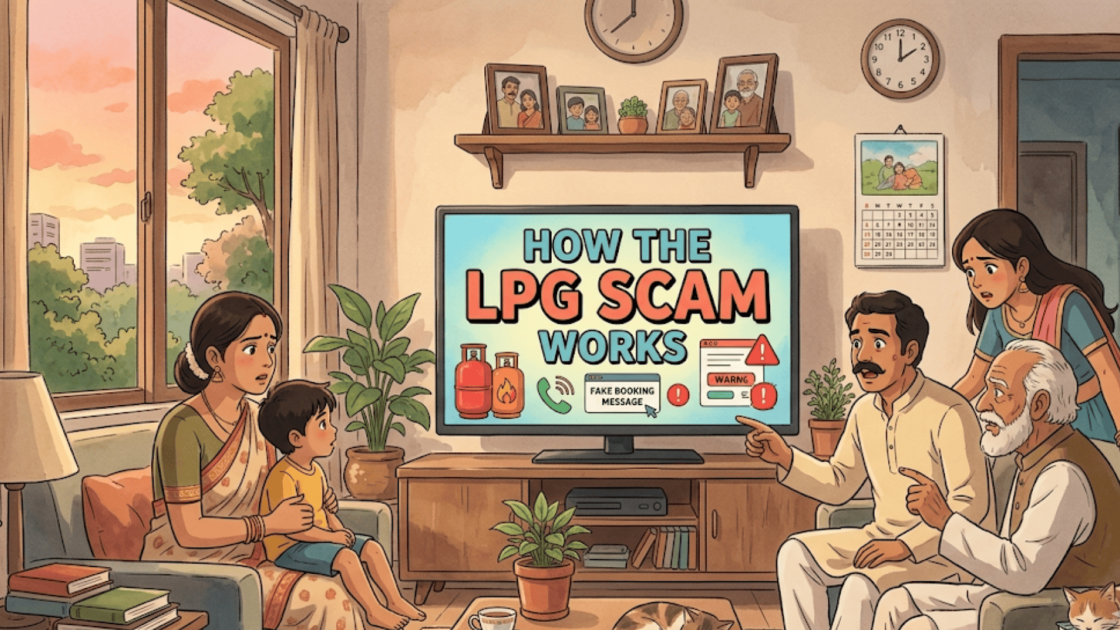
Booking a gas cylinder should be a simple task. But lately, even this everyday chore has become a playground for scammers.
LPG fraud is blowing up because it targets something we all actually need.
When you get a text about your gas booking or a mandatory KYC update, you do not think twice; it feels routine.
That is exactly why these tricks work so well.
They do not start with a weird, suspicious link; they start with something that looks like an official notice from your gas agency.
If you are not careful, a simple click can lead to a lot of regret.
This guide will show you how to spot the fakes before they cost you.
What is The LPG Scam?
Think of an LPG scam as a digital impersonation. Criminals pretend to be from Indane, HP, or Bharat Gas just to get their hands on your private info.
They will call you, send a WhatsApp message, or even create a fake website that looks 100% like the real thing.
They are not there to help you with your cylinder.
Their real goal is your banking details or your money.
And use pressure tactics, like telling you your gas will be cut off, to make you panic and act without thinking.
How the LPG Scam Actually Works in India?
Scammers follow a very specific script to lead you into their trap. It is almost like a professional operation.
-
The Panic-Inducing Message
It usually starts with an SMS that makes you worry.
You might see a message saying your KYC is pending or your connection is being blocked today.
Sometimes, a customer care officer calls you. They sound professional and polite, which makes it very easy to let your guard down.
-
The Clone Website
If you reply, they will send you a link to verify your account.
This link opens a page that looks exactly like the official LPG portal.
You will be asked to type in your name, address, and eventually, your card details.
Because the site looks so real, most people do not realize they are just handing their data to a stranger.
-
The Malicious App Trap
Sometimes, they will ask you to download a specific utility app via a link.
They claim it is for faster booking. In reality, these are spy apps.
Once installed, they can read your private messages and even steal your bank OTPs without you knowing.
-
The Verification Fee Trick
To make the process feel harmless, they might ask for a tiny payment, maybe just ₹10. Since it is such a small amount, you might think, Why not?
But that small payment gives them access to your card details for much larger, unauthorised withdrawals later.
LPG Scam Real Cases
There are several LPG scam cases coming out in this time of crisis. Some of them include:
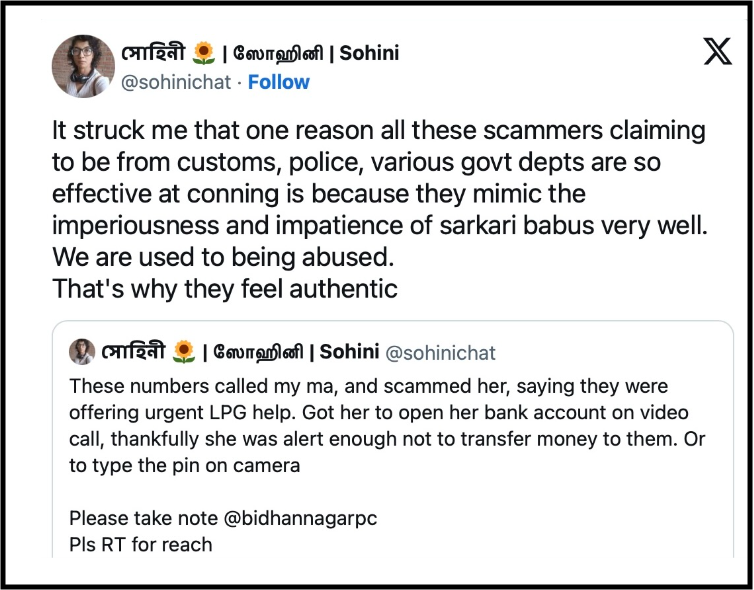
1. The Kolkata Video Call Gas Trap
A recent story from Kolkata serves as a chilling reminder of how bold these scammers have become.
A woman shared how her mother was nearly wiped out after receiving a call from people pretending to offer urgent LPG assistance.
The trick was unusually personal: the scammers convinced her to stay on a live video call while they walked her through a verification process.
They eventually pressured her to open her banking app while the camera was still on, hoping to record her typing in her PIN or capture her account details through the screen.
Luckily, she felt something was off just in time and refused to enter her credentials or move any money.
The family immediately flagged the incident to the Bidhannagar Police, proving that help with your utility bill can quickly turn into a high-tech trap to watch your every move on your banking screen.
2. The Kalyan-Dombivli Gas Crisis App Trap
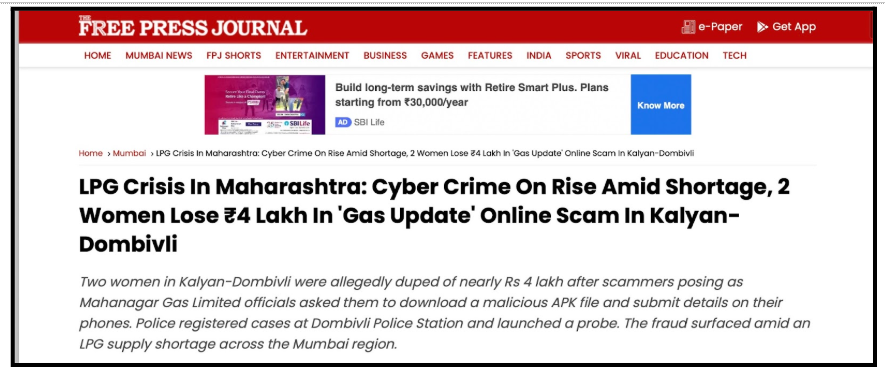
In a recent and devastating case from Maharashtra, two women in Kalyan-Dombivli lost nearly ₹4 lakh after being targeted during a widespread LPG shortage.
Scammers took advantage of the public’s panic over the gas crisis by posing as officials from Mahanagar Gas Limited.
They called the victims with a convincing story about updating gas-related information and pressured them into downloading a specific file (an APK) onto their phones.
Once the women opened the file and filled out a form, the malicious software gave the scammers full access to their devices.
Within moments, their bank accounts were drained.
The Dombivli Police are now investigating the fraud, which highlights a cruel new tactic.
Criminals are using real-world shortages to trick people into installing spy apps that can bypass all their security.
How To Avoid LPG Scams?
Staying safe is not about being a tech expert. It is about slowing down and checking the facts yourself.
1. Use Only Official Booking Channels
Stop clicking on links sent via SMS or WhatsApp.
If you need to book a cylinder, use the official app from the Play Store or the automated IVRS number you have always used.
If you get a suspicious message, ignore the link and call your local gas distributor using the number on your old physical bill.
2. Do Not Panic Over Urgent KYC
Gas agencies do not just cut off your connection via a random text message.
If someone says your KYC is expired, do not click their link.
Instead, take your documents and visit your local gas office in person.
Real distributors prefer you to handle paperwork at their desk, not through a sketchy third-party website.
3. Never Download Apps from Links
Legitimate companies like Indane or HP will never send you a file to download over WhatsApp. Official apps are only found on the Play Store or App Store.
If an agent tells you to install this file for a discount, they are lying. Delete the file immediately and block the number.
4. Protect Your OTPs and UPI PINs
This is the golden rule: no gas agency employee needs your OTP or UPI PIN.
If someone says they need an OTP to complete your booking or refund your money, they are trying to rob you.
Hang up the call immediately. Your private passwords are for you alone.
How To Report A LPG Scam?
If you have already been targeted or lost money, you have to move fast. Speed is everything in cybercrime.
1. Save All Your Proof
Take screenshots of everything: the messages, phone numbers, and bank transaction details.
Do not delete anything yet, as this evidence will be crucial for the investigation.
Keeping organised records will also help authorities act faster and strengthen your case.
2. Call Cybercrime Helpline Immediately
The national cybercrime helpline is the most important number in India in such situations.
If you report the fraud within the first hour or two, authorities can often coordinate with banks to freeze your funds.
Quick reporting significantly increases the chances of recovering your money.
3. File Cybercrime Complaint
Visit the official cybercrime portal and lodge a detailed complaint. Explain the incident clearly in your own words and upload all relevant screenshots and documents.
This ensures your case is officially recorded and tracked at the national level.
4. Visit Your Nearest Police Station
Go to your local police station and file a physical FIR. Carry a copy of your online complaint along with your bank statements and supporting evidence.
An FIR formally initiates legal proceedings and strengthens your chances of justice.
5. Alert Your Bank and Gas Agency
Inform your bank immediately to block cards and monitor suspicious transactions. Also, notify your gas agency about the scam to prevent further misuse.
This step helps protect not only you but also others in your community from similar frauds.
Need Help?
If you have been hit by an LPG scam, it is completely normal to feel frustrated or confused.
These scammers are pros at making things look real. We are here to help you organize your case and make sure you take the right steps to get your money back.
You can check our cybercrime fraud response plan for the details of further steps.
This can guide you through the process of reporting the crime.
You do not have to handle this on your own; we are here to guide you through the reporting process.
Conclusion
LPG scams work because they target a basic need we all have.
They do not look like crimes at first; they look like routine updates. But awareness is your best weapon.
By slowing down, avoiding unknown links, and keeping your personal info to yourself, you can protect your savings.
Remember, if a deal feels too urgent or too easy, it is probably a trap.