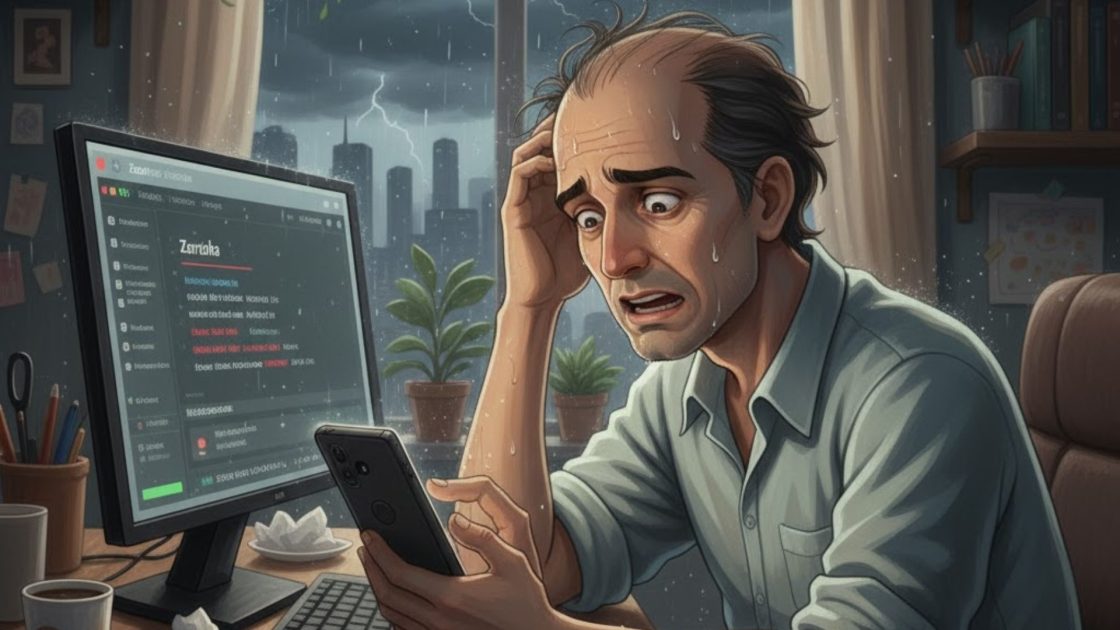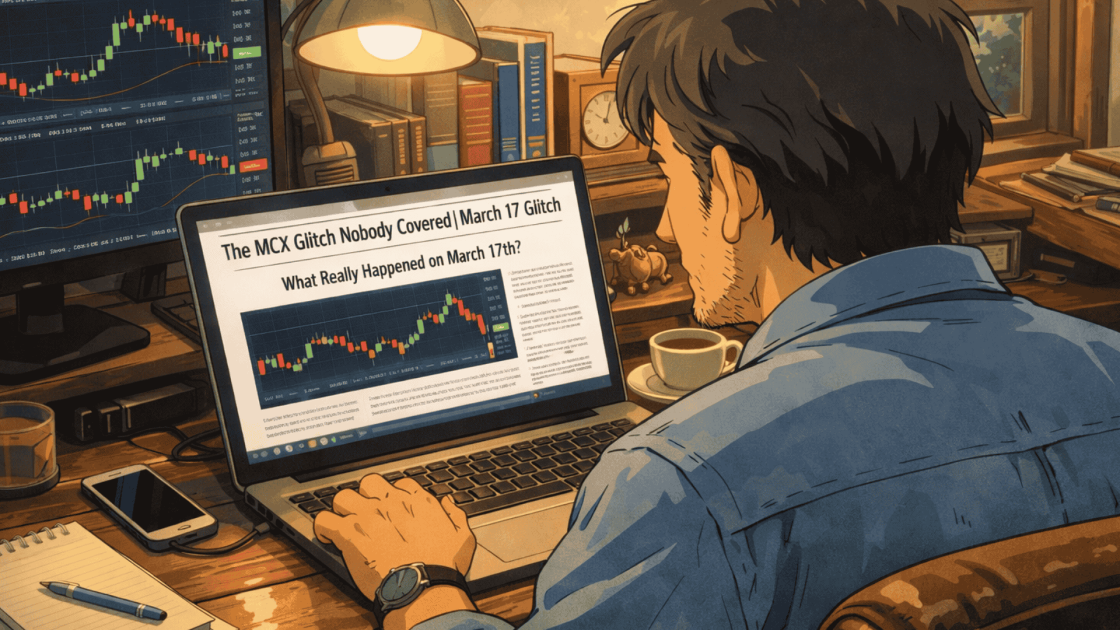
On March 17, 2026, a number of commodity traders reported unexpected problems while trading on platforms connected to MCX (Multi-Commodity Exchange).
Orders weren’t going through. Stop-losses were misfiring. Some traders couldn’t even log in.
What made it worse?
There was no official statement from MCX. No media coverage. No acknowledgement anywhere.
If you were one of the traders affected that day, this post is for you.
Here is what likely happened, and more importantly, what you can do about it.
MCX Technical Glitch On March 17, 2026: What Traders Reported?
While the root cause has not been officially confirmed, the issues reported by traders on March 17 follow a recognisable pattern seen during technical disruptions.
These include:
- Order execution delays: Orders sat in a pending state for far longer than normal, causing slippage and missed opportunities.
- Stop-loss failures: Some traders reported stop orders behaving unexpectedly during this period.
- Price display anomalies: Few traders noticed candle spikes and price mismatches across platforms.
- Login and access problems: Sudden logouts and difficulty getting back into trading apps during critical market moments.
- Order rejections: Orders were rejected with (Risk Management System) RMS-related error messages, which some traders found unexpected
- Incorrect margin display: Temporary discrepancies in margin and open position data.
Why Was There No Coverage on the MCX Glitch?
This is a fair question and an important one.
Technical disruptions in the trading ecosystem do not always make headlines.
An issue has to cause a full market-wide halt or affect an extremely large number of participants simultaneously before exchanges or media typically respond.
In most cases, problems are traced back through multiple layers: the exchange’s own infrastructure, the broker’s order management system, market data feed providers, and network connections.
That investigation takes time. If the issue resolves quickly or affects traders in smaller pockets, it may never be officially acknowledged.
But here is the thing, the silence does not mean nothing happened. It means affected traders have to speak up for themselves.
What You Should Do If You Were Affected?
If you experienced any of the issues described above on March 17, the first thing to understand is that you are not helpless.
India’s trading ecosystem has a structured grievance redressal process, but it only works in your favour if you move quickly and follow the right steps.
Most traders either do nothing because they assume complaints go nowhere or they make a phone call and consider the matter closed.
Neither approach protects you.
Here is exactly what to do instead. Take the first step:
Report It Now
We work with traders through every stage of the process:
- Drafting: We help you write a clear, factual complaint that covers everything a broker or exchange needs to act on it
- Documentation: We guide you on exactly what evidence to gather and how to organise it to strengthen your case
- Escalation: If your broker does not respond or dismisses your complaint, we help you take it to MCX’s investor grievance cell and SEBI SCORES.
- Arbitration representation: If your dispute reaches the MCX arbitration stage, we can represent your case and argue it on your behalf
You do not have to figure this out alone. The earlier you start technical glitch reporting, the better your chances of recovering losses, so do not wait.
Conclusion
The March 17 incident may never receive an official acknowledgement. That is frustrating, but it is also a reminder of something important.
Retail commodity traders in India have a well-defined grievance redressal system.
It exists precisely for situations like this. The problem is that most traders do not know it exists, or do not believe it will work for them.
While a technical glitch in stock market or commodity exchange can happen at any time, the system is designed to protect you, but it only works if you document your issue properly and report it through the right channels.
If you were affected on March 17, do not let the lack of media coverage convince you that your experience did not count. It did.
And you have the right to report it.