A man in Madhya Pradesh pretended to be a SEBI-registered advisor, promised people huge guaranteed profits, and collected more than ₹47 lakh from investors.
On July 9, 2026, SEBI caught up with him. He has been told to return every rupee, pay a penalty of ₹7 lakh, and stay out of the market for a year.
Here is what he did, how the scam worked, and what you can do if something like this has happened to you.
What Happened with SEBI Registered Trading Advisor – Anurag Jaiswal
It started with one complaint. An investor named Arun had paid a large amount to a firm he believed was a genuine SEBI-registered advisory called Sai Proficient Research Investment Advisory, or SPRIA for short.
But when SEBI followed the money, it did not go to SPRIA at all.
It went to a completely different person who had no SEBI registration. His name is Anurag Jaiswal, and he ran something called Zara Portal. He was simply using the real firm’s name as a mask.
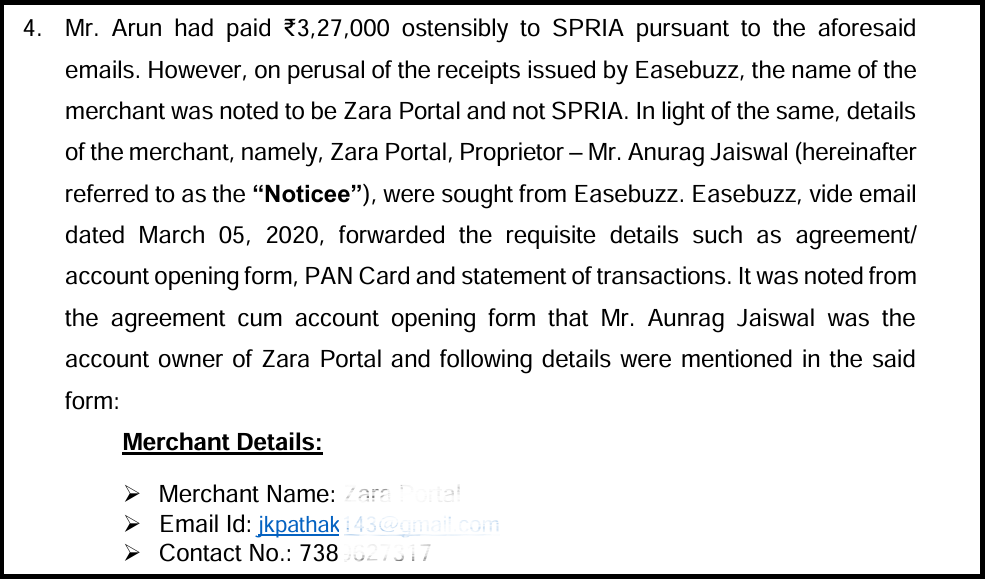
So a genuine registered firm’s identity was being used by someone who had no right to give investment advice in the first place.
What Anurag Jaiswal Advisor Is Accused Of
SEBI said Jaiswal did two things wrong.
First, he gave investment advice and ran an advisory business without any SEBI registration. That is illegal.
Second, he committed fraud. He used emails and invoices made to look like they came from the real registered firm, and he promised guaranteed profits to pull people in.
How the SEBI Unregistered Advisor Scam Worked, Which Costed 47 Lakh
The method is one you have probably seen before.
He emailed investors claiming to be “Sai Proficient Research.”
He said the company was SEBI registered, had an expert team, and even had an ISO certificate. He offered a service for ₹3.75 lakh and promised a profit of around ₹9 lakh in return.
Then he collected the money through a payment gateway, where the real business name showing up was Zara Portal, not the firm he was pretending to be.
Two things here should stay in your mind forever. A real SEBI-registered advisor is never allowed to promise you guaranteed profits. And the name on your payment receipt should always match the advisor you think you are paying. In this case, it did not.
The Exact Rules Anurag Jaiswal Advisor Broke
SEBI named the specific laws he violated. In plain terms, here is what each one means.
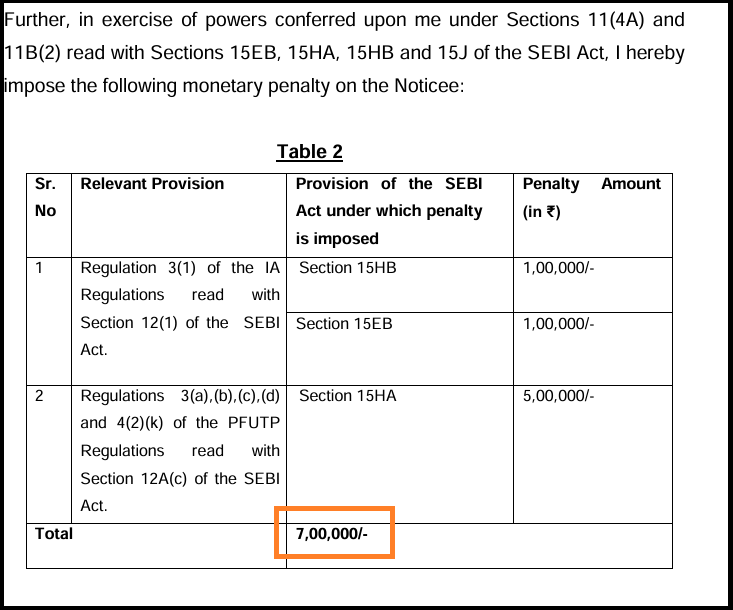
He broke Section 12(1) of the SEBI Act along with Regulation 3(1) of the Investment Advisers Regulations. This is the rule that says you cannot act as an investment advisor without being registered with SEBI.
He also broke Section 12A(c) of the SEBI Act along with Regulations 3(a), 3(b), 3(c), 3(d) and 4(2)(k) of the PFUTP Regulations.
PFUTP stands for Prohibition of Fraudulent and Unfair Trade Practices.
In simple words, these are the rules that make it illegal to cheat or mislead investors, to pretend to be someone you are not, and to spread false or misleading information to influence people’s investment decisions.
So the two buckets are simple. One set of rules is about working without a licence. The other set is about fraud and deceit.
What SEBI Did Next – What Was Its Order
SEBI sent Jaiswal a notice in June 2025 and asked him to explain himself. He never replied. Not to the notice, and not to the reminder that followed.
Jaiswal chose not to defend himself at any point.
He did not send a single reply.
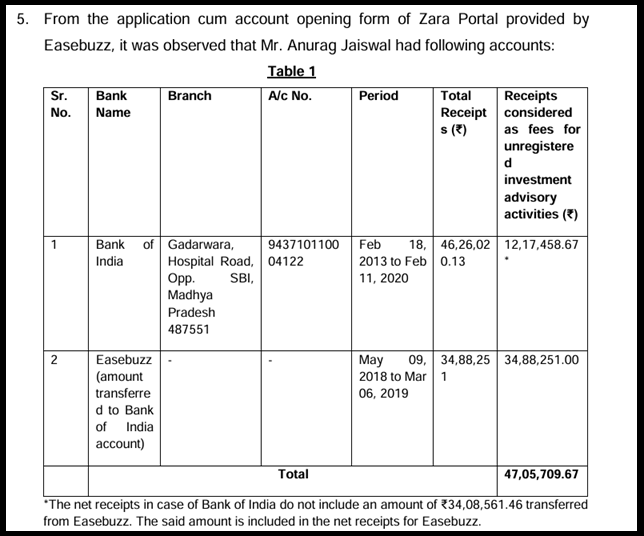
So SEBI’s decision rests fully on the documents on record, which include the emails, the invoices, the payment records, and the bank trail. He did not challenge any of it.
When a person stays completely silent like this, the law allows SEBI to treat the charges as accepted. So SEBI decided the case based on the evidence it already had.
How SEBI Decided the Penalty
Before fixing the penalty, SEBI weighed a few things.
It looked at how much unfair gain the person had made from the wrongdoing, how much loss the investors had suffered, and whether the wrongdoing was a one-time slip or a repeated pattern.
In this case the money was collected over a long period and from more than one investor, which points to a repeated and deliberate act rather than a mistake.
That is the background against which the penalty and the ban were decided.
The Final Decision – SEBI Official Verdict
SEBI found both charges proved. Here is what the order says he must now do.
He has to refund the full ₹47,05,709.67 to investors within three months. The money goes into a monitored account, and he has to put out a public notice in newspapers so affected investors can come forward and claim their refund.
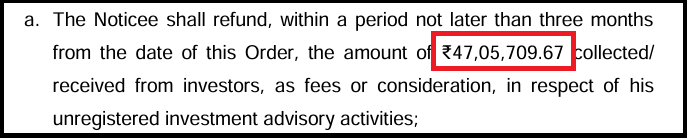
His bank accounts are frozen and he cannot sell his assets until he sets that refund money aside.
He is banned from the securities market for one year, starting after the refund is done.
And he has to pay a penalty of ₹7 lakh within 45 days.
What this Means for You
If you have been trading for a while, you have almost certainly received a message like this. A guaranteed profit tip service. An expert panel. A firm that says it is SEBI registered.
This case is a good reminder of how to stay safe.
Check the registration yourself. Do not trust a claim written in an email. Go to SEBI’s official website and confirm the advisor’s name and registration number before you pay anything.
Treat any promise of guaranteed or assured returns as a warning sign. No registered advisor is allowed to make that promise.
Look at the name on your payment page. If it is different from the advisor you are dealing with, stop right there.
What If This Has Happened to You
The Zara Portal case is a reminder that a name in an email means nothing on its own.
Anyone can copy a real firm’s identity, promise you the world, and take your money.
What protects you is not trust, it is verification.
Check the registration, walk away from anyone promising guaranteed profits, and keep every message and receipt.
And if you have already been caught by something like this, remember that the loss does not have to be the end of the story. There is an official path to report it and to try and recover your money, and you do not have to walk it alone.
The official first step is to file a complaint on SEBI’s SCORES portal, which is the regulator’s grievance system.
A clear complaint with your emails, receipts, and chat records is exactly what turns a loss into a case that can be acted on, just like it did here.
If the process feels confusing or you are not sure how to put your complaint together properly, this is where we help.
We assist investors in documenting these cases the right way, filing them through the correct official channels, and going after fraudulent and unregistered entities.
“Know your rights. Report the fraud. Recover what’s yours.