
Over the years, you have seen many crypto projects come and go. Some fail quietly. Some succeed slowly. And some never really matter, except for how they’re used by others. Beldex Coin falls into that last category.
In theory, it’s a privacy-focused cryptocurrency. In practice, in India, it has become something else entirely.
If you’ve heard about Beldex Coin through an online exchange, you probably wouldn’t be here.
People land on this page after attending a meeting, watching a presentation, or being told, usually by someone they trust, that Beldex Coin is a “safe,” “fixed-return,” or “long-term wealth” opportunity.
That’s where the story needs to be told honestly.
Aarman Beldex Coin
Let’s start with the uncomfortable clarity most promoters avoid.
Beldex Coin exists. It is not imaginary, and it was not created overnight. It operates on its own blockchain and is built using privacy-focused technology inspired by Monero.
On paper, it is presented as a privacy-driven cryptocurrency focused on anonymous transactions.
However, in India, most people don’t discover Beldex through technical research.
Instead, they come across it through structured investment presentations and online promotional content where the focus shifts from technology to projected returns, lock-in plans, and income models.

In that context, one name is frequently highlighted, Aarman, described as the Beldex Coin owner name in India.
He is described as the person driving the growth and expansion of Beldex-based investment programs, which naturally builds credibility around the opportunity.
It’s important to understand, though, that cryptocurrencies like Beldex are decentralized. A blockchain does not usually have a single “owner” in the traditional business sense.
There may be founders or developers, but investment programs built around a coin can operate separately from the core technology.
In India, the operational model promoted around Beldex often works like this:
- Investors join through referral networks.
- Funds are deposited into structured plans.
- Lock-in periods are applied.
- Returns are shown as fixed or projected percentages.
- Earnings increase with team growth.
Notice the shift, the focus moves from blockchain utility to income modeling.
Before investing, always verify independent company details and whether the investment structure is officially approved in India.
Because in crypto, a coin can function technically, while the investment model built around it may operate very differently.
How do Most Indians First Hear About Beldex Coin?
This is where experience matters.
Almost no one in India discovered Beldex Coin by:
- reading whitepapers
- researching GitHub commits
- Comparing privacy protocols
Instead, they discover it through:
- hotel seminars
- closed-door meetings
- WhatsApp or Telegram groups
- referral invitations
The pitch is rarely about privacy or decentralization. It’s about returns.
That distinction is crucial.
Is Beldex Coin Legal in India?
Owning cryptocurrency in India is not banned. However, legality depends on how it is used or promoted.
If a platform promotes:
- pooled investment schemes
- guaranteed returns
- referral-based income structures
Then regulatory concerns arise.
There is currently no public evidence that Aarman-linked Beldex investment schemes are officially approved in India by SEBI or RBI.
Investors should independently verify company details before participating.
Crypto itself may not be illegal, but structured schemes promising assured income can violate Indian financial laws.
Understanding this difference is critical.
Is Beldex Coin Fake or Real?
This question keeps coming up because people sense something is off.
Here’s the honest answer:
- Beldex Coin is real as a blockchain
- The investment narrative built around it is largely fake
A real coin can be used for illegitimate purposes. That’s not a contradiction.
Most investors don’t lose money because a coin doesn’t exist. They lose money because trust is placed in platforms, not protocols.
Beldex Scam
Over time, a pattern has emerged.
First, there was GCCHUB. Then came Aarman. Now, the name has changed again, Nexus2U.
Different branding. Same structure.
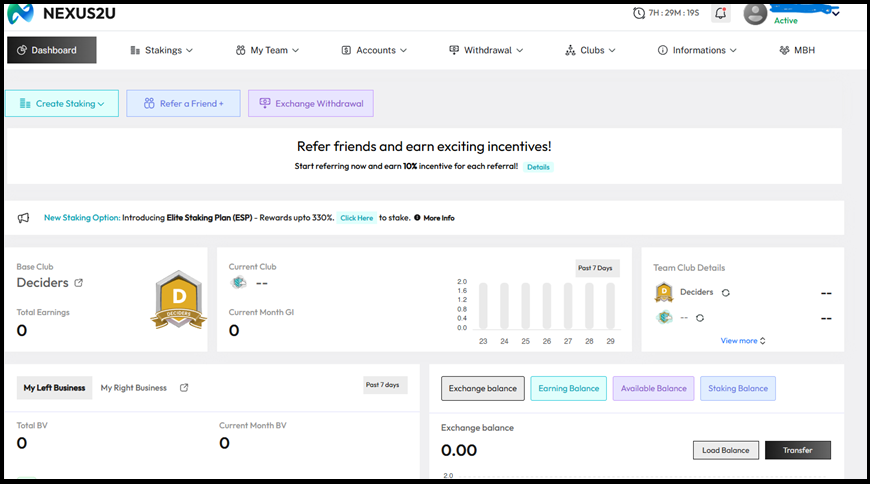
The above image shows readers that this is not a simple wallet or exchange, but a structured platform with referrals, balances, and incentives.
What you see on the Nexus2U dashboard is not accidental design.
It reflects priorities:
- “Refer a Friend”
- Club rankings
- Earning balances
- Staking plans tied to time and volume
This is not how legitimate crypto usage looks.
Let’s talk about the word staking, because it’s being stretched beyond recognition.
In real blockchain networks:
- staking rewards fluctuate
- Returns depend on network conditions
- There are no guarantees
On Nexus2U and similar platforms, staking is presented very differently.
You’re shown:
- fixed monthly percentages
- 3–5 year lock-in periods
- total returns going up to 300%, 400%, even 500%
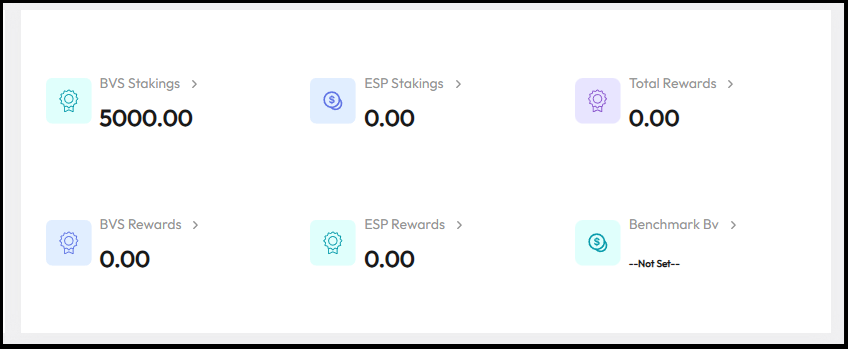
The fixed reward percentages are visible proof of claims that contradict how crypto markets work.
This isn’t staking. It’s a deposit model dressed in crypto language.
No legitimate blockchain can promise those numbers without constant new money entering the system.
Is Beldex a Ponzi Scam?
Another thing that experienced eyes notice quickly: Returns increase when teams grow.
There are:
- left and right business legs
- group incentives
- club upgrades
- performance bonuses
This indicates the classic Ponzi fraud.
Okay, let’s prove it to you.
Below is one of the pages of the PDF shared to promote the Beldex Investment Scheme
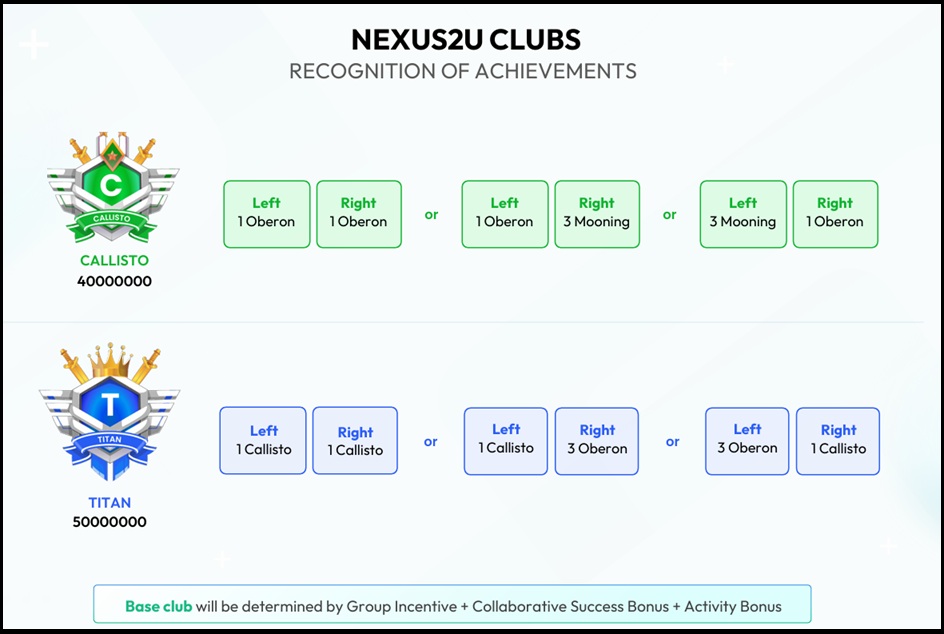
At first glance, this page may look complicated, but the key detail is simple.
To qualify for the “Decider’s Take Off Bonus,” a user must build two teams:
- 10 active members on the left side
- 10 active members on the right side
This means rewards are not earned by using Beldex Coin, holding it, or participating in any blockchain activity. Instead, earnings depend on how many people you recruit and place into a left–right structure.
This type of requirement is commonly seen in multi-level marketing (MLM) models, where income grows by expanding a network rather than by the performance of a product or technology.
In legitimate crypto staking or investing:
- There is no left side or right side.
- There are no recruitment targets.
- Rewards are linked to network conditions or market performance, not team size.
Here, however, the document clearly ties bonuses to team formation, which shifts the focus away from cryptocurrency usage and toward recruitment-driven growth.
This confirms that the scheme is operating as a Crypto Ponzi Scheme.
This distinction is important because it helps investors understand where the money is actually expected to come from.
This visually confirms MLM mechanics without you having to accuse anyone explicitly.
This structure doesn’t exist to “reward community.” It exists to bring in new deposits.
And when new deposits slow down, pressure builds.
Is Beldex Safe?
Safety in crypto isn’t about branding: it’s about control, transparency, and regulation.
Here are important red flags investors should evaluate carefully:
- Fixed or Guaranteed Returns: Promises of set profits ignore market fluctuations and are unrealistic for any legitimate crypto.
- Long Lock-In Periods: Funds are often locked for 3–5 years, reducing flexibility and control over your investment.
- Recruitment-Focused Earnings: Income is tied more to bringing in new members than actual blockchain performance.
- Withdrawal Delays: Requests to withdraw may be postponed or blocked under vague “maturity” rules.
- Limited Company Transparency: Verifiable details about the organization behind the investment are scarce.
- Lack of Regulatory Oversight: No clear approval from Indian authorities, making it difficult to claim legal protection.
- Unverified “Approved in India” Claims: Statements of being officially approved are often unbacked by documentation.
When returns depend more on team expansion than blockchain performance, risk increases significantly.
True crypto staking rewards fluctuate with network activity. They do not promise fixed 300–500% outcomes.
If access to your funds is conditional, restricted, or tied to recruitment performance, safety is already compromised.
Beldex Coin Complaints
The issues don’t end with suspicious traffic patterns, unrealistic returns, and MLM-style recruitment.
There have also been real-world complaints filed with law enforcement.
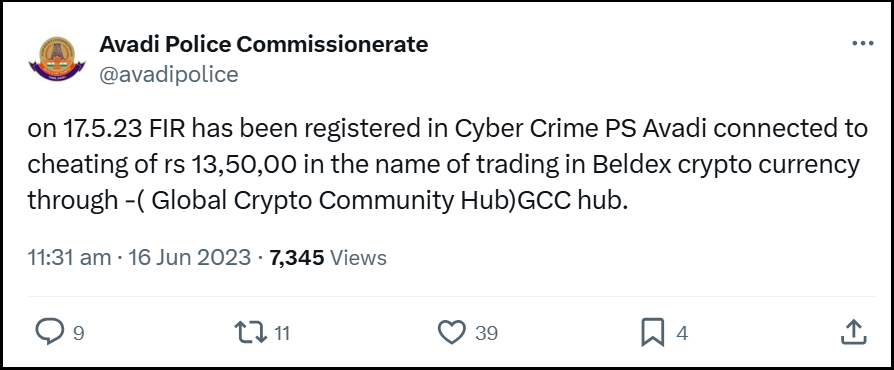
The image above is a tweet from the Avadi Police Commissionerate (Tamil Nadu, India).
In the tweet, the police state that on 17 May 2023, an FIR (First Information Report) was registered by the Cyber Crime Police Station, Avadi.
The case involved an alleged cheating amount of ₹13,50,000 under the pretext of trading in Beldex cryptocurrency through a platform called the Global Crypto Community (GCC) Hub.
An FIR is a formal police complaint in India, meaning authorities found the matter serious enough to start an official investigation.
Cases like this don’t necessarily prove wrongdoing by Beldex directly, but they do show that its name is being used in schemes leading to reported financial losses, adding another layer of doubt for potential investors.
In the cases we’ve reviewed, Beldex Coin becomes unsafe not because of code, but because of how people are asked to give up control of their funds.
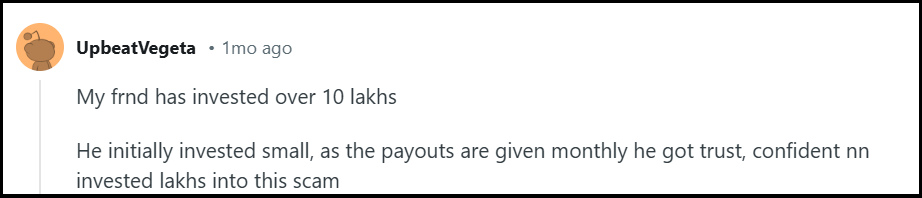
Other than this, multiple complaints tend to arrive late, often after months or years.
Common themes:
- withdrawal delays
- changing rules
- pressure to “wait till maturity.”
- encouragement to recruit instead of withdraw
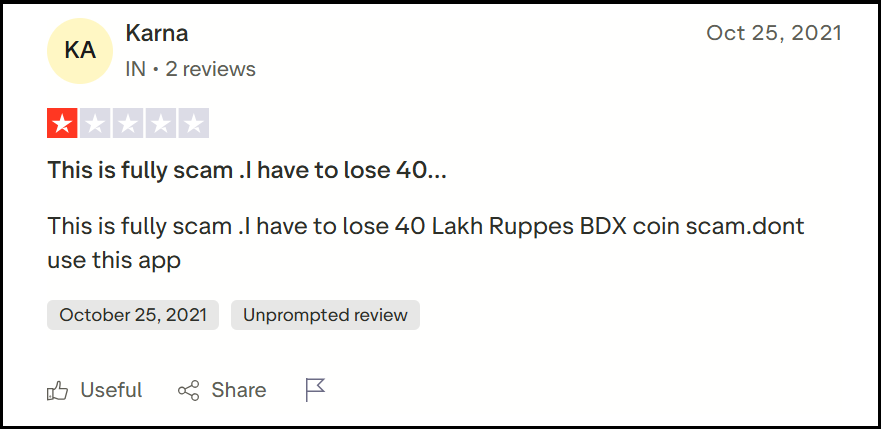
1. Withdrawal Problems
According to Reviews.io, one investor shared: “I invested through an online trading platform that initially seemed legitimate.
However, my situation changed when I tried to withdraw my earnings.
My account was suddenly placed under review, and I was pressured to pay additional clearance fees.”
Withdrawal blocks are classic scam tactics. They take your money but won’t return it.
2. Coordinated Fake Reviews
According to Trustpilot, when questioned about reviews all coming from Tamil Nadu, no satisfactory answer was provided.
According to BehindMLM, “thousands of employees are all from Tamil Nadu.” The LinkedIn profiles show the same pattern.
This indicates organised fraud targeting specific Indian communities. Farmers, daily labourers, and middle-class families. All vulnerable groups.
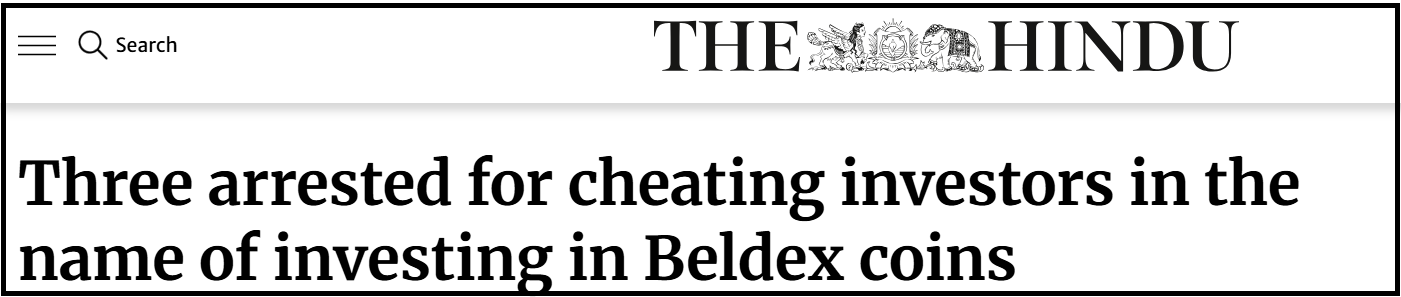
3. MLM Pressure and Recruitment
According to BehindMLM, one concerned individual wrote: “Some of the Beldex products like BCHAT etc, are banned in INDIA, it’s just another Crypto MLM Scam.
Sir, please, one small post or short video on these crypto MLM scammers, they are scamming innocent farmers and daily labourers about crypto investments.”
4. Balance Displaying Incorrectly
Wrong balance shown after reinstallation or rescan.
According to Chrome-stats.com, one user stated: “Like previously intimated, I tried by reinstallation, still old balance and wrong transactions only showing.”
Imagine seeing the wrong balance in your wallet. You don’t know if your money is safe or gone.

In all, Beldex coin is not only unsafe but illegal in India too.
So, before you plan to invest, consider these parameters to protect yourself from financial & emotional distress
Why Coins Like Beldex Are Chosen Again and Again?
This is not personal to Beldex Coin.
From years of observing similar schemes, certain traits make a coin attractive for misuse:
- low public understanding
- limited scrutiny
- complex technology
- easy future narratives
The coin doesn’t need mass adoption. It only needs believability.
What You Should Do If You’re Already Involved?
If you’re reading this while already invested:
- Stop adding funds
- avoid recruiting others
- Save every document and screenshot
- don’t rely on verbal assurances
Delay rarely works in the investor’s favor.
How to Report Investment Scams in India?
If you have been a victim of such crypto scams in India, Act immediately:
- File a Complaint in Cyber Crime
- Report to the Financial Intelligence Unit (FIU): For suspicious transactions
- Lodge an FIR with the Local Cyber Crime Cell
Save everything. Document thoroughly.
By the time people speak up, funds are deeply locked. This is why awareness matters before investment, not after.
Need Help?
Many people hesitate because they feel unsure or embarrassed. That hesitation often costs them time.
If you need clarity on:
- whether your situation qualifies as fraud
- How to file correctly
- What evidence matters
You can register with us now. Getting guidance early can make a difference.
Conclusion
Beldex operates through MLM platforms like Aarman, targeting vulnerable Indians.
The price crash from ₹7 to ₹3 destroyed countless investments. According to BehindMLM, 99% of traffic comes from India despite claiming international status.
The forced reinvestment requirement, fake addresses, impossible return promises, and concentration in Tamil Nadu reveal coordinated fraud.
Moreover, according to Beldex’s own admission, BDX has “no intrinsic value.”
RBI, SEBI, and cyber experts have repeatedly warned against such schemes. An Estonian license doesn’t guarantee legitimacy. Offshore registration enables easy exit scams.
According to BehindMLM, when recruitment dries up, “Aarman will collapse, leaving most participants with empty wallets.”