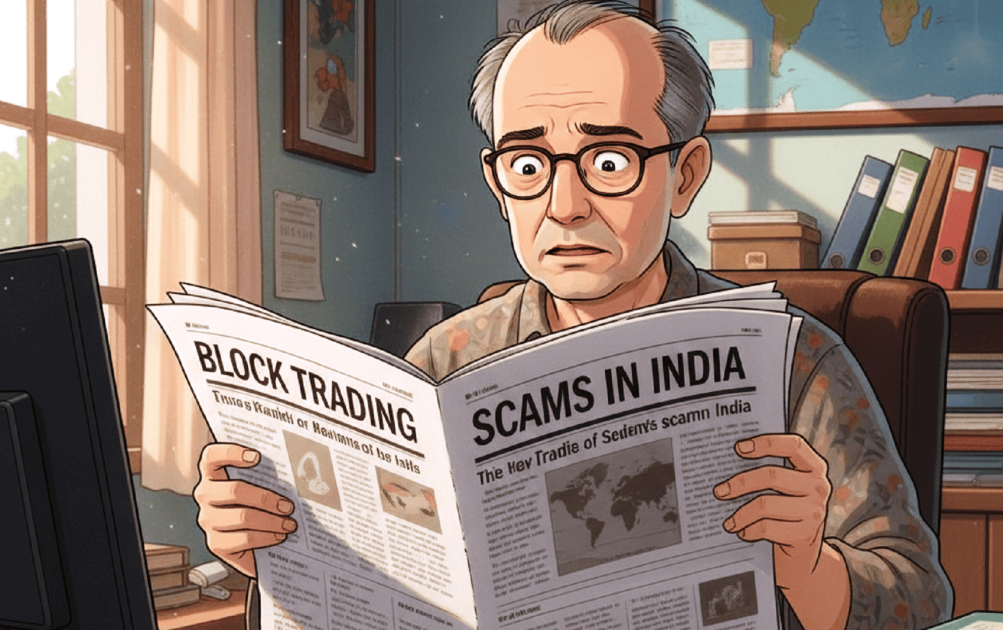
How many of you have come across the term Block Trading?
Well, if you are an active Telegram & WhatsApp user, you might have come across groups claiming block trading facilities.
Although block trading does exist in India, only institutional investors are eligible for the same. So, if anyone claims to provide any such investment scheme, stay away; it could be a block trading scam.
Let’s uncover the details and check what block trading is and how scammers are misusing it for their own benefit.
Block Trading Scams in India
Block Trading, also called a block deal, refers to a large transaction where a significant number of shares are bought or sold in one go without causing sharp price movements in the open market.
These trades are executed through a regulated mechanism so that the broader market remains stable.
In India, such transactions are governed by the Securities and Exchange Board of India and are typically carried out by mutual funds, insurance companies, banks, and other large institutional investors that meet specific regulatory criteria.
Retail investors cannot directly participate in block deals, as this facility is designed for high-volume, regulated participants only.
Now, many people often ask: Block Trading is safe or not?
The answer depends on who is doing it.
For regulated institutional investors operating under SEBI guidelines, block trading is a legitimate and structured market mechanism.
But when unknown individuals on WhatsApp or Telegram promise you access to block deals with guaranteed returns, that’s where the danger begins.
Scammers take advantage of this knowledge gap.
They present block trading as a “premium opportunity” available only to select members, promising assured or unusually high returns.
By marketing it as an exclusive allocation or insider access, they create urgency and push people to act without verifying the facts.
How Block Trading Scams Operate?
Scammers usually create fake WhatsApp or Telegram groups with names mimicking legitimate brokers.
They may use images of CEOs or brand logos to appear authentic.
Once members are added, the scammers:
- Share fabricated SEBI authorisation letters and website links.
- Promise quick profits and ask for fund transfers.
- Use team members posing as investors to show fake returns.
- Pressurise users with urgency and limited-time offers.
Genuine trading platforms, like registered brokers, never ask for direct bank transfers outside their official trading accounts.
Axis Securities Block Trading
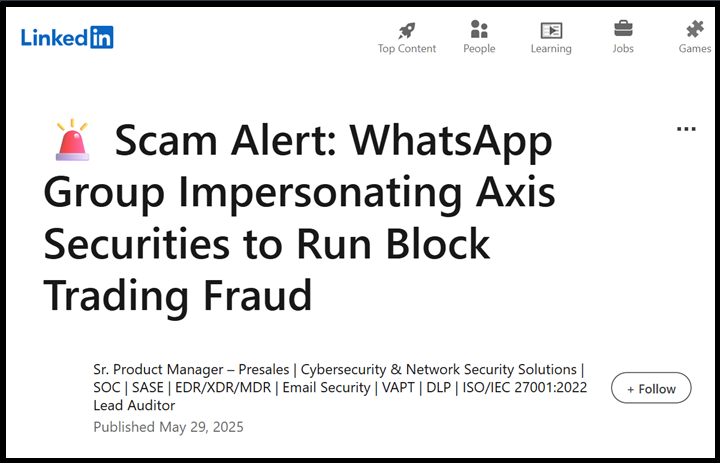
Block Trading Scams Complaints
There are multiple complaints where victims have reported fake WhatsApp groups and investment schemes in which they, or their family members, lost substantial money.
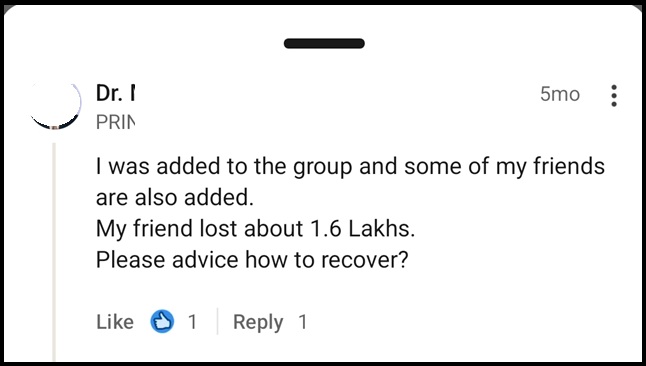
1. Fake WhatsApp Investment Scam
A member of a fraudulent investment group exposed how an Axis Bank–branded fake platform was being used to run a scam.
When he shared proof in the group to warn others, the admin immediately removed him, a classic tactic used to silence awareness and maintain control.

2. Conifer Investments
A similar pattern was seen in a complaint involving a 78-year-old senior citizen, Mr Amal Singh, who was added to a WhatsApp/Telegram group claiming to offer SEBI-registered IPO guidance.
He was encouraged to use the Conifer investments app, which appeared professional and convincing. He initially invested ₹50,000 and was shown fabricated profits to gain his trust.
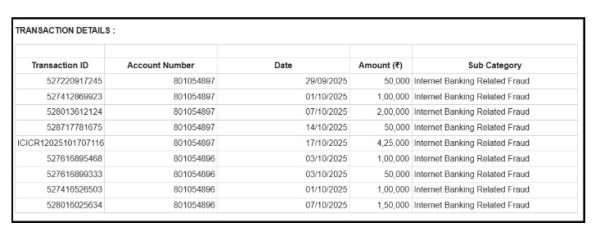
Gradually, he was persuaded to invest more to “secure” IPO allotments. At one stage, he was told he had received CANHLIFE IPO shares worth ₹3.2 lakh and was asked to deposit an additional ₹4,00,000 to confirm the allotment.
The app later showed thousands of allotted shares, but a critical detail exposed the fraud.
The IPO had already closed and been listed before these shares were “allotted.” The entries were fake.
This Conifer investment scam ultimately led to a loss of ₹12,25,000. Withdrawal attempts resulted in delays and errors, a common sign of blocked accounts in such schemes.
Despite filing a complaint on the National Cyber Crime Reporting Portal, recovery remains uncertain.
3. Reported Case in Times of India
As reported by The Times of India, an 88-year-old man lost nearly ₹20 lakh in a block trading fraud.
He was contacted by an entity calling itself “Axix Agency” via WhatsApp and was persuaded to download an investment app. The pattern followed a familiar structure:
- Initial contact through WhatsApp
- Promises of high and instant returns
- Small early profits to build trust
- Sudden demand for 30% of profits as a “withdrawal charge”
- Funds were blocked when he hesitated
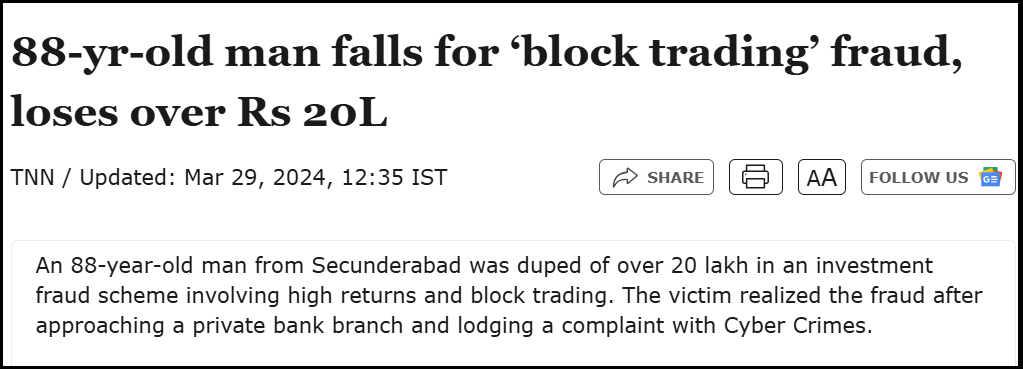
Eventually, the victim realised the deception and filed a cybercrime complaint. Authorities later warned investors about social media-based block trading channels that operate without regulation.
4. Noida Block Trading Scam
In another case from Noida, two fraudsters posed as staff from SBI and added a victim to a WhatsApp group named “SBI Securities.”
They promised:
- 5–10% daily profits
- Guaranteed IPO allotments
- Exclusive block trading access
The victim was asked to register on a website and complete KYC formalities. He initially deposited ₹25,000, but over time, transferred nearly ₹42 lakh into multiple accounts.
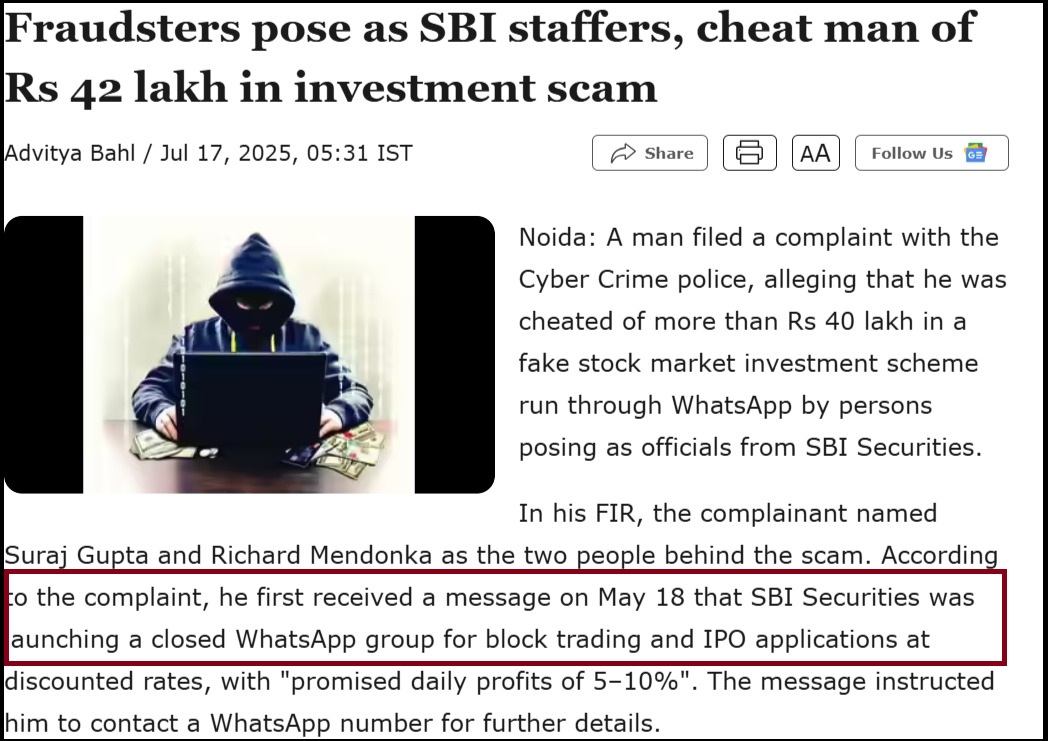
The portal falsely displayed ₹3 crore in profits. When he requested withdrawal, he received ₹2 lakh initially, a tactic used to build false confidence.
After that, the platform demanded a 5% commission before releasing the remaining funds.
The money was never recovered.
These are some real cases for you to go through. This is how they approach potential investors. All these are red flags and need to be investigated before proceeding further.
How to Identify Block Trading Scams?
Now, these are a few cases of block trading scams, but the real question is how to protect oneself from becoming a victim of this fraud in India.
If you actually care for your money and do not follow quick-rich investment schemes, then you are already safe.
Other than this, here are a few signs that you can check to identify such scams.
- If you are added to some random Telegram channels/WhatsApp groups promising exclusive block-deal allocations or guaranteed returns. Stay away.
- A group or investment scheme promising guaranteed returns is the biggest red flag.
- If the group claims to be a SEBI-registered entity, always verify the details and check the website.
- Avoid investing in block trading or IPO using third-party websites.
- Exit the group right away if the Admin shares bank details and UPI for fund addition.
To make it simple and clear, a Block deal is a big deal! No pun intended… Only big institutions or entities do block trading when they buy or sell a bulk of their shares.
How to Report Trading Scams in India?
If you have added to any of these groups and lost your money in a fake investment scheme, then take action now.
- File a Cyber Crime complaint. Share chat history, bank transfer details, etc
- Lodge an FIR at the nearest police station.
- File a Complaint in SEBI by sending an email about the fraud group running under the name of an SEBI-registered broker or entity.
- Inform your bank immediately (raise a dispute, request a stop/recall where possible).
Need Help?
If you have lost money in IPO scams, block trading schemes, or other trading scams in India, professional guidance can help you take the right steps.
You can register with us.
We assist victims with:
- Proper documentation and filing of cybercrime complaints.
- Guidance on reporting IPO scams and fake broker platforms.
- Support in trading fraud recovery procedures.
- Step-by-step help in escalating complaints to banks and authorities.
Many victims feel confused about where to begin. Taking structured action increases clarity and improves the chances of recovery.