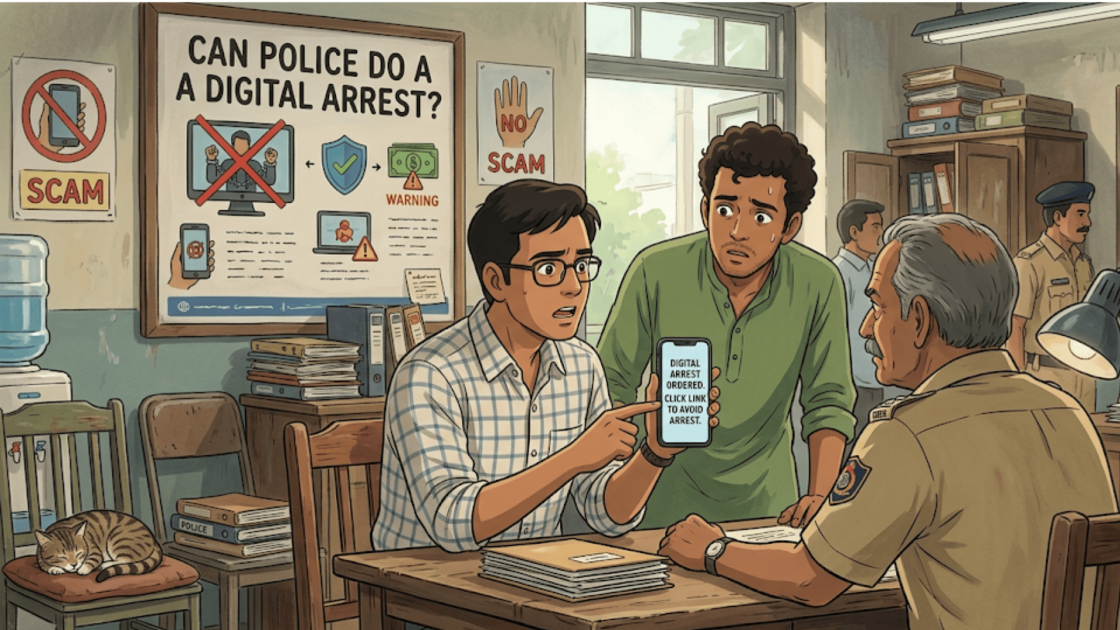
Thousands of Indians have received video calls from people claiming to be CBI officers, customs officials, or cybercrime investigators.
They’re told they’re ‘Under digital arrest’ and cannot disconnect the call. Panic sets in. Money gets transferred.
And only later do victims realise they’ve been scammed.
This guide breaks down what digital arrest actually is, why it’s entirely fake, and exactly what to do if you or someone you know becomes a target.
Is Digital Arrest A Thing?
A digital arrest has no basis in law and is not a recognised legal procedure.
It is a made-up tactic commonly used by scammers to intimidate individuals into believing they are in official custody through phone calls, video calls, or messages.
Fraudsters often impersonate police officers or government officials, sometimes even displaying fake identification or wearing uniforms during video calls to appear credible.
They may insist that you remain on the call as if you are being detained and create a sense of urgency by demanding money to supposedly resolve the issue.
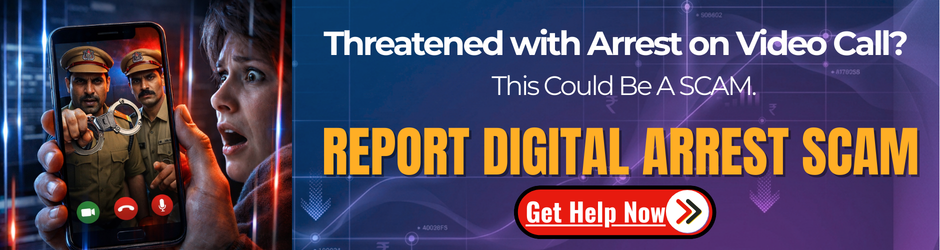
This approach is designed to create intense psychological pressure, causing victims to panic and make quick decisions without properly assessing the situation.
Is Digital Arrest Legal in India?
Under Indian law, an arrest is a physical act governed by the Code of Criminal Procedure (CrPC).
It involves taking a person into physical custody or placing them under restraint, along with clearly informing them of the charges against them.
The law also ensures that the rights of the arrested individual are protected throughout the process.
Importantly, there is no legal provision that permits an arrest to be carried out through a phone call, video call, or any other digital medium.
-
Role of Police Authorities
Police authorities in India are required to follow a strict due process while making an arrest.
This includes showing valid identification, clearly stating the grounds for the arrest, and producing the accused before a magistrate within 24 hours.
Any deviation from these mandatory procedures makes the arrest unlawful.
Can Police Contact You Digitally?
Yes, but not for the purpose of making an arrest.
Law enforcement authorities may use digital communication for legitimate reasons such as sending notices, asking you to appear at a police station, or conducting preliminary inquiries.
For instance, under the Information Technology Act, 2000, cybercrime units may contact individuals through phone calls, emails, or other digital platforms.
However, such communication should not be mistaken for an arrest.
What They Will Never Do?
Police authorities will never declare someone arrested over a phone or video call.
They will not ask for money in exchange for avoiding arrest, nor will they force you to remain on a video call under the pretext of being in custody.
Any such actions are clear indicators of fraudulent activity and should be treated with suspicion.
Digital Arrest Modus Operandi
These scams follow a structured pattern designed to create fear, establish authority, and push victims into acting without verification.
Understanding how they operate step by step can help you recognise the red flags early and avoid falling into the trap.
1. Common Tactics Used
Scammers typically pose as officials from agencies such as the Central Bureau of Investigation or cybercrime units.
They may falsely accuse individuals of being involved in serious offences like money laundering or drug-related crimes, and threaten immediate arrest or legal consequences.
To resolve the issue, they demand payments through methods like UPI, gift cards, or cryptocurrency.
2. Psychological Manipulation
These scams are carefully designed to exploit human emotions and behavioural patterns, making them highly effective even against otherwise cautious individuals.
Fraudsters deliberately create a strong sense of fear and urgency to push victims into making quick decisions without thinking things through.
They often impersonate authority figures to add pressure and credibility, and keep victims engaged on continuous calls to isolate them, preventing any opportunity to verify the information or seek help from others.
Recent Digital Arrest Cases in India
These cases reveal how cybercriminals are using fear, authority, and technology to run highly organised scams.
They also show that anyone, especially elderly individuals, can become a target if awareness is low.
1. Tamil Nadu Digital Arrest Cyber Fraud Case
This case highlights how organised and large-scale digital arrest scams have become.
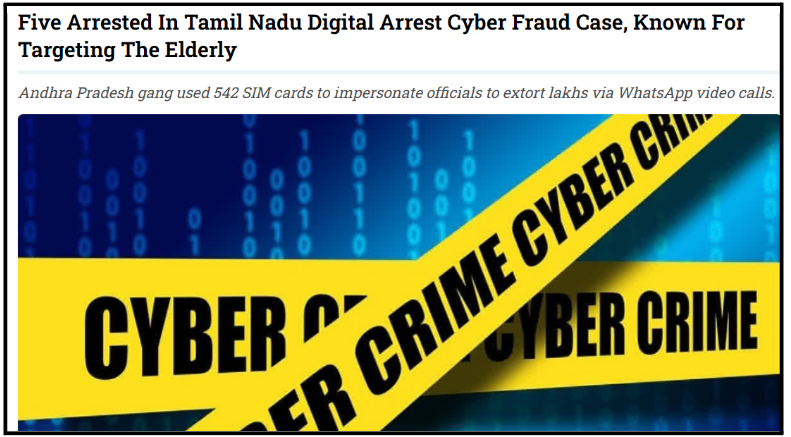
A gang operating from Andhra Pradesh was busted for running a cyber fraud operation that specifically targeted elderly individuals.
They used as many as 542 SIM cards to create fake identities and make their calls appear legitimate.
The scammers would impersonate officials from law enforcement or government agencies and contact victims through WhatsApp video calls.
They falsely accused them of being involved in serious crimes, similar to typical ‘digital arrest’ tactics, and then pressured them to transfer money to avoid arrest or legal trouble.
Because elderly people are often less familiar with such scams and more likely to trust authority figures, they became the primary targets.
The fraudsters exploited fear and confusion to extort lakhs of rupees from victims.
2. Maharashtra Police Bust Digital Arrest Scam
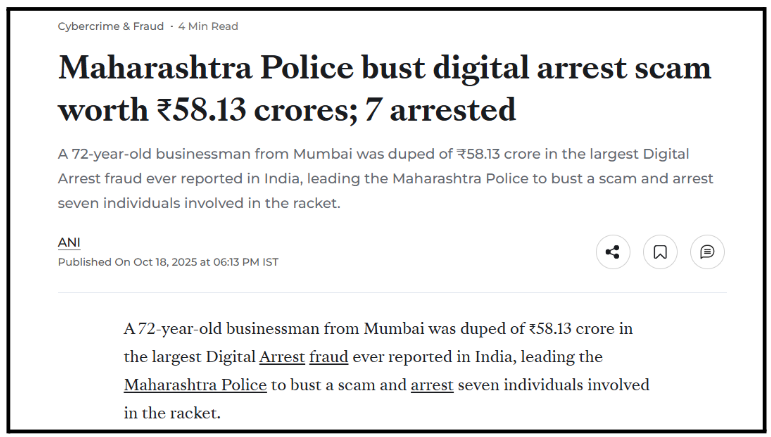
A 72-year-old businessman from Mumbai was targeted by cybercriminals who impersonated law enforcement officials.
Using the typical digital arrest script, they accused him of being involved in serious financial crimes and kept him under constant pressure through calls and likely video surveillance tactics.
Over time, the scammers manipulated and threatened him into transferring a massive ₹58.13 crore, making it one of the biggest reported losses in such scams.
The fraud relied heavily on fear, authority, and psychological control rather than technical hacking.
Following the complaint and investigation, the Maharashtra Police uncovered the racket and arrested seven individuals involved in the operation.
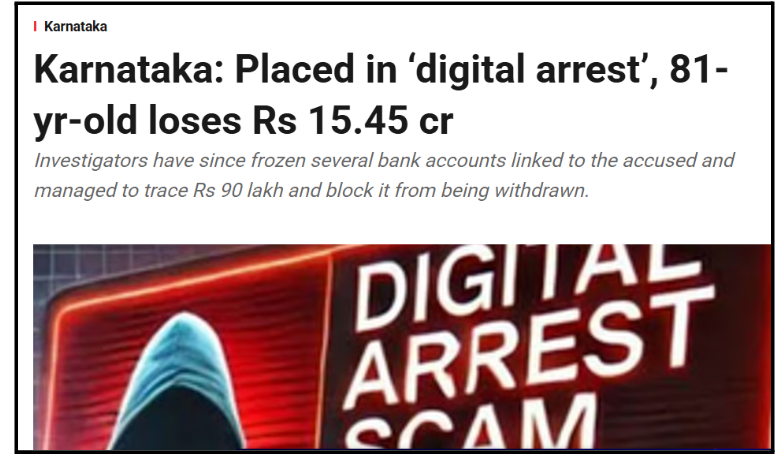
3. Digital Arrest Case in Karnataka
An 81-year-old victim was contacted by fraudsters posing as law enforcement officials.
They falsely claimed the victim was involved in serious criminal activity and placed them under so-called digital arrest.
Using fear and constant monitoring tactics, the scammers pressured the victim into transferring money to avoid legal consequences.
Over time, the victim was manipulated into losing a staggering ₹15.45 crore.
After the fraud was reported, investigators took action by freezing multiple bank accounts linked to the accused.
They were able to trace around ₹90 lakh and successfully prevent it from being withdrawn, showing that timely reporting can still help recover part of the funds.
4. Hyderabad Digital Arrest Case
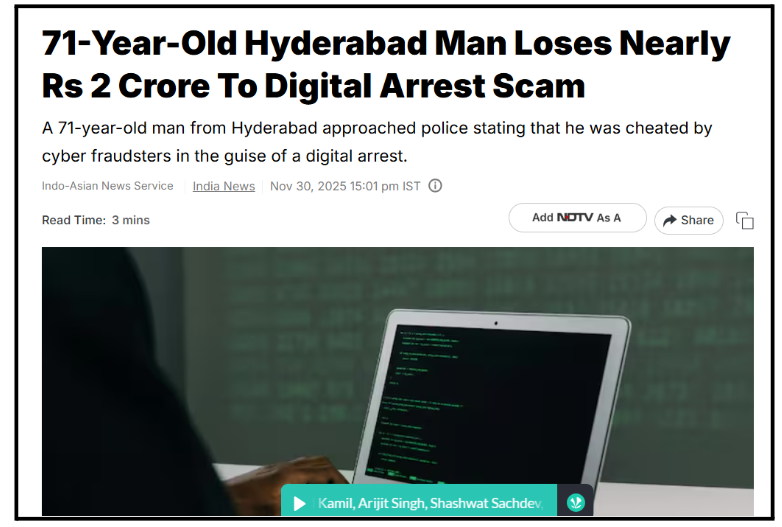
This case from Hyderabad is another example of how “digital arrest” scams are trapping victims through fear and deception.
A 71-year-old man was contacted by cybercriminals pretending to be law enforcement officials.
They falsely accused him of being involved in illegal activities and convinced him that he was under “digital arrest.”
Using intimidation and continuous pressure, the fraudsters manipulated him into transferring money to supposedly “clear” his name and avoid legal action.
As a result, he ended up losing nearly ₹2 crore.
After realising the fraud, the victim approached the police, leading to an investigation into the scam.
How to Report Digital Arrest Scams?
Acting quickly can make a significant difference in limiting your losses and helping authorities trace the scammers.
The sooner you respond, the higher the chances of blocking transactions and recovering funds.
If you are a victim and want to lodge a digital arrest complaint, you can follow these steps:
1. Disconnect Immediately
The moment you recognise the signs of this scam, end the call. Do not engage, do not negotiate, and do not transfer any money.
The caller has no legal authority over you. Their entire leverage depends on keeping you afraid and on the line.
If you’ve already transferred money, contact your bank immediately to attempt blocking or reversing the transaction.
2. File Cybercrime Complaint
File a complaint on the National Cyber Crime Reporting Portal or call the helpline.
Provide all details: phone numbers, screenshots, transaction records, and any documents the scammers shared.
The Indian Cyber Crime Coordination Centre (I4C) tracks these scams nationally and coordinates with law enforcement across states.
3. Preserve All Evidence
Before deleting anything in frustration or fear, save:
- Call recordings (if available)
- Screenshots of video calls, messages, or documents sent by scammers
- Bank transaction receipts
- Email headers and phone numbers used
This evidence is critical for investigation and potential recovery of funds.
4. Approach SEBI for Investment-Related Scams
If the fraud involves fake investment schemes or trading platforms, sometimes bundled with digital arrest threats, file a separate complaint with SEBI through their SCORES portal.
Investment fraud often overlaps with these impersonation scams.
5. Inform Local Police
Beyond the online portal, visit your nearest police station and file an FIR.
Having a physical record with local law enforcement ensures your case is tracked at multiple levels and can help if legal proceedings follow.
6. Stay Alert and Follow Up
After reporting, follow up regularly on your complaint status.
Scammers often operate in networks, and the information you provide may help prevent others from being victimised.
Need Help?
Dealing with a digital arrest scam can be stressful and confusing, but you don’t have to handle it alone.
You can check our cyber fraud response plan for further guidance on the process.
If you’ve been targeted or affected, this plan can provide you with support for the initial stages.
Conclusion
Digital arrest is not law enforcement, it’s extortion dressed up in official-sounding language.
No legitimate police officer will demand money over a video call, threaten arrest without physical presence, or ask you to stay under virtual surveillance.
The scam succeeds because it hijacks fear.
But knowledge breaks that hold.
If you remember nothing else: real arrests happen in person, with documented procedures, and never require you to transfer money to avoid them.
Share this information with family, especially elderly relatives who may be less familiar with how government agencies actually operate.