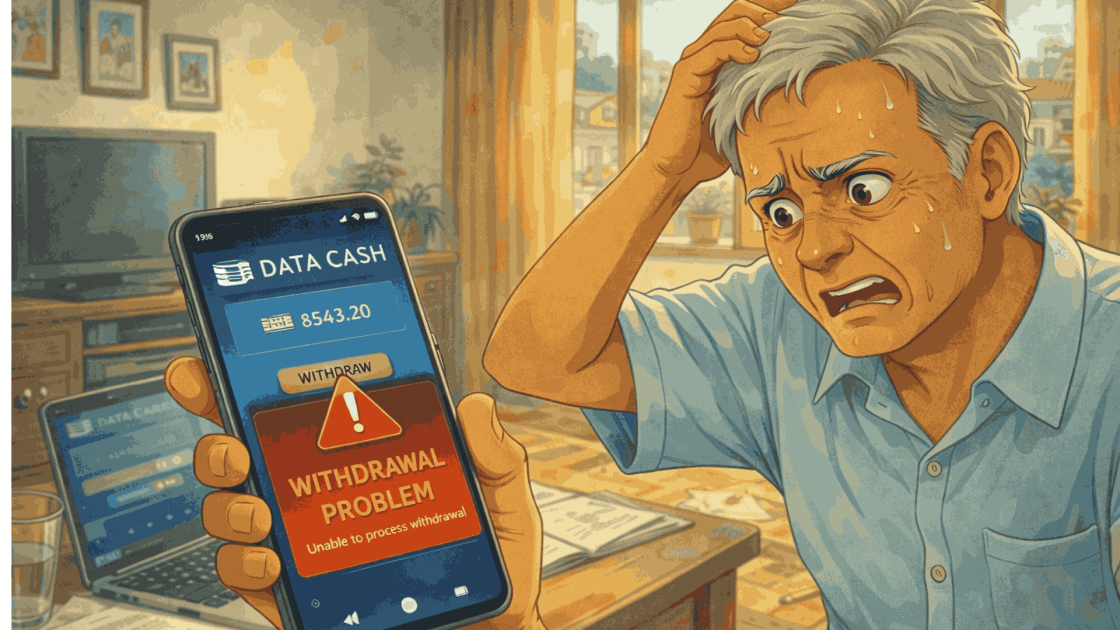
Searches for Data Cash App withdrawal usually come from users who have already seen balances inside the app and want to know one thing: Will the money actually reach my bank or UPI account?
Apps that promise earnings from unused mobile data or simple tasks often look convincing at first. Dashboards show growing balances, withdrawal buttons are visible, and UPI options appear ready.
But the real test of legitimacy is not how the app looks. It is whether withdrawals work consistently and transparently.
This article explains how the Data Cash app presents withdrawals, what users report when they try to cash out, where the risks lie, and what to do if money gets stuck.
Data Cash App Withdrawal Explained
Data Cash app claims that users can earn money by selling unused data or completing in-app activities.
The app shows balances increasing inside a dashboard. It also suggests that withdrawals can be made through UPI services like Google Pay, PhonePe, or Paytm.
However, there is a clear gap. The platform does not clearly document its withdrawal policy.
There is no transparent explanation of minimum withdrawal limits, processing timelines, fees, possible deductions, or reasons why a withdrawal may be delayed or rejected.

The identity of payout partners is also not clearly disclosed.
When a platform promotes payouts but does not define these basics, users rely on assumptions instead of verified rules.
How Is the Withdrawal Process Shown?
Based on publicly shared walkthroughs, the withdrawal flow inside the app is designed to look structured and straightforward.
The interface creates a sense that earnings are accumulating and can be accessed once certain conditions are met.
The typical flow appears as follows:
- User completes the Datacash Pro Login and sees a balance increasing over time
- A withdrawal option appears once a minimum amount is reached
- UPI details are requested
- The withdrawal status changes to “processing” or “reviewing.”
At this stage, expectations are clearly set that the money will arrive soon. The presence of a status update gives the impression that the request is actively being handled.
However, this is also the point where many user complaints begin. Some users report that the status remains stuck on “processing” for extended periods.
Others say additional conditions appear after initiating withdrawal.
The gap between what the screen suggests and what actually happens is where frustration builds.
Is Data Cash App Safe?
When evaluating any platform that promises passive income, data monetisation, or effortless digital earnings, safety and transparency must come first.
Unfortunately, in the case of Data Cash, several warning signs raise concerns about whether it is a safe choice.
The app is primarily distributed through APK files and external links rather than official app stores, which means it bypasses independent security review systems and platform-level accountability.
The earning model of these data selling apps is also unclear. There is no transparent explanation of how revenue is generated or how consistent payouts are funded, which creates uncertainty around long-term withdrawal reliability.
The platform also relies heavily on dashboard-based earnings displays and referral-style growth, which are common patterns in high-risk earning schemes rather than regulated financial services.
Combined with limited company disclosure, no visible regulatory oversight, and minimal verified payout proof, the overall structure reflects elevated financial and data risk.
Data Cash does not currently present the level of transparency, accountability, or regulatory clarity expected from a safe digital earning platform.
Data Cash App Red Flags
Withdrawal problems in reward or earning-style apps usually do not appear randomly. They often connect to how the platform is structured behind the scenes. When transparency is weak, payout risk increases.
1. Lack of Regulation and Accountability
Apps in this category are sometimes published without a clearly verifiable developer identity or traceable corporate presence.
Even when listed on app stores, developer details may be minimal. Without strong regulatory oversight, there is no independent authority ensuring payout commitments are honored.
If withdrawals fail, users often have limited escalation options. There is no financial regulator supervising reward-based return promises. That lack of accountability directly affects payout reliability.
2. No Transparent Business Model
Another issue is the absence of a clearly explained revenue source. Many such apps do not clearly state:
- Who actually pays for the rewards
- Why are individual users being paid
- How the platform generates sustainable income
If there is no transparent and logical business model, payout funds rely entirely on internal platform control. That creates risk. When new inflow slows down, withdrawal friction often increases.
3. Psychological Trust-Building
Some platforms allow small initial withdrawals. This builds confidence. Users feel the system works. After that, they are encouraged to invest more time, money, or referrals.
This pattern reduces skepticism early. It creates a cycle where users increase commitment before testing larger withdrawals. When problems appear, exposure is already higher.
Understanding these structural patterns helps explain why withdrawal issues in such apps are not isolated events, but often built into the operating model itself.
What To Do Once You Are Scammed?
If you believe you were misled or have lost money, act quickly. Delays reduce the chances of tracing funds or freezing suspicious accounts. Keep your approach structured and documented.
1. Report to Cybercrime: First, report the matter to cyber crime authorities. File a complaint on the National Cyber Crime Reporting Portal.
Upload screenshots, transaction IDs, payment confirmations, chat records, and app details. Clear documentation helps investigators understand the flow of money.
2. Contact Your Bank or UPI Provider: Next, contact your bank or UPI provider immediately. Inform them that the transaction appears suspicious or disputed.
Share reference numbers and request a trace or account flag. In some cases, early action can prevent further movement of funds.
3. File an FIR with the Local Police or Cyber Cell: If the financial loss is significant, visit your local police station or cyber cell. Lodge an FIR with complete documentation.
Carry printed transaction records, screenshots, and communication logs. An FIR strengthens the legal trail and enables a formal investigation.
4. Act Quickly to Improve Recovery Chances: Early reporting improves the possibility of action and increases the chances of partial or full recovery.
Need Help?
If you are unsure how to document your case or escalate the issue properly, structured guidance can make the process much easier and more effective.
We support users by:
- Organising evidence such as transaction records, screenshots, and communication logs
- Guiding you through the complaint-filing process step by step to ensure all required details are included
- Helping escalate the matter through the correct channels if the initial complaint does not resolve the issue
For a clearer understanding of the overall process, you can also review the information available in our online fraud response plan.
Addressing such situations early, with proper documentation and the right procedure, can significantly improve the chances of a timely and fair resolution.
Conclusion
The Data Cash App withdrawal process looks simple on the surface, but there is no verified proof that it works reliably.
The absence of clear withdrawal rules, lack of official app-store accountability, and repeated user allegations of stuck payments make it a high-risk platform.
Seeing a balance is not the same as receiving money.
Until there is transparent documentation, verified payouts, and accountable ownership, users should treat the Data Cash app with extreme caution.
When it comes to easy money promises, skepticism is often the safest decision.