Apps that promise passive income by sharing unused internet or data have become increasingly popular. They claim you can earn money in the background while doing nothing, just by keeping an app installed.
Some people say these apps are legit.
Others call them outright scams.
So what’s the truth?
The reality sits somewhere in between.
Data Selling apps can be real, but many users experience outcomes that feel misleading, frustrating, or unfair. This blog explains why using real user reviews, not marketing claims.
Are Data Selling Apps Real?
Data-selling apps usually claim to let users earn money by:
- Sharing unused internet bandwidth
- Allowing background network access
- Completing surveys as a secondary income source
Popular examples include Pawns.app, Honeygain, and PacketStream.
In theory, these apps operate by:
- Routing third-party traffic through user connections, or
- Monetizing user participation through surveys and referrals
In practice, user experience varies widely, and that’s where most complaints begin.
Data Selling Apps Complaints
Let’s check the reliability by considering other users experience:
Case 1: Months of Usage, Almost No Earnings
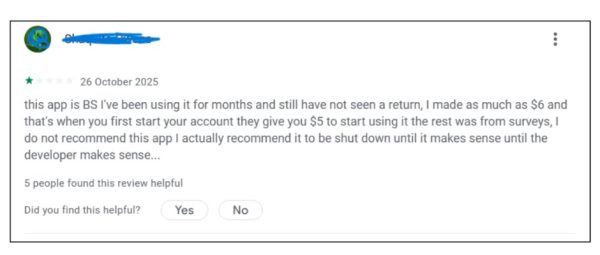
One user reported using Pawns.app for several months and earning only around $6 total.
Importantly, $5 came from a sign-up bonus, not actual usage. The remaining amount came from surveys, not data sharing.
The user felt the app:
- Did not deliver meaningful returns
- Relied heavily on bonuses to appear rewarding
- Failed to justify the time and resources used
The user concluded that the app does not make economic sense and expressed disappointment after prolonged use.
Case 2: Survey Completion Without Payment
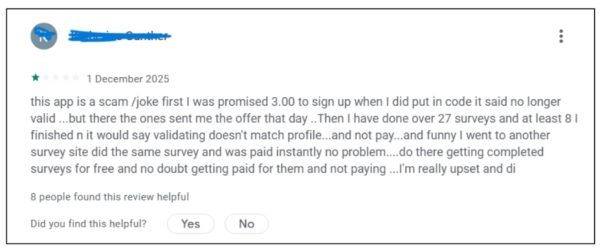
Another user described a more serious frustration related to surveys.
According to the review:
- A promised sign-up reward failed to apply
- The user attempted over 27 surveys
- At least 8 surveys were fully completed
- Surveys were rejected at the final stage with “profile mismatch.”
- No payment was issued despite completion
The user stated that the same surveys paid instantly on another platform, leading them to believe Pawns.app benefited while the user received nothing.
This experience left the user feeling exploited and misled.
Based on these complaints and common scam patterns seen in India, many users begin asking, is Data Selling App safe
When an app repeatedly:
-
Promises quick or guaranteed income
-
Shows earnings that can’t be withdrawn
-
Delays or blocks payouts
-
Asks for broad permissions without clear explanations
-
Pushes surveys that fail only at the last step
-
Operates mainly through Telegram or WhatsApp
It raises serious red flags. For many users, the gap between what’s promised and what actually happens becomes impossible to ignore.
How to Identify Data Selling Scams?
Before installing any such app, users should:
- Read recent app reviews, not just ratings
- Look for long-term user feedback, not early bonuses
- Check if withdrawals actually work
- Avoid apps that:
- Constantly disqualify surveys
- Remove payout options
- Change core features without notice
- Be realistic about earnings, not income
If an app cannot clearly explain how much users really earn, that’s a red flag.
How to File a Complaint Against Data Selling Scams?
If you’ve already used a data-selling app and feel misled:
- Document app behavior, earnings, and failed payouts.
- Report misleading claims on the Play Store.
- Uninstall apps that demand unnecessary permissions.
- Avoid “recovery” offers that promise to get your money back.
- File a Cyber Crime complaint.
Many scams target users after disappointment sets in.
Need Help?
Many users find it hard to report problems because they don’t know where to complain, what proof is needed, or which authority to contact. After being ignored once, many feel confused or give up.
Register with us today.
We help you choose the right reporting platform, organize evidence like screenshots and payment records, write clear and effective complaints, and report issues safely without falling for follow-up scams.
Our focus is user protection and accountability, without fear or panic.
Conclusion
So, is a data-selling app real or fake?
It can be real and still not worth it.
Most users don’t lose money directly, but they lose:
- Time
- Privacy comfort
- Trust
If an app promises effortless income from your data, question the value exchange carefully. Because when earnings stay near zero, the real cost becomes clear.