Over the last few years, several mobile apps have entered the market claiming to offer passive income by sharing unused internet bandwidth.
The pitch sounds simple: install an app, keep it running, and earn money while your internet sits idle.
Apps like Pawns.app, Honeygain, and PacketStream promote this idea aggressively through app stores, ads, and referral programs. Many users download these apps believing they can earn a small but steady income with little effort.
However, real user experiences tell a very different story.
This blog examines data-selling apps through verified user reviews and complaint patterns, focusing on what people actually faced after installing and using these apps in India.
Data Selling App Scam
Data-selling apps claim to pay users for:
- Sharing unused internet bandwidth
- Allowing background network usage
- Completing surveys alongside data sharing
In reality, these apps often rely on:
- Extensive device and network permissions
- Continuous background activity
- Long-term user participation for minimal returns
While the apps frame this as “passive income,” users rarely receive clear explanations about:
- How their internet connection is used
- Who consumes the data routed through their device
- Why earnings remain extremely low
At first glance, these platforms look like harmless passive income tools. But once users notice heavy permissions and vague explanations, the question Data Selling App real or fake starts to feel very real.
Data Selling App Complaints
In recent months, several users have raised serious complaints against so-called data-selling apps that promise easy earnings in exchange for sharing personal or device data.
These platforms often attract users with attractive payout claims, but later alter app features, restrict withdrawals, or completely block access to earned funds.
The following case highlights one such instance where changes in the app’s core functionality resulted in financial loss for the user.
Case 1: Core Feature Removed, Earnings Locked
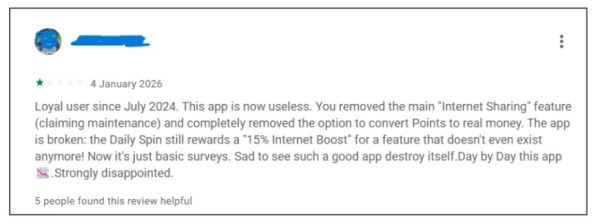
A long-term pawn.app user reported that the app initially worked as advertised, but later became unusable.
According to the review:
- The main internet-sharing feature was removed, citing “maintenance.”
- The option to convert points into real money disappeared
- The app continued showing rewards like “Internet Boost,” despite the feature no longer existing
- The app shifted almost entirely to surveys
The user described this as watching a once-useful app destroy itself over time.
User impact:
- Time and resources invested became meaningless
- Accumulated points lost value
- The earning promise changed after adoption
- Loyal user since July 2024
- Removal of internet sharing
- Locked point-to-cash conversion
Case 2: Excessive Permissions, Negligible Earnings
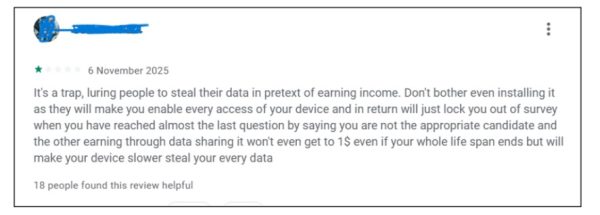
Another Pawns.app user described the app as a “trap,” alleging that:
- The app demands broad device permissions
- Surveys frequently disqualify users at the final stage
- Data-sharing earnings never reach even $1
- The device becomes slower over time
- The user feels their data is exploited without fair compensation
This complaint reflects a common frustration: users provide access and time but receive no meaningful return.
User impact:
- Wasted time on surveys that were never completed
- Privacy concerns due to high access permissions
- Device performance issues
- Strong perception of exploitation
- trap
- steal data
- Lock you out of survey
- device slower
The above issues were reported with Pawns.app does not exist in isolation.
Users have raised similar complaints about:
- Honeygain
- PacketStream
Across platforms, users commonly report:
- Extremely slow earnings despite continuous usage
- Sudden payout issues or withdrawal delays
- Accounts are restricted or rendered inactive
- Poor or unresponsive customer support
Many users openly describe these apps as “scams,” not necessarily because they are illegal, but because the outcome does not match the promise.
Is Data Selling App Safe?
A key issue often ignored by marketing is this:
Users do not legally own or control how their internet connection is resold.
Internet services operate under ISP and telecom regulations. While users pay for access, reselling or routing traffic through residential connections raises questions about:
- ISP terms of service
- Network misuse
- Liability if the connection gets flagged
If an app routes third-party traffic through a user’s IP address, the risk stays entirely with the user, not the app. Any misuse, policy violation, or investigation traces back to the individual’s network.
Because users carry the legal and network risk without transparency or control, data-selling apps cannot be considered safe to use.
How to Protect Yourself from Data Selling Scams?
Before installing any data-selling or bandwidth-sharing app, users should:
- Read recent app-store reviews, not just ratings
- Check if core earning features still exist
- Review permissions carefully
- Understand minimum payout thresholds
- Avoid apps that:
- Remove withdrawal options
- Push endless surveys instead of core earnings
- Fail to explain how data is used
If an app cannot clearly explain who benefits from your data, that is a warning sign.
What to do if Online Fraud Happens?
If you have been a victim of any such scam, then do not fret! There are ways to recover your losses.
Follow the steps below and act quickly to increase the chances of recovery of losses:
Step 1: Document Everything
Save:
- App screenshots
- Earnings dashboard
- Payment or withdrawal attempts
- App-store reviews and timelines
Step 2: File a Cyber Crime Complaint
If you believe the app misused data or permissions:
- File a complaint on the national cybercrime portal
- Attach screenshots and permission details
Need Help?
Many users face difficulties when trying to report issues because they:
- Are unsure where or how to file a formal complaint
- Lack clarity on what evidence or documents are required
- Don’t know which authority or platform is appropriate for escalation
- Feel overwhelmed or ignored after initial attempts
You can register with us.
We help users to:
- Understand the correct channels for reporting digital fraud or app-related issues
- Organize and document proof such as payment records, screenshots, and communication logs
- Draft clear, structured complaints for platforms, regulators, or cybercrime portals
- Safely navigate the reporting process without falling for follow-up or recovery scams
The goal is accountability and user protection, not fear.
Conclusion
Data-selling apps promise effortless income, but real user experiences show:
- Earnings remain negligible
- Features disappear without warning
- Users carry privacy and network risks
- Transparency remains weak
In India, where digital adoption moves faster than regulation awareness, users must stay cautious.
If an app asks for access first and explains value later, it’s worth stepping back.
Because when it comes to your data and internet connection, the cost often outweighs the payout.