
Have you recently heard about DSJ Exchange through a Telegram channel or a random WhatsApp invite?
Many investors say they first came across the platform through messages promoting simple crypto trades and appealing daily return claims.
As interest in cryptocurrency continues to grow in India, it’s becoming common for new platforms to attract attention through social media groups and messaging apps.
Before considering any such opportunity, it’s important to pause and understand how the platform actually works.
In this article, we take a closer look at what DSJ Exchange presents to users and the key details investors should carefully review before making any decision.
What is DSJ Exchange?
DSJ Exchange describes itself as a global cryptocurrency trading platform offering users access to digital asset markets.
The platform promotes features such as simplified trading, structured earning models, and a system presented as suitable even for beginners.
In its promotional messaging, DSJ Exchange positions itself as a modern exchange designed to make crypto participation easier and more accessible.
DSJ Exchange is heavily promoted through BG Investment Group (also called BG Wealth Sharing or BG-168).
These groups appear to play a role in introducing new users to the platform and sharing instructions related to participation.

DSJ Exchange Login
The registration and login process typically begins through an invitation link shared via Telegram or WhatsApp groups.
After clicking the link, users are directed to a sign-up page where they are required to enter basic details such as a mobile number or email address, create a password, and often input a referral or invitation code.
Once registered, users can log in to access their dashboard.
The dashboard generally displays account balance details, deposit options, withdrawal sections, and trading or task-based participation features.
Further instructions on how to use the platform are usually shared within the associated messaging groups.
DSG Exchange Investment Scheme
To understand the overall structure, it’s important to look at how participation is typically organized on the platform.
Based on user experiences shared across online forums and messaging groups, the model appears to follow a guided approach rather than independent trading.
Here’s how it generally works:
- Users are added to Telegram or WhatsApp groups after registering.
- Admins or “mentors” share step-by-step trading instructions.
- Participants are asked to complete specific tasks or click-based trading actions.
- Account dashboards reflect daily profit figures after these activities.
Promotion largely happens through Telegram and WhatsApp communities, where screenshots of profits and withdrawal proofs are circulated to build confidence.
Some investors claim they were able to withdraw smaller amounts initially, which increased their trust in the system.
Over time, users are encouraged to deposit more funds to access higher returns or upgraded plans.
Because experiences vary and financial risk is involved, it is important to independently verify the platform’s legitimacy and regulatory status before investing.
Is DSJ Exchange Legal in India?
Here’s what Indian investors need to know. DSJ Exchange has NO authorization from SEBI. The platform lacks any valid Indian regulatory approval.
Moreover, international regulators have issued serious warnings:
FCA Warning (UK): The FCA explicitly states visitors should avoid dealing with this firm.
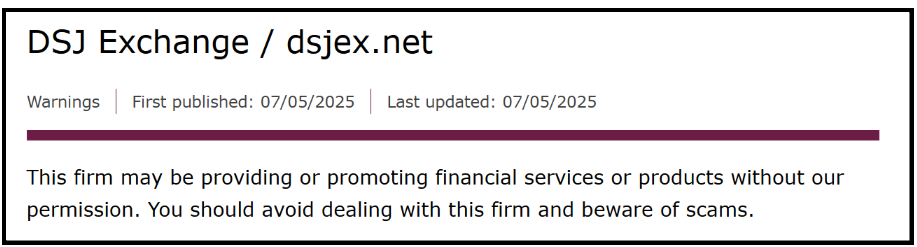
FMA Warning (New Zealand) – New Zealand’s Financial Markets Authority added dsjoo.com to their blacklist on April 25, 2025.
Reasons cited: market manipulation, fraud, and impersonation.
Think about it, if they were legitimate, why would regulators worldwide issue warnings?
Is DSJ Exchange Safe?
Spotting a scam isn’t always easy. But DSJ Exchange shows warning signs so significant that ignoring them could expose investors to serious financial risk.
Many people researching the platform eventually start asking the same question: Is DSJ Exchange real or fake?
The answer depends on carefully examining certain red flags.
Let’s break them down:
- Multiple Domain Names – Legitimate businesses don’t constantly change websites. DSJ Exchange operates from .com, .net, with different domain names like dsj011, dsjex112, and more.
- Telegram-Based Operations – Professional exchanges don’t operate primarily through anonymous Telegram channels. This allows them to disappear easily.
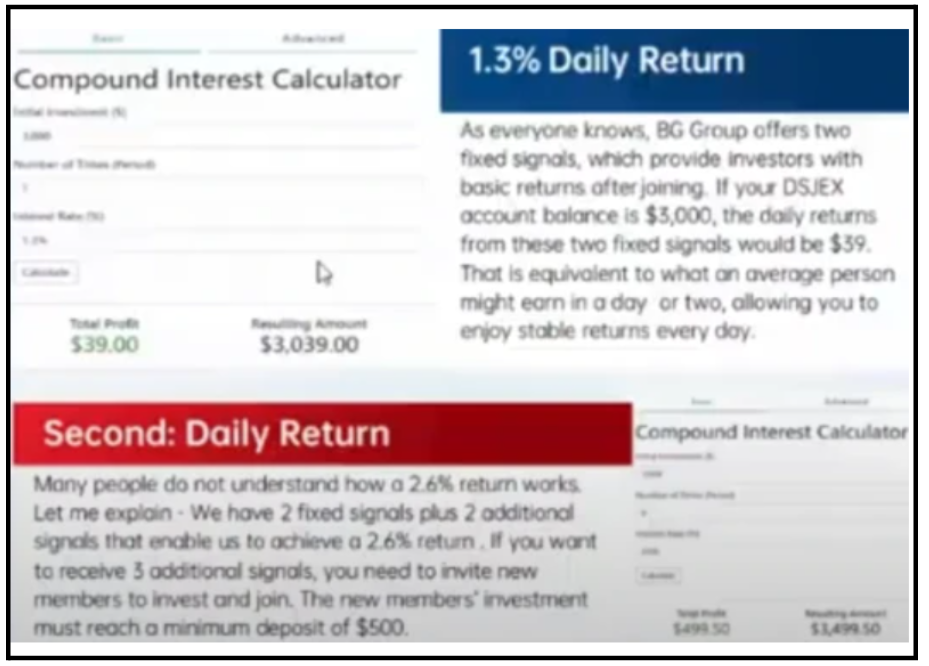
- Guaranteed Promises – They guarantee 1.3% to 2.6% daily returns. No legitimate investment offers such consistent profits without risk.
- No Physical Address – The platform lists no verifiable office location. Any addresses mentioned are likely fake.
- No Customer Support – When problems arise, good luck reaching anyone for help.
- Pressure Tactics – They use aggressive marketing claiming “limited time offers” to rush your decision.
Is DSJ Exchange a Scam?
When you dig a little deeper, the concern isn’t just about “online trading.”
The platform is often linked with networks like BG Wealth Sharing (BG-168), and many users say the system feels more controlled than it appears on the surface.
Several technical patterns have raised questions:
- Signal Code Trading: Users are reportedly given specific “codes” to paste for trades, which makes some question whether the activity reflects real market trading or internally generated results.
- Withdrawal Fee Demands: In some cases, large withdrawals allegedly trigger requests for extra “tax” or “security” payments before funds are released.
- Non-Official App Access: Instead of standard app stores, access may rely on direct links or APK downloads, which can carry security risks.
- Rapid Fund Movement: Deposited crypto is sometimes moved across wallets quickly, making tracking difficult.
- Ponzi-Style Operation Risk: If returns appear dependent on continuous new deposits rather than transparent trading profits, it may resemble a Ponzi-style structure.
No single factor proves anything on its own.
But when multiple patterns align, it becomes important to step back and evaluate carefully.
Before investing, ask yourself: Is the system transparent and independently verifiable, or are you relying mainly on internal promises and group screenshots?
How to File Cryptocurrency Complaints in India?
If you’ve been affected or suspect fraudulent activity, report trading scams immediately:
- Report Cybercrime: Report the incident directly to the official National Cyber Crime portal to ensure it is logged and investigated under cybercrime regulations.
- File a complaint with SEBI: Use the SEBI Complaints Redress System (SCORES) to report fraud related to investments, trading platforms, or stock market irregularities.
- Contact the Economic Offences Wing (EOW): Reach out to your state’s Economic Offences Wing for specialized investigation of financial crimes and complex fraud cases.
- Approach Your Local Police: File an FIR at the nearest Cyber Crime Cell to ensure local law enforcement initiates an investigation and legal action.
The sooner you report, the better your chances of recovery.
Need Help?
Have you lost money to DSJ Exchange or similar crypto scams?
You’re not alone.
Thousands of Indian investors face this daily.
Our team specializes in helping fraud victims navigate the complex trading scam recovery process.
We can:
- Connect you with verified legal experts who handle crypto fraud cases specifically in India
- Guide you through the complaint-filing process with SEBI, Cybercrime Portal, and local police
- Provide documentation templates that strengthen your case
- Share recovery strategies that have worked for other victims
Don’t suffer in silence. And most importantly, don’t let these scammers win.
Your recovery journey starts with one step.
Start with our fraud response plan, and let’s fight back together.
Conclusion
DSJ Exchange is NOT a legitimate trading platform.
The evidence is clear: multiple international regulators have issued warnings, users consistently report DSJ Exchange withdrawal problems, and the platform operates through anonymous Telegram channels with frequently changing domains.
The connection to the BG Wealth Sharing Ponzi scheme, combined with zero valid licenses from SEBI or any top-tier regulator, makes this extremely dangerous for Indian investors.
If an investment opportunity seems too good to be true, it probably is.
Always verify platform credentials through official regulatory websites. Never invest based on WhatsApp/Telegram messages alone.
Remember, protecting your capital is always better than trying to recover it later.