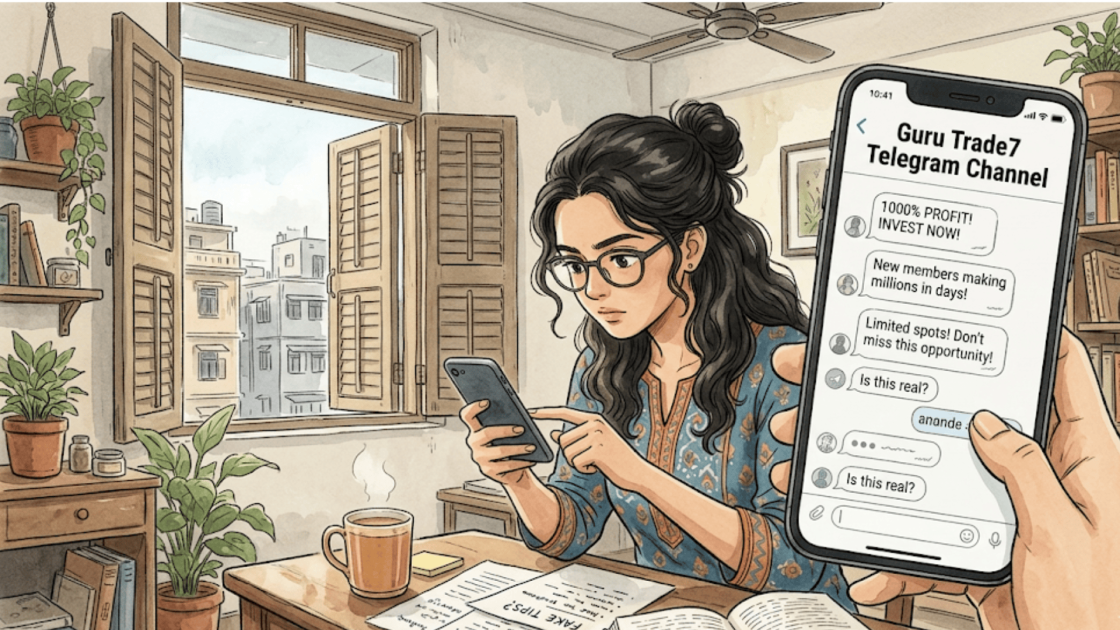
If you have spent even a little time on Telegram, you have probably seen those trading groups that promise easy money.
Big profits, zero effort, 100% winning signals. It all sounds tempting, especially when you are just starting out.
One such channel, linked to the Guru Trade7, follows this exact pattern.
At first glance, it looks professional. But once you dig a little deeper, things start to feel off.
The goal of this blog is simple: To help you understand how these setups work so you do not end up losing your money.
Guru Trade7 Telegram Channel Review
The Telegram channel – @GURU 33 TRADING TRADE7 TRADERS basically works as a promotional funnel for the Guru Trade7 platform.
It has over 10,000 subscribers.
The platform focuses on fast-paced trading in multiple segments like stocks, commodities, forex, etc.
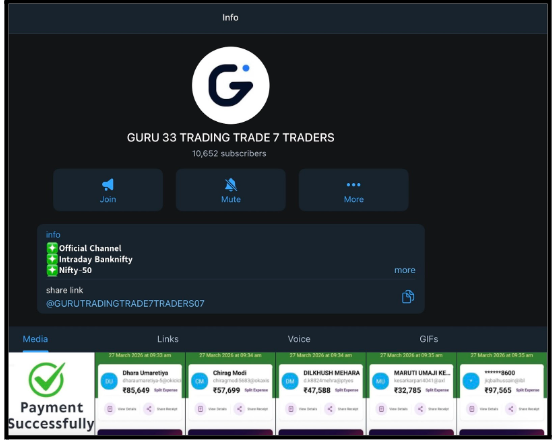
Here is how the Telegram channel usually presents itself:
- It shares signals, which tell you when to buy or sell on assets like Bitcoin or gold.
- It positions itself as an expert by using screenshots of massive profits.
- It constantly pushes users toward a paid VIP group, which is paid.
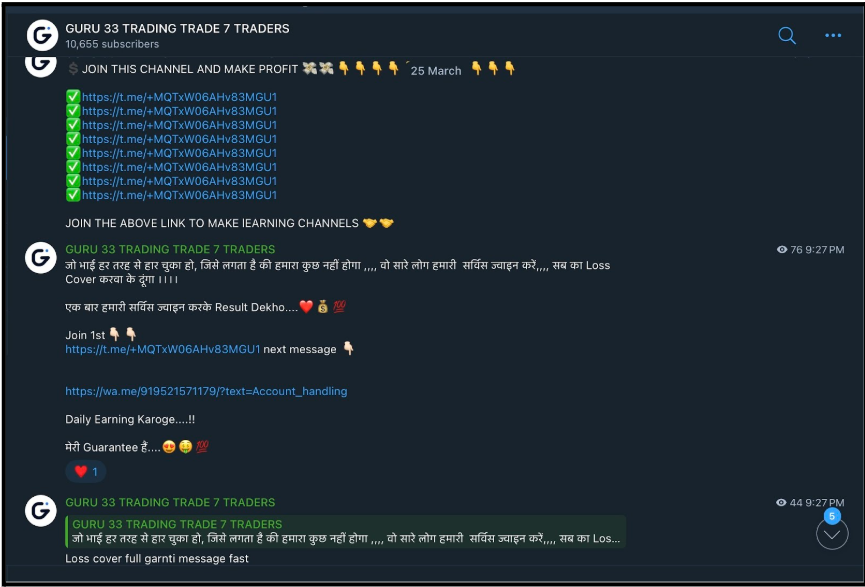
- They claim that if you join our premium service, you will recover all your losses.
- The admin also claims you will earn guaranteed daily returns.
The entire setup is designed to move you from curiosity to trust to payment.
And if you pause for a moment and think about it, if someone really had a system that wins almost every trade, why would they sell it for a few thousand rupees?
Guru Trade7 Telegram Channel Major Red Flags
At first, everything about these channels looks polished. The messages sound confident, and the profit screenshots look very real.
But if you take a step back and really observe, a pattern starts to emerge.
And it’s not a good one.
-
No Real Identity Behind the Channel
The first thing that stands out is how anonymous everything is. You are expected to trust someone with your money, yet there is no clarity on who they are.
There is no real name, no office address, and no verifiable background.
In India, anyone offering paid trading advice is supposed to be registered with the Securities and Exchange Board of India.
Genuine advisors usually mention their registration details openly because that builds trust.
Here, it is the opposite. The anonymity actually works in their favour, because if things go wrong, they can simply disappear without a trace.
Such anonymity often leads users to question-is Guru Trade7 real or fake?
Especially when there is no verifiable information available.
This concern is valid, as lack of identity is one of the most common signs of potential scams.
-
No Regulation Means No Protection
Another serious concern is the lack of regulatory backing. The platform being promoted has reportedly appeared on the alert list issued by the Reserve Bank of India.
This is not a small detail. It directly impacts your safety as a user.
If your money gets stuck, your withdrawal is delayed, or your account suddenly stops working, there is no proper system in place to protect you.
This is exactly why many people are now questioning is Guru Trade7 safe or not, as the risks clearly outweigh any promised returns.
You are essentially on your own, dealing with an unregulated entity.
The platform itself is not safe.
-
The Guaranteed Profit Illusion
This is where many people get convinced.
The language used in these channels is very deliberate ,“full guarantee”, “daily profit”, “recover all losses today”.
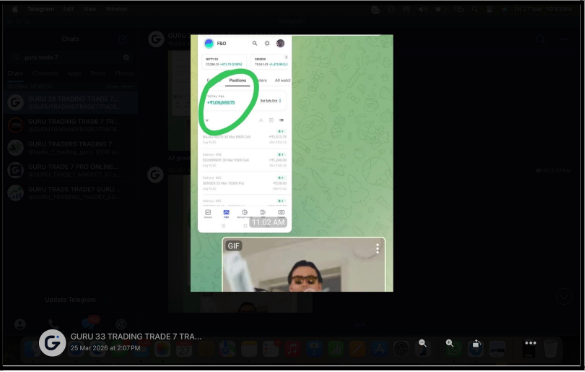
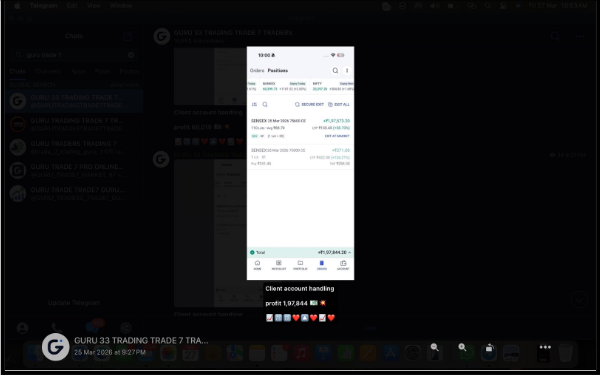
They also post profit screenshots with massive profits. It gives you a sense of certainty, especially if you are hoping to make quick money.
But real trading does not work like that. Losses are part of the process, even for experienced traders.
No one, absolutely no one, can promise fixed returns in a volatile market.
So when someone does, it is not confidence. It is a tactic.
-
The VIP Trap Feels Convincing
The shift from free signals to paid access is very subtle. At first, everything feels helpful and low-risk. Then slowly, the focus moves toward the VIP group.
It is positioned as something exclusive, almost like you are being given access to a secret. But once you are inside, the experience often changes.
You may see that the signals are not performing the way they were promised.
Losses may increase, and instead of accountability, the admins may be pressured to invest more money to recover.
In some cases, additional charges can also be introduced. Things like account handling fees or withdrawal processing charges.
At that point, it becomes clear that the goal is not to help you trade better. It is to keep you spending.
-
Silence Is Not a Good Sign
One subtle but important detail – you can not reply in these channels.
There is no discussion, no feedback, no way to question anything. Everything is one-sided.
That is not how a genuine community works.
In real trading groups, people share experiences, discuss strategies, and even talk about losses. Here, that is completely missing.
And that silence is intentional. It prevents others from exposing what is actually happening.
-
The 40% Profit Sharing Promise
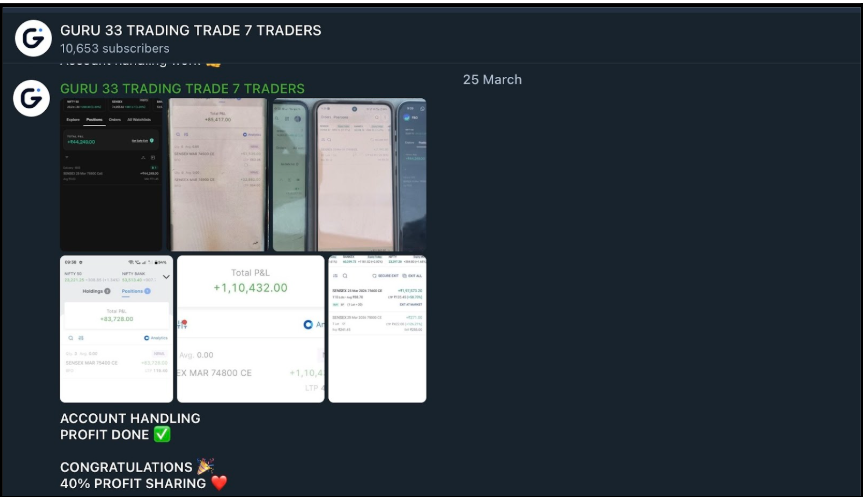
You might see offers where they claim you keep 60% of the profit while they take 40%.
It sounds convincing at first, but it raises a basic question, if they can really generate consistent profits, why rely on your money?
More importantly, such profit-sharing setups with anonymous Telegram users do not follow the norms set by the SEBI.
In most cases, this is just a way to make the offer look safe and attractive, while there is little clarity on how the trades are actually being handled.
-
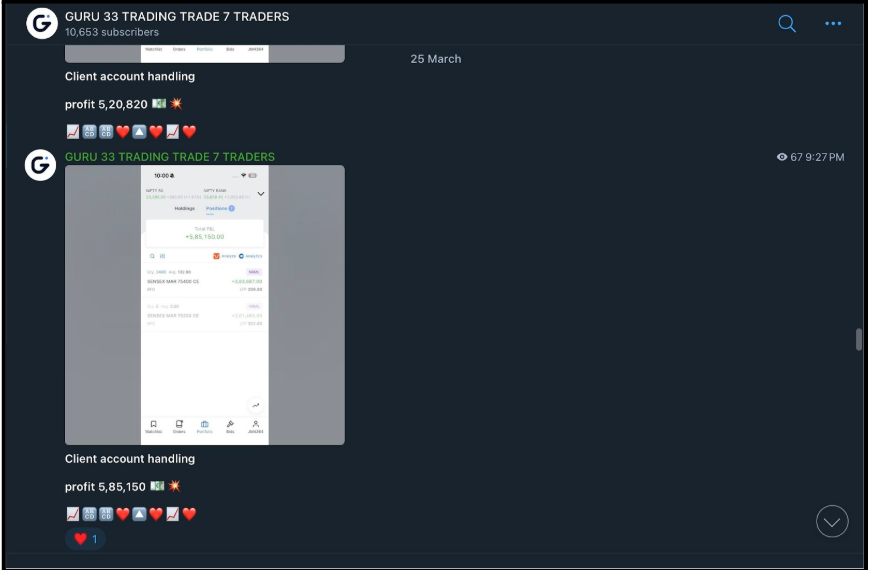
Trading Account Handling
Another thing you might notice is them offering to manage your trading account on your behalf.
They will often post screenshots showing huge profits, and claim they made it for their clients.
At first, this can feel reassuring. Like, you do not even need to learn trading, someone else will do it for you.
But think about it logically. How can an unknown person on Telegram directly handle your account?
No legitimate or SEBI-registered advisor is allowed to casually take control of a client’s trading account like this, especially through an anonymous platform.
On top of that, those profit screenshots are very easy to fake.
They can be edited, reused, or even created using demo accounts. There is no way to verify if they are real.
In reality, this account handling setup is often just another way to gain your trust and, in some cases, direct access to your money.
Once trust is built, victims are slowly encouraged to invest more funds without questioning the process.
This is how trading scams work, by creating a false sense of security before exploiting it.
What to do if Someone Scams You in a Trade?
If you have interacted with this channel or lost money, the most important thing is to act quickly and stay calm.
The process might feel overwhelming at first, but taking the right steps can actually make a difference.
1. Start by Securing Your Evidence
Before doing anything else, gather all your proof. These channels can disappear without warning, so do not assume they will be there later.
Make sure you save screenshots of the Telegram group, the username, and your conversations, especially where payments or promises were discussed.
Keep your transaction details ready, including UPI confirmations and UTR numbers.
This might feel like a small step, but it is actually the foundation of your complaint.
2. Call the Cybercrime Helpline as Soon as Possible
Next, call the national cybercrime helpline. Timing matters here.
If you report the fraud quickly, ideally within the first couple of hours, there is a chance the authorities can alert banks and try to stop the money before it is moved further.
When you call, explain the situation clearly and share your transaction details. You will be given a complaint reference number. Keep that safe.
3. File Cybercrime Complaint
After that, go to the official cybercrime portal and register your complaint under financial fraud.
While filling the form, be specific.
Mention the Telegram handle clearly, explain how you were approached, and describe what led to the payment. Upload all your screenshots and transaction proof.
Try to keep your explanation simple and chronological. It helps the authorities understand the case faster.
4. Inform Your Bank Directly
This is a step many people skip, but it is important.
Visit your bank branch and speak to the manager. Explain what happened and submit a written complaint along with your documents.
Banks can sometimes coordinate with other banks involved in the transaction. In certain cases, they may be able to flag the account or delay withdrawals.
But this only works if you act quickly.
5. Consider Filing an FIR
If the amount lost is significant, it is crucial to file an FIR at your local police station or cyber cell.
This makes your complaint official and allows a deeper investigation. It also strengthens your case if further action is needed.
Carry printed copies of all your evidence to make the process smoother.
Need Help?
Losing money like this is not just about finances; it can leave you confused and unsure about what to do next.
The reporting process can also feel a bit overwhelming if you are handling it alone.
You can check the detailed process in our trading fraud response plan, to organise your proofs and get more clarity on the next steps.
Sometimes, just having someone simplify the process can make it much easier to deal with.
Conclusion
Scams like these do not look like scams in the beginning. And that is exactly why they work.
They build trust slowly, create urgency, and present an illusion of easy money.
By the time doubts start creeping in, many people have already invested more than they intended to.
A genuine trading journey does not come from anonymous Telegram channels.
It comes from learning, patience, and using regulated platforms, along with guidance from advisors registered with SEBI.
If something feels rushed or too perfect, take a step back. That pause alone can save you from a costly mistake.