Planning a vacation is a happy time. You spend your evenings searching for good hotels, checking prices, and waiting for your time off.
Unfortunately, scammers use this excitement to trick people.
In India, holiday fraud is becoming very common. These scams look very real because they use professional websites and polite customer service.
Most people only realise they have been cheated after their money is already gone.
Understanding how these holiday scams work is the best way to protect your savings.
What are Holiday Scams?
A holiday scam occurs when fraudsters pose as legitimate travel agents to steal your money by promising trips, hotels, or flights that never actually exist.
These imposters specialize in travel package scams, creating high-quality, professional-looking brochures for popular destinations like Goa, Thailand, or Dubai.
They focus on making their offer look like a once-in-a-lifetime deal, so you feel you have to pay quickly.
There are a few types of holiday scams:
- The Fake Package Scam: This is the most common type. Scammers create a beautiful brochure for a popular place like Goa, Thailand, or Dubai. They offer a luxury stay at a much lower price than anyone else.
- The Pilgrimage (Yatra) Scam: These target religious travellers planning trips to religious places. Scammers know these are emotional journeys, so they use religious language to gain your trust before stealing your money.
- The VIP Booking Scam: During major events such as the Kumbh Mela or New Year’s Eve, scammers promise VIP tents, helicopter rides, or special entry passes that do not exist.
- The Fake Website Scam: Scammers make a website that looks exactly like a famous travel site, such as MakeMyTrip or Airbnb. You think you are paying a real company, but the money is going directly to a scammer.
How Do Holiday Scams Operate?
These scammers operate in a highly calculated way. They do not just ask for money immediately; they build a story to make you believe them.
It usually starts with a social media ad that looks very professional. Once you click on it or leave your number, a travel expert will call you or message you on WhatsApp.
They speak very politely and send you PDFs that look like official government documents or hotel tie-ups.
To reassure you, they might even send you photos of previous satisfied customers.
Once they see you are interested, they change their tone to create a sense of panic.
They will tell you the hotel is nearly full or that the special discount will expire in two hours.
This pressure is meant to stop you from checking the facts. They will ask you to pay a booking fee or a tax amount via UPI or a bank transfer.
After you pay the initial amount, they often request additional funds for insurance or visa fees. They keep this going as long as you keep paying.
The moment you start asking too many questions or try to cancel, they block your number and disappear.
Holiday Scam Real Cases
There are several news stories every few days about holiday scams. You can read some of them below to understand how the scam operates in the real world.
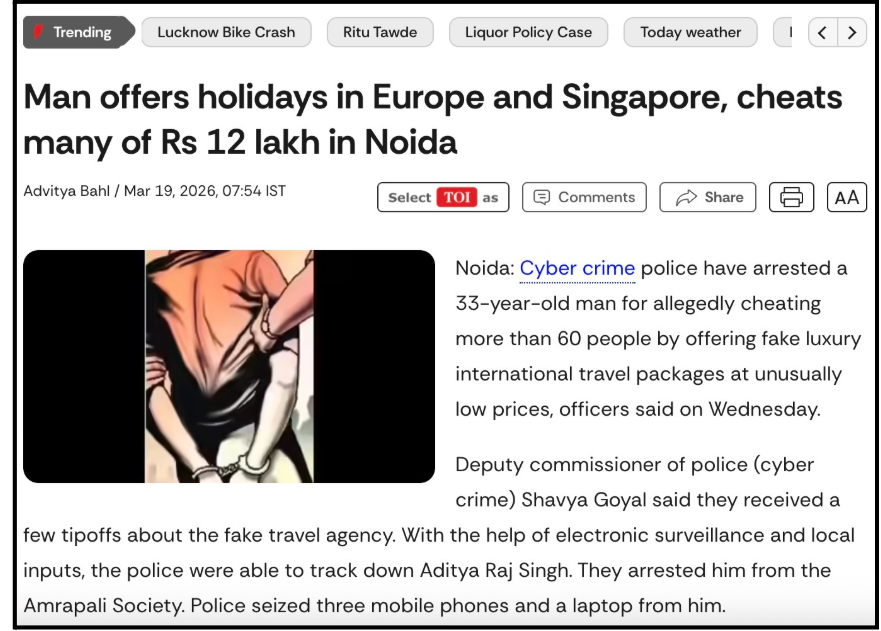
1. The Noida International Trip Fraud (2026)
In a major case in Noida, a man started a fake travel office.
He promised luxury trips to Europe and Singapore and ran many ads on social media that looked like a real company.
More than 60 people paid him because the prices were good but not too low to be suspicious.
To keep them from worrying, the scammer even sent fake booking receipts and flight numbers.
Many families spent weeks packing and getting ready for their first big trip abroad.
On the day they were supposed to leave, the victims went to the office and found it locked and empty.
The man had taken nearly ₹12 lakh in advance payments and ran away. No flights were ever booked, and the families were left with no way to get their money back.
2. The Hyderabad Umrah Pilgrimage Scam (2026)
Religious trips are a common target because people trust these organisers more.
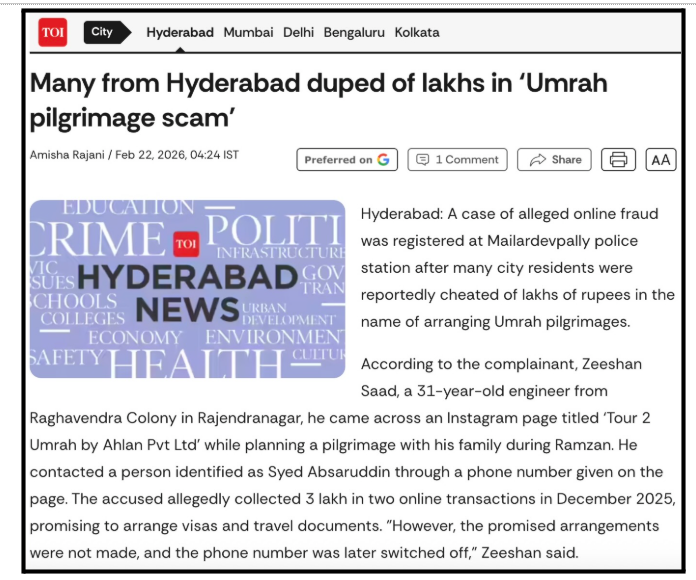
In Hyderabad, a group of people lost lakhs of rupees to an Instagram page offering all-inclusive Umrah packages.
The scammers spoke with the victims for weeks and shared photos of prior groups and schedules.
They even sent fake visa updates to make the process appear real. Because it was a religious trip, many elderly people trusted the organiser and sent their life savings.
As soon as the final payments for hotels and flights were made, the scammers turned off their phones and deleted the page.
The pilgrims realised they had been cheated only when they called the airline and learned that no tickets existed.
3. Haj Travel Package Fraud (Kolkata – 2026)
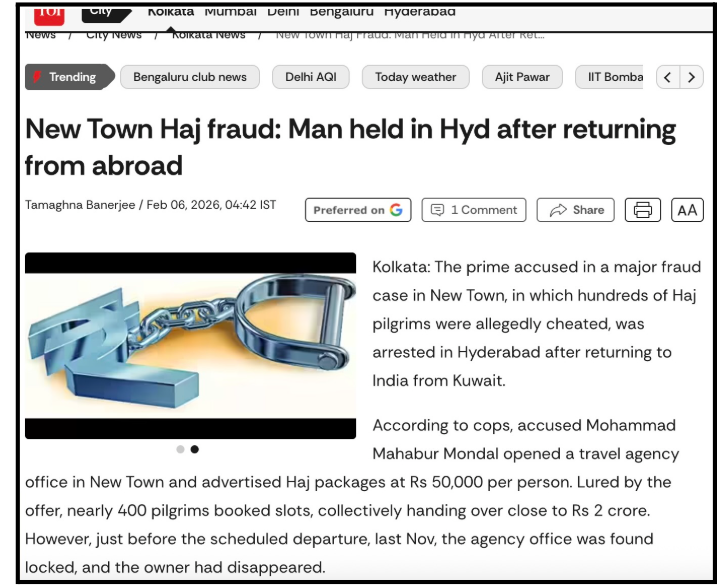
This was a large-scale operation in which nearly 400 people were defrauded by a fake agency offering low-cost Hajj packages.
The scammers used group booking as a clever excuse for lower prices than other agencies.
They operated out of a physical office for months to reassure people. They even distributed ID cards and travel kits to the pilgrims.
Many people spent years saving up for this specific journey. They trusted the agent because he seemed so knowledgeable about the process.
Just a few days before the trip was supposed to begin, the organiser shut down the office and fled the country with the entire collection.
Hundreds of families arrived at the office for their final briefing, only to find the door locked.
The total loss was estimated at ₹2 crore, leaving many elderly people devastated and stranded without their savings.
How to Report a Holiday Scam?
If you have experienced such a scam and do not know what to do next, follow these steps:
1. Save All Your Proof Immediately
As soon as you think you have been cheated, stop talking to the agent and save everything.
Take photos of the original ad, your WhatsApp chats, the booking papers they sent, and the bank payment details. Having these organised is essential when speaking with the police.
2. Call the Helpline Right Away
If you have just sent money, you must move fast. Call the cybercrime helpline immediately.
If you report it quickly, the police might be able to stop the money in the scammer’s bank account before they can take it out.
3. File Cybercrime complaint
Go to the cybercrime website and file a report under Financial Fraud.
Be very clear, list the website address, the social media name, and the phone numbers the scammers used.
Upload all the photos and receipts you saved in Step 1 so the police have a strong case.
4. Inform Your Bank
Call your bank’s fraud department and explain exactly what happened. They need to mark the transaction as a fraud.
Even if the funds are already gone, notifying the bank helps them track the criminals and keeps your account safe from further issues.
Need Help?
If you have lost money to a holiday scam, it is normal to feel confused and unsure what to do next.
We are here to help you assess your situation and determine exactly how the scam occurred.
If you ever feel unsure or stuck, you don’t have to navigate it alone.
Move forward with confidence by checking the detailed process in our online fraud response plan so that you can take the next step with clarity.
This can help you organise all these confusing details into a clear list that the police and banks can actually use to help you.
This plan will also guide you through the reporting process step by step so you do not miss any important details or deadlines.
You do not have to handle this alone; we provide the support you need to protect yourself and report the fraud to the appropriate authorities.
Conclusion
Holiday scams work because they use your excitement for a vacation.
Most victims are not careless; they are simply tricked because everything looks very real.
The best thing you can do is take your time.
Learning how to avoid holiday scams starts with recognising that scammers thrive on your excitement and the “FOMO” (Fear Of Missing Out) created by limited-time discounts.
Whether you are receiving a suspicious “free stay” voucher on WhatsApp or being asked to pay for a tour guide via an unsecured link, staying vigilant is your best defence.