In the last few years, IPO investing has exploded in popularity across India. For many, it looks like the perfect way to jump into the stock market and grab some quick profits.
If you are a beginner, it feels like an easy, exciting gateway to building wealth. But this surge in interest has also put a target on investors’ backs.
Today’s IPO fraud cases are not just simple tricks; they are highly organised and designed to look 100% genuine.
Scammers add people to WhatsApp or Telegram groups, where so-called experts give out advice. They even push you to use trading apps that look exactly like the ones used by major brokers.
Victims often trust the process because everything feels professional, the conversations are polished, the platforms look sleek, and the profits start rolling in almost immediately.
By the time you realise there is something fishy, your money is already gone.
What Are IPO Scams?
An IPO scam is a fraud where criminals use the hype of the stock market to trick you into handing over your cash.
They do not just come out and ask for money in a suspicious way. Instead, they play the long game to build trust.
They create a digital world where everything feels real: a group chat where investors discuss stocks daily, an app that mirrors market activity, and advisors who sound like they have decades of experience.
Over time, you start to believe you are genuinely participating in an IPO.
But the truth is, there is no real IPO. The money you transfer never hits a regulated investment channel.

Instead, it goes straight into bank accounts controlled by the scammers.
Once the amount you’ve invested gets large enough, the trap closes. Withdrawals stop, the excuses start piling up, and eventually, the scammers block you and vanish.
How To Identify IPO Scam?
Most IPO scams tend to follow a similar playbook.
Once you recognise how they operate, the warning signs become much easier to spot, especially if you already understand how the legitimate IPO process in India works.
Real IPOs never happen in secret WhatsApp groups. Here is how to tell the difference between a genuine opportunity and a well-planned fraud.
1. APK Files and Suspicious App Downloads
The most common weapon today is the APK file. Instead of telling you to go to the Play Store, scammers send you a file directly on WhatsApp or Telegram.
They will claim it is a premium version or a special app that gives you early access to the IPO.
Because you install it manually, it bypasses the security checks your phone usually runs.
Sometimes, these apps even sneak onto the Play Store for a few days just to look legitimate. Once they have gathered enough victims, they delist the apps.
2. Clone Apps That Look Completely Real
Scammers are masters at building clone apps. These are designed to look identical to real, famous trading platforms.
The charts, the colours, and even the login screens feel familiar.
At a glance, nothing looks wrong. But if you look closely, you can see the problems.
You might find a tiny spelling mistake, a weird developer name, or the app asking for permissions it does not need.
These are small details, but they are exactly what expose the fraud.
3. Money Going to Personal Bank Accounts
This is a massive red flag that many people miss until it is too late. In a real IPO investment, your money never leaves your control in this way.
It stays in your own bank account, linked through secure systems like ASBA (Application Supported by Blocked Amount).
You authorise the transaction, but you never send money directly to a stranger.
In these scams, they will ask you to transfer funds to various bank accounts, often in random individual names.
The moment you hit send, it’s no longer an investment; it becomes the scammer’s money.
4. Fake Profits and Data Mismatches
To keep you hooked, these apps show you fake profits. Your balance goes up, the returns look amazing, and the numbers are encouraging.
But if you compare those live prices with the actual NSE or BSE values, you can see they do not match.
You might notice unrealistic jumps in profit or small errors in the decimals. These are not technical glitches; they are proof that the entire platform is a fabrication.
5. Gradual Pressure and Payment Demands
The scam is a slow burn. They might even let you withdraw a small amount of money early on just to make you confident.
But as your investment grows, the tone changes.
Suddenly, you have to pay taxes, processing fees, or account upgrade charges just to get your own money back.
This is where most people realise they have been had, but by then, the bulk of their savings is already in the scammer’s hands.
Real IPO Fraud Cases
It is one thing to hear about fraud, but reading about the actual cases shows just how professional these scammers have become.
They do not just ask for money; they build a whole world of fake trust.
1. The ₹1.3 Crore High-Return Nightmare
In a recent case from Panchkula, the scam started with the appealing hook: the promise of huge profits from IPOs. The fraudsters did not just offer a tip; they claimed to offer huge returns.
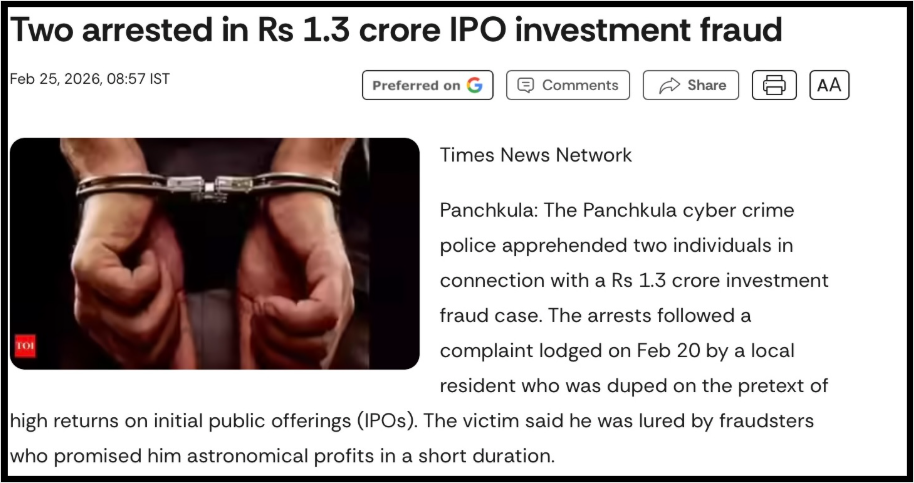
Instead of using a regulated broker, the victim was told to transfer funds directly to various bank accounts. He kept sending money, truly believing he was bidding for multiple high-value IPOs.
In reality, the money was not being invested at all.
It was being funnelled through a massive network of mule accounts – bank accounts that scammers buy and sell just to move stolen cash.
This constant rotation makes the money trail almost impossible to follow.
2. The WhatsApp DMA Account Trap
In Ahmedabad, a victim fell for a scam that used technical jargon to sound professional. It started with an online ad on Instagram that led to a WhatsApp group.
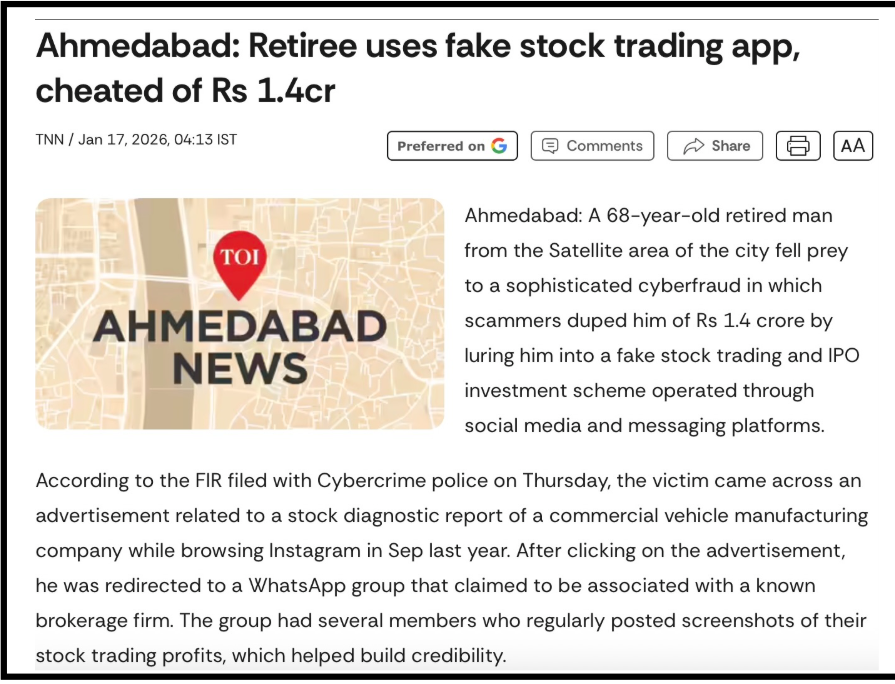
The group was named to look exactly like the customer support for a famous brokerage house. Inside, experts gave out daily trading tips and IPO guidance to build a sense of community.
The scammers then pushed him to open a Direct Market Access (DMA) account.
Because the term sounded advanced and technical, it felt legitimate. He was told to download an app through a link, not the official App Store.
The app showed steady profits. He transferred a total of ₹ 1.4 crore to the scammer’s account.
Then the scammers pushed him to invest in high-value IPOs and demanded ₹1.6 crore as service charges.
When the victim refused to pay more and demanded back his principal amount, the scammers stopped responding.
3. The ₹7 Crore Paper Profit Illusion
Another case from Ahmedabad perfectly illustrates how scammers use cloned apps to play with your head.
A victim was added to a WhatsApp group where investment tips were shared around the clock.
To make the lie even heavier, the scammers even shared fake certificates from a real, well-known broking firm.
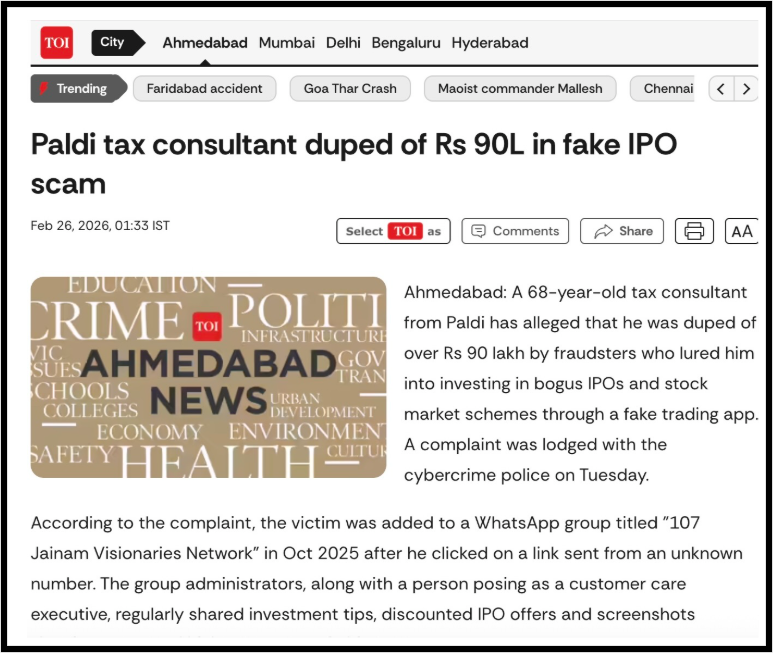
After watching the group for a while, the victim felt safe enough to download their app via a link. He transferred ₹ 90.27 lakh in multiple RTGS transactions.
Once he started investing, the app’s dashboard showed him exactly what he wanted to see: massive profits.
At one point, his screen showed returns of over ₹7 crore. To keep the illusion alive, the scammers even sent ₹ 1.2 lakh to his bank account.
The nightmare began when he tried to withdraw ₹ 1 crore and later ₹ 1.5 crore. He was told he had to pay a 10% service fee on those profits before he could touch the money.
That is when he contacted the actual broking firm and found out the devastating truth.
The app was a total fabrication, the IPO offers did not exist, and the ₹7 crore on his screen was just a number typed into a fake database.
How to Protect Yourself from IPO Scams?
Scams are becoming more advanced day by day. But here are some tips that will help you protect yourself from IPO scams.
-
Stick to Verified Platforms
Only use official apps from brokers you know and trust. Never go off-platform just because someone promises better returns or early access.
If it is not a major, regulated broker, stay away.
-
Be Careful with App Downloads
If someone tells you to install an APK file or click a link to download a special app, treat it as a danger sign.
Real investment firms will always point you to the official Google Play or Apple App Store.
-
Understand How Real Investments Work
In a legitimate IPO, your money stays in your bank account until the shares are actually allotted to you.
You never have to transfer money to a third party’s personal account.
If you remember this one rule, you can dodge 90% of these scams.
-
Pay Attention to Small Details
Do not ignore the little things.
If the stock prices look weird or the app feels clunky, trust your gut.
Inconsistencies in data or interface errors are often the first signs of a clone app.
-
Avoid Rushed Decisions
Scammers like to create a now-or-never situation. They want you to panic and act before you can think.
If an opportunity is being pushed too hard or is closing in minutes, it is almost certainly a scam.
What do I do if Online Fraud Happens?
If you have already been scammed and do not know what to do next, follow these steps:
- Collect Your Evidence: Gather every screenshot, chat log, and transaction receipt you have. These are the building blocks of your case.
- Report immediately to the Cybercrime Helpline: Contact the national cybercrime helpline. The faster you report, the better the chance the authorities have of freezing the scammer’s bank account.
- File a Cyber Crime Complaint Online: Head to the official cybercrime portal and submit your report. Be as detailed as possible and upload all the evidence you have gathered. A well-organised complaint is much more likely to get results.
- Inform Your Bank: Tell your bank exactly what happened. They need to know the transaction was fraudulent so they can try to track the funds or block the recipient’s account across the network.
- Report the Platform Involved: If you were targeted in a WhatsApp or Telegram group, report that group to the app’s security team. This helps prevent scammers from finding their next victim.
- File a SEBI Complaint: Lodge a complaint with the SEBI through its SCORES grievance portal. Check the SEBI Complaint IPO Refund process to take action.
Need Help?
If you have been targeted by an IPO scam, it is normal to feel overwhelmed. These traps look incredibly real, and it is hard to know what to do once the money is gone.
This is where we come in. You can check the details in our fraud response plan to get more assistance.
We help you look at the situation clearly, organise your evidence, and walk you through the reporting process so your voice is heard.
Conclusion
IPO scams are getting more sophisticated every day. From fake APK files and clone apps to fabricated profit screens, scammers are using multiple layers of deception to win your trust.
But once you know their playbook, you can beat them.
Real investing is never about shortcuts, high-pressure tactics, or guaranteed daily returns.
Taking a few extra minutes to verify an app or a bank account can be the only thing that stands between you and a major financial loss.
Stay sceptical, stay safe, and always verify before you invest.