In recent years, many apps like Fiewin have become popular in India by promising users quick money through small online games. But one question always comes up: is Fiewin legal?
Let’s understand what the law says about online gaming, how Fiewin works, and why it may not be operating legally.
Fiewin App
The Fiewin App burst onto the scene with a tempting promise: play a few simple games, predict a few colours, and watch the money roll in.
It marketed itself as a fun, effortless way to earn quick cash from your phone.
All you had to do was “top up” your in-app wallet, small deposits, big returns, and plenty of excitement. To make it even more enticing, Fiewin offered a referral system where users could boost their earnings just by inviting friends.
The more people you brought in, the more commissions you earned.
On the surface, it felt like a golden opportunity: easy games, fast money, and rewards at every turn. But as many users later discovered, things weren’t as simple as they seemed, leading many to wonder: is Fiewin Safe?
Is Fiewin Legal in India?
When it comes to online gaming in India, things aren’t as straightforward as they seem. There’s no single national law that covers everything; each state decides its own rules, which makes the whole topic a little tricky to navigate.
But when it comes to chance-based games, the story changes. Lotteries, betting, color prediction, or anything where outcomes depend mostly on luck are banned in many states.

If you’re playing a game where the result is basically a coin toss, it usually falls under illegal gambling.
Most of those “play and earn money” apps you see everywhere don’t have any licenses at all. So even if they look safe, flashy, or popular, they’re operating in a legal grey zone.
So while Fiewin may look fun and rewarding, the truth is it functions much more like an online gambling platform, which is illegal in most Indian states.
Is Fiewin Registered or Regulated in India?
There is no proof that Fiewin is registered as a legitimate company in India.
It doesn’t appear in official gaming or business registries, nor is it regulated by the Reserve Bank of India (RBI) or any state gaming authority.
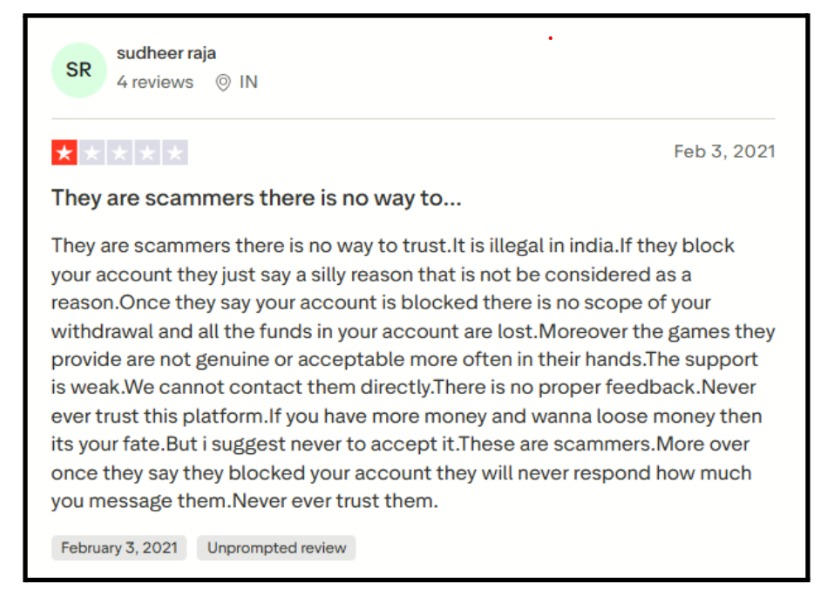
Without proper registration or licenses, Fiewin operates outside India’s legal financial system. These points suggest that Fiewin may not comply with Indian laws for gaming or financial operations.
Fiewin App Scam Cases
Using such apps can lead to several risks, including:
- Losing your money with no refund options.
- Data misuse, as your KYC and bank details are stored on unverified servers.
- Possible violation of the IT Act, 2000, which penalizes the use of illegal online platforms.

In some cases, users can also be questioned by authorities if found participating in unlawful gaming activity.
How to Check If a Gaming App Is Legal in India?
Before using any gaming app, check the following:
- The app must clearly mention its company registration number.
- It should have a registered Indian address and contact details.
- Legal gaming apps display a license from a recognized state authority.
- It should use secure payment gateways and transparent withdrawal terms.
If any of these are missing, the app is most likely unsafe or illegal.
How to Report if You Lost Money on Fiewin?
If you lost money or feel cheated by Fiewin:
- Take screenshots of all transactions.
- File a complaint in cyber crime.
- You can also file a complaint through your local cyber cell.
- Block your card or UPI if you shared sensitive info.
Avoid making further deposits or referrals – it only strengthens the scam.
Need Help?
If you want step-by-step support in filing your complaint, you can register with us.
We guide victims through documenting evidence and submitting official reports through proper legal channels.
Conclusion
To sum up, Fiewin is not a legal or regulated gaming platform in India.
It runs luck-based games, takes deposits without a license, and lacks transparency in ownership. Then you should consider asking: Is Fiewin real or fake before joining.
While it may look harmless and real at first, it violates several Indian gaming and financial laws.
If you enjoy online games, it’s safer to stick with licensed, skill-based platforms that are verified under Indian law.