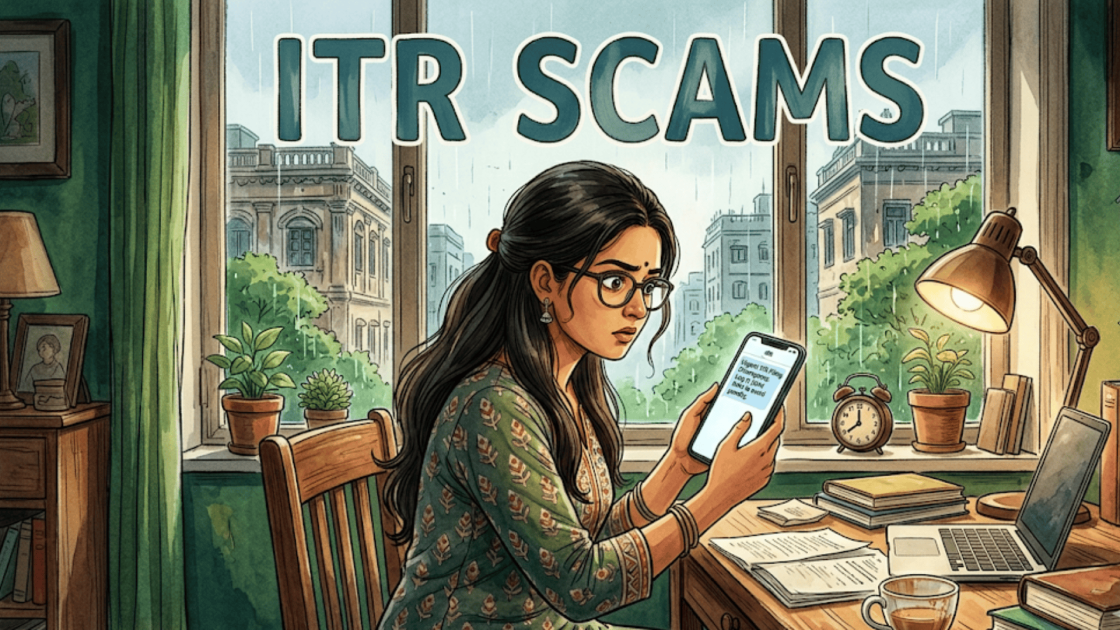
Every year, millions of Indians file their Income Tax Returns, making the ITR season a goldmine for scammers.
As the deadline approaches and anxiety peaks, fraudsters deploy increasingly sophisticated tactics to steal your money, personal data, and peace of mind.
An Income Tax Return (ITR) is an annual declaration of your income, deductions, and tax liability submitted to the Income Tax Department.
It’s a mandatory compliance for taxpayers and, when filed correctly, can result in refunds if you’ve paid excess tax during the year.
This is precisely where scammers strike.
They exploit the complexity of tax filing, the fear of penalties, and the anticipation of refunds to manipulate unsuspecting taxpayers.
From fake refund messages to impersonation of tax officials, ITR scams have evolved into a multi-crore industry that thrives on urgency and confusion.
What Are ITR Scams?
ITR (Income Tax Return) scams involve fraudsters impersonating officials from the Income Tax Department of India or related financial institutions.
Their goal is to create urgency or fear, often around refunds, penalties, or verification issues, so that victims act quickly without verifying authenticity.
These scams typically peak during tax filing seasons, when people are already expecting communication related to refunds or notices, making the deception more convincing.
How Does An ITR Scam Operate?
ITR-related scams are carefully designed to look legitimate and exploit urgency, fear, or excitement around refunds.
Scammers often combine technology with psychological pressure to make their communication appear authentic.

Understanding these common tactics is the first step to recognising and avoiding such frauds:
1. Fake Refund SMS and Emails
The most common trap.
You receive a message claiming you’re eligible for a tax refund, just click a link and enter your bank details to receive it.
The link leads to a convincing replica of the Income Tax Department’s website, designed to harvest your credentials.
2. Phishing Calls From ‘Tax Officials’
Scammers pose as Income Tax Department officers, claiming discrepancies in your return or threatening arrest for unpaid dues.
They demand immediate payment through UPI, gift cards, or wire transfers, methods no legitimate government agency would ever use.
3. Fraudulent Filing Services
Unlicensed agents offer to file your ITR at suspiciously low fees.
They either steal your PAN, Aadhaar, and bank details for identity theft or file incorrect returns to claim fraudulent refunds in their own accounts.
4. Malware-Laden ‘ITR Software.’
Free ITR filing tools circulated via WhatsApp or email often contain malware.
Once installed, these programs capture keystrokes, steal passwords, and compromise your banking apps.
5. Bogus Notices and Penalty Threats
You receive an official-looking notice claiming tax evasion, demanding immediate payment to avoid legal action.
These counterfeit documents replicate government letterheads with alarming accuracy.
6. Refund Interception Scams
Scammers contact you claiming your refund failed due to incorrect bank details.
They guide you through updating your information on a fake portal, redirecting your legitimate refund to their account.
Recent ITR Scams Happened In India
With tax filing becoming increasingly digital, scammers are now exploiting the ITR process to target unsuspecting individuals.
By mimicking official communication and creating urgency around refunds, they trick people into sharing sensitive financial information.
Here’s a real example of how such scams unfold:
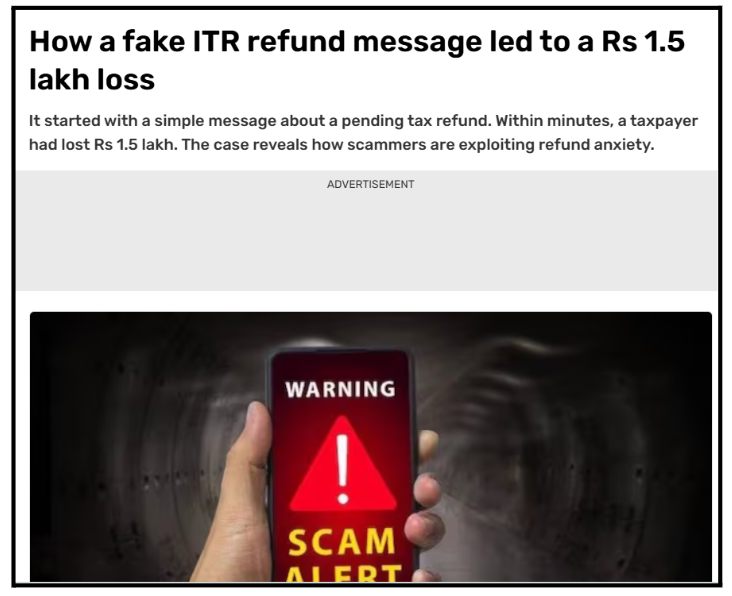
1. Fake ITR Refund Message
This case shows how scammers exploit something as routine as a tax refund to trick people.
The victim received a message claiming there was a pending ITR (Income Tax Return) refund.
The message looked genuine and created urgency, prompting the person to act quickly. It likely included a fake link or instructions to ‘claim’ the refund.
Once the victim clicked the link or shared details (such as bank info, OTP, or login credentials), the scammers gained access and withdrew ₹1.5 lakh within minutes.
These scams work because they tap into refund anxiety.
People expect money back and don’t want to miss it, so they act without verifying.
The Income Tax Department never asks for sensitive details or payments through random links or messages.
Always verify refund status only through the official income tax portal and never share OTPs or banking details.
2. ₹500 Crore Refund Scam
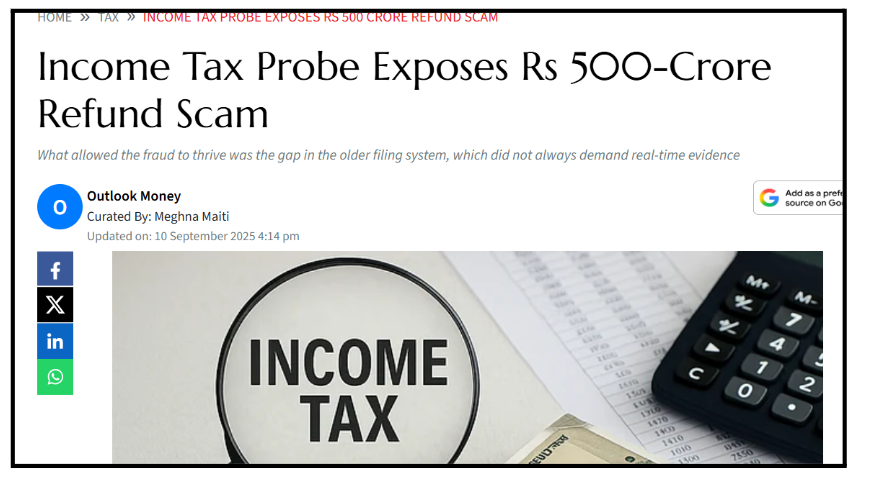
In this scam, individuals or networks filed fraudulent income tax returns to receive money from the government that they were not legally entitled to.
The fraud was possible mainly because of gaps in the older tax filing system.
At the time, the system did not always require real-time verification of key details such as income, tax deducted at source (TDS), or supporting financial documents.
This allowed scammers to submit false information, like inflated deductions or fake TDS claims, and get refunds processed before thorough checks could be completed.
Investigations revealed that the scam likely involved organized efforts, including the use of multiple or even stolen identities to file numerous fake returns.
By repeating this process at scale, the fraudsters were able to siphon off a very large amount of money over time.
In response, authorities have strengthened the tax system with more advanced digital checks.
Today, features like real-time data matching, pre-filled returns, and automated fraud detection make it much harder to carry out such scams.
How to Report ITR Scams?
Reporting an ITR scam promptly is crucial to minimize financial loss and help authorities take swift action.
The faster you act, the better the chances of blocking fraudulent transactions and tracing the scammers.
Follow these steps to ensure your complaint is properly recorded and pursued:
1. Act Fast
Time is critical. The moment you suspect fraud, whether you’ve clicked a suspicious link, shared credentials, or transferred money, take immediate action.
Contact your bank to freeze transactions, change passwords, and document everything while the details are fresh.
2. File Cybercrime Complaint
File a formal complaint at India’s national portal for reporting cybercrimes.
Select the appropriate category (financial fraud, identity theft, phishing) and provide all relevant details, including screenshots, transaction IDs, and phone numbers used by scammers.
3. Preserve All Evidence
Screenshot every message, email, and fake website. Save call recordings if possible.
Document the timeline of events. This evidence is crucial for investigation and potential recovery of funds.
4. Inform Local Police
File an FIR at your nearest police station with all documentation.
While cybercrime portals handle digital aspects, a local FIR creates an official record and enables coordinated investigation.
5. Stay Alert and Follow Up
Track your complaint status regularly.
Scammers often attempt follow-up fraud, posing as ‘recovery agents’ or ‘investigating officers’, demanding fees to retrieve your lost money.
The Income Tax Department and police never charge for these services.
Need Help?
Navigating the aftermath of a scam can be overwhelming.
Understanding your legal options, filing effective complaints, and protecting yourself from further damage requires expertise.
You can check the reporting process in our online fraud response plan to get more clarity.
Conclusion
ITR scams succeed because they weaponize trust in government institutions and exploit the stress of tax compliance.
But awareness is your strongest defense.
Remember: the Income Tax Department never requests sensitive information via SMS or calls, never threatens arrest for immediate payment, and processes refunds only to bank accounts registered in your official records.
Before clicking any link, verify it starts with incometax.gov.in.
Before responding to any call, hang up and contact the department directly through official channels.
Before trusting any filing service, confirm they’re registered with the Income Tax Department.