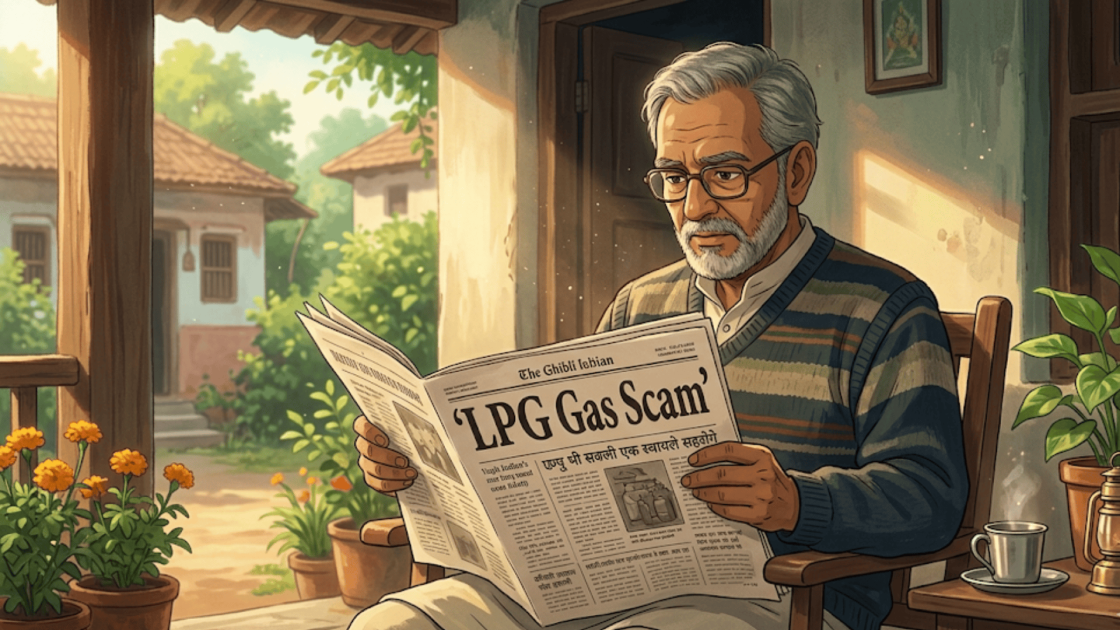
Right now, many families are already stressed about LPG.
Due to geopolitical tensions involving Iran, the US, and Israel, and concerns around the Strait of Hormuz, there has been fear around fuel movement and gas supply.
In many places, people have been worried about delayed cylinder delivery, rising prices, and long queues outside gas agencies.
Even where supply has not fully stopped, the panic itself has been enough to make people anxious.
News, rumours, and rushed messages have created a lot of confusion.
At the same time, the government has said domestic LPG supply is being prioritised and advised people to use only official booking channels.
And this is exactly the kind of moment scammers wait for to carry out an LPG gas scam.
They know that when people are worried about something as basic as cooking gas, they are more likely to react fast.
A message saying your gas connection will be cut, a WhatsApp link promising urgent booking, or a fake discount ad can make even careful people panic.
That is why the LPG gas scam is dangerous. It does not always look like a big cyber fraud in the beginning. It often starts like an ordinary household problem.
What Is the LPG Gas Scam?
The LPG gas scam is a fraud where criminals pretend to be from a gas agency or LPG company and trick people into sharing personal or banking details.
Sometimes they send SMS messages. Sometimes they call or use WhatsApp, fake ads, or fake websites.
Their goal is simple: Scare you, rush you, and then take your money.
They may say your gas connection needs updating and may claim your KYC is pending. They may offer quick delivery, priority booking, or a discount because of the ongoing situation.
But the real purpose is not to help you book a cylinder. The real purpose is to get access to your phone, your account, or your payment details.
How the LPG Gas Scam Works?
This scam often begins with a message that feels urgent. It may say your gas connection will be disconnected.
It may say your refill is blocked. It may offer a special booking link because of high demand. The words are chosen carefully so that you feel you need to act immediately.
After that, the scammer pushes you toward the next step.
They may send a link that opens a fake website, which looks like a real gas booking page. They ask you to enter your name, phone number, address, card details, or bank information.
In some cases, they send an APK file or an app link and tell you to install it for booking, KYC, or payment verification. That is where things get serious.
Those apps can help fraudsters see OTPs, access sensitive information, and even misuse banking apps on your phone.
Sometimes the amount they ask for is very small, maybe ₹10 or a tiny verification fee.
That makes the request look harmless. But the small payment is often just a trick to open the door to a much bigger fraud.
How Scammers Reach Your Bank Account?
Most people think the scam is about LPG booking. It is not. LPG is just an excuse.
The real target is your money. Once a person clicks a fake link and starts entering details, scammers can collect card numbers, bank details, and other personal information.
If they get access to OTPs as well, they can quickly make unauthorised transactions.
If they trick someone into installing a malicious app, they can gain even deeper access to the phone.
That can put banking apps, messages, and payment alerts at risk.
This is why such scams are so effective. They do not ask for money in an obvious way at first and build trust by sounding like customer support.
They make the victim believe this is just a normal update, a routine booking step, or a quick fix during a difficult time.
By the time the victim realises something is wrong, the money may already be gone.
LPG Gas Scam Real Cases
One reported case from Dombivli, Maharashtra, shows how ordinary this scam can look in the beginning.
A woman received an SMS saying her gas connection would be disconnected if she did not update her bill details.
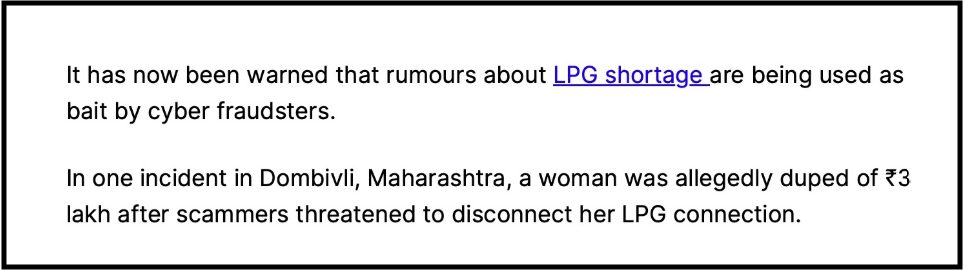
At a time when people were already worried about LPG supply and booking problems, the message felt believable.
She did what many people would do in that situation. She called the number in the message, hoping to sort it out quickly.
The person on the call did not sound like a criminal. They sounded helpful.
They sent her a link and told her to fill in the required details. She followed the instructions, thinking this was part of the update process.
But within minutes, nearly ₹3 lakh was withdrawn from her account.
Reports said about ₹2 lakh went from her credit card and ₹99,500 from her debit card.
It all happened so fast. What started as a simple attempt to keep her gas connection active turned into a major financial loss.
That is what makes this scam frightening.
It does not begin with something obviously suspicious. It begins with fear, urgency, and a problem that feels very real.
How Can You Avoid an LPG Gas Scam?
Here is how you can spot and avoid LPG gas scams:
1. Verify First, Do Not React in Panic
Scammers want you to act before you think. So the first rule is simple: Pause.
If you get a message saying your gas connection will be disconnected, or that you need an urgent booking, do not click immediately.
Check with your official distributor or the official company platform first. Even a few extra minutes of checking can save you from a huge loss.
2. Use Only Official Booking Channels
Book your cylinder only through official websites, official apps, IVRS, SMS booking, official WhatsApp booking, or your authorised distributor.
Public authorities have specifically warned people not to trust random links, ads, or forwarded messages for LPG booking.
3. Never Trust Links Sent on WhatsApp or SMS
A fake message can look very real. It may carry the name of HP Gas, Bharat Gas, or Indane. It may even sound professional. But that does not make it genuine.
If a booking or update link comes from an unknown message, do not open it. Fraudsters are using fake websites and fake booking pages to steal information.
4. Do Not Install Unknown Apps or APK Files
This is a big red flag. No genuine gas company needs you to install a random APK file sent through WhatsApp or SMS to keep your connection active.
Such files can give fraudsters access to your phone, your OTPs, and your financial information.
5. Never Share OTP, Card Details, or UPI PIN
No gas agency, no delivery person, and no customer care executive should ask for your OTP, UPI PIN, CVV, or internet banking password.
The moment someone asks for these details in the name of LPG booking, stop the conversation.
6. Be Extra Careful With Small Payment Requests
Many people drop their guard when the scammer asks for a tiny amount like ₹10. It feels too small to be dangerous. But that small step is often just a trap.
Once you proceed, the scam can move toward bigger unauthorised payments or stolen banking access.
How to Report an LPG Gas Scam?
If you have been targeted or affected, it is important to act quickly and report the incident through the proper channels.
1. Gather Proof
Before you delete anything, collect all the proof you can.
Save screenshots of the message, WhatsApp chat, ad, payment page, link, phone number, bank debit alert, and any file or app you were asked to download.
These details matter when you file a complaint.
2. Call Cybercrime Helpline Immediately
If money has been deducted or you think your account has been compromised, call the national cybercrime helpline right away.
Fast reporting matters because it may improve the chances of stopping or tracing the transaction.
3. File a Cyber Crime Complaint Online
File a complaint on the official cybercrime reporting portal and add the full story clearly.
Mention when the message came, what number called you, what link you clicked, what details you shared, and how much money was lost.
4. Inform Your Bank
Call your bank or card provider immediately. Ask them to block the card, secure your account, and check for suspicious transactions.
If you have shared UPI or banking details, do not wait.
5. Tell Your LPG Company or Distributor
Inform your real gas agency or LPG provider that fake messages or fake booking links are circulating. This can help them warn other customers, too.
6. File a Local Police Report
If the fraud is serious or the loss is high, file a complaint with your local police station or cyber police station as well. Keep copies of everything you submit.
Need Help?
If you have been targeted in an LPG gas scam, we can help you handle the next steps properly.
We help you organise the full incident, arrange the proof clearly, and turn scattered screenshots, call details, and payment records into a complaint that is easier to understand and file.
If you are unsure about what to do now, you can check out the process in our online fraud response plan to get more assistance.
Conclusion
The LPG gas scam works because it targets people at a vulnerable moment.
It uses fear around cooking gas, booking pressure, and household urgency to make people trust the wrong message.
That is why awareness matters so much. A fake LPG alert may look small, but it can lead to a very real financial loss.
Stay calm, verify everything, use only official channels, and report fast if something goes wrong.
Stay vigilant against the risks of cyber crime.