
Crypto trading platforms appear and grow fast in India, often promising advanced tools, low fees, and high-return opportunities.
Shark Exchange is one such name that has recently started circulating among Indian traders, especially those interested in crypto futures and options trading.
At first glance, the platform looks modern and professional. It offers INR deposits, derivative products, and referral incentives.
But when real money and high-risk instruments are involved, appearances are not enough.
What Is Shark Exchange?
Shark Exchange is an online cryptocurrency trading platform where users can trade digital assets, mainly through futures and derivatives markets.
It allows users to deposit funds, take trading positions on crypto price movements, and withdraw profits or remaining balances through linked bank accounts.
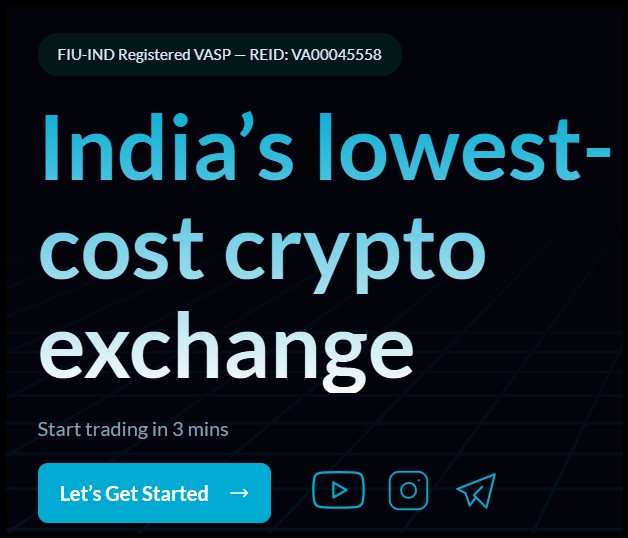
The platform is operated by Lightningnodes Technologies Private Limited, an India-registered company.
It focuses on leveraged crypto trading, meaning users can trade with borrowed exposure to increase potential gains or losses.
The exchange mainly targets active traders looking for high-risk, high-reward trading opportunities.
Crypto trading on the platform works through a standard exchange model. Users complete KYC, deposit funds, open trades using market tools, and manage positions based on price movements.

The platform earns revenue through trading fees and related charges.
Shark Exchange Login
To trade on Shark Exchange, users follow a structured onboarding and authentication process designed for security and regulatory compliance.
The platform’s workflow is broken down into four primary phases:
1. Account Creation
Users initiate the process by registering a unique profile.
This involves providing a primary email address or phone number and establishing secure credentials to serve as the foundation for their digital identity on the exchange.
2. Identity Verification (KYC)
To unlock full platform functionality and ensure a secure trading environment, users must complete a Know Your Customer (KYC) protocol.
This step typically requires submitting government-issued identification and passing automated liveness checks to prevent fraud and meet global financial standards.
3. Secure Authentication
Access to the trading dashboard is granted through a standard login system.
Users enter their registered credentials, often supplemented by Multi-Factor Authentication (MFA), such as an SMS code or an authenticator app, to provide an extra layer of protection against unauthorised access.
4. Asset Management & Derivative Trading
Once authenticated, users can deposit capital into their secure wallets.
With a funded account, they gain access to the exchange’s suite of financial instruments, allowing them to execute derivative trades and manage complex market positions in real-time.
Shark Exchange Modus Operandi
Shark Exchange claims to provide fast INR deposits and withdrawals, low trading fees, and professional-level trading tools.
It also highlights FIU-IND registration for AML compliance and promotes itself as a secure and transparent trading environment.
The platform specifically advertises a 0.016% maker fee and a 0.040% taker fee, positioning itself as a low-cost trading alternative compared to many global derivatives exchanges.
It also promotes leverage of up to 150×, emphasising the ability to take larger market positions with smaller capital.

Leveraged trading is presented as an opportunity to maximise exposure and potential returns.
At the same time, the platform states that crypto trading involves significant risk, market volatility, and that profits are not guaranteed.
Is Shark Exchange Legal in India?
This is where many users get confused.
Some crypto platforms, including Shark Exchange, mention FIU-IND registration. That registration relates to anti-money laundering compliance.
It means the platform reports certain financial activities, but that does not mean approval by SEBI or RBI. It does not guarantee user protection or profit safety.
India does not currently have a clear, comprehensive regulatory framework that fully protects retail users trading crypto derivatives.
Crypto exchanges operate in a compliance space, but not under a full investor protection structure like stock brokers.
So even if a platform claims regulatory compliance, users remain largely unprotected if trades go wrong, withdrawals are delayed, accounts are frozen, or disputes arise.
Legal reporting status is not the same as investor protection.
Shark Exchange User Complaints
User reviews shared publicly show concerns mainly related to trading experience, order execution, and withdrawals.
These are individual user opinions and not verified findings, but they help explain the type of issues some traders say they faced while using the platform.
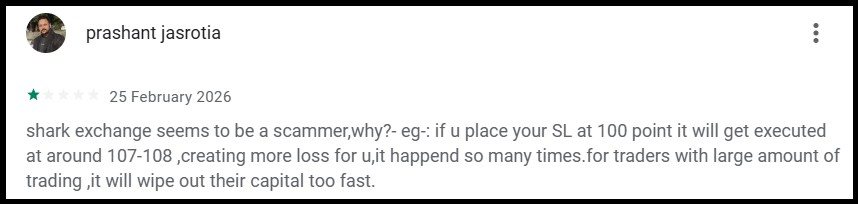
1. Stop-Loss Orders Executing at Unexpected Prices
One user claims that stop-loss orders were triggered far away from the set price, causing larger losses than expected.
According to the review, this happened multiple times and resulted in capital being reduced quickly during trades.
The concern here is about order execution accuracy and trading risk control.
2. Trading Features Not Matching Expectations
When users report that a platform lacks the advanced features it advertised, like specific options trading tools, it is often more than just a technical glitch.
In many cases, this “bait-and-switch” is a primary indicator of how crypto scams work.
Legitimate platforms invest millions into their trading engines to provide seamless execution.
Scammers, however, prioritise the “glossy” exterior to lure you in, while the backend is often a hollow shell designed only to receive deposits.

The user felt the trading experience was limited compared to expectations and described disappointment after using the app.
3. Withdrawal and Interface Complaints
A different user reported difficulty withdrawing money and described the overall experience as poor.
The review also mentioned problems trading directly from charts and compared the platform unfavourably with other exchanges, suggesting usability and withdrawal concerns.
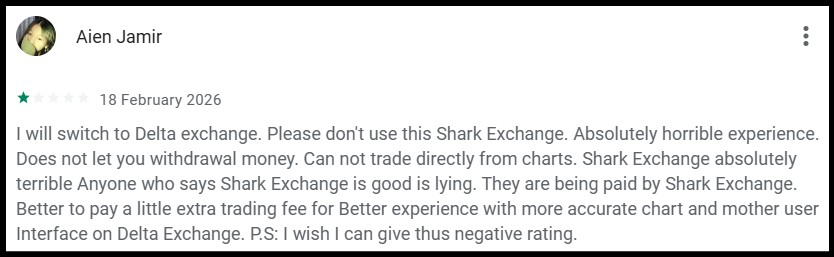
These reviews highlight that most complaints focus on trading mechanics and fund access rather than account setup or installation.
How to Report Shark Exchange?
If you face issues such as frozen funds, blocked withdrawals, or account access problems, it is important to act quickly and follow a structured reporting process.
Early documentation and escalation improve the chances of review or investigation.
1. Preserve Evidence Immediately
Start by saving all important records. Keep screenshots of balances, trade history, withdrawal requests, emails, and chat conversations with support.
Also, save transaction IDs and timestamps related to deposits or withdrawals.
2. Contact Platform Support
Raise the issue through the platform’s official support email or help system. Clearly explain the problem and request a written response.
Written communication creates a record showing you attempted resolution directly with the platform.
3. Inform Your Bank or Payment Provider
If INR transfers were used, contact your bank or UPI provider immediately. Share transaction details and request a trace or review of the payment.
Early reporting may help banks flag suspicious transactions.
4. Report Cybercrime
If funds remain stuck or you suspect financial misconduct, file a complaint through India’s National Cyber Crime Reporting Portal.
Upload all collected evidence and mention platform details, transaction information, and communication records.
Reporting early increases the chance of investigation and helps establish a clear timeline of events.
Need Help?
If you have been a victim of such scams, join our crypto fraud response plan now.
We help you organise and preserve the right evidence, such as transaction records, screenshots, chats, and app details, so nothing important is missed.
We then guide you through filing proper complaints with the relevant cybercrime and financial authorities, ensuring your report is accurate and complete.
Early clarity prevents deeper losses.
Conclusion
Shark Exchange is a crypto derivatives trading platform, not a simple crypto app. That distinction alone puts it in a high-risk category for retail Indian users.
There is no verified evidence today that Shark Exchange is a scam. But there is also no safety net if things go wrong.
Indian news shows, again and again, that unregulated or lightly regulated crypto platforms, especially those offering leverage, can lead to massive financial damage.
In crypto derivatives, the biggest danger is not always fraud. It is a complex risk sold as an opportunity.
Proceed carefully, question everything, and never trade money you cannot afford to lose.