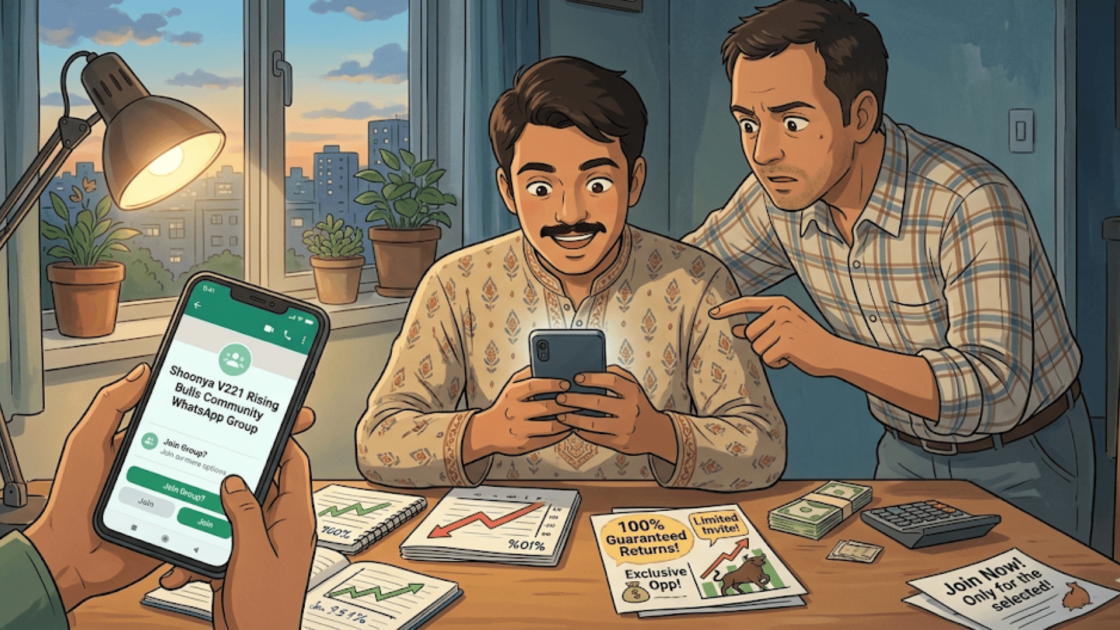
A simple WhatsApp message offering stock market guidance turned into a ₹75 lakh loss for a retired professional.
The scammers did not rush the process.
They introduced themselves as representatives of a known brokerage, added him to a WhatsApp group, and kept sharing trading tips and profit updates to build confidence.
Everything looked structured and convincing. The group stayed active, the app showed steady profits, and even a small withdrawal worked in the beginning.
By the time he tried to withdraw a larger amount, the situation had already changed.
In this blog, you will see how the Shoonya V221 Rising Bulls Community WhatsApp group operated and how you can identify similar scams before they cause serious damage.
What is Shoonya V221 Rising Bulls Community WhatsApp Group?
Shoonya by Finvasia is a legitimate stock trading platform that offers zero-commission trading through its official app and website.
However, scammers have started misusing this brand name to run fake investment schemes.
The “Shoonya V221 Rising Bulls Community” WhatsApp group is not an official group run by Shoonya.
Instead, scammers create such groups to make their setup look credible and to attract people who already trust the brand.
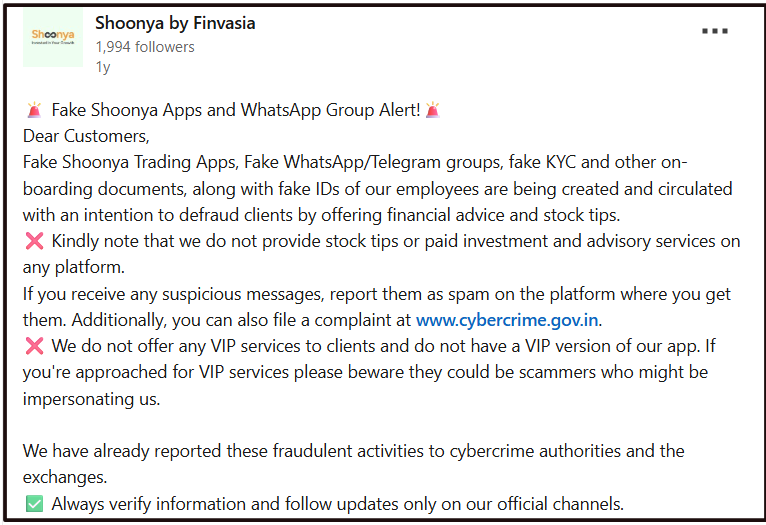
In fact, Shoonya has already warned users about fake apps, fake representatives, and WhatsApp groups that misuse its name.
The company does not provide stock tips, does not run investment groups on WhatsApp, and does not offer guaranteed returns.
Even then, scammers continue to use the Shoonya name because it helps them build trust quickly.
Once they add someone to these groups, they start sharing trading ideas, posting profit screenshots, and creating an environment that feels active and reliable.
As a result, everything begins to look structured and professional.
But in reality, these groups operate as part of a controlled system where scammers decide what you see and how you react.
Because of this setup, many people fail to notice the red flags in the beginning. By the time they start questioning things, the scam has already progressed much further.
Real Case: ₹75 Lakh Shoonya Trading Scam
A retired assistant general manager became the target of this scam after a woman contacted him on WhatsApp and introduced herself as a representative of Shoonya.
She spoke confidently, shared trading knowledge, and slowly built credibility.
This was not a random incident. A major news report covered this exact case, which shows how structured this scam actually was.

This headline confirms that the victim lost around ₹75 lakh through a fake trading setup linked to a WhatsApp group.
It also highlights how scammers used stock market concepts like IPOs and trading to make the entire process look legitimate
1. How the Scammer Contacted the Victim
The scammer directly called him on WhatsApp and asked if he was interested in stock market trading.
She claimed that she worked with Shoonya and even shared an ID card to support her identity.
Because she used a known brand name and communicated professionally, he did not question her intentions at that stage.
2. Scammer Added the Victim to a WhatsApp Group
After building initial trust, she added him to a group named “Shoonya V221 Rising Bulls Community.”
This group became the central place where all further interaction happened.
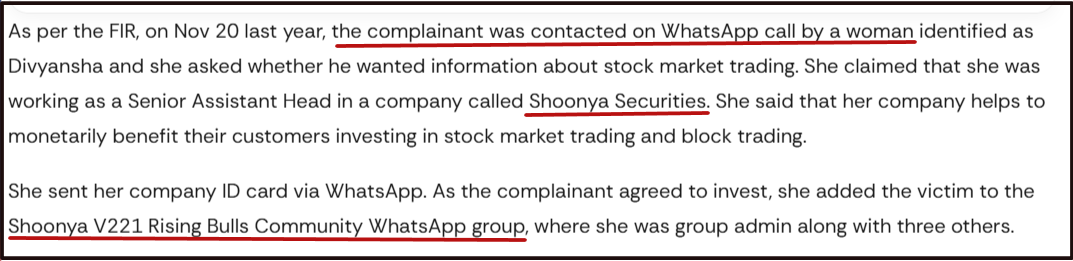
This part of the report clearly mentions the group name and confirms that the scammers used a WhatsApp community to run their operation.
This is important because it shows that the group was not random; it was a planned setup to manage multiple victims at once.
3. Scammers Built Trust Through Constant Activity
Inside the group, admins actively shared stock tips, IPO opportunities, and trading instructions.
At the same time, several members posted messages about their profits.
Because the group remained active and consistent, the victim started trusting the environment.
He saw regular updates and assumed that real trading was happening.
4. Scammers Introduced a Trading App and Investment Process
Once they gained his confidence, the scammers asked him to download a trading app through a link.
They then shared bank account details and guided him on how to transfer money for trading.
He followed their instructions and started investing through the app, believing that he was participating in genuine market activity.
5. A Small Withdrawal Increased His Confidence
At one point, he withdrew a small amount, and the money reached his bank account.
This step played a key role in the scam.
Because the withdrawal worked, he trusted the system completely and continued investing larger amounts without hesitation.
6. The App Displayed Fake Profit
As he invested more money, the app started showing high returns. Over time, it displayed profits of around ₹5.8 crore.
Because of these numbers, he believed that his investments were performing extremely well and that he had built significant wealth.
7. Scammers Blocked Withdrawal with Charges and Taxes
When he tried to withdraw a larger amount, the scammers changed their approach.
They asked him to pay IPO subscription charges first and assured him that the withdrawal would happen after that.
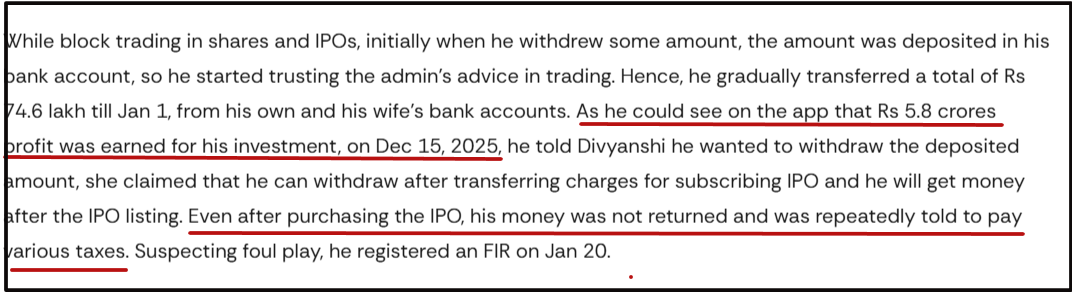
This part of the report explains how the scammers demanded additional payments and still did not release any funds.
It clearly shows the turning point where the victim realized that something was wrong.
8. The Final Loss: ₹75 Lakh
Over time, he transferred around ₹74.6 lakh from his and his wife’s accounts.
Eventually, he understood that the entire setup was fake and filed a complaint with the cybercrime authorities.
This case shows how scammers take control step by step. They do not rush. Instead, they build trust first and then use that trust to push bigger financial decisions.
What is Block Trading?
In this case, scammers used the term “block trading” to make the investment look more advanced and exclusive.
Before understanding how they used it, it’s important to understand what block trading actually means.
In simple terms, block trading refers to large-volume buying or selling of shares.
Institutional investors and high-net-worth individuals usually carry out these trades because they deal with significant amounts of money.
These transactions take place through regulated stock exchanges, and they follow strict rules to ensure transparency.
However, scammers take advantage of this concept because it sounds technical and exclusive.
When they mention “block trading,” they create the impression that you are getting access to something that regular investors cannot access easily.
As a result, people start believing that they are part of a special opportunity.
How Impersonation Scam Works in the Name of Block Trading?
Scammers do not just rely on fake identities.
They combine impersonation with financial terms like block trading to make their story more convincing.
1. Scammers Create a False Identity
First, the scammer contacts you and claims to work with a known brokerage like Shoonya.
They speak professionally and may even share fake documents to support their claim.
Because they use a familiar brand name, you lower your guard.
2. Scammers Introduce “Exclusive” Trading Opportunities
Next, they talk about block trading and claim that you can participate in high-value trades.
They position it as a limited opportunity and suggest that only selected people get access.
This creates urgency and makes the offer feel valuable.
3. Scammers Use WhatsApp Groups to Reinforce Trust
They then add you to a WhatsApp group where other members appear to share profits and positive experiences.
Because you see others participating, you start believing that the opportunity is genuine.
4. Scammers Show Fake Profits Through a Controlled App
After that, they ask you to use a trading app and start investing.
The app shows increasing profits, which makes you feel confident about your decisions.
In reality, the scammers control all the data shown in the app.
5. Scammers Block Withdrawals with Additional Charges
Finally, when you try to withdraw your money, they ask you to pay charges such as taxes or fees.
They continue asking for payments without releasing your funds.
At this stage, the scam becomes clear, but by then, significant money is already lost.
How to Identify an Impersonation Scam?
For impersonation scam, fraudsters follow a pattern. Once you understand that pattern, you can spot the scam early and avoid losses.
- Scammers contact you without any request: They call or message you on WhatsApp and offer trading or investment opportunities. Legitimate brokers do not reach out randomly to offer such services.
- Scammers use a known brand name: They claim to represent platforms like Shoonya and may send fake ID cards or documents. You should always verify through the official website instead of trusting what they show.
- Scammers add you to a trading WhatsApp group: They include you in a group where members share profits and discuss trades. In most cases, scammers control these accounts and create a false sense of success.
- Scammers ask you to use an unofficial app: They send a link and tell you to download a trading app outside the Play Store. Legitimate platforms do not distribute apps through such links.
- The app shows unusually high profits: The app displays consistent gains and rapid growth in your balance. Scammers manipulate these numbers to make the setup look real.
- Scammers ask you to pay to withdraw money: They demand charges like taxes or processing fees before allowing withdrawals. Genuine brokers never ask you to pay to access your own funds.
How To File a Report Against Trading Scams?
If you come across a scam like this, you should act quickly. Early action increases the chances of limiting your loss.
- Report Online Fraud: File a complaint with the cybercrime department and share complete details of what happened. Include transaction records, chat history, and screenshots.
- Inform your bank immediately: Contact your bank as soon as you notice the fraud. Explain the situation clearly and request them to block further transactions and take necessary action.
- Preserve all evidence carefully: Save: Chat conversations, Payment receipts, App screenshots and Contact numbers. This information helps authorities investigate your case effectively.
- Stop all communication with the scammers: Do not reply to their messages or calls once you identify the fraud. Do not send any more money, even if they promise to release your funds.
- Act quickly and stay consistent: Follow up on your complaint and keep records of every step you take. Timely action plays a key role in handling such cases.
Need Help?
If you have faced a similar situation, and confuse about the process of trading scams recovery, then its must be overwhleming.
Many people feel confused after a scam because they don’t know what step to take first or how to move forward. That delay often makes things more difficult.
The right approach starts with proper reporting, correct documentation, and timely follow-ups.
When you follow the process correctly, you improve your chances of taking action in the right direction.
At the same time, having guidance can make this process much easier.
From understanding what to report to organizing your case properly, the right support helps you avoid mistakes.
If you need guidance on how to proceed,, you can check the detailed complaint process in our online fraud response plan.
Conclusion
This case shows how scammers do not rely on a single trick.
They build trust step by step, use familiar brand names, and create an environment that feels real before asking for larger investments.
They use concepts like block trading and IPOs to make the opportunity sound legitimate, even though no real trading happens in the background.
Once you understand this pattern, it becomes easier to recognize similar scams early.
You don’t need advanced knowledge of the stock market.
You just need to question how the opportunity is being presented and whether it follows a legitimate process.
Staying alert and verifying information before investing can protect you from such losses.