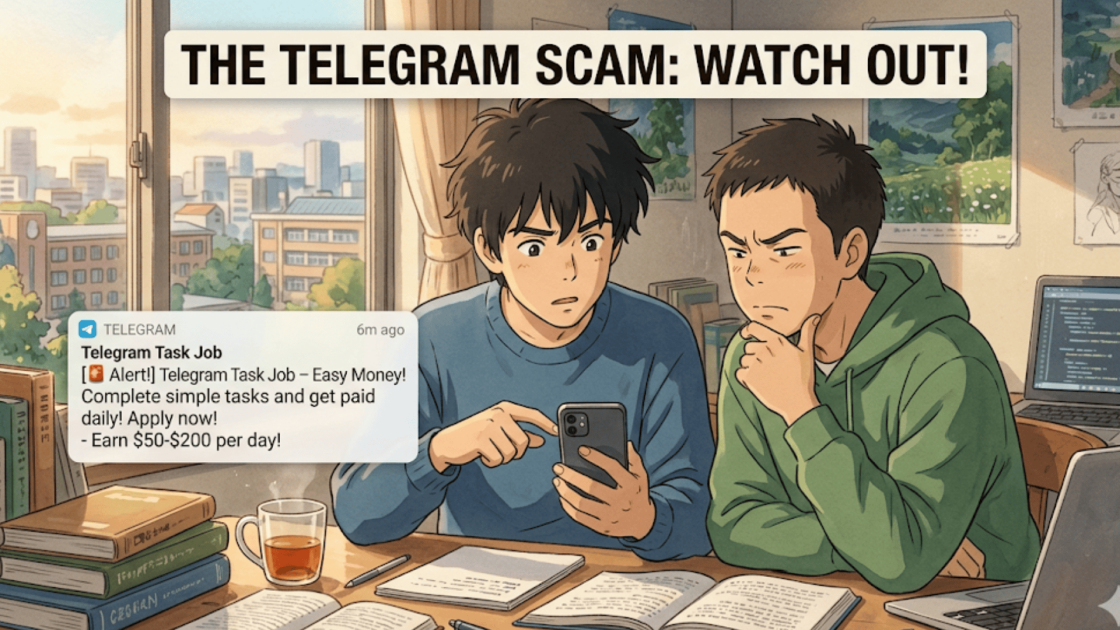
You receive a message about earning money online.
It promises simple work, flexible timing, and quick payments. At first, nothing feels unusual.
The offer looks clear, the steps seem easy, and the conversation feels genuine. Because of this, many people decide to try it.
However, this is where the problem begins.
Telegram task job scams don’t look like scams in the beginning.
Instead, they look like real opportunities. Scammers guide you step by step, show small results, and make the process feel safe. As a result, people continue without questioning it.
By the time the situation changes, the money is already gone.
In this blog, you will understand how Telegram task job scams actually work, how to identify the warning signs, and what steps you should take if you face a similar situation.
What is a Telegram Task Job?
A Telegram task job usually claims that you can earn money by completing simple online activities.
These tasks may include liking videos, writing reviews, clicking links, or following pages.
The offer often sounds flexible and easy, which makes it attractive, especially for students and people looking for extra income.
Most of these opportunities reach people through messages or social media.
After the first interaction, the conversation quickly shifts to Telegram. There, the process looks more organised, with groups, instructions, and regular updates.
Because of this setup, many people assume it is a genuine job. Now, here’s the important part.
Some online jobs do exist where you complete small tasks and get paid.
However, those jobs operate through verified platforms and do not ask you to pay money to start or continue.
Telegram task jobs follow a different pattern.
Instead of paying you consistently, they slowly push you into making payments.
What looks like a job in the beginning starts behaving like an investment or a system where you have to put in money to earn more.
That shift is where the risk begins.
How Telegram Scams Work?
These scams follow a structured process. At each stage, everything looks normal, which is why many people don’t recognise the problem early.
A common pattern seen in telegram fraud cases involves scammers assigning simple tasks and gradually asking for higher deposits under the promise of increased returns.
Step 1: Initial Contact
It usually starts with a message.
Someone reaches out with an earning opportunity and explains that you can make money by completing simple tasks.
The offer sounds easy and flexible, so you decide to try it.
Soon after, they move the conversation to Telegram.
Step 2: Small Tasks and First Payment
At the beginning, they give you simple tasks.
You complete them and receive a small payment. Because of this, the process feels real. You see actual money coming in, so you start trusting the system.
Step 3: Trust Building
Once you feel comfortable, they make the setup look more structured.
They may add you to a group where others appear to be earning.
They share screenshots, updates, and messages that create a sense of activity. As a result, you feel that everything is working properly.
Step 4: Prepaid or “VIP” Task
After building trust, they introduce higher-paying tasks.
However, this time they ask you to pay first. They may call it a prepaid task, a VIP level, or a requirement to unlock better earnings.
At this stage, the process starts to shift.
Step 5: Repeated Payments with New Reasons
Once you make the first payment, they don’t stop.
Instead, they create new reasons, such as a system error, an incomplete task, or an additional requirement. Each time, they ask you to pay again to fix the issue or continue the process.
Because you expect returns, you keep going.
Step 6: Withdrawal Problem
Finally, when you try to withdraw your money, the problem becomes clear.
The system does not allow withdrawal. Instead, they ask for more payments or delay the process. At this point, you realise that something is wrong.
By then, the money is already gone. This is not a job.
It is a system designed to make you pay step by step. The tasks only exist to build trust. The real goal is to keep you engaged until you send larger amounts.
How to Identify Real vs Fake Telegram Task Jobs?
At first glance, both real and fake opportunities can look similar. However, if you look closely, the difference becomes clear.
A genuine job follows a simple rule; it pays you for your work.
You don’t need to pay anything to start. The company or platform provides clear details, and you can verify them outside Telegram.
In most cases, communication does not depend only on Telegram, and the process does not feel rushed.
Because of this, you remain in control of your decisions.
-
What a Telegram Task Scam Looks Like
A scam follows a different pattern.
Instead of paying you consistently, it asks you to pay first. The moment money becomes a requirement, the situation changes.
They may promise fixed returns or guaranteed income. They may show screenshots or group activity to make the process look real.
However, they avoid proper verification and keep everything inside Telegram.
As a result, you rely only on what they show you.
-
Key Signs You Should Not Ignore
If you notice these signs, you should stop and question the situation:
- Someone contacts you first with an earning opportunity
- They ask you to pay money to continue or unlock tasks
- They promise fixed or guaranteed returns
- You see progress or profit, but you cannot withdraw it
- They create urgency and push you to act quickly
- They avoid sharing clear identity or company details
A real job gives you work and pays you for it. A scam creates a system where you have to keep paying to move forward.
If you remember this difference, you can identify most Telegram task scams early.
Real Telegram Task Job Scam Cases
These scams may look different on the surface, but real cases show a very similar pattern.
People don’t lose money in one step. Instead, the process builds slowly; first trust, then payments, and finally a complete loss.
Here are some real cases that show how this actually happens.
Case 1: How a Telegram Task Scam Led to a ₹63 Lakh Loss
A man from Visakhapatnam joined a Telegram group that offered online tasks with good earnings.
At first, everything looked genuine. He completed a few tasks and even received small payments. Because of this, he started trusting the system.
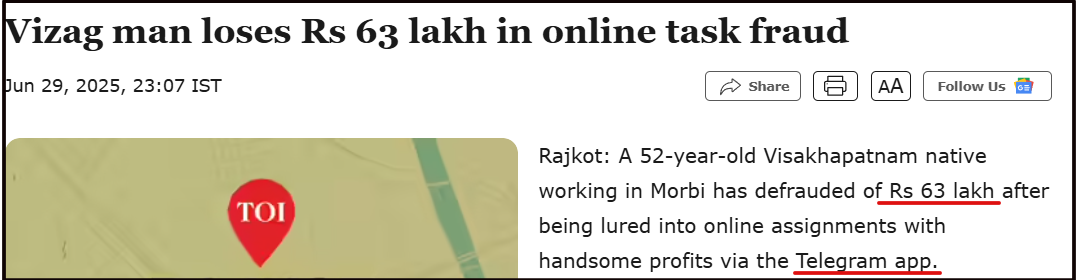
The headline shows a loss of ₹63 lakh. However, this did not happen in one step.
After the initial phase, the group asked him to invest money to unlock higher-paying tasks. The platform showed his balance increasing, which made the process look real.
But when he tried to withdraw, the situation changed. They asked him to pay additional charges. Then they introduced new conditions. As a result, the withdrawals never happened.
By the time he realised the issue, he had already lost ₹63 lakh. The first payment builds trust. The real loss starts after you begin investing.
Case 2: How a Task Job Scam Turned Into a ₹23 Lakh Loss
A chartered accountant from Ahmedabad received a message offering daily earnings through online tasks.
The offer sounded simple, so he decided to try it. Soon, the conversation moved to Telegram, where the process looked more structured.
He paid a small amount to begin and received returns initially. Because of this, he continued.
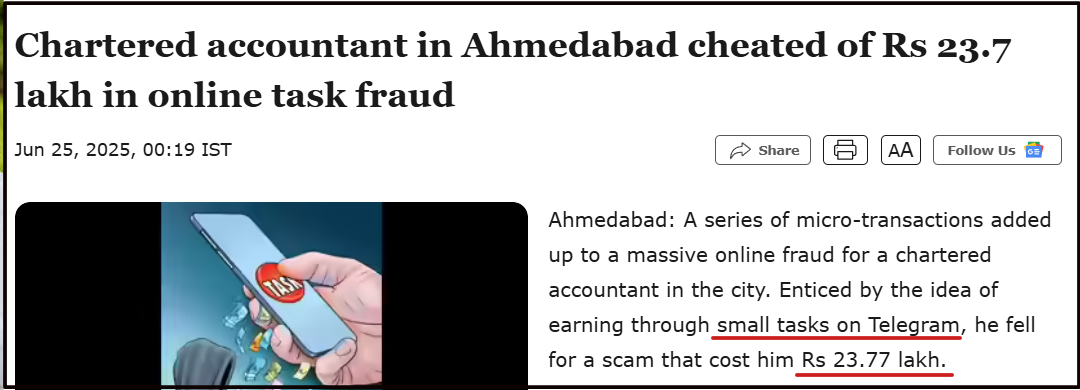
The headline mentions a loss of over ₹23 lakh.
After gaining his trust, the scammers asked him to invest more money to earn higher returns. Each time he paid, they introduced new tasks and requirements.
The payments continued over several days.
Eventually, when he tried to withdraw, the system failed. At that point, he realised the fraud, but the money was already gone.
Scammers don’t rush. They stretch the process so you keep paying over time.
Case 3: How a Telegram Task Scam Caused an ₹8.5 Lakh Loss
A man from Ghaziabad received a message promising quick earnings through simple tasks.
At first, he completed a few tasks and received small payments. This made the opportunity look genuine.
Soon after, the scammers asked him to invest money for better returns.

The headline shows a loss of ₹8.5 lakh.
In this case, the scam moved quickly. Within a few days, he invested a significant amount. However, when he tried to withdraw, the system did not allow it.
Instead, they asked for more payments. By the time he understood the situation, the money was already lost.
These scams don’t always take time. In many cases, they work within days.
All three cases follow the same pattern. They start with small tasks and initial payments. Then they build trust. After that, they ask for larger amounts. Finally, they block withdrawals.
The details may change, but the structure remains the same. If you understand this pattern, you can recognise the scam before it reaches the final stage.
How to Report a Telegram Scammer in India?
If you realise that you have been scammed, act quickly and follow these steps:
- Stop all payments immediately: Do not send any more money, even if they give new reasons or promises.
- Save all related details: Take screenshots of chats, transaction receipts, usernames, and any links or platforms involved.
- File cybercrime complaint online: Share complete information along with your evidence so the authorities can understand the case clearly.
- Inform your bank without delay: Explain the situation and request that they review or block the transactions if possible.
If you don’t know how to recover money from a Telegram scam, you can follow these steps to get the help of the authorities.
Even if the situation feels confusing, taking the right action at the right time can help you limit the damage and move forward with clarity.
Need Help?
If you have faced a Telegram task job scam or feel stuck in a similar situation, you don’t have to figure everything out on your own.
Many people feel confused after a scam; what to do next, where to report, and how to take the right steps.
You can review the process in our online fraud response plan. It will help you understand how you can move forward with the right approach.
At the same time, don’t delay. The sooner you take action, the better your chances of handling the situation effectively.
Conclusion
Telegram task job scams don’t stand out as scams at first.
They look organised, they feel simple, and they show just enough proof to build trust. Because of this, many people move forward without thinking twice.
However, once you understand how these scams work, the pattern becomes easier to recognise. The moment you see a situation where you have to pay to continue, that’s your signal to stop and question it.
In the end, it’s not about avoiding Telegram. It’s about understanding how these setups work and staying aware at the right time.
That awareness can save you from a serious loss.