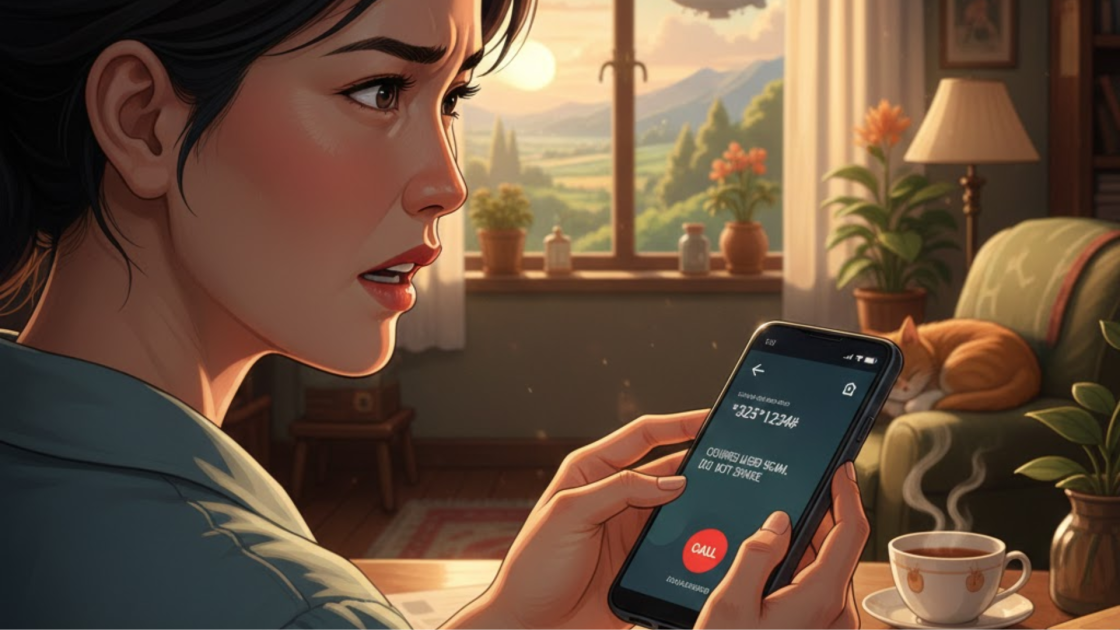
Courier calls feel normal now, right? You pick up, hear “delivery agent,” and your brain switches to autopilot. The caller sounds polite, professional, and in a hurry.
Then comes the line that ruins people: “Sir/Ma’am, dial this quick code to confirm.” You trust them because they don’t ask for any link, OTP or app so it feels safe.
But that one USSD code can quietly turn on call forwarding and redirect your incoming calls, including bank verification calls. By the time you notice something is “off,” the scammer may already be inside your accounts.
It is definitely a scary situation to be in. In this blog, let us discuss how these scams happen and how you can protect yourself from this.
What is USSD Call Forwarding Scam?
Let’s break it down in simple terms.
USSD stands for Unstructured Supplementary Service Data. Think of it as a secret code language between your phone and your telecom provider.
These are short codes with asterisks (*) and hash symbols (#). You already use them while checking your prepaid balance and activating services. They work anywhere, anytime without needing the internet.
Scammers have weaponized this feature. They send you codes starting with “*21*” followed by a mobile number. When you dial that code, your phone silently activates call forwarding. All your incoming calls now go to the scammer’s number instead of yours. And you won’t see any notification, popup or any warning.
The dangerous part? This happens completely offline. No malware, no app download and no hacking in the traditional sense. Just a simple code that exploits a legitimate telecom feature.
Government Advisory Regarding USSD Call Forwarding Scam
In December 2025, the Ministry of Home Affairs (MHA) issued an official public warning about this scam.
The Tamil Nadu Police Cyber Crime Wing, led by ADGP Sandeep Mittal, also released a detailed advisory.
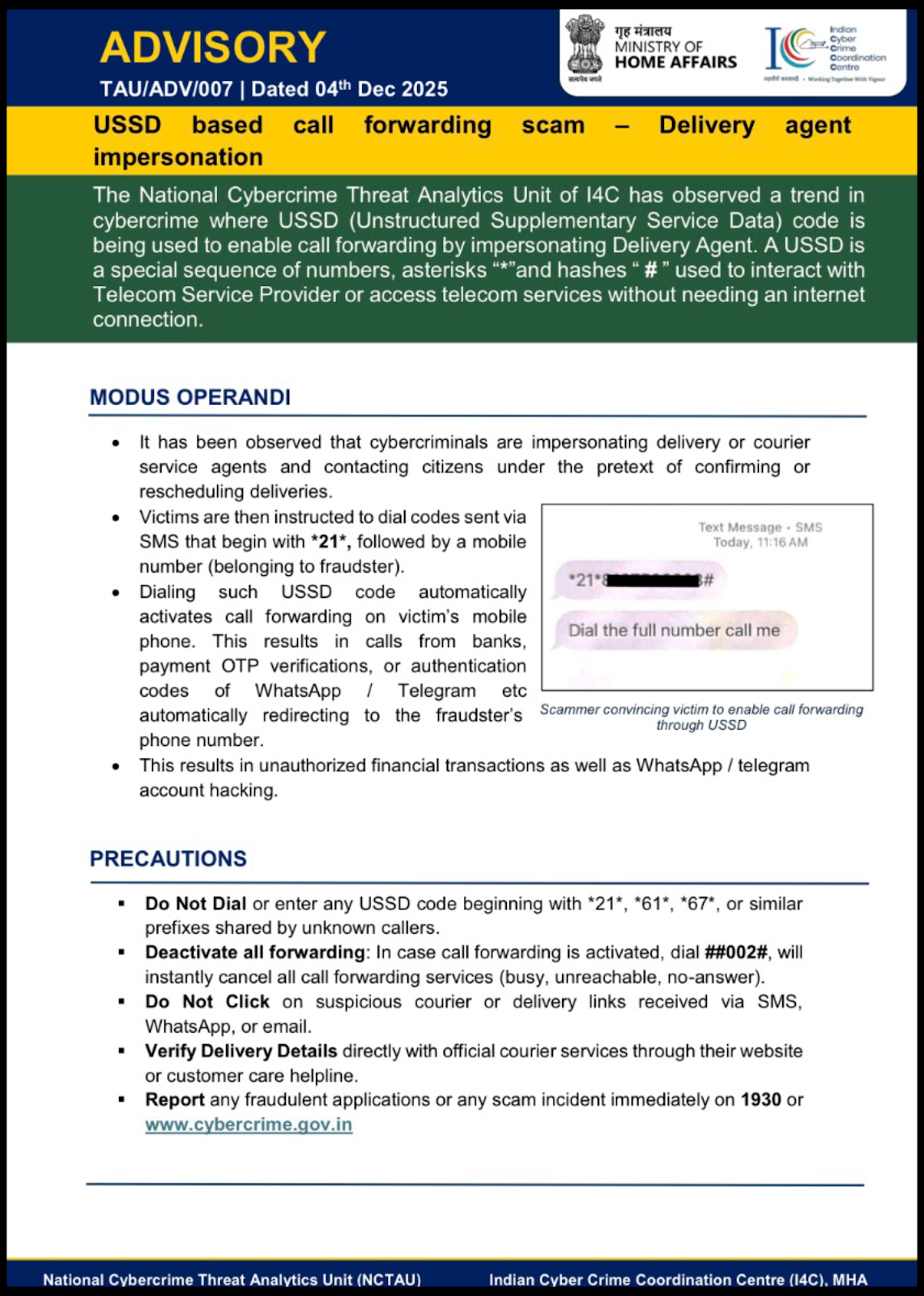
Here’s what the government is explicitly warning Indians about:
- Never dial USSD codes starting with *21*, *61*, *67* (or similar prefixes) when unknown callers send them.
- Do not click links from SMS, WhatsApp, or email about deliveries from strangers.
- Always verify delivery details directly through official courier websites or their official phone numbers.
- If call forwarding accidentally activates, dial ##002# immediately to disable it.
The advisory emphasizes that this scam doesn’t require technical sophistication. It exploits trust and familiarity. The average person has no idea what “call forwarding” even means. That’s the vulnerability scammers are targeting.
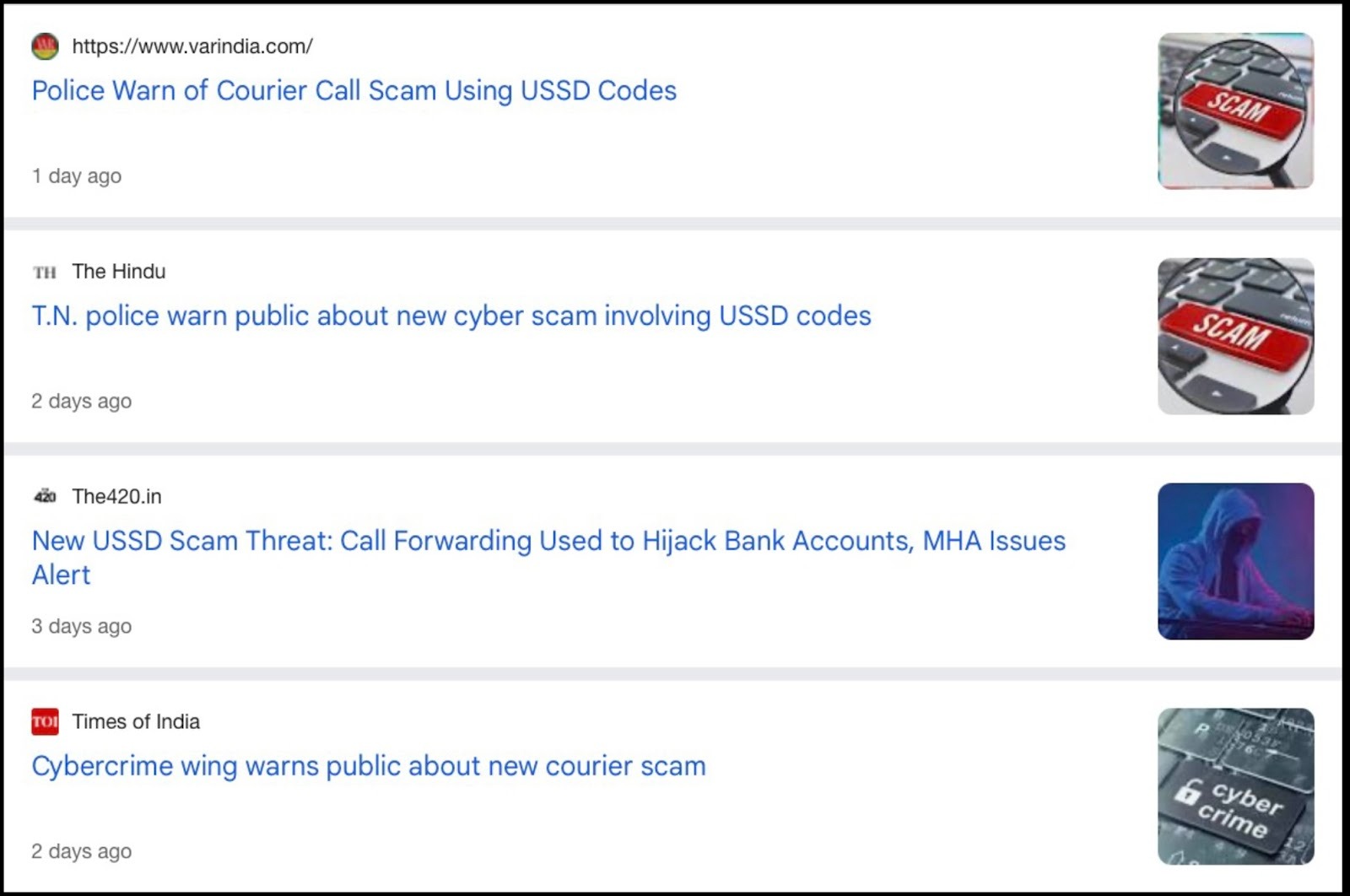
Several established media channels have covered this scam and warned people to be aware of it. Tamil Nadu police has also issued a public advisory regarding this new fraud.
Real Story
The victim didn’t click any link. The victim didn’t share any OTP. So what could possibly go wrong, right?
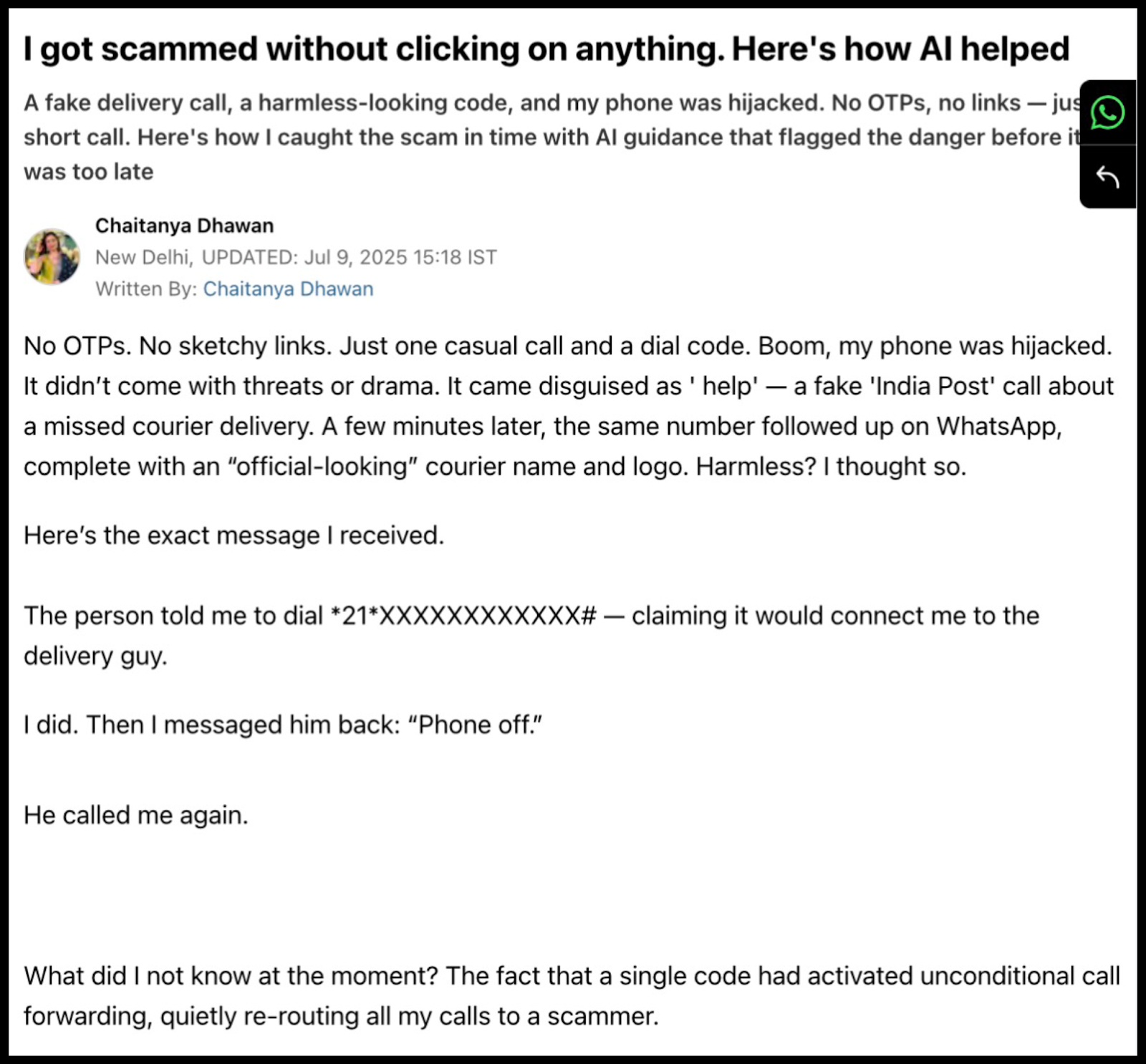
It started like a normal day for Chaitanya. A casual call came in, claiming to be “India Post” and talking about a missed courier delivery. No drama. No threats. Just a helpful tone and a quick solution.
Minutes later, the same number followed up on WhatsApp with an official-looking courier name, logo, and message. It looked harmless. Then came the “tiny step” that changed everything.
The caller asked the victim to dial a simple code: 21XXXXXXXXXX#.
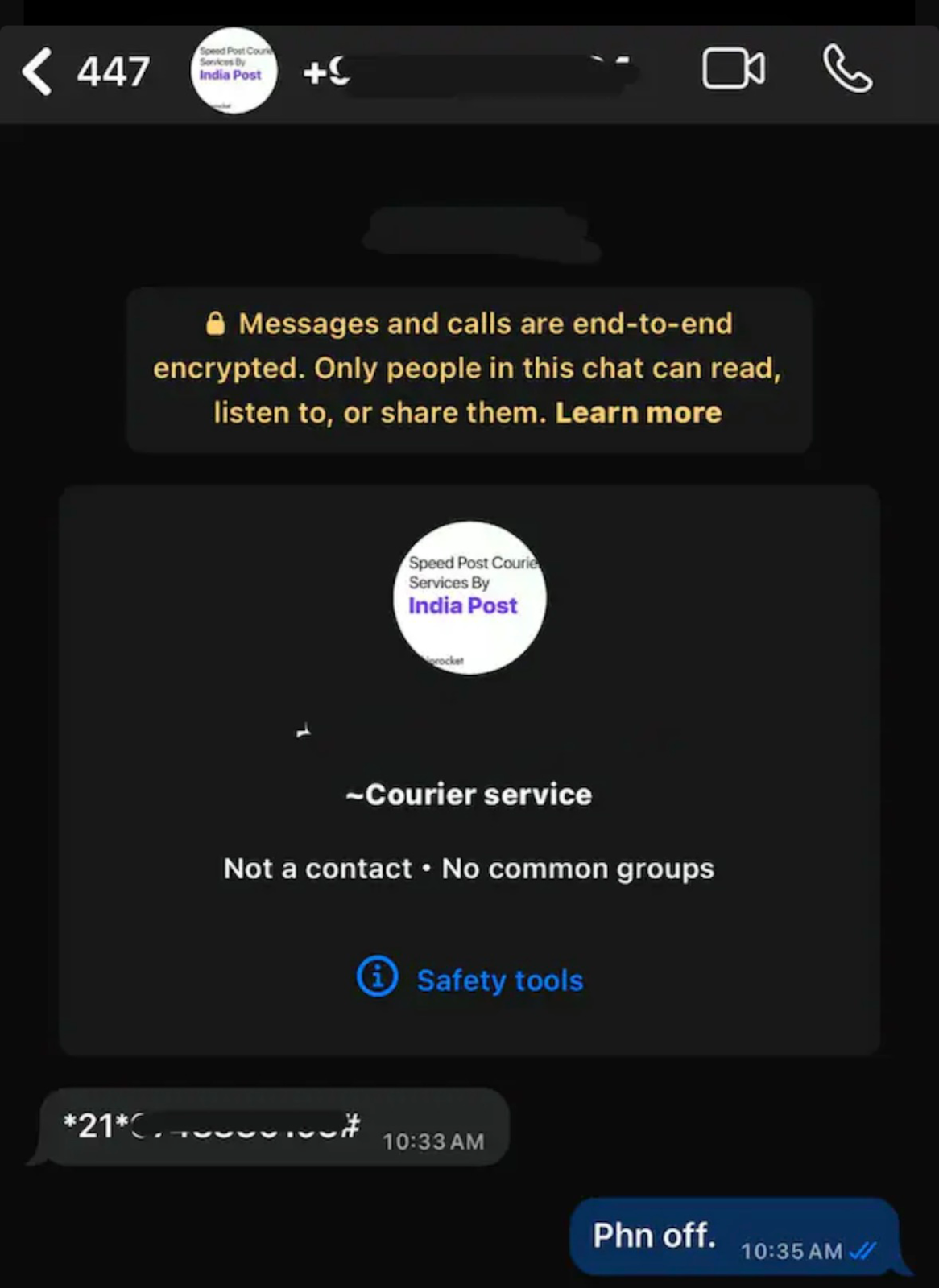
“This will connect you to the delivery guy,” the scammer claimed. The victim dialled it. But the victim noticed that the phone suddenly started behaving strangely.
What the victim didn’t know was terrifying: that one USSD code had silently activated unconditional call forwarding. That means every incoming call could be redirected to the scammer.
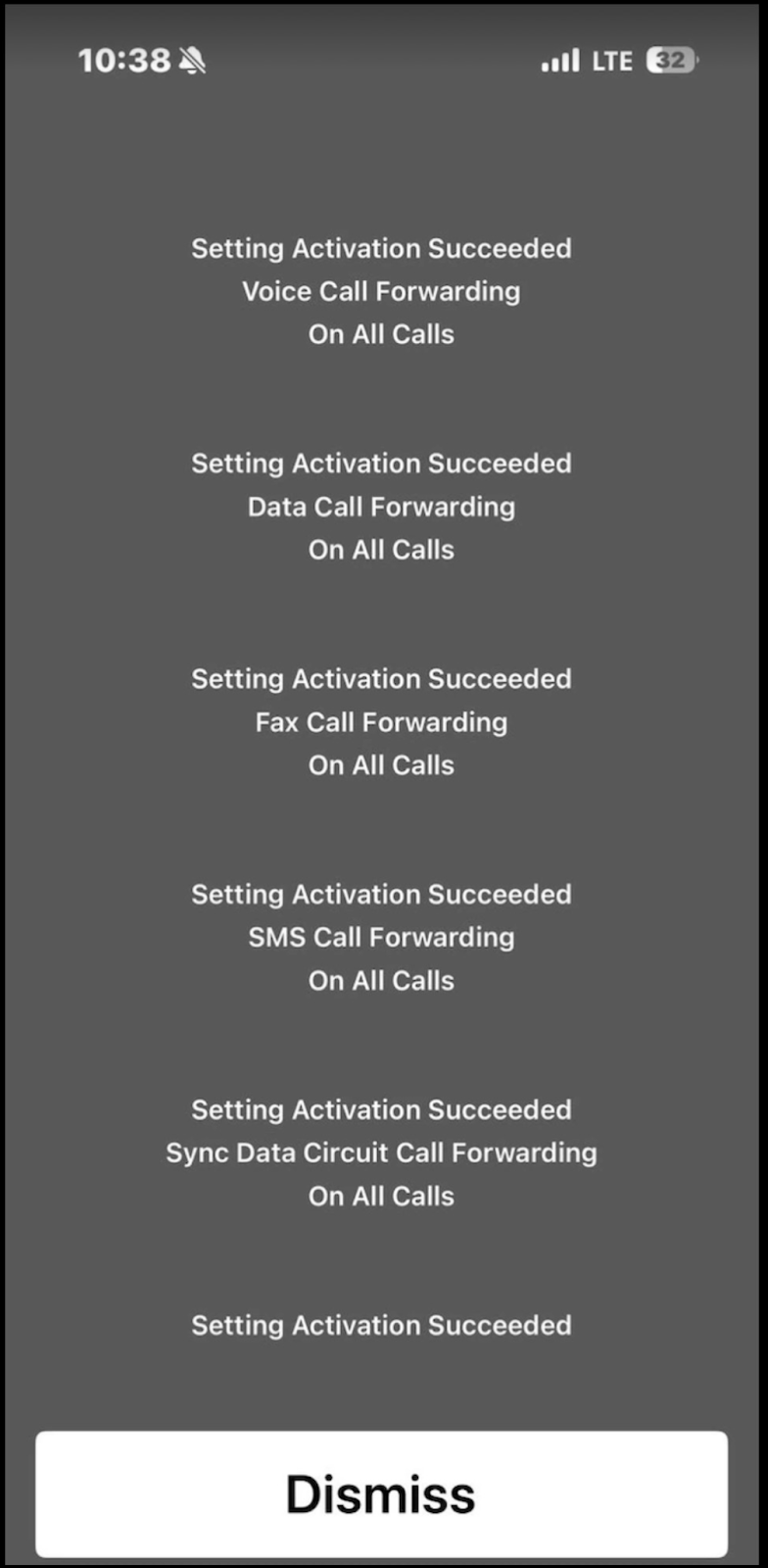
Here’s where it got lucky: the AI guidance flagged the pattern and warned that 21 codes are used for call forwarding fraud. The victim checked call settings, confirmed forwarding was turned on, and disabled it in time before the real damage began.
Community Platform Warnings
Many stories relating to courier fraud are being shared on community platforms as well. Victims have come forward to aware people about the type of new scam that is happening.
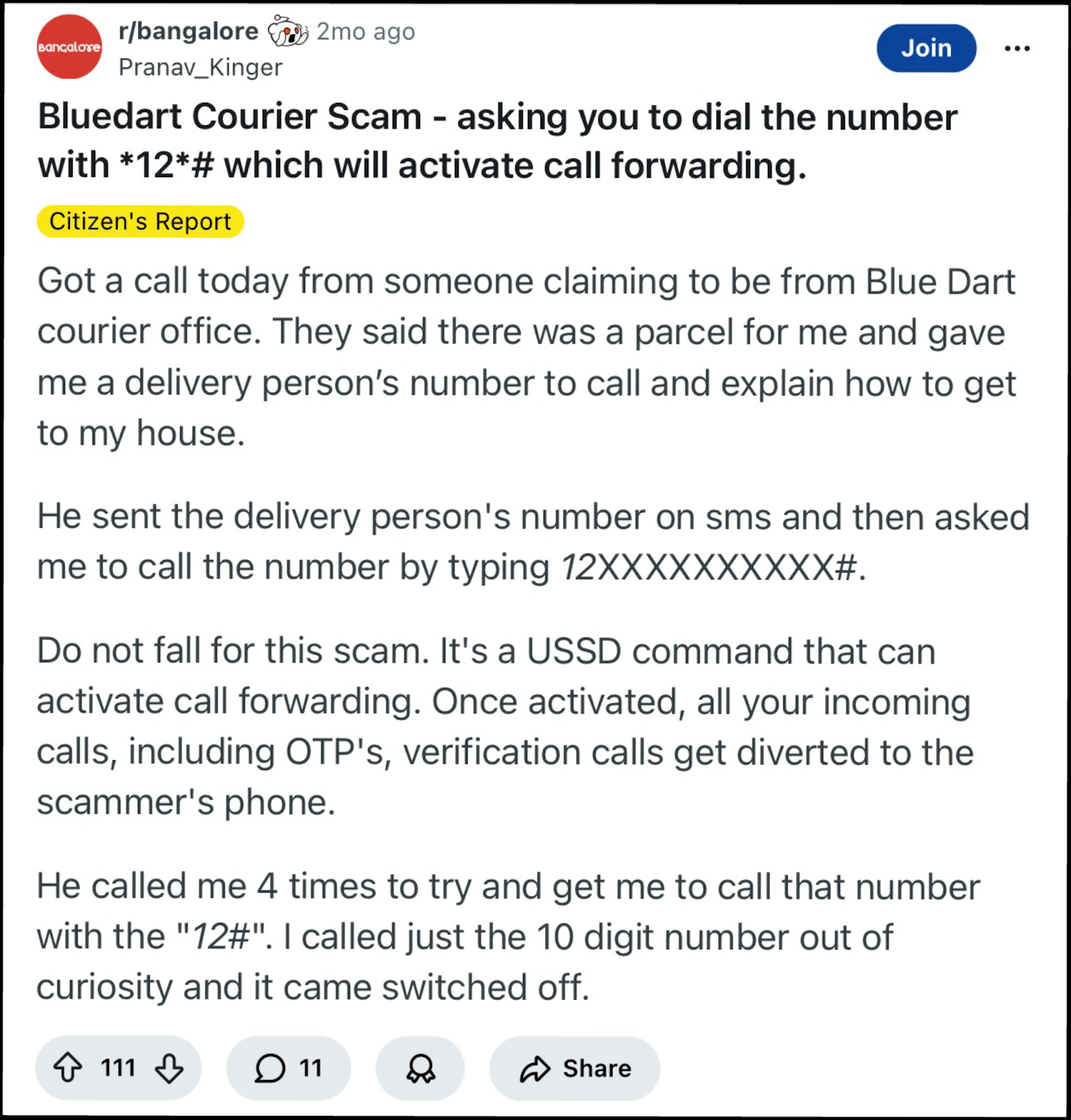
A user shared his bluedart courier scam experience. Seeing Bluedart, most people think that it is a reliable service. But, scammers have exploited the names of popular delivery brands in order to execute their scam. The victim urged people to never call an unknown number if they have USSD command.
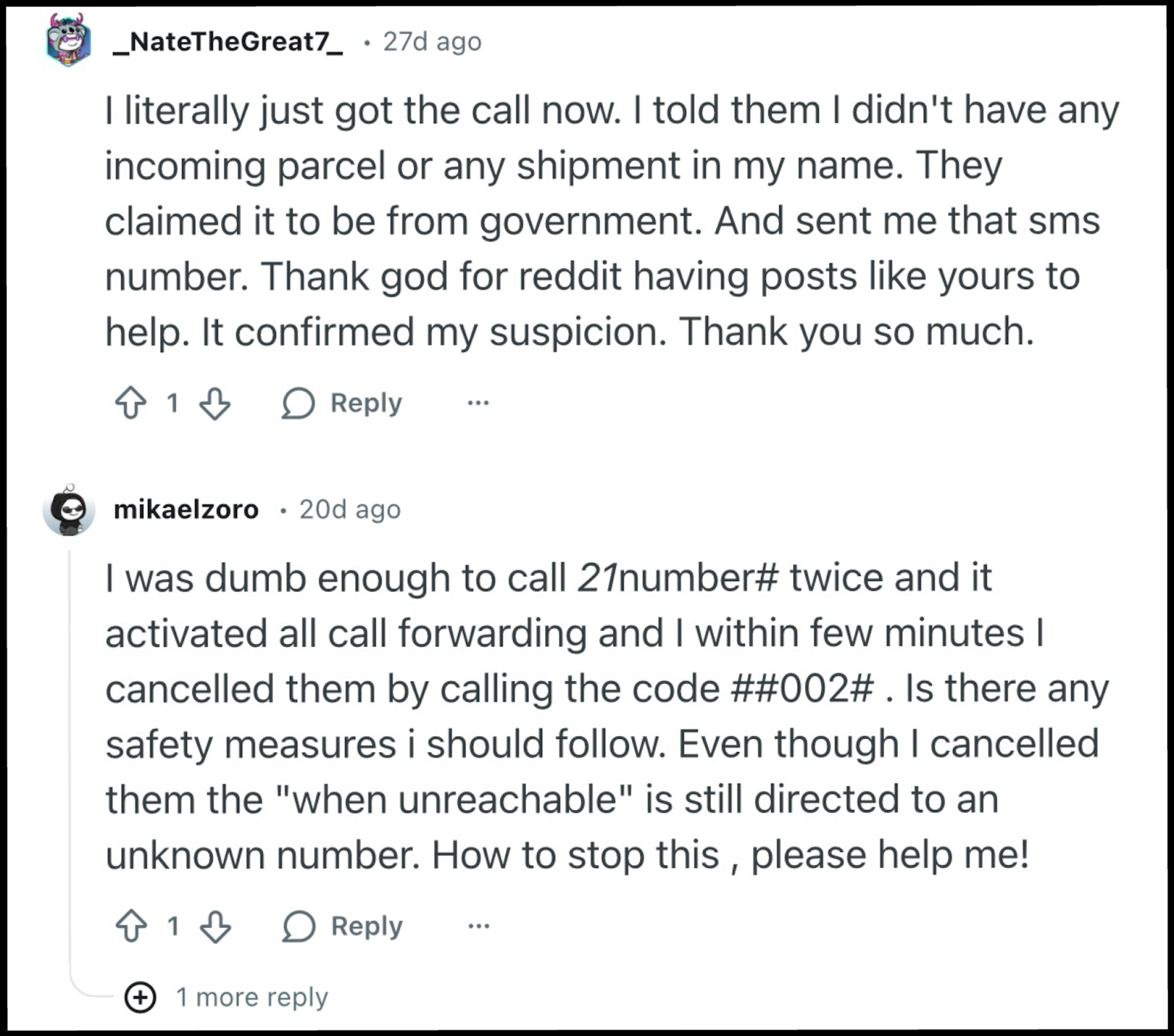
Another user shared that he got the same call even when he didn’t order anything. And guess what the scammer said, “it is from the government’s side.” The user was aware enough to check the scam online and protect himself.
How to Protect Yourself from USSD Call Forwarding Scam?
If you have been a victim to this fraud, or want to protect yourself then, you need to follow some simple steps. This will help you in protecting your privacy.
1. Know the Red Flags
Never dial any USSD code (starting with * or #) that an unknown caller sends you. Don’t click delivery links from random SMS, WhatsApp, or email messages. Real courier companies never ask you to dial mysterious codes.
2. Check If Call Forwarding Is Active
If you’re worried or if something feels off, check immediately. Dial #21# on your phone and press the call button. If call forwarding is active, you’ll see which number your calls are being forwarded to. If it’s an unknown number, that’s your alarm bell.
3. Disable Call Forwarding Immediately
If you find call forwarding is active on your phone, dial 002 right away. This disables all call forwarding instantly.
4. Verify Deliveries the Right Way
Always confirm parcel details directly through the courier’s official website or their official customer care number. Don’t use numbers from SMS or email. Look them up yourself.
5. Monitor Your Bank and Messaging Apps
Check your bank statements regularly for unauthorized transactions. Enable transaction alerts through your banking app.
If something looks wrong, contact your bank immediately. Similarly, if you notice unusual activity on WhatsApp or Telegram, change your passwords and inform your contacts.
How to Report USSD Courier Scam?
If you receive a suspicious USSD message or call claiming to be from a courier service and asking for payment, verification, or personal details, it is important to act quickly.
Follow these steps to report the scam and protect yourself:
1. Do Not Respond or Share Information
Avoid clicking on links, dialing USSD codes, or sharing OTPs, bank details, or personal information. Scammers often use urgency to trick victims.
2. Report to the Cyber Crime Portal
Visit the National Cyber Crime Reporting Portal and file a Cyber Crime complaint. Provide details such as the phone number, message content, date, and any transaction details.
3. Inform Your Bank or Wallet Provider
If you have already made a payment or shared financial details, immediately contact your bank or digital wallet provider to block transactions and secure your account.
4. File a Complaint with Your Telecom Operator
Report the suspicious number or USSD code to your mobile service provider. This helps them block the number and prevent further misuse.
5. Lodge a Police Complaint (If Money Is Lost)
For financial loss, visit your nearest police station and file an FIR with all supporting evidence, such as screenshots, call logs, and transaction receipts.
Need Help?
If you have been a victim of this scam and lost money, you can register with us. Our team specialises in recovering money lost to scammers.
Conclusion
Scammers succeed because they exploit what people don’t know. They rely on confusion about USSD codes, call forwarding, and delivery protocols. Once you understand how the scam works, you become much harder to trick.
Stop for a moment before dialing any mysterious code. Ask yourself: “Did I ask for this code? Is this from the official number?” A few seconds of hesitation could save you from financial ruin.
The best defense against fraud is a community that’s informed and vigilant.
Stay safe. Stay aware.