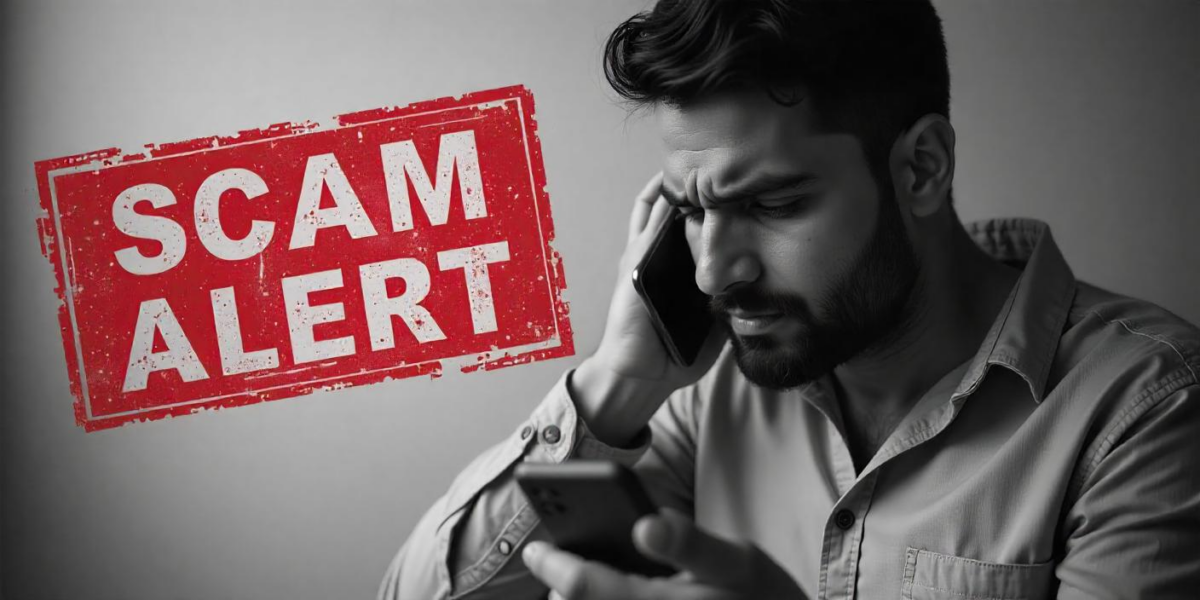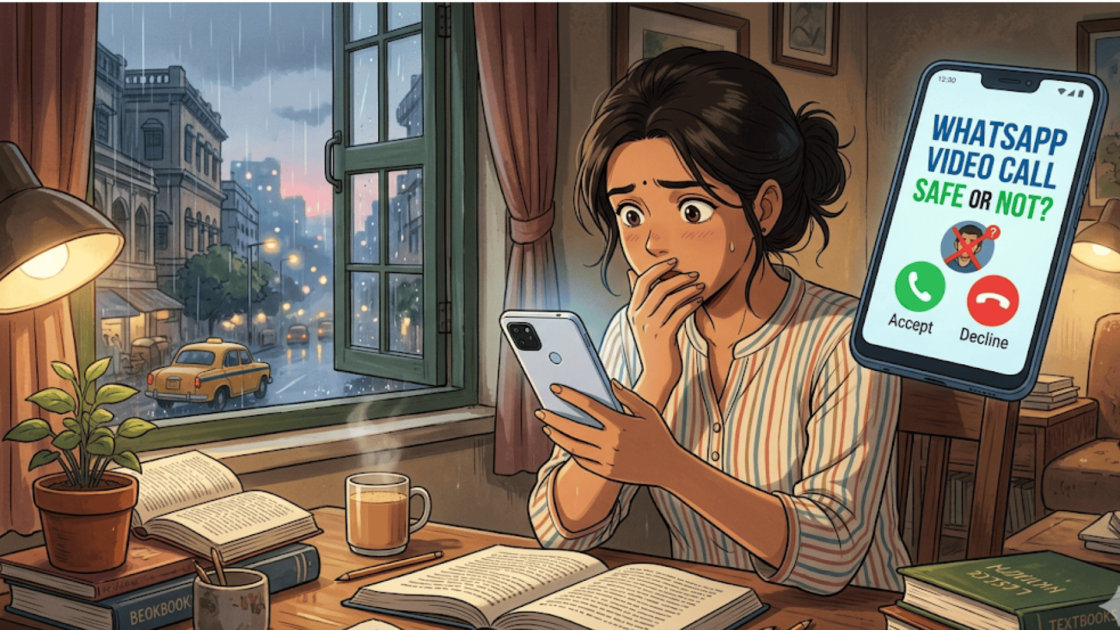
An unknown WhatsApp video call comes in. No message, no context, just a random number trying to connect.
Most people still pick it up. It feels normal. It’s WhatsApp, so what could really go wrong?
That’s exactly what scammers count on. WhatsApp video calls are secure.
The platform uses end-to-end encryption, so no one can intercept your call. But scams today don’t happen by breaking systems.
They happen by manipulating people. So the real risk isn’t the app. It’s what happens after you answer that call.
In many recent cases, a simple video call turned into something serious. People were threatened, controlled, and even forced to transfer money while staying on camera.
In this blog, we will understand how WhatsApp video call scams actually work, how to identify them, and what you should do if you receive such a call.
How Unknown WhatsApp Video Calls Turn Into Scams?
It doesn’t feel like a scam in the beginning. In most cases, it starts with a simple video call that looks completely normal.
- It usually starts with a WhatsApp video call from an unknown number, without any prior message or context.
- Most people still answer. Some out of curiosity, others assuming it could be important.
- The caller begins speaking immediately, often in a serious or confident tone. This makes the situation feel real from the start.
- Instead of giving you time to think, they introduce something urgent, like a parcel issue, complaint, or problem linked to your number.
- Because you are already on video, the situation feels more believable than a normal call.
- At this point, your focus shifts. You stop questioning the caller and start reacting to what they are saying.
- The caller then tries to keep you engaged. They may ask you to stay on the call or avoid disconnecting.
- Slowly, they take control of the conversation without you even realising it.
What started as a random video call doesn’t stay random for long. By the time you realise something is off, the situation has already moved ahead.
How These WhatsApp Video Call Scams Actually Work?
At first, it doesn’t feel like a scam. In fact, many victims of WhatsApp scams say the call looks completely normal, and the conversation starts in a serious but controlled way.
Most people don’t realise what’s happening until the situation has already escalated.
In a recent case, a professional received a WhatsApp video call from an unknown number. The caller introduced himself as a police officer and claimed the person was involved in a serious financial crime.

The tone was strict and urgent. Within minutes, the situation felt serious and frightening.
The caller then said the person was under “digital arrest” and must stay on the video call.
He was warned not to disconnect or contact anyone. Under pressure, the victim followed instructions and eventually transferred a large amount of money.
By the time the call ended, the damage was already done.

This isn’t just one isolated incident.
Similar cases have been reported across different cities, following almost the same pattern.
1. Fake Police or Authority Calls
- The scammer claims to be from police, CBI, or another government agency.
- They speak in a strict and confident tone to make the situation believable.
- Often, they create a serious accusation to trigger fear immediately.
2. Digital Arrest and Control Tactics
- The victim is told they are under investigation or “digital arrest.”
- They are asked to stay on video call and not disconnect.
- The caller may stop them from contacting family or friends.
- This creates isolation, making it harder to think clearly.
3. Pressure, Fear, and Money Demand
- The scammer keeps increasing pressure by mentioning legal consequences.
- The situation is made to feel urgent, leaving no time to verify anything.
- Finally, money is demanded to “resolve” the issue.
- By this stage, fear takes over and many people comply.
These scams don’t depend on hacking or technical tricks. They work because they create fear, take control of the situation, and push you into quick decisions.
And it all begins with a simple WhatsApp video call.
WhatsApp Video Call Scam
Not every unknown call is a scam. But in these cases, there are usually small signs that people ignore in the beginning.
Once you notice them, it becomes much easier to step back and not get pulled into the situation.
- The call comes from an unknown or international number, often without any prior message or introduction.
- The person starts speaking immediately in a serious or authoritative tone, without giving you time to question them.
- They claim to be from police, CBI, or any government authority and mention a legal issue linked to your name or number.
- You are asked to stay on the video call and avoid disconnecting, even if you feel uncomfortable.
- The caller creates urgency by saying the matter is serious and needs immediate action.
- You are told not to inform family, friends, or anyone else about the situation.
- The conversation quickly shifts towards sharing personal details or transferring money.
These signs may not feel obvious in the moment. However, when you look at them together, the pattern becomes clear.
If a WhatsApp video call makes you feel rushed, pressured, or scared, it’s usually not a normal call.
What To Do In Such Cases?
If you receive a call like this, don’t panic. These scams only work when you react quickly without thinking.
Follow these steps instead:
1. Cut the Call Immediately
The moment something feels off or suspicious, disconnect the call without hesitation or second thoughts.
Scammers rely on keeping you engaged and emotionally manipulated to carry out their plan.
Ending the call early removes their control and prevents the situation from escalating further.
2. Avoid Engaging or Arguing
Trying to argue, question, or outsmart them often makes things worse and prolongs the interaction unnecessarily.
It gives scammers more time to manipulate your thoughts and build pressure using fear tactics.
The safest and most effective approach is to not engage at all and exit immediately.
3. Protect Your Personal Information
Never share OTPs, bank details, passwords, or any form of identification on such suspicious calls.
Even small pieces of information can be combined and misused for financial fraud or identity theft.
Always treat unknown or unverified callers as untrustworthy, no matter how convincing they sound.
4. Refuse Payments Firmly
No genuine authority, government body, or organisation will ever ask for money over a video call.
Scammers often create urgency or fear to push you into making quick financial decisions.
Stay calm, stay firm, and do not transfer any amount under any circumstances.
5. Block and Report the Number
Once the call ends, block the number immediately to prevent repeated contact or harassment.
Use the report option on platforms like WhatsApp to flag the account as suspicious.
Reporting helps platforms take action and reduces the chances of others being targeted.
6. Report Online Fraud
If there is any financial loss or serious scam attempt, report it to the cybercrime authorities immediately.
Provide complete details such as call logs, messages, transaction proof, and any other evidence.
Taking quick action increases the chances of investigation, tracking, and possible recovery of funds.
Once you disconnect, the scammer loses control. That’s the most important step.
Need Help?
If something like this has already happened, don’t ignore it or feel stuck. These scams are more common than people realise, and there is a way to deal with it.
Start by collecting all the details related to the call: number, screenshots, and any transaction proof. Then report it as soon as possible so action can be taken in time.
If you feel confused about what to do next or how to proceed, you can check out the process in our cybercrime fraud response plan.
This will help you in understanding the next steps.
Taking the right action at the right time can make a real difference.
Conclusion
WhatsApp video calls are not unsafe on their own. The platform is secure, and the technology works as it should.
While people often ask, can a scammer fake a video call on WhatsApp, the real problem starts when the wrong person is on the other side.
Today, scammers are using simple video calls to create fear, build pressure, and control people in real time.
What looks like a normal call can quickly turn into something serious if you are not careful.
That’s why awareness matters more than anything else. If you stay alert, question unexpected calls, and don’t react under pressure, these scams lose their impact completely.
Because in the end, it’s not the WhatsApp video call that puts you at risk. It’s trusting the caller without verifying them.