When people search for Al Khair Bank, they are usually not just browsing out of curiosity. Most are looking for financial help, often hoping for an interest-free or ethical option that feels safer than conventional loans.
Islamic or Sharia-compliant banking carries that promise, so the name immediately builds trust.
But very quickly, another question pops up: Is this actually real, or am I walking into something risky?
That question matters, especially when money is involved.
Let’s talk through what Al Khair Bank actually refers to, where the confusion starts, and why people need to slow down before trusting anything they see online.
Al Khair Bank Overview
The biggest problem with Al Khair Bank is not what it claims to stand for, but how the name is used online.
In general, Islamic banking follows clear principles. It avoids interest, focuses on ethical finance, and relies on shared risk rather than guaranteed returns.
Plus, institutions operating under this system usually offer structured loans, savings, or financing models that stay within Sharia guidelines.

In India, there are real, offline organisations that work along these lines.
One example is Al-Khair Co-operative Credit Society Ltd., which operates as a cooperative society.
These kinds of institutions usually work face-to-face, serve limited local communities, and function under specific internal rules. They do not behave like digital-first banks, and they do not push loans through social media.
Confusion starts when the same name begins appearing on random websites, loan application pages, and ads that promise quick approvals or fully online, interest-free loans.
Many of these pages do not clearly explain who runs them, where they are located, or what authority they operate under. When you try to verify them, you stop getting clear answers.
That gap between real institutions and online claims is where people get stuck.
Is Al Khair Bank Real or Fake?
The answer depends on which version you are dealing with.
Genuine Islamic finance organisations with similar names exist. They have physical offices, defined operating areas, and limited services.
If you walk into one, speak to staff, and receive proper documentation, you are dealing with something real.
At the same time, many online offers are using the name “Al Khair Bank”. They have no proven link to these institutions. Scammers know that ethical finance and religious branding lower suspicion.
They reuse familiar names, add convincing language, and create urgency, all without actually being a bank.
So the name itself is not fake. But a large number of online offers using it are frauds.
Is Al Khair Bank Safe?
If you visit a known branch of Al Khair bank, a verified local credit society office, or use official resources that belong to the real bank, and they are properly licensed and regulated, your interactions can be safe.
You can look for:
- Physical address and branch verification
- Official registration/licensing documents
- Clear contact details that match official listings
But it is unsafe when you engage with unverified online ads or calls. Many scams use the bank’s name to appear credible.
So, if you get unsolicited WhatsApp or Instagram loan offers, requests for advance fees before loan approval, or messages asking for personal information before verification, it’s most likely not safe.
In fact, courts and authorities in some cases have identified that people have been scammed this way.
A legitimate bank will never demand upfront fees for loan processing or approvals over email or WhatsApp without transparent and written documentation.
Al Khair Bank Complaints
When you look beyond official-sounding websites and ads, real people’s experiences tell a much clearer story.
Across news reports, forums, and social media, similar warnings keep coming up, mostly around the misuse of the Al Khair name.
1. Fake Online Loan Ads Using the Bank’s Name
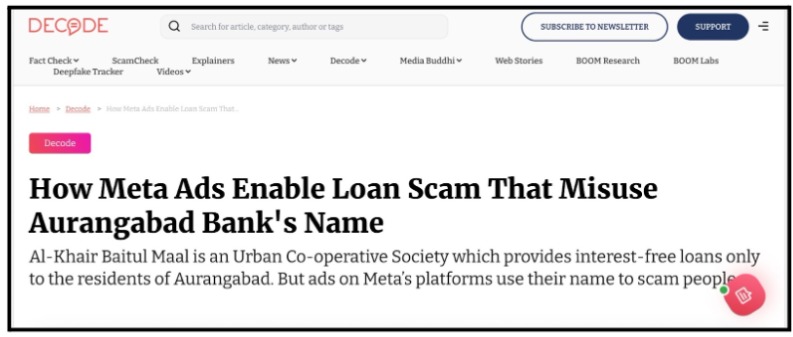
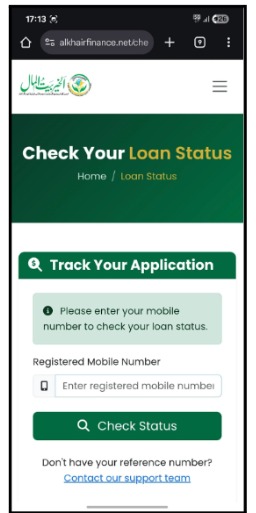
In mid-2024, BoomLive uncovered a large-scale scam running on Facebook and Instagram. The ads claimed to offer interest-free online loans in the name of Al-Khair Baitul Maal, which is a cooperative society based in Aurangabad.
The ads looked believable. They used old video clips, official language, and links that appeared genuine. But there was a twist – the real institution does not offer online loans at all.
People who responded were repeatedly asked to pay “processing fees.”
One victim reportedly lost around ₹40,000 before realising something was wrong. Investigators later suggested the total amount scammed through this method could be close to ₹2 crore.
2. Fake Loan Offer Using a False Office Address
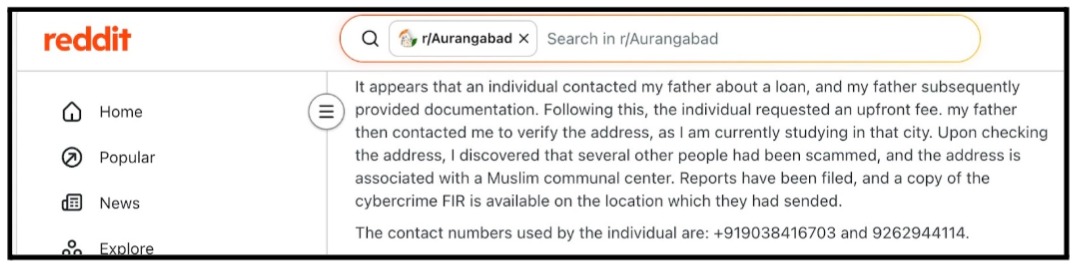
In one reported incident, a man was contacted about a loan and was asked to share his documents. After that, the caller demanded an upfront fee to “process” the loan.
The man’s son, who was studying in the same city, decided to verify the address that had been shared. When he checked the location, he discovered that several other people had already been scammed using the same address.
The place itself was not a loan office at all, but a Muslim community centre.
What made it even more concerning was that reports had already been filed, and a copy of a cybercrime FIR was available at that very location, clearly showing that this address had been used earlier in similar fraud cases.
3. YouTube Warnings From the Public
In one of the YouTube videos, a person explained how they were approached with promises of “approved” or “interest-free” loans linked to Al Khair or Islamic finance institutions.
The conversations often started politely and confidently, but soon shifted toward demands for fees or personal information.
Many people in the comments have also said that they have faced the same scam. So, most of these stories follow the same pattern, which makes them hard to ignore.
Taken together, these complaints and reports point to a recurring issue, not necessarily with legitimate Islamic finance institutions, but with how their names are being misused online to gain trust and extract money from unsuspecting people.
How to Report Loan Scams in India?
If you realise you have been misled or lost money in something that claimed to be Al Khair Bank, act immediately.
Below are the steps to file a complaint about online personal loan fraud in India:
1. Collect Evidence: Save all messages, screenshots, call records, payment receipts, and URLs.These will be crucial for reporting.
2. Report to Cyber Crime complaint online: Use the national cybercrime reporting portal to lodge an online complaint. Authorities can trace digital footprints and assist with investigations.
3. File an FIR at a Local Police Station: You can also take all your collected evidence to a police station or your nearest cybercrime cell and file an FIR.
4. Inform Your Bank Immediately: If you made payments or shared bank details, inform your bank right away. They might be able to block further transfers or assist with fraud resolution.
5. Report to Platform Providers: Report scam pages and ads to platforms like Meta (Facebook/Instagram) so they can take them down and prevent further misuse.
Need Help?
If you are feeling confused, misled, or stressed after an experience with a fake loan offer in the name of Al Khair Bank, do not panic.
Many people who thought they were dealing with a real institution were later caught off guard by requests for fees or personal information.
If you are looking for support, we can help you:
- Collect and organise your evidence for reporting.
- Guide you through the official reporting process step by step.
- Explain where to report, who to contact, and what the likely outcomes are.
You do not have to figure it out alone; reach out to us now. Early action can protect you and others from similar scams.
Conclusion
Al Khair Bank, in its genuine form, stands for ethical and interest-free finance.
But online, the same name often gets used in ways that do not match how real institutions actually operate.
If an offer feels rushed, unclear, or strangely confident, pause. Trust grows through transparency, not pressure.
And, when it comes to money, asking one extra question today can save you from a long-term problem tomorrow.