

Quick Summary
A broker’s job is to execute your orders, not tell you what to buy. When a broker or their representative starts giving specific FnO trading calls, entry points, targets, or promises to recover your losses if you invest more, that crosses into investment advice they usually aren’t licensed to give. One trader lost ₹8 lakh after a broker pushed him into FnO with escalating “just invest a bit more” calls. Real SEBI enforcement orders against unregistered call-givers have run into hundreds of crores in refunds and disgorgement. Here’s the line, and what to do once it’s been crossed.
Vijaypal (name changed) had been trading equities steadily for three years, a modest 1 to 2 percent return, nothing dramatic.
Then a broker called, suggesting he try intraday and FnO trading, promising that ₹30,000 could turn into ₹50,000.
The first day went well.
What came after did not.
Can a Broker Legally Give You FnO Trading Calls?
No. A stock broker’s registration authorises execution only, placing your buy and sell orders on the exchange.
Brokers, their sub-brokers, and their authorised persons are not permitted to tell you what to buy, at what price, with what stop-loss, or at what target; that activity requires a completely separate registration as an Investment Adviser (IA) or Research Analyst (RA) under SEBI’s regulations.
The line gets crossed in ways that feel routine at the time: a sub-broker texting specific stock picks every morning, an authorised person running a paid Telegram group with live entry and target calls, a representative calling with a tip and saying “you should buy this today,” or an account manager suggesting trades in exchange for a cut of the profit.
All of these cross the line, regardless of how casual or helpful they sound in the moment.
SEBI’s 2024 amendments went further still, prohibiting registered brokers from even associating with unregistered individuals or entities offering trading advice, so a broker linked to an unregistered advisor or finfluencer is itself a violation.
Vijaypal’s ₹8 Lakh FnO Loss
On the first day, the broker helped Vijaypal book a ₹9,000 profit, and he was excited. The next day brought a ₹4,000 loss, and the broker’s answer was simple: invest another ₹30,000 to balance it out. He did. The cycle continued until his loss in intraday trading reached ₹3,50,000.
The broker didn’t stop there. With a new budget announcement approaching, he was told the market would go up, and he should invest more.
He took out a loan to fund it, and lost again. He was then advised to put money into the company’s own portfolio, and followed that advice too. His total loss reached ₹8,00,000.
The broker giving him these calls had no registration ID, and Vijaypal hadn’t yet filed a formal complaint by the time he reached out for help.
The lesson sitting inside this case is one every investor eventually learns the hard way: trust your own knowledge and skills when it comes to your capital.
Even recommendations from properly registered research analysts can still lead to losses, so a recommendation from someone with no registration at all deserves even more scepticism, not less.
Real SEBI Enforcement Against Personalised Call-Givers
SEBI has been treating unregistered trading calls, whatever they’re branded as, “education,” “mentorship,” or “account handling,” as a priority enforcement area, and the penalties show it.
Yash Garg ran “Yash Trading Academy” through Telegram channels including “YTA Premium” and “Intraday Blaster,” offering paid equity and derivatives calls without holding any Investment Adviser or Research Analyst registration, while falsely claiming to be SEBI-registered.
He also offered “account handling” services, directly managing client demat accounts and placing trades without the Portfolio Manager registration that is required, and ran profit-sharing arrangements retaining up to 50% of client gains, alongside advertising “100% guaranteed profit” claims, a direct violation of SEBI’s prohibition on return assurances.
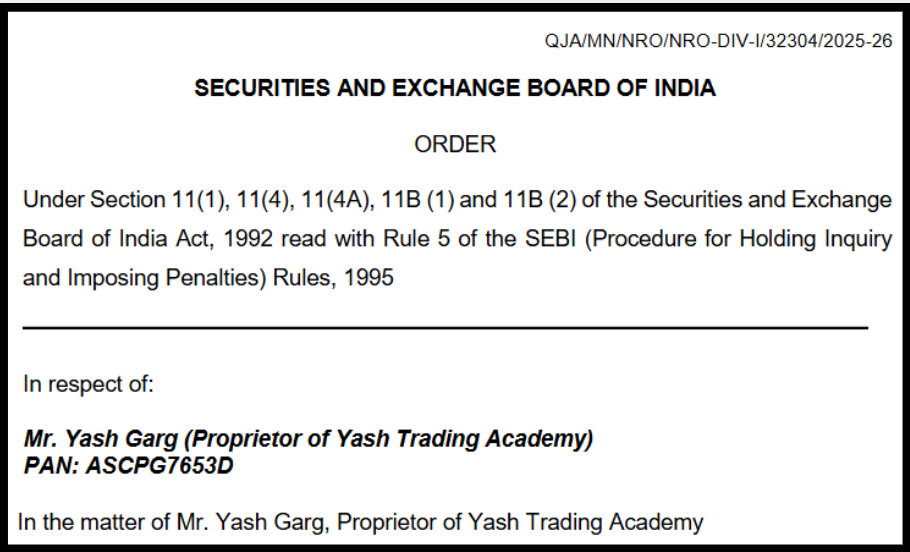
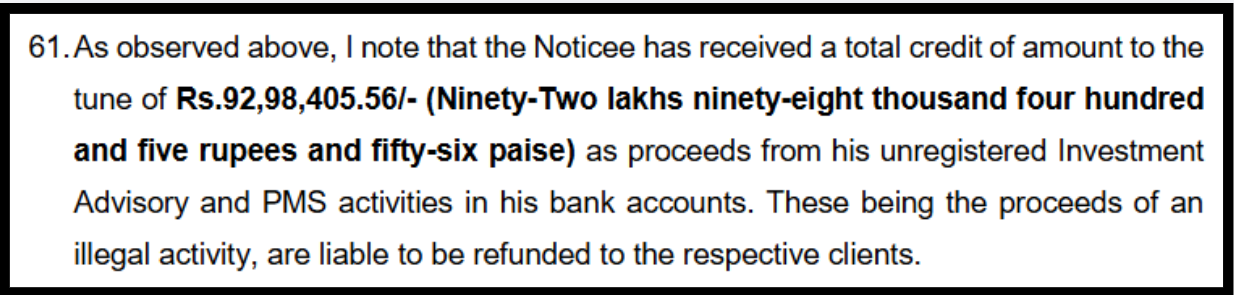
SEBI barred Garg from the securities market for two years, or until a full refund is completed, whichever is later, directed him to refund ₹92.98 lakh to investors within three months, imposed a ₹16 lakh monetary penalty split between fraudulent trade practices and other violations, and required a public newspaper notice about the refund process.
Two other major cases follow the same pattern at a much larger scale, and both are covered in full detail, including the exact violations and penalty breakdowns, in our guide on the profit sharing trading scam.
First, Avadhut Sathe Trading Academy faced a SEBI disgorgement order of over ₹546 crore for allegedly collecting fees from unregistered advisory activity disguised as trading education.
Second, “Baap of Chart” (Mohammad Nasiruddin Ansari) promised a “95% profit accuracy” algorithm on his YouTube channel while allegedly posting personal trading losses during the same period, resulting in a market ban and a multi-crore refund order.
Can a Broker Promise to Recover Your Trading Loss?
No, not under any circumstance. The stock market is inherently uncertain, and a broker is a middleman who executes trades, never a guarantor of outcomes.
What a broker can legally do is execute your buy and sell orders, provide research reports and general market insights, offer trading tools and platforms, charge applicable fees, and manage your account technically without making unauthorised trading decisions.
Notice what’s missing from that list: any form of the word “guarantee.”
If your broker is promising to recover your trading loss, treat it as an active danger signal, not reassurance.
The pattern is one of the oldest tactics in the book for extracting more money from an emotionally vulnerable investor, and it plays out almost identically every time: a promise, a deposit, deeper losses, then silence.
The pattern follows:
- It pushes you to invest more, deepening exposure into riskier trades.
- It directly violates SEBI’s prohibition on guaranteeing returns or loss recovery.
- It creates false security that stops you from monitoring your own account.
- It frequently escalates into unauthorised trading once the broker starts acting aggressively “to recover” what was lost.
And it is very often simply the opening move of a scam designed to extract as much as possible before disappearing.
If you hear this promise, stop all further trading and investment immediately.
Ask your broker to confirm the promise in writing; a genuine broker will never put something illegal on paper.
Start collecting every chat, email, call recording, and transaction statement right away, and don’t close your account until this evidence is secured.
Speak to a financial or legal professional who understands SEBI’s framework before your next move.
How to Report a Broker’s Unregistered Trading Calls?
Save every WhatsApp message, Telegram post, email, or chat containing a specific stock call, entry price, target, or stop-loss, with call recordings backed up wherever possible.
If you’ve shared login credentials, OTPs, or demat access with anyone, revoke it and change your password immediately.
Check the caller’s actual registration on SEBI’s official intermediary portal, since a broker’s registration alone never authorises trading advice, and the same verification habit is exactly what separates a genuine registered entity from the kind covered in is sebi registered broker safe.
File a written complaint with the broker first, then escalate to SEBI SCORES if unresolved, then SMART ODR for structured mediation, and finally exchange arbitration if the dispute remains unsettled, where documented WhatsApp or Telegram evidence carries real weight.
The complete step-by-step process, with timelines and what to attach at each stage, is covered in full in our guide: file a complaint against your stock broker.
Did your broker give you specific FnO calls, or promise to recover a loss if you invested more?
We check whether the person calling you was actually registered to give that advice, and build the complaint around the exact SEBI violation involved.
Register with us to help you out in the whole process.
Conclusion
A stock broker’s role is strictly limited to trade execution, not offering personalized FnO tips or promising loss recovery.
Following unregistered advisory calls compromises your capital and strips away regulatory protections when trades go wrong.
If your broker has crossed this line, stop trading immediately, secure all communications, and file a formal grievance.
Taking timely legal and regulatory action via SEBI SCORES or SMART ODR is your best path toward holding them accountable.
Report. Recover. Stay Fraud Free.
Frequently Asked Questions
Yes, unless the broker or the specific person calling you separately holds an Investment Adviser or Research Analyst registration. A broker's execution-only registration never authorises personalised calls with entry points, targets, or stop-losses, regardless of how the advice is framed.
No. Treat that promise as a warning sign, not reassurance. No broker can legally guarantee any market outcome, and this specific tactic is commonly used to extract further deposits before losses deepen even more.
Check SEBI's official intermediary registration portal directly rather than taking the claim at face value. Several major enforcement cases, including one covered above, involved individuals falsely claiming registration status they never actually held.





 Add us as a preferred source on Google »

