
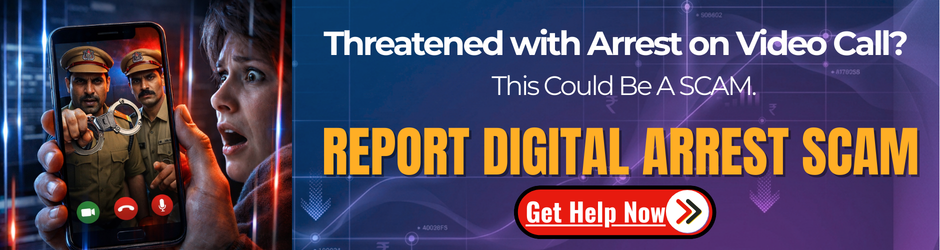
How Does the Digital Arrest Scam Happen?
These scammers use a carefully thought-out plan to extort innocent people. Knowing their process will surely help you identify the scam.
-
Impersonating Authority Figures
The scam usually begins with a call from someone pretending to be a police officer, CBI agent, or another government official.
They speak in a serious, professional tone and may even use official-sounding titles to make themselves seem trustworthy and convincing.
-
Creating Fear Of Arrest
Once they have your attention, they accuse you of being involved in a crime, such as tax evasion, illegal transactions, or misuse of your identity.
They claim that a case or arrest warrant has been issued in your name, creating panic and making you feel like you must act immediately.
-
Pushing For Video Communication
To make the situation feel more real, they may ask you to switch to a video call on platforms like WhatsApp, Skype, or Zoom.
This step is meant to strengthen their credibility and make you believe you are dealing with real officials.
-
Using Fake Official Setups
During the video call, they might appear in a setting designed to look like a police station or office.
Some may even wear uniforms or show fake documents to further convince you that the situation is genuine.
-
Demanding Money To “Resolve” The Issue
Finally, they pressure you to transfer money, claiming it will help settle the case or prevent your arrest.
They may insist on quick payment through bank transfer or UPI, using urgency and fear to stop you from thinking clearly or verifying the truth.
At this stage, many victims start questioning whether digital arrest is legal in India or not.
It is important to understand that no law enforcement agency in India conducts arrests over phone or video calls, making such claims completely fraudulent.
Can Police Do Digital Arrest?
If you’re wondering if police can digitally arrest you, it’s important to understand that no such legal concept exists.
Police authorities cannot arrest someone via phone or video call.
However, they may use digital channels to communicate for official purposes, including notices or investigation-related queries.
While these interactions are valid, they should not be confused with a lawful arrest.
For example, under the Information Technology Act, 2000, cybercrime units may reach out through phone calls, emails, or other digital platforms.
However, such communication should never be confused with an actual arrest.
Digital Arrest Real Cases In India
Digital arrest is not just a theoretical threat; they are happening across multiple cities in India, affecting people from different backgrounds.
Looking at real cases helps understand how these scams unfold in practice and how easily even careful individuals can fall into the trap.
1. Digital Arrest Case in Bengaluru
In this case, a 78-year-old woman was cheated of ₹38 lakh in a “digital arrest” scam.
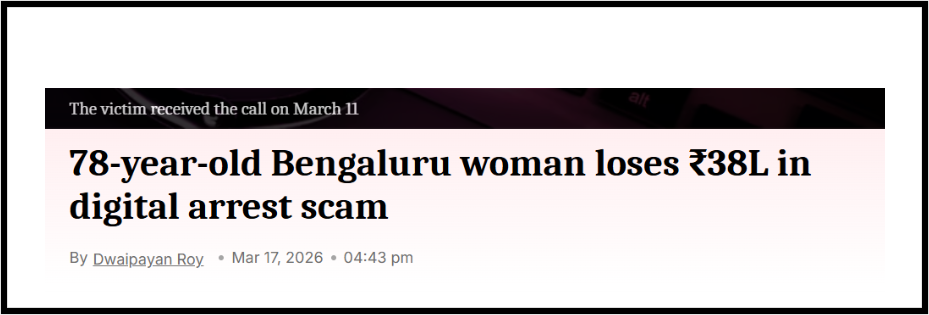
The fraudsters pretended to be officials from the NIA and contacted her with serious accusations, claiming she was involved in illegal activities.
To make the situation feel real, they kept her under constant pressure and even made her stay on calls for long periods, creating a sense of fear and urgency.
They convinced her that she was being monitored and should not speak to anyone else about it.
Over time, they manipulated her into transferring large amounts of money, saying it was necessary to clear her name and resolve the case.
After the incident, a complaint was filed, and an investigation was launched to track down the fraudsters.
2. Digital Arrest Case in Coimbatore
In this report, fraudsters are targeting residents by pretending to be officials and using fear as their main tool to control victims.

In several instances, scammers contact people and falsely accuse them of being involved in serious crimes.
They then create panic by threatening arrest and keep victims engaged for long periods, sometimes even on video calls, to make the situation feel real.
Many victims, especially older individuals, end up believing the claims because the scammers use personal details and convincing setups.
Overall, the report serves as a reminder that these scams are becoming more frequent and sophisticated, and staying alert is more important than ever.
3. Digital Arrest Case in Noida
This case began with a call from a man who claimed she was involved in a money laundering case, immediately creating fear and confusion.
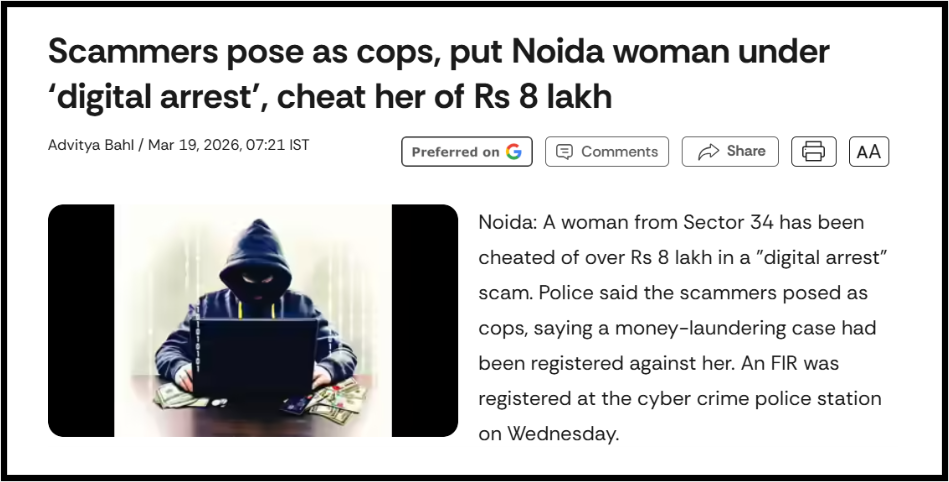
To make the situation feel real, the scammers even arranged a video call that looked like a courtroom setting.
This made her believe that the matter was serious and official, leaving her too scared to question it.
Over the next 24 hours, they kept pressuring her and convinced her that transferring money was necessary for verification and to clear her name.
Trusting them and wanting to avoid trouble, she transferred more than ₹8 lakh.
It was only after the calls suddenly stopped, and no money was returned, that she realised she had been scammed.
She then filed a complaint through the cybercrime portal, and police have started investigating the case to track down the fraudsters.
How To Report Digital Arrest?
If you ever encounter a digital arrest scam, the key is to stay calm and respond wisely.
Taking the right steps at the right time can help you avoid serious trouble.
You can take the following steps to file a digital arrest complaint:
-
Double-check Who You’re Dealing With
Never take someone’s word at face value just because they claim to be an official. Ask for their details, but don’t rely on them alone.
Always verify through the organisation’s official website or helpline.
Cross-checking independently can instantly expose most impersonation scam.
-
Be Wary of Urgent Payment Requests
Scammers often create a sense of panic to make you act quickly without thinking.
Keep in mind that no genuine authority will ever ask you to transfer money over a call or online.
If you are being rushed to pay immediately, it is almost always a red flag.
-
Keep Your Personal Information Safe
Avoid sharing sensitive details like your Aadhaar number, bank account information, passwords, or OTPs. Once shared, this information can easily be misused for financial fraud.
Even partial information can be enough for scammers to exploit your identity.
-
File a complaint with the Police
Fraudsters may try to isolate you by asking you not to tell anyone.
If you encounter such situations, it’s important to act promptly.
You can file a complaint at your nearest police station regarding the fraud, which not only helps initiate action against the perpetrators but also protects you from further harm.
Acting quickly can help limit the damage.
If you receive such a call, report it through the Sanchar Saathi portal, call the cybercrime helpline, or file a complaint on the National Cyber Crime Reporting Portal.
Early reporting increases the chances of tracking the fraud and preventing further loss.
Need Help?
If you or someone you know is dealing with a situation like this and feels unsure about what to do next, it’s okay to seek help.
Digital arrest scams can be overwhelming and stressful, but you don’t have to face them alone.
With the right guidance, you can handle the situation more confidently, deal with the scammers effectively, and complete the necessary reporting process.
We help you take control of the situation by organising your evidence, identifying gaps in the scam narrative, and guiding you through the exact reporting process, step by step.
Check out the complaint process in our digital arrest fraud response plan and get the support you need.
In many reported cases, victims transferred lakhs of rupees believing they were under investigation.
Unfortunately, after the scam is exposed, digital arrest scam money recovery depends on how quickly the fraud is reported to authorities.
Conclusion
Digital arrest scams are built on fear, urgency, and manipulation, making them feel frighteningly real. But understanding how they work and how to check digital arrest is your biggest advantage.
No genuine authority will ever threaten you over a call, isolate you, or ask for money to resolve a case.
The moment something feels rushed or secretive, take a step back and question it. Stay calm, verify everything, and involve someone you trust.
Awareness and caution can protect you from becoming the next victim of this growing scam.