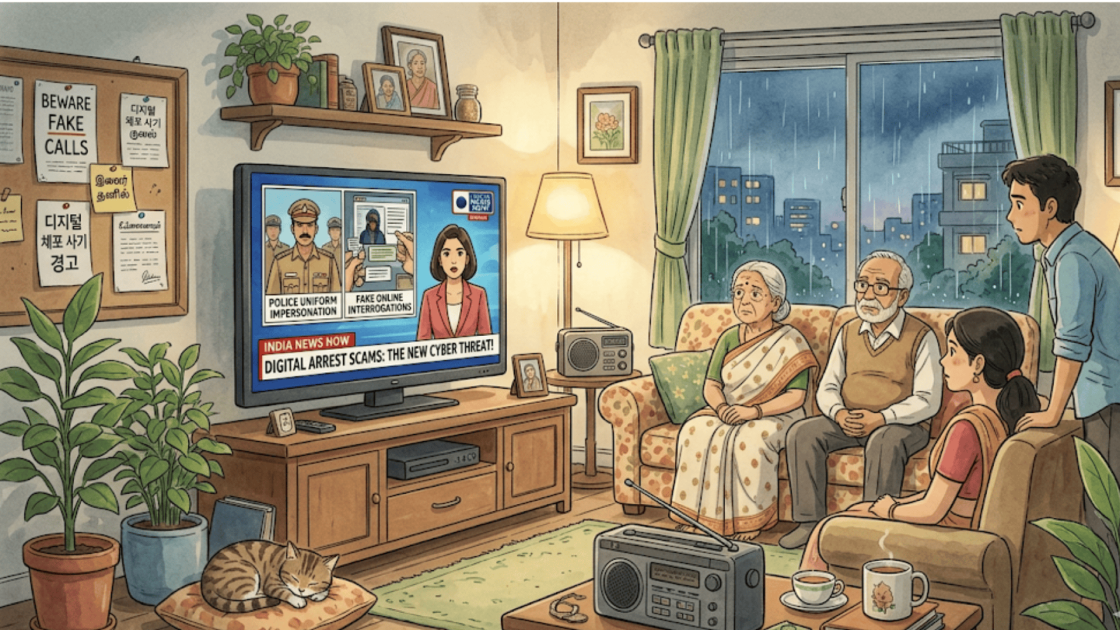
The term digital arrest has quickly become one of the most terrifying phrases in India’s digital world.
Unlike a typical bank scam, where someone just steals your password, this fraud targets your mind.
Scammers use intense psychological pressure to make you feel like a criminal.
They want you to believe that you are under the watchful eye of the law. Plus, they make you think that one wrong move will land you in a jail cell.
Most people follow their orders because the situation feels incredibly urgent and scary.
But here is the reality: digital arrest is a staged performance designed by criminals to rob you of your life savings.
In this blog, we will break down the key details of this scam and how to stay safe.
What is a Digital Arrest Scam?
A digital arrest is a high-tech form of extortion. Criminals pretend to be police officers, CBI agents, or officials from the Narcotics Control Bureau (NCB).
This digital arrest modus operandi usually starts with a WhatsApp call claiming that a suspicious package linked to your identity has been seized.
The arrest part happens when they force you to stay on a live video call. They tell you that you are under virtual surveillance.
Plus, they tell you that you cannot leave your room, talk to anyone, or even turn off your camera.
They might even show you fake arrest warrants or court orders with your name on them.
The goal is to isolate you and keep you in a state of panic until you agree to pay a verification fee or bail fee to clear your name.
Is Digital Arrest Legal in India?
There is absolutely no provision for digital arrest in the Indian legal system.
No law, not even the new Bharatiya Nyaya Sanhita (BNS), allows a police officer or a judge to arrest you over a video call.
In India, a real arrest must follow strict legal procedures under the Bharatiya Nagarik Suraksha Sanhita (BNSS).
A real officer must be physically present, show you a valid ID, and provide a memo of arrest.
No real government agency will ever ask you to stay on a video call for 24 hours.
Plus, they will not demand money to settle a criminal case. If anyone asks for money over a call to avoid jail, they are a criminal, not a cop.
Can Police Do Digital Arrest?
Let’s clear this up right away: no, police cannot “digitally arrest” you.
If you ever receive a call or video message claiming that you are under arrest and must stay on the line, pause and think for a moment.
Real law enforcement does not work this way.
While police may contact you through calls, emails, or messages for genuine reasons like inquiries or notices, an arrest is a legal process that cannot happen over a screen.
Scammers rely on fear and urgency to make you act without questioning, so if something feels off, like threats, pressure, or demands for money, it probably is.
Taking a moment to verify instead of reacting instantly can save you from falling into a trap.
Is Digital Arrest a Cyber Crime?
Yes, it is one of the most serious forms of cyber-enabled crime in India.
It is not just cheating; it is a combination of several criminal acts. It involves the use of the internet, spoofed calls, and video platforms.
So, it falls under the jurisdiction of the Cyber Cell.
In early 2026, the Supreme Court of India even described these scams as “digital dacoity”.
The government has since classified them as organised cybercrime because large syndicates usually run them.
They are often operating across state or international borders.
These criminals do not just steal money; they use digital tools to hijack a person’s freedom and peace of mind.
Digital Arrest Scam Real Cases
These real stories show how easily anyone can be tricked by these scary video call scams. They are a powerful reminder that real police will never arrest you over a phone screen.
1. The South Delhi NRI Couple Fraud
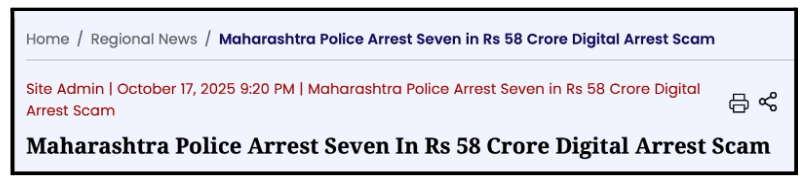
An elderly NRI couple living in South Delhi’s Greater Kailash area was targeted and duped of over ₹14.8 crore.
The scammers kept them under round-the-clock video surveillance for two weeks. They claimed their SIM card was linked to a money-laundering investigation.
The fraudsters even conducted fake court proceedings over video. And they convinced the couple to move their funds into RBI-mandated accounts for verification.
Delhi Police eventually busted this racket, which had international links to operators in Cambodia and Nepal.
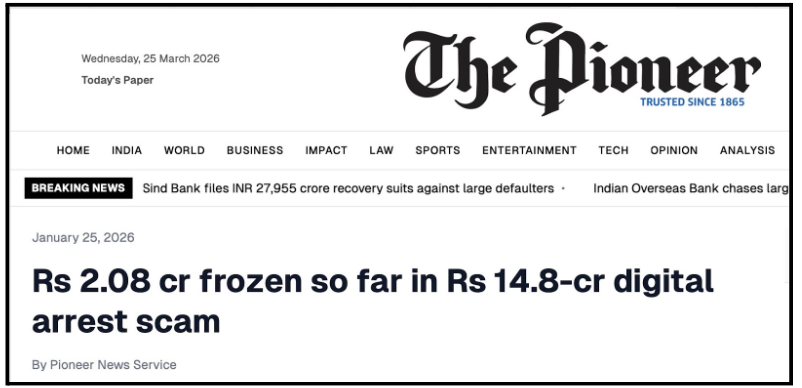
2. The ₹58 Crore Mumbai Businessman Case
This represents one of the largest digital arrest frauds in Mumbai’s history.
A 72-year-old businessman was kept under virtual arrest for 40 days. The criminals staged elaborate fake courtrooms and police interrogations over video calls.
They eventually tricked him into transferring ₹58.13 crore in multiple instalments. This wiped out his entire life savings.
Maharashtra Cyber eventually tracked the money through over 6,500 fake bank accounts and arrested seven people linked to the syndicate.
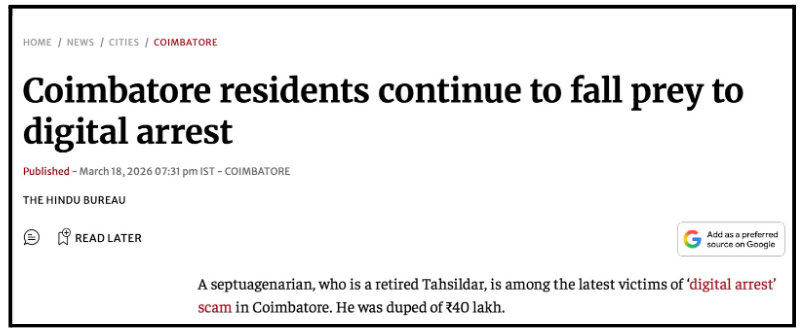
3. The ₹40 Lakh Retired Tahsildar Case
In Coimbatore, a retired government officer was targeted by scammers pretending to be from the Reserve Bank of India.
They claimed his Aadhaar was misused in a high-profile criminal case.
The victim was kept under digital arrest for an entire day and told his money needed to be verified by the RBI.
He transferred ₹40 lakh in multiple transactions before his family grew suspicious.
This case highlights how scammers specifically target elderly people who have a high respect for authority.
How to Protect Yourself from Digital Arrest?
Staying safe is about being more alert than the scammer. Here are the most effective ways to protect yourself:
-
Verify the Official Source
If someone calls you claiming to be a police officer, do not trust their uniform or background. Real officers will never use WhatsApp for an investigation.
Ask for their name, rank, and the name of their police station.
Then, hang up and call that police station directly using a number you found on an official government website.
-
Spot the Uniform Trap
Scammers often wear uniforms and sit in rooms with official-looking logos.
They do this to build fake trust. Remember, anyone can buy a uniform or set up a fake background.
If you are being told you are a suspect, ask them to send an official summons via post.
Real legal work is done on paper, not through a video screen.
-
Never Share Personal or Financial Data
A real investigator will never ask for your bank account details, your Aadhaar number, or an OTP over the phone to verify your funds.
They certainly will not ask you to move your money to a secret government account.
The moment someone mentions money or bank transfers, it is a scam.
-
Break the Chain of Isolation
Scammers will tell you that the case is secret and you cannot tell your family.
This is their most powerful weapon. They want you to feel alone.
Always tell a friend or family member if you receive such a call.
Just speaking to another person can help you realise that the story does not make sense.
-
Check the Email/Link Details
Scammers often send fake notices via WhatsApp.
Look closely at the email address or the link. Official government emails in India almost always end in .gov.in or .nic.in.
If you see a Gmail or Outlook address being used for a CBI notice, it is a fake.
How To Report A Digital Arrest?
If you have been targeted, acting quickly is crucial for digital arrest scam money recovery.
Here is the step-by-step process to lodge a digital arrest complaint:
1. Organise Your Evidence
Before you file any report, you must gather your proof. Take clear screenshots of the video calls and the WhatsApp numbers.
Also, take screenshots of every single document the scammers sent you.
Most importantly, save your bank transaction receipts and the exact UPI IDs or account numbers where you sent the money.
Having these details organised makes it much easier for the police to track the fraud across different bank accounts.
2. Call the Cybercrime Helpline
The first and most critical step is to call the national cybercrime helpline the second you realise you have been scammed.
Reporting within the first 1-2 hours is vital.
The police officials will note your basic details and alert the involved banks to place a hold on the suspect accounts.
3. File a Cybercrime Complaint
Visit the cybercrime portal to complete your report. File your complaint under the financial fraud category.
Write a clear description of the scam and upload your screenshots and bank receipts.
A detailed report here helps the police map out the entire transaction chain.
4. Notify Your Bank Immediately
Call your bank’s fraud department or visit your branch in person. Ask them to flag the transaction as a cybercrime.
Banks have special channels to communicate with the receiving bank.
They can try to stop the payment from being settled.
5. File a Physical FIR
For large losses, a physical FIR is essential.
Visit your local Cyber Cell or police station. Submit all the proof that you have collected so far.
A proper FIR is a powerful tool that forces banks to cooperate.
Plus, it provides the legal basis for recovering your money through the court system.
Need Help?
If you are being threatened by a scammer right now, the most important thing is to hang up the call.
They cannot arrest you through a screen. If you have already lost money, do not panic.
If you want guidance on reporting the case, you can check out our online fraud response plan for better clarity.
With this, you will get assistance every step of the way. So, do not delay further.
Conclusion
A digital arrest is nothing but a well-acted lie. It works because it exploits our fear of the law and our respect for authority.
However, once you know that no real agency works this way, the scammer loses their power over you. Staying informed is your best defence.
Remember, if someone asks for money to stop an arrest, they are the ones who belong in jail. So, if you ever receive any such call, just hang up and report the number.