Have you ever scrolled through LinkedIn or Naukri.com and felt that thrill when a “dream job” pops up, especially one promising quick cash for simple tasks?
What if I told you some of those offers might be traps set by foreign entities to snag your personal info or even national security details?
The University Grants Commission (UGC) has sounded the alarm, warning universities and students about this sneaky scam.
It’s not just paranoia; this is a real cyber threat targeting Indians, particularly those in defense, journalism, or research fields.
In this blog, we’ll break it down simply, spot the red flags, and arm you with tips to stay safe from job scams in India.
UGC Warning
The UGC recently fired off directives to all universities and colleges across India, urging them to alert students and staff.
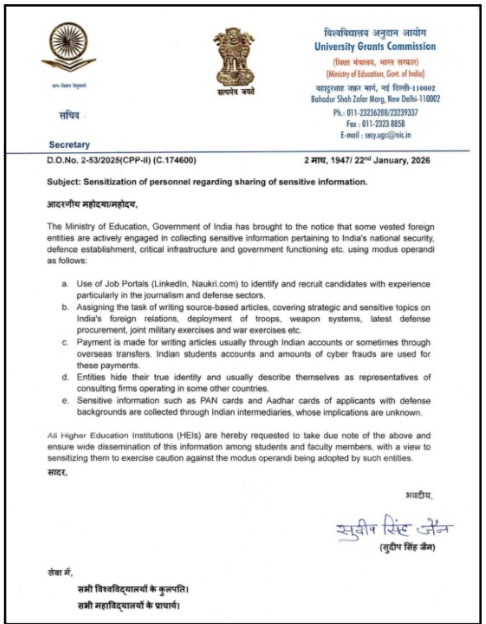
Here’s the typical playbook, broken down clearly so you see the pattern.
They launch with a hook: a LinkedIn ad or Naukri alert for a high-paying role abroad, often in defence or tech, promising salaries like Rs 2 lakh monthly.
You apply, sharing Aadhaar, PAN, salary slips, or even bank proofs for “verification.”
These individuals then give you a task of creating “source-based articles” on highly sensitive subjects, including India’s foreign relations, weapon systems, troop deployments, and defence procurement.
These aren’t legit recruiters. They’re masking as consulting firms from other countries, targeting folks with backgrounds in defense, national security, or critical infrastructure.

The goal? Extract details like PAN cards, Aadhaar numbers, bank info, or even intel on India’s defense setups.
Ever received a “congrats, you’re selected” ping? That’s step one, so pause there.
UGC got this intel from the Ministry of Education, highlighting how these scammers promise payments but often route money through dubious bank accounts linked to cyber fraud.
How These Job Scams Operate on Portals?
Picture this: You’re a student or young professional low on cash. A post offers ₹500-₹2000 for writing short articles or surveys.
Sounds harmless, right? But soon, they’re asking for your ID proofs or work history in sensitive areas.
Scammers are pros at blending in. They post enticing job ads on LinkedIn, Naukri, Indeed, or even Facebook groups, posing as international consultancies.
Targets? Mainly Indians with journalism experience, defense connections, or access to strategic information.
Once you bite, they move fast:
- Initial Hook: Simple tasks like “write a 200-word article on defense tech” for quick pay.
- Data Grab: Request your resume, PAN, Aadhaar, and bank details for “payment processing.”
- Escalation: Probe deeper into your knowledge of military sites, infrastructure, or government projects.
- Payment Ploy: Use infected links or mule accounts (often Indian students’ banks) to transfer “earnings,” implicating you in money laundering.
Reports from Hindi news outlets like Live Hindustan detail how these entities hide their true identity, claiming to be from neutral countries while funneling data abroad.
It’s espionage disguised as employment, and universities are ground zero because students and faculty often have access to research data.
Red Flags to Spot Fake Job Offers
Don’t let excitement cloud your judgment.
Here are the steps to identify a fake job offer letter:
- Too-Good-to-Be-True Pay: ₹1000 for 30 minutes? Legit jobs don’t pay like lotteries.
- Vague Company Details: No verifiable website, odd email domains (e.g., [email protected]), or LinkedIn profiles with few connections.
- Sensitive Requests Early: Asking for Aadhaar/PAN on first contact? It’s a massive no.
- Payment via Links/Apps: Avoid sharing bank details; use official UPI only after verification.
- Defense-Focused Queries: Jobs oddly fixated on India’s military, nukes, or infrastructure? Report it immediately without any doubt.
UGC emphasizes verifying employers via official sites or the MCA portal before sharing anything. Cross-check on Google and if it’s a ghost company, run.
Why Students and Universities Are Prime Targets?
Why hit campuses?
Universities brim with bright minds researching AI, defense tech, and biotech, which are hot commodities for foreign intel. Freshers, strapped for cash, are easy marks.
Plus, job portals don’t vet posters rigorously. A LinkedIn post can go viral without checks, reaching thousands. UGC’s circular to institutions stresses disseminating this info via emails, WhatsApp groups, and notices to prevent leaks that could harm national security.
This ties into broader cyber threats, like the recent NEET PG data breaches, where personal info got sold online, fueling scams.
Your data isn’t just yours; it could endanger the country.
How to Protect Yourself from Job Portal Scams?
If you want to protect yourself from these scams, you can do so by following some simple rules before you apply.
Stay one step ahead with these practical steps:
- Verify the employer on MCA.gov.in or their official site.
- Never share Aadhaar/PAN/bank details upfront—use virtual numbers or emails for initial chats.
- Use strong privacy settings on LinkedIn; don’t accept connections from unknowns.
- Report suspicious posts directly on the portal (e.g., LinkedIn’s “Report Job” button).
- Stick to verified recruiters from NASSCOM or AICTE-approved lists.
- Install antivirus software, enable 2FA, and educate friends, as knowledge is your best shield.
How to Report a Job Scammer?
If you have spotted a scam, then you need to act fast, as reporting helps authorities track these networks.
You can follow these simple steps:
- File a Cyber Crime complaint: File online at the National Cyber Crime Portal. Provide screenshots, links, and chats.
- Job Portal Report: Flag on LinkedIn/Naukri; they suspend accounts.
- Police FIR: Visit the local station for the cyber cell if personal data is stolen.
- Alert Others: You can post on community platforms and make other people aware of fraud.
Need Help?
If you have been a victim of such a job offer scam, you don’t need to worry. All you need to do is register with us.
Our team of experienced professionals will help you in filing your complaint and make sure that your money is recovered successfully.
Conclusion
Job hunting should excite, not ensnare.
UGC’s alert reminds us: In a digital world, one click can cost your privacy or worse.
Verify, report, and share this wisdom to protect yourself, your peers, and India.
Next time an “easy money” ad tempts you, pause and think: Is it legit, or a foreign fox in recruiter clothing?