Online trading has exploded in popularity across India, bringing with it a flood of platforms promising extraordinary returns.
Scrolling through social media or WhatsApp, you’ve likely encountered ads for trading apps that claim you can turn ₹100 into thousands within days.
Guru Trade7 is one such platform that has captured significant attention and raised serious concerns.
Before you invest a single rupee, you need to understand what you’re dealing with.
This guide examines Guru Trade7 in detail, separates fact from fiction, and explains exactly what Indian law says about platforms like this.
What is Guru Trade7?
Guru Trade7 presents itself as an online trading platform offering access to forex, cryptocurrencies, commodities, and synthetic indices.
The platform operates through a mobile app and website, targeting users who want to participate in financial markets with minimal capital.
How Guru Trade7 Operates?
The platform attracts users through multiple channels:

- Social media ads on Instagram, Facebook, and YouTube promise quick profits
- WhatsApp and Telegram groups where “experts” share trading tips and success stories
- Referral programs that incentivise existing users to recruit friends and family
- Influencer promotions featuring screenshots of supposed earnings
The registration process is notably quick, often requiring just an email address and password, with minimal or no KYC (Know Your Customer) verification.
This ease of entry is itself a warning sign, as legitimate trading platforms in India must follow strict identity verification protocols.
Is Guru Trade7 Legal?
In India, any platform offering trading services, whether in stocks, forex, or crypto, must be registered and regulated by the Securities and Exchange Board of India.
This ensures transparency, investor protection, and accountability.
However, multiple independent reviews and investigations indicate that Guru Trade7 is not registered with SEBI, which is a major red flag.
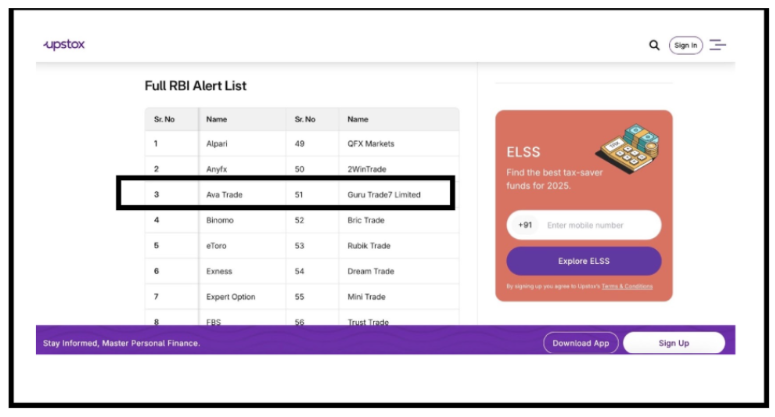
Apart from being unregulated, Guru Trade7 has also been flagged in the alert list issued by the Reserve Bank of India (RBI) for unauthorised forex trading platforms.
This means it is not permitted to offer forex trading services to Indian users under existing laws.
Platforms listed in such alerts are considered high-risk and potentially involved in fraudulent activities.
Engaging with them can lead to financial losses with little to no legal protection.
-
What Does This Mean For Users?
- It operates outside India’s legal financial framework
- There is no regulatory protection for your money
- In case of fraud, legal recovery becomes extremely difficult
- The platform can block withdrawals or disappear without accountability
Since Guru Trade7 is unregulated and lacks legal authorisation, it cannot be considered a legal or safe trading platform in India.
Experts and reviews consistently classify it as high-risk or potentially fraudulent, mainly due to its lack of licensing, transparency, and numerous user complaints.
Is Guru Trade7 Real or Fake?
The platform does exist and appears functional on the surface, you can download the app, register, and access what looks like a trading dashboard with charts, balances, and transaction options.
This kind of polished interface is often designed to create a sense of legitimacy and trust for new users.
However, the fact that a platform is operational does not guarantee that it is safe, regulated, or trustworthy.
To understand the risk, one must look at how trading scams work in India, where scammers often deploy “mirror” apps that show fake market movements.
These apps simulate real-time gains to encourage users to deposit larger sums, only to block withdrawals once the “investment” reaches a certain threshold.
While Guru Trade7 may look and feel like a real trading platform, the overall pattern of behaviour aligns closely with known fraudulent or high-risk schemes.
It is strongly advisable to exercise caution, avoid investing significant funds, and verify any platform through official regulatory bodies before trusting it with your money.
Guru Trade7 Safe or Not?
Not every warning sign appears obvious at first, but patterns begin to emerge if you look closely.
Recognising these red flags early can help you avoid deeper financial risks and make more informed decisions.
1. Unrealistic Profit Guarantees
No legitimate trading platform can guarantee returns of 80%–90%. Financial markets are inherently volatile, and even professional traders experience losses.
When a platform promises consistent high returns with minimal risk, it’s almost certainly misrepresenting reality.
2. Lack of Transparent Company Details
Guru Trade7 provides no verifiable information about: Company registration details, Names of directors or management, Audited financial statements.
Legitimate brokers openly share this information because they’re legally required to.
3. No Regulatory Registration
This is the most critical issue. Guru Trade7 is not registered with SEBI or any recognised financial regulatory body in India.
More concerning, the Reserve Bank of India has specifically added Guru Trade7 Limited to its Alert List of unauthorised forex trading platforms.
4. Pressure Tactics
Users report aggressive tactics from “account managers” including: Urgency messaging (“Last slot available!”), Claims of insider information,
Pressure to deposit more funds to “unlock” withdrawals, Threats that accounts will be closed if deposits aren’t made.
Guru Trade7 User Reviews
Guru Trade7 has received a large number of negative reviews across various forums and review platforms.
-
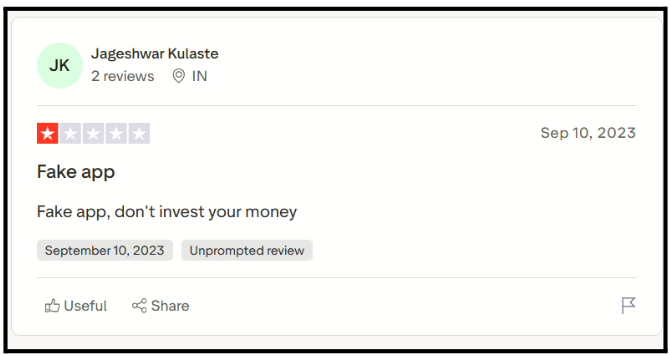
Untrustworthy and Misleading App
The reviewer has given the app a 1-star rating, which indicates strong dissatisfaction.
The review title is “Fake app”, suggesting the user believes the app is not genuine or trustworthy.
-
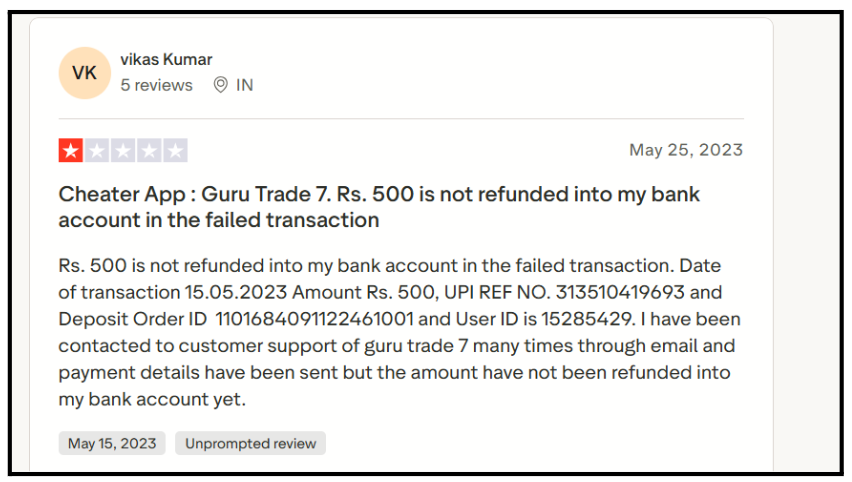
Poor Customer Support
The user reports a failed transaction where ₹500 was deducted but not refunded, despite multiple follow-ups with support.
This reflects poor customer service and a lack of timely resolution.
Repeated attempts via email without action have led to frustration and loss of trust.
Prompt refunds and responsive support are critical to maintaining user confidence.
What to do if Someone Scams You in a Trade?
If you suspect that you’ve been a victim of a trading scam, it’s important to act quickly and follow these steps:
- Preserve Evidence: Start by collecting and saving all relevant proof—this includes transaction receipts, screenshots, chat logs, emails, and any other communication.
- Lodge a Complaint with Authorities: Report the issue to the Reserve Bank of India through its consumer grievance portal, or file a complaint with the Securities and Exchange Board of India with complete details.
- File a Cybercrime Complaint: File a complaint on the official cybercrime portal, clearly outlining the incident and attaching all supporting evidence.
- Register an FIR: Visit your nearest police station and file a First Information Report (FIR) to initiate a formal investigation.
Keep in mind, while recovery of funds isn’t always guaranteed, reporting the scam can help authorities take action and protect others from similar frauds.
Need Help?
If you’ve interacted with a trading platform like Guru Trade7 and something feels off, it’s important to act promptly and stay cautious.
Situations like these often become clearer only after certain issues arise, especially around withdrawals or communication.
You can check the detailed process in our trading fraud response plan, to organise your proofs and get more clarity on the next steps.
You don’t have to navigate this alone. With the right approach and timely action, you can handle the situation with more clarity and control.
Conclusion
Guru Trade7 may appear attractive with its promises of quick profits and easy entry, but the reality tells a very different story.
The platform shows multiple warning signs, a lack of transparency, unrealistic return claims, an absence of proper regulation, and consistent negative user experiences.
Most importantly, it is not registered with the Securities and Exchange Board of India and has been flagged by the Reserve Bank of India, making it an unauthorized and high-risk platform in India.
In today’s digital trading landscape, if something sounds too good to be true, it usually is.
Legitimate trading involves risk, regulation, and transparency, none of which Guru Trade7 convincingly provides.
Engaging with such platforms can put your money at serious risk, with little to no legal protection.