Between April 2021 and November 2025, authorities swooped in and blocked a whopping ₹7,647 crore from landing in fraudsters’ bank accounts.
Impressive, right?
Yet, in that same window, only ₹167 crore reached victims’ pockets, even as online financial scams raked in a mind-boggling ₹52,969 crore in reported losses.
These figures, straight from the Ministry of Home Affairs (MHA), highlight the dangers of cyber crime clearly. We’re getting better at stopping money from reaching criminals, but returning stolen funds remains the real challenge.
That’s where the real battle lies.
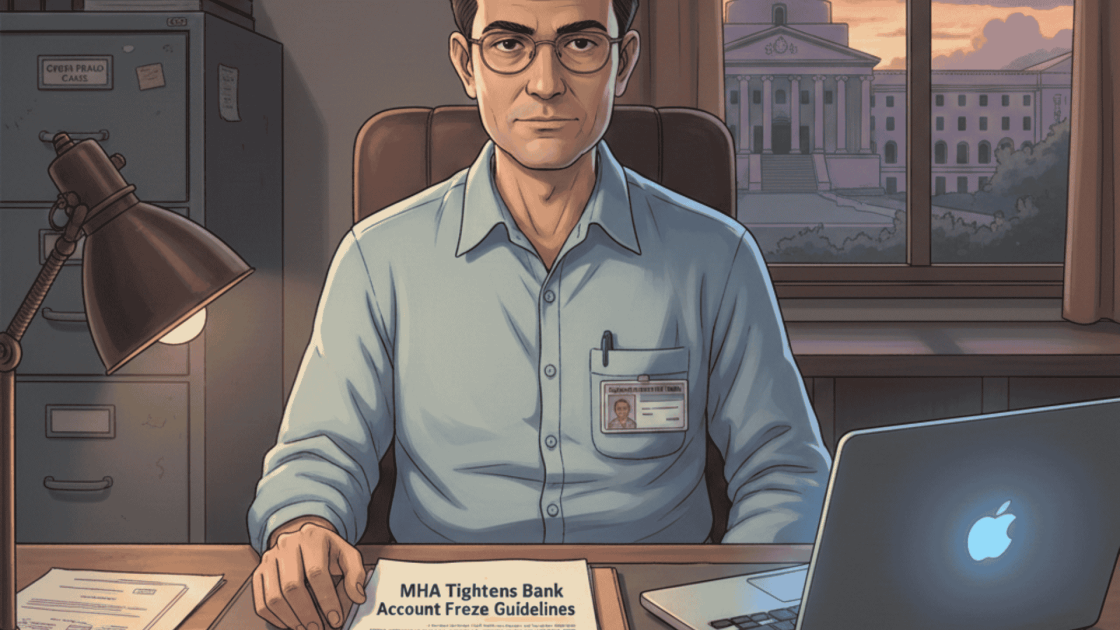
Now, the MHA is stepping up with tighter rules on bank account freezes in cyber fraud cases, aiming to make the process faster, fairer, and more victim-friendly.
If you’ve ever worried about scams wiping out your savings, this could be a game-changer.
Let’s break it down.
Why Bank Account Freezes Matter in India’s Cyber Fraud Fight?
Cyber fraud in India isn’t just a buzzword; it’s a daily nightmare.
Think UPI scams, phishing links disguised as bank alerts, or those shady “investment” apps promising moonshot returns.
The National Cyber Crime Reporting Portal logs over 1.5 million complaints annually, according to I4C data. When police trace the money trail, freezing suspect bank accounts is step one to claw it back.
But here’s the catch: under the old rules, freezes could drag on for months, tying up innocent funds too.
Banks froze accounts on police request, but without strict timelines or oversight, victims waited endlessly, and fraudsters’ lawyers often got accounts unfrozen before the cash could be returned.

MHA’s new guidelines, announced in late 2025 via the Indian Cyber Crime Coordination Centre (I4C), fix this.
They mandate banks to freeze accounts within hours of a police alert, limit freezes to confirmed fraudulent transactions only, and set a 180-day cap unless renewed with solid evidence.
This comes from MHA’s official press note and aligns with RBI’s 2023 master directions on fraud monitoring.
The goal?
Speed up refunds while protecting everyone involved. No more “frozen in limbo” stories that leave victims high and dry.
Key Changes in MHA’s New Bank Freeze Guidelines
These aren’t vague suggestions, but they’re enforceable rules rolled out to banks, police, and cyber cells nationwide.
Drawing from MHA’s detailed advisory and RBI’s compliance framework, here’s what’s new:
- Lightning-Fast Freezes: Banks must act within two hours of receiving a police-issued “Freezing Order” via the I4C portal. No more waiting days for manual emails.
- Targeted Action Only: Freezes apply strictly to tainted funds like traced digital transactions linked to fraud. Legitimate balances stay untouched, reducing collateral damage.
- Strict Timelines for Resolution: Accounts auto-unfreeze after 180 days if no court order extends it. Victims get priority hearings for refund claims within 14 days.
- Victim Refund Boost: A new “Victim Refund Protocol” requires banks to provisionally release up to 50% of frozen sums to verified victims after police verification, per MHA-I4C guidelines.
- Tech Integration: Everything funnels through the National Integrated Cyber Crime Coordination Centre (NICCC) platform, linking police, banks, and the National Payments Corporation of India (NPCI) for real-time tracking.
These tweaks build on the Bharatiya Nagarik Suraksha Sanhita (BNSS), which empowers quicker police action in economic offenses.
RBI’s backing ensures banks comply, with penalties for delays. Early reports from MHA show a 30% uptick in refunds since rollout ehich is proof of it working well.
How do these rules protect you from Cyber Scammers?
Imagine getting a call: “Your ATM card is blocked. Share the OTP to unblock.” You do, and your ₹50,000 is gone.
Under old rules, even if police froze the scammer’s account, you’d wait months for your money. Now, with MHA’s tightened grip, that timeline shrinks dramatically.
For banks, it means less litigation from account holders claiming wrongful freezes. For police, it streamlined workflows via the I4C dashboard.
And for you? Faster justice.
MHA data shows digital frauds hit rural India hardest with over 40% of cases.
These updated rules help level the playing field. When combined with RBI’s two-factor authentication mandates and NPCI’s UPI safety limits, they form a solid defense shield, especially for people who know how to protect yourself from cyber crime and act early instead of reacting late.
What To Do If You Are A Victim of Cybercrime?
Spot a scam? Don’t panic and act fast to trigger these freeze rules.
Here’s your step-by-step guide on where to report Cyber Crime:
- File a Cyber Crime complaint online: Use the National Cyber Crime Reporting Portal. Upload transaction IDs, screenshots, and bank statements. The portal is directly linked to I4C, triggering instant alerts to the police, and allowing you to track your cyber crime complaint status in real time as the case progresses.
- Alert Your Bank: Forward the 1930 reference number to your bank’s fraud desk. They’ll block your card and start internal probes.
- Follow Up with Police: Visit your local cyber cell or file via the portal’s “Track Complaint” feature. Request a freezing order that they must issue within 24 hours if the evidence holds.
- Claim Your Refund: Once frozen, submit proof to the bank or Superintendent of Police. Use the 180-day window wisely.
Pro tip: Enable RBI-recommended alerts like transaction SMS and app notifications. Over 90% of freezes succeed if reported early, per MHA stats.
Need Help?
If you have lost money to scams and frauds, don’t worry! Recovery is still possible.
All you need to do is register your complaint with us.
Our team of dedicated professionals will help you recover your money.
Conclusion
MHA’s tightened bank account freeze rules mark a pivotal shift in India’s war against cyber crimes in India.
By slashing delays and prioritizing victims, they’re bridging the ₹7,647 crore blocked versus ₹167 crore returned gap.
But remember, prevention beats cure: verify before you click, and stay vigilant.
These changes empower everyday Indians to fight back smarter.