

Quick Summary
Rohit Sinha (name changed) paid a research analyst whose fee kept rising as his trading account grew. Total claim stood at 64,500.
The core violation was a fee structure tied to account balance, which SEBI rules do not permit for research analysts. We filed through SEBI SCORES 2.0 and secured a recovery of 50,000, a 77.5 percent share.
Rohit (name changed) opened a trading account with a small deposit in early 2025. A research analyst reached out through a paid social media campaign and offered a starter package for ₹8,000.
Within three months, Rohit’s account balance crossed ₹2 lakh on paper gains from a few winning trades. The analyst then asked him to upgrade to a higher tier costing ₹22,000, citing his larger portfolio size as the reason.
This is where the file becomes a violation rather than a sales pitch. A SEBI-registered research analyst may only charge fees that are fixed or slab-based on the service tier. Fees calculated as a percentage of a client’s account balance or assets sit outside the permitted structure.
Over five months, Rohit paid three separate upgrade fees, each justified by his rising balance. His total outlay reached ₹64,500 before his trades turned unprofitable and the account balance fell sharply.
The analyst never once mentioned that fees should not move with account size. Every renewal message referenced Rohit’s balance directly, calling it fair pricing for a bigger portfolio.
After understanding his case, our team helped him take the right steps, eventually leading to the recovery of ₹50,000.
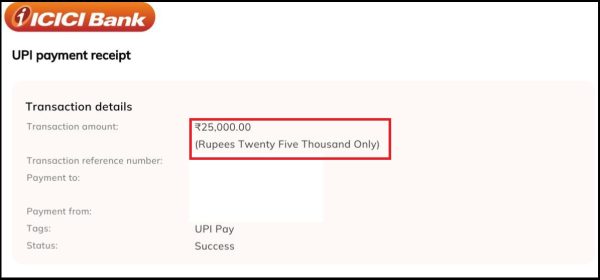
How Our Team Fought and Presented Legal Arguments
Our team began by mapping every payment against the balance figure quoted at the time. We requested Rohit’s full WhatsApp export and his trading account statements for the entire period.
Step 1: Establish the fee pattern
We mapped all four payments on a single timeline and linked each to the account-balance screenshots the analyst himself shared.
This made the payment pattern clear and difficult to dispute.
Step 2: Cite the specific regulation
We identified the exact SEBI Research Analyst regulation governing how fees must be structured and disclosed.
The complaint showed how the analyst’s variable fee model conflicted with those requirements.
Step 3: Draft the legal notice
The notice pinpointed the specific clause allegedly breached and attached the corresponding balance-linked messages as evidence.
With the documents placed side by side, there was little room to deny the fee arrangement.
Step 4: File on SCORES 2.0
We submitted the complaint with a clear timeline, fee-pattern chart, and copies of every invoice Rohit had received.
This gave SEBI a structured evidence trail instead of a complaint based only on allegations.
The analyst’s defense claimed the higher fee reflected a premium tier with more calls per day. We countered that the tier upgrade offer itself was triggered by balance size, not by any service change Rohit had requested.
Successful Recovery of ₹50,000
After SCORES escalation and a follow up grievance review, the analyst agreed to settle. Rohit recovered ₹50,000 of his ₹64,500 claim, a 77.5 percent share.
The final settlement closed within eleven weeks of the first complaint being filed. Rohit received the amount directly into his bank account.
More money in your account shouldn’t mean more fees in theirs.
Register with us if your advisory fee has been rising with your account balance. We will review your payment trail for free.
Conclusion
Rohit’s case shows how rising advisory fees can signal a regulatory violation, not simply a premium service.
The payment trail and balance-linked messages became crucial evidence in challenging the analyst’s fee structure. By presenting the facts chronologically, the complaint established a clear connection between account size and fees charged.
His ₹50,000 recovery also shows why investors should act when an advisory fee model appears questionable.
If your fees have increased with your portfolio, review the payment records before accepting the charges as legitimate.
Don’t let illegal fee models go unchallenged.
Report. Recover. Stay Fraud Free.
No. Fees must follow a fixed or slab structure disclosed at the start. A fee that rises with your account balance or profits breaks the permitted model. Yes. Payment records, invoices, and chat history showing the fee logic are often enough to build a strong file. No. Recovery percentage depends on how much of your claim was pure fee against how much was trading loss, which follows a separate rule. Eleven weeks from the SCORES complaint to the final settlement, which is a typical timeline for a well documented fee dispute.Frequently Asked Questions





 Add us as a preferred source on Google »

