

Quick Summary
Initial Claim: ₹2,20,000 Core Violation: A firm registered as a Research Analyst gave recommendations with no documented basis, communicated only through WhatsApp, misrepresented basic facts about how markets operate, and pushed for further investment once losses appeared. Forum Used: Direct negotiation with the firm, following a formal legal notice. Recovery Secured: ₹1,00,000, roughly 45 percent of the claim. Pranav Deshmukh (name changed) is not a market expert. He trusted what he was told. He was told something that was simply not true, that markets operate around the clock, and that single false claim shaped everything that followed.
Pranav’s advisory relationship with a firm registered as a Research Analyst rested on a basic misrepresentation early on. He was told the markets operated twenty-four hours a day, a claim used to justify constant engagement and near-continuous trading pressure.
This was not a minor exaggeration.
Markets operate within defined hours, and a claim suggesting otherwise misrepresents the most basic fact a client needs to understand about how their own trades actually function.
Zero Research, Full Risk: The Reality Behind the Recommendations
Alongside this misrepresentation, Pranav received trade recommendations that showed no evidence of the analysis SEBI requires behind every research based call.
Specific targets, along with instructions to buy, hold, and sell, arrived without any documented reasoning attached.
Every one of these instructions came through WhatsApp chats and calls, a channel that offers none of the verifiable, professional record-keeping SEBI expects from a registered research analyst’s client communications.
Anyone receiving unresearched, WhatsApp-only trade instructions can file a complaint against sebi registered research analyst, since the absence of documented analysis behind a paid recommendation is a clear, independently provable violation
More Money Requested As Losses Grew
As Pranav’s losses accumulated, the response was to encourage further investment rather than to pause and reassess.
This pattern of pushing additional capital into a losing position, particularly without any documented suitability assessment, is precisely the kind of inducement SEBI’s rules exist to prevent.
Paying ₹1,72,000 for Unexplained, Unbacked Services
Throughout the entire relationship, Pranav never received a single invoice or a written service plan describing what he was actually paying for.
His total payments to the firm reached ₹1,72,000, made without any documentation explaining the fee structure or the scope of the services it was meant to cover.
How a Proven Misrepresentation Became the Anchor of Our Case?
The false statement about markets operating around the clock gave this case an unusually clear starting point, since it was a factual claim that could be shown to be simply untrue.
Step One: We Documented The Market Hours Misrepresentation Directly
The specific claim that markets never close was recorded word for word from the communications where it appeared, since a factually incorrect statement is far harder to argue around than a vague misleading impression.
Step Two: We Catalogued Every Undocumented Recommendation
Each trade instruction was reviewed for any accompanying analysis or research basis. None existed anywhere in the record, establishing a consistent pattern rather than a single lapse.
Step Three: We Traced The Pressure To Invest Further After Losses
Messages encouraging additional investment following mounting losses were compiled separately, showing a clear pattern of inducement rather than ordinary advisory guidance.
Step Four: We Highlighted The Complete Absence Of Invoices
The total lack of any invoice or written service plan across ₹1,72,000 in payments was documented as its own transparency violation, independent of the quality of the advice itself.
Step Five: We Sent A Legal Notice Covering Every Documented Violation
Our notice set out the false market claim, the undocumented recommendations, the pressure to invest further, and the missing invoices together, each tied to its specific SEBI regulation.
Step Six: We Pushed Through Direct Negotiation With The Firm
With a factually false claim anchoring the complaint alongside the documentation gaps, our team engaged the firm directly to move the matter toward resolution.
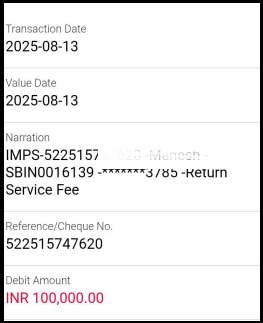
Through this direct negotiation, the matter was resolved with a recovery of ₹1,00,000.
Told Something About The Market That Simply Wasn’t True? Our Team Can Help
Pranav’s case started with one factually false claim we could document word for word. If something you were told about how trading works has ever sounded off, write it down exactly as it was said.
Register with us and we will take it from there.
Conclusion
A misrepresentation that can be checked against basic fact, like a false claim about when markets are actually open, often makes a stronger starting point for a complaint than a vague sense that the advice was simply bad.
Pranav’s case shows why documenting the exact wording of a claim like this matters, since a factually false statement is difficult for any firm to explain away later.
Paired with the complete absence of invoices and any research basis behind the recommendations, that single false claim became the anchor for a case built on documentation the firm itself could not produce.
Report. Recover. Stay Fraud Free.
Frequently Asked Questions
A specific, checkable misrepresentation is harder to dispute than a subjective judgment about advice quality, since it can be verified against basic, undisputed facts.
It can be used, but SEBI expects professional, verifiable record keeping around client communications. Relying on it exclusively, with no other documentation, weakens a firm's compliance position.
It means no documented research, data, or analysis exists behind the specific buy, hold, or sell instruction given, which SEBI regulations require research analysts to maintain.
Yes, particularly without any reassessment of suitability or risk appetite. Pushing additional capital into a losing position is a recognised form of prohibited inducement.
Keep every payment record you have, since the absence of invoices is itself a documentable transparency violation, separate from any dispute about the advice received.





 Add us as a preferred source on Google »

