

Quick Summary
A college student from Ludhiana claimed ₹1,54,473, made of ₹1,35,545 in fees and a ₹18,928 trading loss. A SEBI registered research analyst took his first payments 86 minutes before he signed the agreement. The firm invoiced only ₹65,000 of the fees and gave trade orders by phone, although its own agreement promised SMS only. We sent a formal legal notice and then filed on Smart ODR. The matter resolved with a recovery of ₹70,000, about 45 percent of the claim.
What if a research analyst takes your money before you even sign the agreement?
That is exactly what happened to Dev (name changed), a college student from Ludhiana, and a simple timestamp proved it.
In this case study, you will see how we helped him recover fees paid before signing a research analyst agreement, using only the firm’s own invoices, timestamps, and call recordings.
Research Analyst Agreement Signed After The Money Moved
Dev subscribed to an index options service sold by a firm registered with SEBI as a Research Analyst.
He signed the services agreement digitally, with Aadhaar, late that afternoon.
The signature carried a timestamp.
His first two payments had already reached the firm, about 86 minutes earlier.
Why Fees Taken Before Consent Break SEBI Rules?
SEBI rules say no research service can be rendered and no fee charged until the client’s consent on the terms is received. The duty sits with the analyst, not the client.
Here the fee came first and the consent came after. The agreement’s own timestamp proved it.
Eight Payments In Six Days Through A Payment QR Code
Over the next six days, Dev paid the firm eight times. The total was ₹1,35,545.
Every payment went through a payment collection QR code sent by the firm.
Anyone who paid a research analyst this way can start a research analyst complaint with those payment records.
Research Analyst Fees Collected Without Invoice: Only ₹65,000 Of ₹1,35,545 Was Invoiced
The firm issued Dev two invoices in total. One was for ₹3,000 and covered a one-week service.
The other was for ₹62,000 and covered a service running past four months.
That made ₹65,000 on paper.
The other ₹70,545 had no invoice, no receipt, and no written explanation of what it was for.
₹48,000 Taken While A Trade Was Running
On the last two days, with nothing left to sell, the firm took a further ₹48,000 in two payments. Only the one-week service was running at that time.
The longer service was still a week from starting.
Those payments were taken while Dev’s positions were open and losing money.
A Price That Appeared On No Price List In The Agreement
The agreement’s own annexure listed prices for each service. Weekly was ₹3,000, and the yearly rate was ₹1,78,180.
The ₹62,000 invoice matched no line on that list. The agreement itself also recited a ceiling of ₹1,51,000 a year per family, yet its yearly price sat ₹27,180 above it.
Trade Calls On Phone, Not SMS: What The Agreement Said Versus What Happened?
The agreement was unusually clear. All recommendations come by SMS. The firm does not give recommendations over the phone.
It said only messages from the registered mobile number or email count as research.
Dev never received a single research report or recommendation SMS.
Every Trade Instruction Came By Phone Call
Dev had call recordings. On them, a representative named the contract, the quantity, the target, and the stop loss. He then told Dev to wait and not exit.
The same representative asked how much money was in the demat account. He then said to take large quantities in one go.
Profit Promises The Agreement Denied
The agreement said the firm sells no guaranteed return calls. The recordings said otherwise.
The representative said the responsibility for making a profit would be his. He also named a specific profit figure of fifty thousand rupees.
Pressure Calls To A Student And His Father
Dev is a student. The representative pressed him for a further payment and said his service would be cancelled if it was not made.
On a later call, the representative said he had spoken to Dev’s father too. He then apologised to both of them.
Non-Disparagement Clause In A Research Analyst Agreement And Other Terms Against SEBI Rules
The agreement had clauses that worked against the client.
Each one went against SEBI rules.
- Breakage fee. Leaving early meant paying half the remaining fee, while SEBI rules say a client gets a proportionate refund and no breakage fee.
- No refund clause. The termination clause offered refunds only if the firm lost its registration.
- Non disparagement. The client agreed never to say anything that could harm the firm, publicly or privately. On its face it covered a SEBI SCORES complaint.
- Courts of another city. Every dispute had to go to courts about 400 kilometres from where Dev lived.
How We Built The Claim From The Firm’s Own Paperwork?
The case rested on timestamps, invoices, and recordings.
We built it in six steps:
Step 1: Compare The Signature Time With The First Payment
The digital signature time and the payment times were set side by side.
The 86 minute gap became the opening point of the notice.
Step 2: Reconcile Every Payment Against Every Invoice
All eight payments were listed with their times and running totals.
Against them sat two invoices, leaving ₹70,545 unexplained.
Step 3: Match The Invoices To The Price List
The ₹62,000 invoice was checked against the annexure. It fitted no listed service and no listed period.
Step 4: Transcribe The Call Recordings
Each instruction, promise, and payment demand was written out with its translation.
We then matched each to the regulation it broke.
Step 5: Send A Formal Legal Notice
Our notice demanded a refund, the records behind every instruction, and written confirmation that the non-disparagement clause would not be used against him.
Step 6: Escalate To Smart ODR
When the notice did not settle the matter, we filed on Smart ODR portal with the payments, invoices, agreement, and recordings attached.
How We Recovered ₹70,000 Through Smart ODR?
Dev’s claim stood at ₹1,54,473, made up of ₹1,35,545 in fees and ₹18,928 in trading loss.
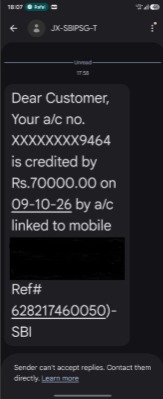
Through the Smart ODR process, the matter was resolved with a recovery of ₹70,000, about 45 percent of the claim.
Paid Before You Signed? Our Team Can Help You Recover Your Fees
Check the time on your digital signature and compare it with your first payment.
If the money moved first, Register with us and we will build the case from those timestamps.
Conclusion
Dev’s case did not depend on any expert opinion. It depended on a clock. The signature said 17:57, and the payments had landed earlier.
Every other point grew from the firm’s own paperwork.
It also shows how far an agreement can disagree with a firm’s own behaviour.
The paper said SMS only, no guaranteed calls, and no execution on the client’s behalf. The recordings showed phone orders, profit promises, and pressure on a student.
A recovery of about 45 percent is not a full refund, and we say so plainly. It reflects what the documents could prove at the stage the dispute settled.
If a notice to your own firm stalls, the Smart ODR complaint portal takes the same documents into a structured forum.
Report. Recover. Stay Fraud Free.
No. SEBI rules require the client’s consent on the terms before any service or fee. A payment timestamp earlier than your signature is strong evidence. No. You are entitled to a proper invoice for each payment. Fees with no invoice or register entry can be challenged. Keep the recordings and the agreement together. The gap between the firm’s written terms and its actual conduct is itself evidence. A clause cannot take away your right to complain. The Investor Charter says you are not bound by terms that contravene SEBI rules. Yes. SEBI rules give a proportionate refund on early termination and bar breakage fees. A non refundable line does not override that.Frequently Asked Questions





 Add us as a preferred source on Google »