

Quick Summary
Initial Claim: ₹1,00,000 Core Violation: An unregistered individual with no disclosed SEBI status convinced a client to open a broker account and pay a service fee for guaranteed profit tips, then disappeared once losses mounted, leaving the broker accountable for failing to prevent misuse of its own platform. Forum Used: SEBI’s Online Dispute Resolution process, filed against the broker. Recovery Secured: ₹53,000. Rohit Ahuja (name changed) is from Kanpur, Uttar Pradesh. The person who caused his loss never had to answer for it. He disappeared the moment the losses arrived. The broker whose platform he used did not get to disappear as easily.
Rohit received an unsolicited call from someone offering guaranteed profits through stock market trading. He had no trading experience of his own, and the caller’s confidence, combined with a promise of one hundred percent profit with no risk, was enough to convince him to act.
On the caller’s instruction, Rohit opened a demat account with a major broker.
He was charged a service fee of ₹70,000, and every trade that followed was placed purely on the strength of this caller’s tips.
Why Unsolicited Profit Guarantees Violate SEBI Regulations?
At no point did the caller disclose any SEBI registration. No credentials were shared.
No verifiable identity beyond a phone number was ever established. A promise of guaranteed, risk free profit from someone with no disclosed registration status is not advice; it is a claim SEBI regulations prohibit outright, regardless of who makes it.
Rohit’s losses accumulated steadily as he followed the tips he was given, eventually reaching ₹3,20,000. Once the losses were substantial, the caller stopped responding entirely.
When the Fraudster Disappears: Shifting Focus to Platform Liability
With the individual responsible gone, the practical question became who else bore responsibility for what had happened.
A registered broker carries an obligation to prevent its platform from being used as the vehicle for exactly this kind of unregistered, fraudulent activity.
Allowing an account to be opened and funded on the instruction of someone with no disclosed credentials, and allowing trades to proceed under that influence, points to a gap in the broker’s own oversight of how its platform gets used.
Anyone whose account was opened or directed by an unregistered caller can file complaint against stock broker even when the individual responsible has since disappeared, since the broker’s own platform obligations remain regardless of whether the original caller can be located.
How FraudFree Built a Successful Case Without the Original Caller?
With the original caller unreachable, this case needed to rest entirely on the broker’s own responsibility for what had happened on its platform.
Step One: We Reconstructed The Full Sequence From First Contact
The unsolicited call, the account opening, the fee payment, and every subsequent trade were placed on a single timeline, showing the account had been opened and operated entirely under this caller’s direction.
Step Two: We Confirmed The Caller Had No Disclosed Credentials
We reviewed every available communication and confirmed no SEBI registration number, adviser code, or verifiable credential had ever been shared, establishing the guarantee itself as inherently illegitimate.
Step Three: We Framed The Broker’s Platform Obligation As The Central Claim
Rather than pursuing an untraceable individual, we built the complaint around the broker’s own responsibility to prevent this kind of unregistered influence over a client’s account and trading activity.
Step Four: We Compiled The Fee And Trading Loss Into One Documented Claim
The ₹70,000 service fee and the resulting trading losses were combined into a single, clearly evidenced financial claim supported by payment records and trade history.
Step Five: We Filed Through SEBI’s Online Dispute Resolution Process
With the individual unreachable, formal escalation to SEBI’s ODR mechanism gave the case a structured forum specifically suited to resolving a dispute the broker could not simply ignore.
Step Six: We Represented Rohit Through The ODR Process To Resolution
Our team carried the case through the ODR process, keeping the focus consistently on the broker’s platform-level responsibility rather than the absent individual.
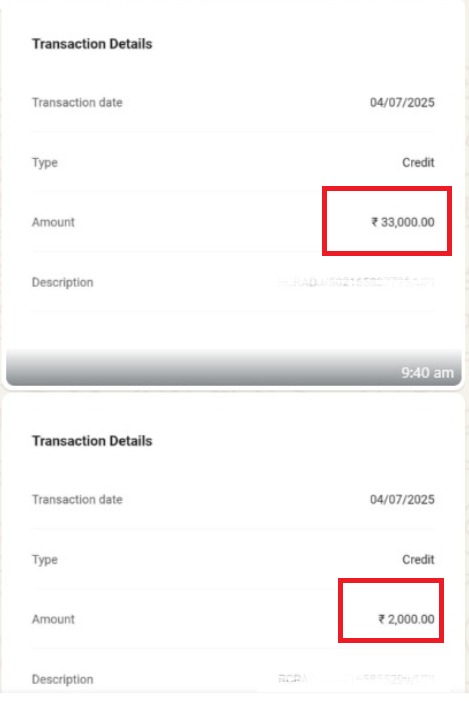
Through this process, the matter was resolved with a recovery of ₹53,000.
Was Your Account Opened Or Directed By Someone Who Then Disappeared? Our Team Can Help
Rohit’s case worked because we held the broker accountable once the original caller was gone. If someone with no disclosed credentials directed your trading, document what you can about them today, then reach out.
Register with us and we will take it from there.
Conclusion
When the person responsible for a fraud disappears, that does not mean accountability disappears with them.
Rohit’s case shows why a broker’s responsibility to prevent unregistered influence over a client’s account can carry a complaint forward even without identifying or locating the original caller.
Building the claim around the platform’s obligations, rather than a person who could not be found, turned an apparently dead end into a resolved case through SEBI’s own dispute resolution process.
Report. Recover. Stay Fraud Free.
Frequently Asked Questions
Yes. If the broker's own platform was used to open the account and place the trades, a claim can be directed at the broker's responsibility for that platform rather than at an untraceable individual.
Brokers carry an obligation to prevent misuse of their platforms. An account opened and operated under the direction of an unregistered individual raises questions about that oversight.
Any promise of guaranteed, risk free returns is prohibited under SEBI regulations regardless of who makes it, and the absence of any disclosed registration makes such a claim even less credible.
Your own account opening records, payment confirmations, trade history, and any saved communication with the individual, even without their real identity confirmed, remain valuable evidence.
It is well suited to disputes where direct engagement has not resolved the matter, particularly when the claim rests on a registered entity's own obligations rather than an untraceable individual.





 Add us as a preferred source on Google »

