
When someone promises you’ll become “financially independent” through their ₹34,999 robotic trading course, what crosses your mind?
Hope or hesitation?
If you’ve stumbled upon Trade with Sanchit on YouTube or Instagram, you’re probably wondering whether this is the real deal or just another expensive promise.
Let’s unpack everything about this channel with evidence.
Trade with Sanchit YouTube Channel
Sanchit Chopra operates the YouTube channel “Trade with Sanchit” and positions himself as a full-time derivative trader.
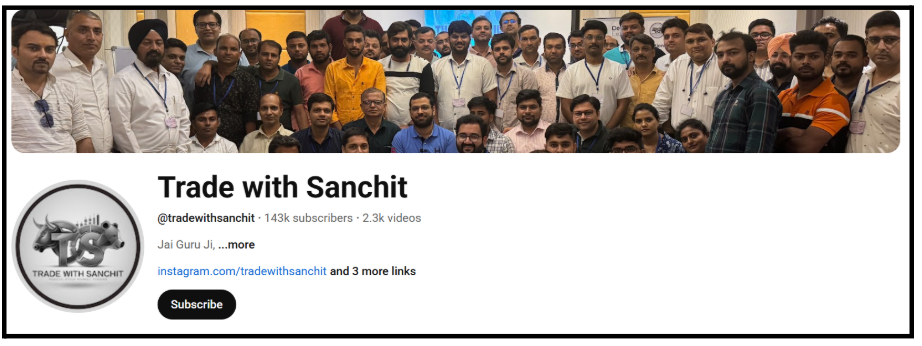
According to his channel description and social media profiles, here’s what we know:
Basic Profile:
- Location: Dubai, UAE (Previously based in India)
- Experience Claimed: 7+ years in Indian, Crypto & Forex Markets
- SEBI Registration: Not SEBI Registered
According to his Instagram bio, he describes himself as a “Robotic Day Trader” and frequently uses the phrase “Jai Guru Ji” in his communications.
How Trade with Sanchit Operates?
Before examining the controversies, let’s understand how this channel functions day-to-day:
1. Live Trading Sessions: The channel’s primary content consists of live intraday trading sessions during market hours.
According to his channel, students can “trade alongside” him during these sessions.
2. Educational Content: Sanchit claims to offer a “completely free beginners to advanced stock market course” on his channel.
The content includes:
- Basic to advanced stock market trading concepts
- The famous “TWS ka Formula” with multiple setups
- Market analysis and option Greeks
3. Social Media Presence: Active across multiple platforms, including YouTube, Instagram, Telegram, and a dedicated mobile app.
Regular posting of trading updates, profit screenshots, and motivational content designed to build trust and attract followers, this is how trading scams work by first creating familiarity and confidence.
4. The Signature Product TWS Ka Formula: Sanchit has created what he calls a “viral” formula that simplifies complex trading concepts.
Should You Follow Trade With Sanchit Channel?
While we cannot label anyone without proper investigation, certain patterns deserve your attention.
1. The ₹34,999 “Robotic Trading” Course
According to the Graphy course page, “TWS Ka Robot” claims to teach automated algorithmic trading.
Let’s break down what’s concerning:
- The Disclaimer Irony
“Disclaimer: Our TWS ka ROBOT is a course designed to explain to you how to automate your trades, but we make no guarantees of profit.
Users are advised to carefully consider and follow their own parameters when utilizing and making their algorithm.”
Notice the language?
It’s a course “designed to explain” automation – not a ready-made robot that trades for you.
However, the marketing with taglines like “Abb TWS Robot Karega Apke Liye Trade!” creates very different expectations.
- Hidden Costs
The disclaimer also mentions: “Additional Software: Third party softwares (if required) will need to be separately purchased and will not be provided at our end.”
This means after paying ₹34,999, you may need to purchase additional software like Amibroker (which itself costs thousands) and broker API integrations to actually implement the “robot.”
And after all this, the result?
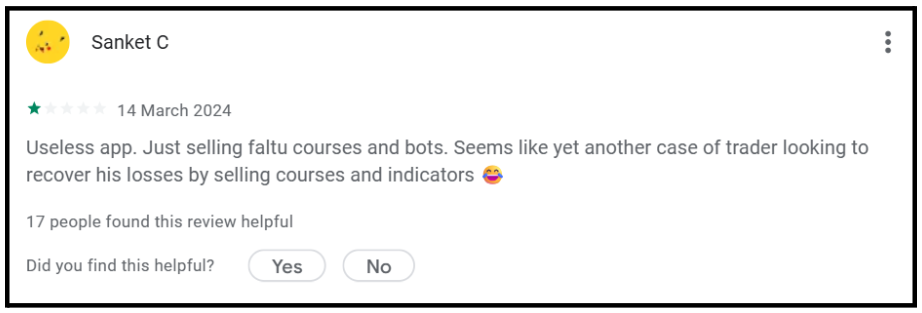
2. The “500+ Trained Students” Claim
Sanchit claims to have trained 500+ students who are making “decent profits.”
However:
Where’s the Verified Proof?
- No audited statements from these 500+ students
- No third-party verification of their profitability
- No transparency on how many students actually lost money
- No data on what percentage of students are consistently profitable
According to investigation patterns exposed by Moneylife, trading educators often showcase only their successful students while hiding the majority who lose money.
3. The “Viral Formula” Marketing
The “TWS Ka Formula” is marketed as a viral, game-changing tool. But consider this:
If the Formula Really Worked:
- Why would he sell it for ₹34,999 instead of using it himself to make crores?
- Why is there no documented, audited track record of this formula’s performance?
- Why does the disclaimer say “no guarantees of profit”?
According to trading psychology research, the phrase “viral formula” is a psychological trigger designed to create FOMO, not an indicator of actual effectiveness.
4. Inducement Content: The Clickbait Reality
Perhaps the most concerning aspect of Trade with Sanchit’s marketing strategy is the heavy use of inducement content designed to lure viewers.
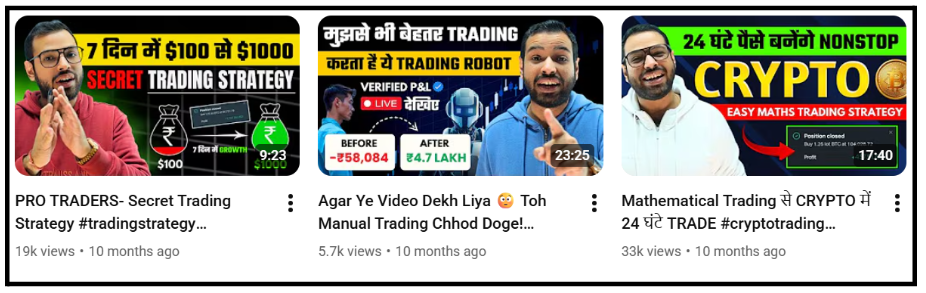
Common Patterns in All Videos:
- Exaggerated profit claims (₹4.9 lakh daily, $100 to $1000 in 7 days)
- Use of terms like “SECRET,” “ROBOT,” “VERIFIED,” “FIXED INCOME.”
- Dramatic thumbnails with money visuals and shocked expressions
- Before/after profit screenshots
- Promises of effortless, automated profits
- All videos funnel viewers toward the ₹34,999 course
5. The Selective Transparency Problem
Here’s what you’ll never see on Trade with Sanchit’s channel: complete, unedited Profit & Loss statements.
Notice how all the thumbnails show:
- Only profit screenshots, never losses
- Selective “after” results without showing the complete trading history
- No disclosure of how many trades were taken to achieve that one profitable trade
According to SEBI’s investor awareness guidelines, such inducement content is specifically warned against.
The regulator defines “luring investors with unrealistic promises” as a key characteristic of unregistered investment advisors operating illegally.
Warning Signs While Trading with Influencers
If you’re considering any trading course or service, watch for these red flags:
- Guarantees of Success: No legitimate trader guarantees profits. Markets are inherently unpredictable, and anyone promising consistent returns is either lying or doesn’t understand trading.
- Non-Refundable Policies: Educational products, especially expensive ones, should offer a money-back guarantee.
- Hidden Costs: When the advertised price doesn’t include necessary software, subscriptions, or tools required to implement the strategy, that’s a deceptive practice.
- Offshore Operations: When trading educators operate from jurisdictions where Indian regulators have limited reach, it makes legal recourse difficult for Indian students.
- Lack of SEBI Registration: Anyone providing investment advice or trading recommendations in India must hold an SEBI registration. Operating without it is illegal.
- Misleading Marketing: When the marketing says “Robot will trade for you,” but the fine print says “course to explain automation,” that’s intentionally misleading.
How to Report Trading Scams?
If you’ve been affected by any trading course or service that made false promises, take action immediately:
Here is how to file a complaint against such Trading frauds in India:
- Lodge a complaint with SEBI: You can file your complaint in SEBI by sending an email with detailed evidence of misleading claims and financial losses.
- File a Cyber Crime complaint: The national cybercrime reporting portal is specifically designed for online financial fraud.
- Report to Consumer Protection Forums: For cases involving mis-sold educational products or services, consumer courts can order refunds and compensation.
- Report on YouTube Platform: Report misleading financial content directly on YouTube.
Need Help?
If you’ve purchased Trade with Sanchit’s course or similar trading education and feel misled, don’t suffer in silence. You have rights as a consumer.
We Can Help You:
- Guide you through filing SEBI complaints against unregistered advisors
- Help you document evidence for consumer court proceedings
- Connect you with legal experts specializing in financial product mis-selling
- Assist in recovering your losses through proper legal channels
- Provide support in navigating regulatory complaint processes
- Connect you with others who’ve faced similar situations
Don’t let expensive promises cost you your hard-earned money.
Register with us today and let us help you navigate the trading scam recovery process while preventing others from falling into the same trap.
Remember: Your experience matters. By reporting suspicious practices, you help protect thousands of other aspiring traders from potential financial harm.
Conclusion
Trade with Sanchit promises to create “1,00,000 financially independent intraday traders.”
Given that SEBI data shows 90% of F&O traders lose money, this promise is either impossibly optimistic or deliberately misleading.
The ₹34,999 “robotic trading” course comes with non-refundable terms, requires additional expensive software, and includes disclaimers stating no guarantee of profits.
The marketing creates expectations of automated trading success, while the legal fine print tells a very different story.
The Bottom Line: If someone’s primary business is selling expensive trading courses rather than trading itself, question their true expertise.
Real successful traders rarely need to sell courses because their trading profits far exceed what they could earn from education.