Unauthorised trades can quickly spiral into real losses, so penalties exist to push brokers and market intermediaries to take client consent seriously.
If a trade happened in your account that you didn’t approve, this blog will help you understand what counts as unauthorised activity, what penalties can follow, and what to do next.
Let’s be honest: most investors don’t wake up excited to read regulations.
But when your money is involved, understanding unauthorised trading penalties is less about “legal stuff” and more about knowing how to protect yourself and how to respond fast when something feels off.
Unauthorized Trading
Unauthorised trading is when a trade is executed in your account without your valid consent.
In cases of unauthorised trading by stock broker, the broker fails to prove that the client actually placed or approved the trade.
SEBI has specifically stressed that brokers should execute client trades only after keeping verifiable evidence of the client placing the order.
For example, written instruction, recorded phone call, email from authorised ID, internet/app logs, SMS records, etc.
Unauthorised Trading Penalties by SEBI
SEBI imposes penalties and takes regulatory action because unauthorised trading risk directly threatens investor trust.
If trades can happen without consent, investors can face unwanted risk, losses, and even disputes that take months to resolve.
SEBI has issued a dedicated circular focused on the prevention of unauthorised trading by stock brokers, dated March 22, 2018, showing that this is treated as a serious market conduct issue.
Beyond monetary loss, unauthorised trading can also create secondary damage like forced margin shortfalls, unexpected leverage exposure in F&O, tax complications, and time-consuming grievance processes.
So, regulators and exchanges use penalties to deter repeat behaviour and enforce tighter controls.
Stock exchanges also prescribe financial disincentives and other actions when unauthorised trading is established.
Types of Unauthorised Trade Penalties
Here are some common types of penalties:
- Exchange-level financial disincentives: One reported structure is ₹50,000 per unauthorised trade case or 3% of the admissible claim value (whichever is higher), subject to a cap of ₹5 lakh.
- Operational restrictions on brokers: Where repeated cases arise, oversight can tighten, for example, the same reported framework mentions inspections and a one-month ban on onboarding new clients if 10 such cases arise in a quarter.
- SEBI monetary penalties (adjudication): SEBI can impose monetary penalties after inspections/findings, depending on violations noted in an order.
- Regulatory directions/censure (non-monetary action): SEBI can also proceed under its intermediary regulatory framework based on inspection findings and recommended actions.
Real Cases Of SEBI Unauthorised Trade Penalties
Here are a few past instances where penalties/strict actions were taken.
You can use these as reference points for how seriously regulators treat client consent and control lapses:
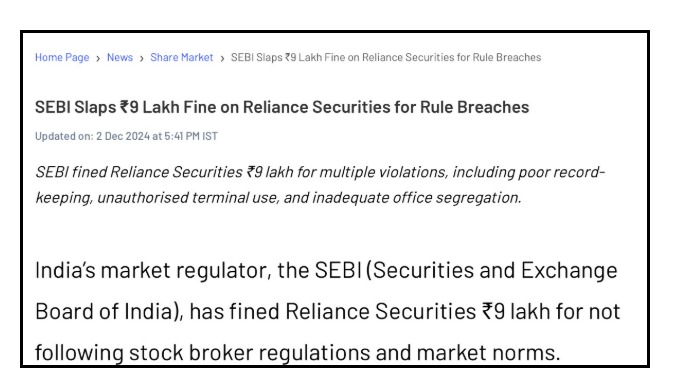
This action came out of an inspection where the order records multiple compliance findings, including Anand Rathi’s unauthorized trading and “improper client order recording.”
SEBI’s order also notes that the broker acknowledged 3 instances of unauthorised trades, explaining they happened due to dealer “punching errors.”
SEBI’s broader allegation set included issues like missing order-placement confirmations in some instances and delayed submission of complaint documents to the inspection team.
Penalty imposed: ₹5,00,000
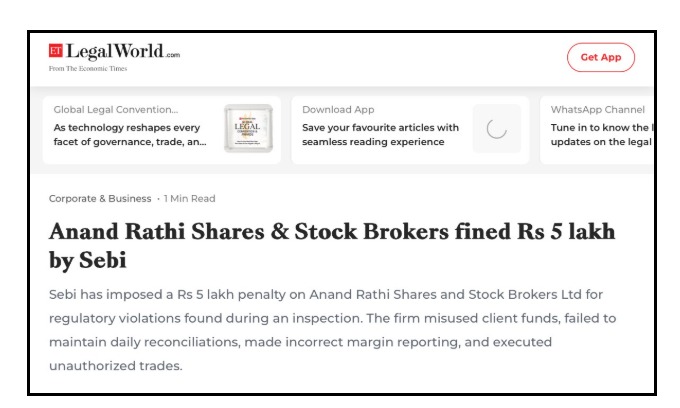
This SEBI Cybersecurity order on Reliance Securities for multiple violations, including poor record-keeping, unauthorised terminal use, and inadequate office segregation.
Those may sound like “operations issues,” but they directly affect investor protection because weak records and weak terminal controls are exactly how unauthorized activity can slip through and become hard to dispute later.
Penalty imposed: ₹9 lakh.
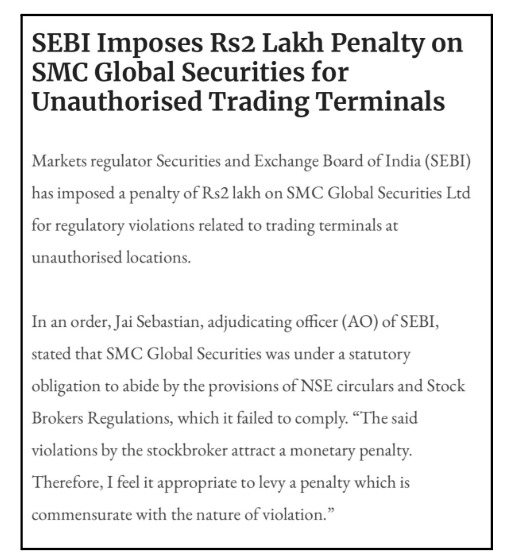
- SEBI Imposed ₹2 Lakh Penalty on SMC Global Securities Ltd
SEBI imposed a penalty because trading terminals were linked to unauthorised locations.
The trading infrastructure was operating from places that weren’t permitted/disclosed as required.
For an investor, the phrase SMC Global unauthorised trading isn’t just about someone placing a trade without permission; it’s about the integrity of the environment where those trades are placed.
And when terminals are running from unauthorised locations, it raises the obvious question investors hate: “If the setup is off-books, how confident can anyone be about trade controls and client safety?”
Penalty imposed: ₹2 lakh
How To File a Stock Market Fraud Complaint?
If you have ever been a victim of unauthorised trading, don’t ignore it; act immediately to protect your money and legal rights.
Here’s how you can file a complaint against unauthorised trading:
- Check the evidence:
Save contract notes, trade confirmation messages, app screenshots, ledger statements, bank/demat statements, and timestamps of any alerts you received.
- Raise it with the broker first:
You can email the broker’s grievance cell and clearly state the disputed trades, contract details, date/time, and that you did not authorise them.
- Escalate to the Exchange/ODR if unresolved:
NSE states investors can lodge complaints against trading members via the ODR portal (effective Aug 16, 2023), SCORES, email, or a physical complaint to the investor service centre.
NSE also lists SCORES as a channel investors can use to lodge complaints.
- Track and follow up:
You must keep your complaint reference numbers, respond quickly if more documents are asked, and track the status until closure.
Need Help?
If you have lost your money because of unauthorised trading, you can register with us.
Our firm specialises in recovering lost money.
We will guide you from the first to the last step of recovering your hard-earned money.
Conclusion
Unauthorised trading isn’t just a “service issue,” but it’s a consent violation that can expose investors to risk they never signed up for.
The good news is: there are clear complaint pathways and real regulatory consequences, so you don’t have to accept it as “normal market stuff.”
If the trades weren’t yours, treat them like a priority.
Document everything, file a complaint with SEBI in writing, escalate the matter on time, and stay consistent.