

In the trading world, especially on Telegram and X, new “market experts” pop up all the time.
Some fade away, and some grow fast. One name that keeps coming up in trader discussions is Aakanksha Gupta.
She has a big online presence, active Telegram groups, and paid subscriptions. Along with followers, she has also attracted criticism.
Over time, traders have raised questions about how profits are shown, how services are described, and whether everything being promoted actually stays within SEBI rules.
This blog looks at those concerns in a simple, easy-to-understand way, based on patterns traders have discussed publicly.
Who is Aakanksha Gupta?
Aakanksha Lovely Gupta is known in the trading community for sharing stock market views, mainly around options trading. Like many modern market educators, she uses Telegram and social media to reach traders.
There is usually a free channel where general market talk happens. From there, people are encouraged to join paid premium groups where trade ideas are shared more actively.
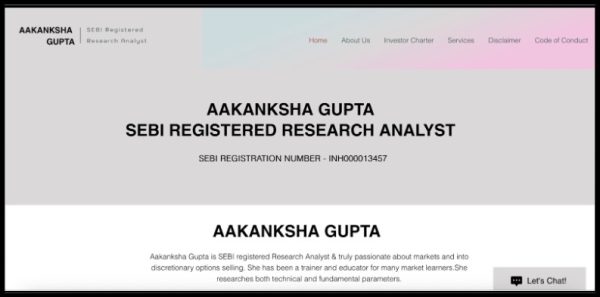
Aakanksha Gupta is a SEBI-registered Research Analyst (Registration No. INH000013457) with a perpetual registration valid from October 16, 2023.
That matters because it allows her to give research-based recommendations.

But it also comes with rules. A lot of people miss that second part. SEBI registration is not a free pass.
There are clear limits on how research can be marketed, how performance can be shown, and what kind of services can be offered.
How Does Her Trading Model Usually Look?
If you have spent time on her X profile and in Telegram trading circles, this setup will feel familiar.
It starts with a large free group. Market commentary, opinions, confidence-building posts. People watch for a while, and trust slowly builds.
Then comes the paid group. Monthly subscriptions. Inside, messages often include very specific option trades, strike prices, quantities, entry, and exit levels.
Along with that, there are regular profit screenshots and celebratory messages when trades work out. And this is where many complaints begin.
Not because trades made money, but because of how the wins are shown and what is quietly left out.
Aakanksha Gupta Complaints in India
As Aakanksha Gupta’s visibility has grown, so have the conversations around her work. Not all of them are positive.
Over time, traders and observers have pointed out a few recurring issues that keep coming up across platforms.
-
1. Public Accusations on Social Media
One of the more direct complaints surfaced openly on Twitter. A user commented under her post saying:
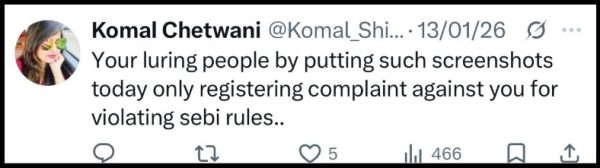
This kind of public accusation is rare unless frustration has reached a certain point.
Traders who leave comments like this are usually reacting to what they feel is misleading communication, especially around profits and performance claims.
Let’s look into the violations that led traders to this stage.
Aakanksha Gupta Violations
While a single comment doesn’t prove wrongdoing, it does reflect growing discomfort among followers who feel the messaging crosses regulatory boundaries.
1. Very Specific Trading Instructions
One of the strongest complaints revolves around how detailed the trade calls are.
According to subscribers, messages often include:
- Exact option strikes
- Exact quantities
- Clear entry prices
- Defined exit levels
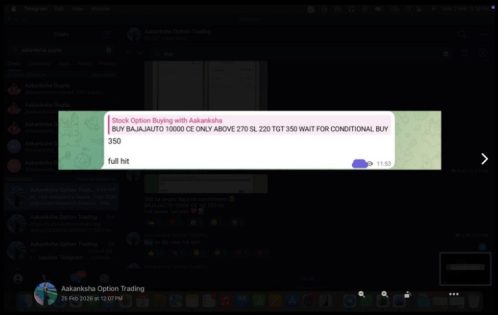
At that point, it stops looking like general research or market commentary and starts resembling direct trading advice.
Direct advice comes with stricter requirements – risk profiling, suitability checks, and proper documentation.
Many traders say they never went through any formal risk-assessment process before receiving these instructions.
That gap is what worries people the most.
2. “Educational Purpose” Disclaimers vs Ground Reality
Many messages include disclaimers saying the content is “for educational purposes only.” On paper, that sounds safe.

But traders say the reality feels different.
When messages are time-sensitive, give exact levels, and are framed around execution, they do not feel educational. They feel actionable.
Several subscribers follow trades exactly as posted, believing that was the intended use.
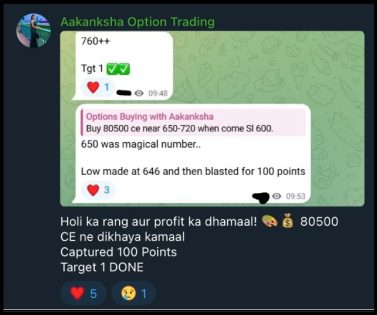
This mismatch between disclaimers and delivery suggests a serious issue.
3. Only Profits, Rarely Losses
A recurring complaint is about selective visibility.
In her Telegram channels and on her X profile, profit screenshots are frequent. Winning trades are celebrated loudly. Phrases like “big profit,” “jackpot trade,” or “massive performance” appear very often.
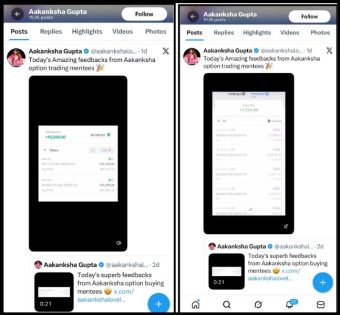
What traders say is missing are the losing trades.
Markets do not move in straight lines. Losses are a normal part of trading. When only profits are shown, it quietly creates an impression that success is consistent and losses are rare.
This kind of selective performance sharing is exactly what SEBI guidelines try to prevent, because it can mislead retail investors into underestimating risk.
4. Constant Push to Join the Premium Group
Another issue traders frequently mention is the sheer volume of premium group promotions.
Telegram messages often swing quickly from profit screenshots to sales pitches.
For many traders, this aggressive promotion starts to feel less like education and more like pressure.
This creates a cycle where excitement from profits is immediately leveraged to sell subscriptions, without giving people time to reflect or assess risk.
5. Questions About Past Practices Before SEBI Registration
Complaints do not only focus on the present.
Some traders have pointed out that before SEBI registration, Aakanksha Gupta was already offering trading guidance and running paid groups.
During that period, anyone who lost money had very limited regulatory protection.
SEBI oversight only applies after registration. Losses incurred before that fall into a grey area.
Interestingly, some observers feel that after registration, the tone did not become more cautious. Instead, the confidence in promotions appeared to increase.
The structure remained similar, but the presence of an SEBI licence seemed to add a layer of perceived legitimacy, without a visible shift in communication style.
6. Allegations Around Who Is Actually Giving the Advice
Another sensitive issue raised in complaints is who is really doing the research.
There have been discussions suggesting that trade ideas or recommendations may be prepared or influenced by others, while being distributed under Aakanksha Gupta’s name and brand.
If that is the case, it raises compliance concerns. SEBI regulations require clear accountability.
Investors must know exactly who is responsible for the research they are following. Any ambiguity around this can create serious regulatory and ethical issues.
Even the perception of unclear responsibility can reduce trust.
What To Do In Such Cases?
If you feel uncomfortable, misled, or financially impacted after following trading advice, there are steps you can take.
1. Save All Evidence First
Before doing anything else, keep everything safe. Save Telegram messages, screenshots of trade calls, payment proofs, and emails.
Even messages that look harmless now can become important later, so do not delete or edit anything.
2. Contact the Analyst in Writing
Reach out to the analyst through email or their official grievance channel.
Clearly explain what advice you followed and why you believe it was misleading or harmful.
SEBI-registered analysts are required to respond to investor complaints.
3. File a Complaint on SEBI SCORES
If the response does not help, you can raise a complaint on SEBI’s SCORES portal. Upload all supporting documents and keep the explanation factual and simple.
This creates an official regulatory record of your issue.
4. File Arbitration in Stock Market and Dispute Resolution
If the matter involves financial loss and remains unresolved, you may consider using SEBI’s Online Dispute Resolution (ODR) mechanism or filing for arbitration with the stock exchange.
These processes allow an independent authority to review the case and issue a decision.
Need Help?
A lot of traders stay silent because they think one complaint will not matter. That’s not true.
If you have faced losses, confusing communication, or services that seem to cross regulatory boundaries, structured help can make the process less stressful and far more effective.
We offer guidance and thoughtful next steps. Our team of expert professionals analyzes the case thoroughly and organizes the evidence for effective reporting.
Conclusion
Many traders start by asking, Is Aakanksha Gupta SEBI registered?
While the answer is yes, registration alone does not remove the need for transparency and ethical conduct.
What remains unclear and concerning for many traders is the repeated profit-heavy messages, selective screenshots, aggressive promotional language, and references to account handling.
A SEBI license adds credibility, but it does not replace transparency or ethical conduct. Traders should always slow down, ask uncomfortable questions, and look beyond Telegram hype.
In the stock market, certainty is an illusion. No matter how confident the message sounds, there are no guarantees.
Staying alert, informed, and cautious is still the safest trade anyone can make.