

Quick Summary
Arbitration in the stock market is the final, binding stage of resolving a dispute with a broker or any registered intermediary, reached only after your complaint and conciliation fail. It runs under SEBI’s online dispute resolution framework through the exchanges, is decided by independent arbitrators, and ends in an award enforceable in law. Fees start at ₹5,400 and come back to you if you win. Claims above ₹30 lakh go before three arbitrators. This page gives you the full picture: what arbitration is, which disputes qualify, how the route runs, and where each stage is covered in depth.
Something went wrong between you and your broker, and the usual complaint route got you an apology at best and silence at worst.
At that point, most investors assume the only option left is a courtroom, with years of dates and lawyer bills.
There is a faster, cheaper, binding route built specifically for market disputes, and most investors have never used it.
This page walks you through arbitration in the stock market: what it is, when it applies, and how the route runs from your first complaint to a legally enforceable award.
Arbitration in Stock Market Meaning
Arbitration is the legal process where an independent arbitrator, not a court, hears both sides of a market dispute and passes a binding decision called an award.
It sits at the end of the dispute route, after your complaint to the intermediary and the conciliation stage have both failed.
The process runs under SEBI’s online dispute resolution framework through the stock exchanges, and the decision is enforceable under the Arbitration and Conciliation Act, 1996.
In plain words: it is the stage where the dispute stops being a conversation and becomes a case.
And unlike a courtroom, it is built for speed, with most matters concluding in months, not years.
Difference Between Arbitration and Arbitrage in Stock Market
Search this topic and half the results talk about buying a stock on BSE and selling it on NSE for a few rupees of profit.
That is arbitrage, a trading strategy.
Arbitration, with an extra syllable, is a legal process for resolving disputes.
The two words get mixed up constantly, and if you are here after losing money to a broker or advisor, picking the wrong one sends you down pages that have nothing for you.
The table below splits them across the four things that matter: what each one is, who uses it, what it involves, and what it has to do with your money.
Find your situation in it, and you will know which word is yours:
| Arbitration | Arbitrage | |
|---|---|---|
| What it is | A legal process to resolve disputes | A trading strategy to earn profit |
| Who uses it | Investors wronged by a broker or intermediary | Traders exploiting price differences |
| What it involves | Evidence, hearings, and a binding award | Buying on one exchange, selling on another |
| What it means for your money | A route to recover what you lost | A way to earn a few rupees per share |
If your broker traded without your permission, held back your payout, or an advisory firm took fees and vanished, arbitration is your word.
Arbitrage has nothing to do with getting your money back.
Now that the word is right, the next question is whether your dispute qualifies.
Which Disputes Can Go to Arbitration?
Not every bad experience in the market is an arbitration matter, and knowing the difference early saves you months.
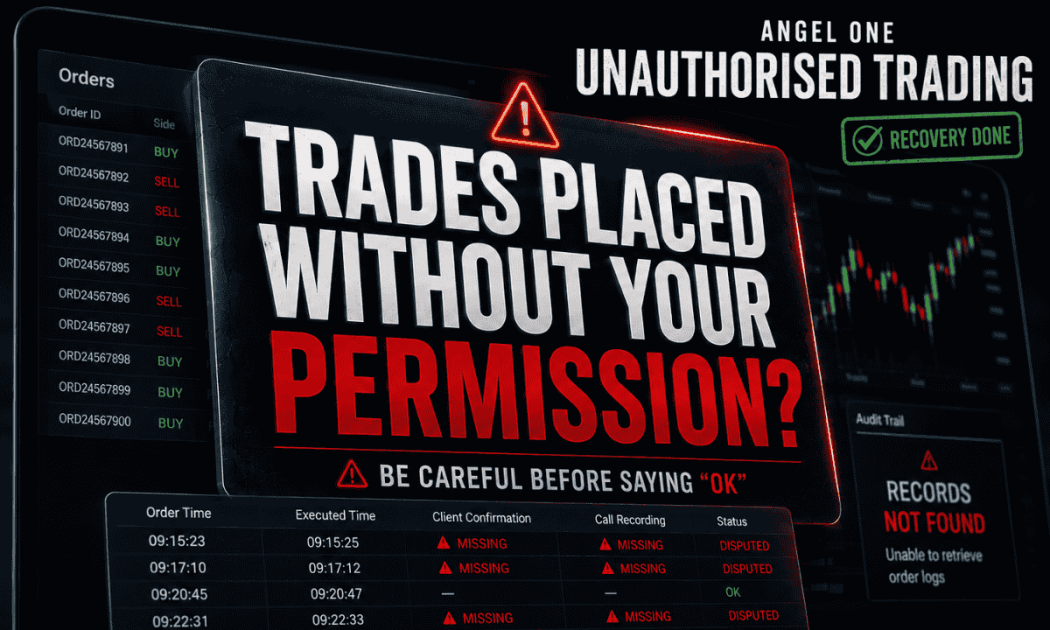
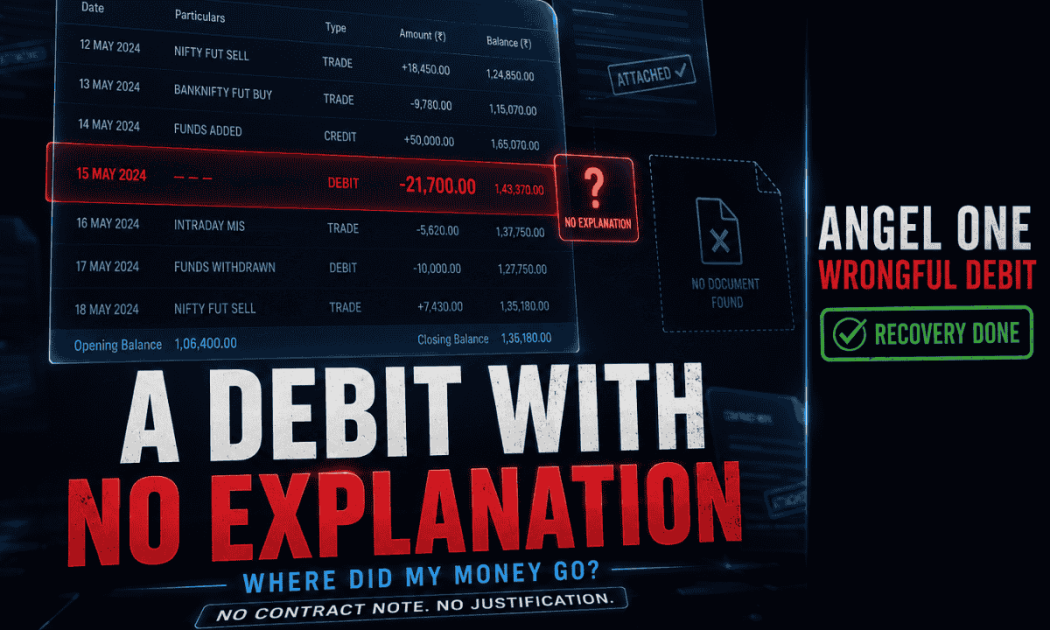
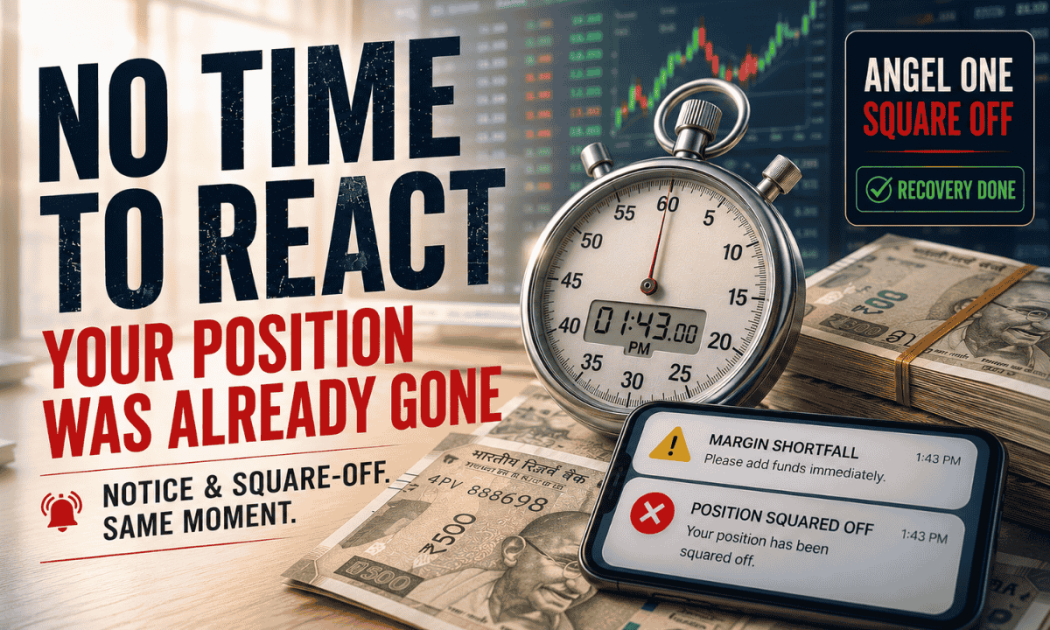
Broadly, the disputes that qualify involve a registered intermediary breaking a rule or an obligation that cost you money: unauthorised trades, wrongful square-offs, payout delays, disputed charges, unexecuted orders, and advisory service failures.
A market loss on advice that was properly given, on the other hand, is not by itself a claim.
The complete eligibility list, with what qualifies and what does not, sits on our page on what matters can be referred to arbitration, worth checking before you invest any effort in filing.
How Does Arbitration Work in Stock Market?
The route is a ladder, and arbitration is its top rung.
Every stage below it must be climbed first, and each completed stage strengthens the record your final case stands on.
The ladder runs in four stages, from your first written complaint to the binding award:
- Complain to the intermediary: Your broker or advisor gets the first written complaint, and their response, or silence, goes on record.
- Escalate to the regulator and exchange. SEBI’s complaint platform and the exchange create the official record of your grievance.
For NSE side disputes, an NSE complaint through the exchange’s own route is the stage that must conclude before anything moves further. - Attempt conciliation. A neutral conciliator brings both sides to the table through the SMART ODR system. Settle here, and the matter ends with a recorded agreement at no cost to you.
- File the arbitration. Conciliation failed, so now an arbitrator is appointed, both sides present evidence, and a binding award follows.
How the conciliation stage compares with the arbitration that follows it, from speed to legal force, is covered in our guide on SMART ODR vs NSE arbitration.
The legal machinery behind these stages, including how the Arbitration and Conciliation Act governs the proceedings, is covered on our page on the steps of arbitration proceedings in India.
Complained to your broker months ago and still just getting “we are looking into it”?
We will pick your case up from wherever it has stalled, complete the record for the stages already behind you, and move it to the stage where a decision actually comes.
What Is the Cost of Arbitration in Stock Market?
Let’s be honest about the thought in your head right now: you have already lost money, and the last thing you want is to spend more chasing it.
Almost every investor stops at this exact question, so here is the straight answer.
The fee depends on your claim amount and works in slabs, starting at ₹5,400 for the smallest claims and rising step by step as the claim grows.
Two things then decide what you actually end up paying, and both are in your hands.
The first is timing: file soon after conciliation fails and you pay the base fee, but let the delay stretch and the same claim can cost you double.
The second is winning: if the award goes your way, the fee you deposited comes back to you, which means a genuine case filed on time costs you close to nothing in the end.
The complete slab table, the late fee rules, and the refund conditions sit on our page on NSE arbitration fees.
What Happens at the End: The Award
Everything in the route leads to one document.
The award is the arbitrator’s binding decision, and if it goes your way, it directs the other side to pay, with a 15-day clock and the exchange watching until the money reaches you.
Claims above ₹30 lakh are decided by a panel of three arbitrators rather than one, and a challenge is possible only through court on narrow legal grounds.
Not every case reaches an award, though.
Some end midway through withdrawal or settlement, and what each of those endings means for your money sits on our page on the termination of arbitration proceedings.
How enforcement works, what happens when a broker refuses to pay, and the real cases where investors recovered up to ₹28 lakh are on our page: NSE arbitration award.
NSE, BSE or MCX: Does It Matter Where Your Broker Trades?
The framework is the same across exchanges, which is good news if your broker operates on more than one.
SEBI’s dispute resolution system runs through all the recognised exchanges, so the stages, the fee slabs, and the binding nature of the award do not change with the platform.
What changes is where your dispute is handled, which follows where the disputed trades happened.
How that jurisdiction gets decided, what stays identical at both exchanges, and the one situation where the choice genuinely matters are all covered in our guide: BSE vs NSE arbitration.
For disputes on the NSE side, the exchange-specific rules, process, and recovery cases sit on our page on NSE arbitration process.
So do not spend energy worrying about which exchange your broker used.
The route you follow and the rights you hold stay the same, and only the desk handling your file changes.
And whichever exchange your case runs through, most matters conclude within four to six months.
Want to see where those months go, stage by stage?
Check our guide: how long does arbitration decision take.
Conclusion
The stock market has a formal, binding route for investors who were wronged, and it does not run through a courtroom.
It runs through a ladder of stages, ends in an award with legal force, and costs a refundable fee that starts smaller than most people’s monthly SIP.
What it asks of you is order: complete each stage, keep every record, and file before delay inflates the cost.
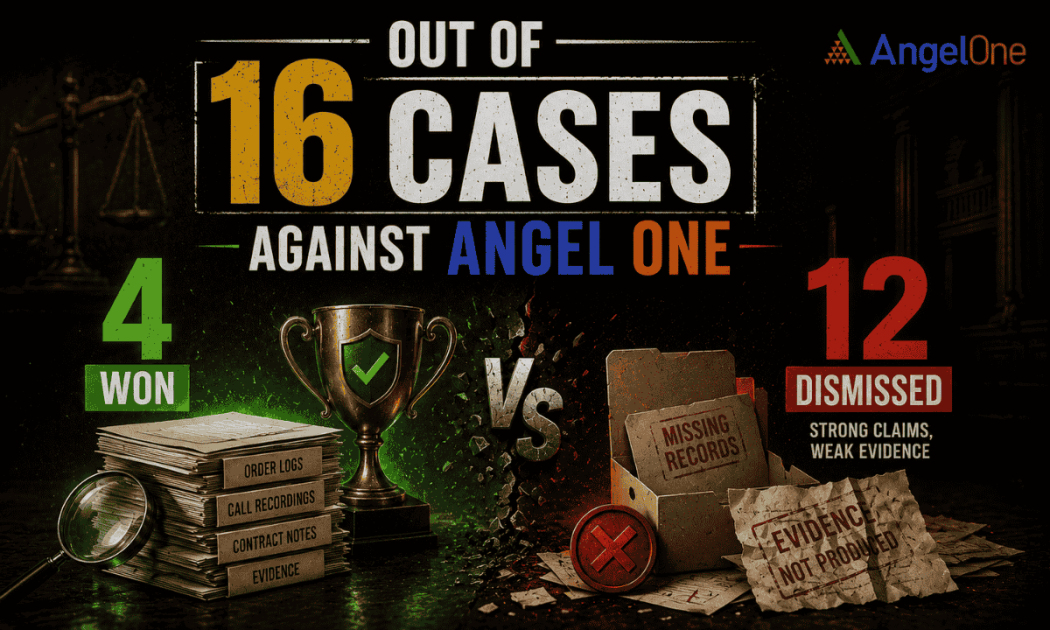
If your dispute is real and your documents exist, the route above is how investors have recovered lakhs. It works when you work it in sequence.
Report. Recover. Stay Fraud Free.
Frequently Asked Questions
For market disputes, usually yes. Arbitration concludes in months instead of years, costs a refundable slab-based fee, and the arbitrators understand market rules. Court remains the route only for the narrow challenge stage after an award.
No. The route requires the earlier stages first: your complaint to the intermediary, the regulator and exchange record, and conciliation. Skipping stages gets applications rejected, so the sequence protects your case rather than delaying it.
Independent professionals empanelled under the framework, typically retired judges, legal experts, and market professionals. Neither side picks its own decision-maker, which keeps the process neutral for you and the intermediary alike.
Yes. The award carries legal force under the Arbitration and Conciliation Act, the broker must pay within the prescribed window, and the exchange monitors compliance. Ignoring an award puts the broker's own registration at risk.
Proceedings can end without an award in limited situations, like withdrawal by you, a settlement reached midway, or specific procedural grounds. Each ending affects your fee and your right to refile differently, so check where your case falls before assuming it is over.

 Add us as a preferred source on Google »

