
Quick Summary
Ravi Saraogi is an individual SEBI registered investment adviser, INA200013983, who practises as Samasthiti Advisors. Registered since 17 September 2019, he reports 13 complaints received and resolved in FY 2024-25 and none in other years shown. His annual total row reads zero, which does not match. The website, as reviewed, shows no fees and no MITC, privacy policy, terms or refund policy. We found no SEBI order against him as of 17 October 2026, which is not a clean certificate.
You may be weighing a financial planner who calls himself independent and zero commission, and a promise like that is easy to like. This blog looks at Ravi Saraogi Investment Adviser through his own disclosures.
It makes sense to look at the rulebook items behind it, such as fees, paperwork and complaints, before you share your portfolio.
We cover the registration, the complaint table, the missing price and documents, and the claims on his website, then turn the gaps into questions you can send in writing.
Who Is Ravi Saraogi and What Does Samasthiti Advisors Offer?
Ravi Saraogi is an individual investment adviser registered with SEBI. He practises under the name Samasthiti Advisors, from Chennai.
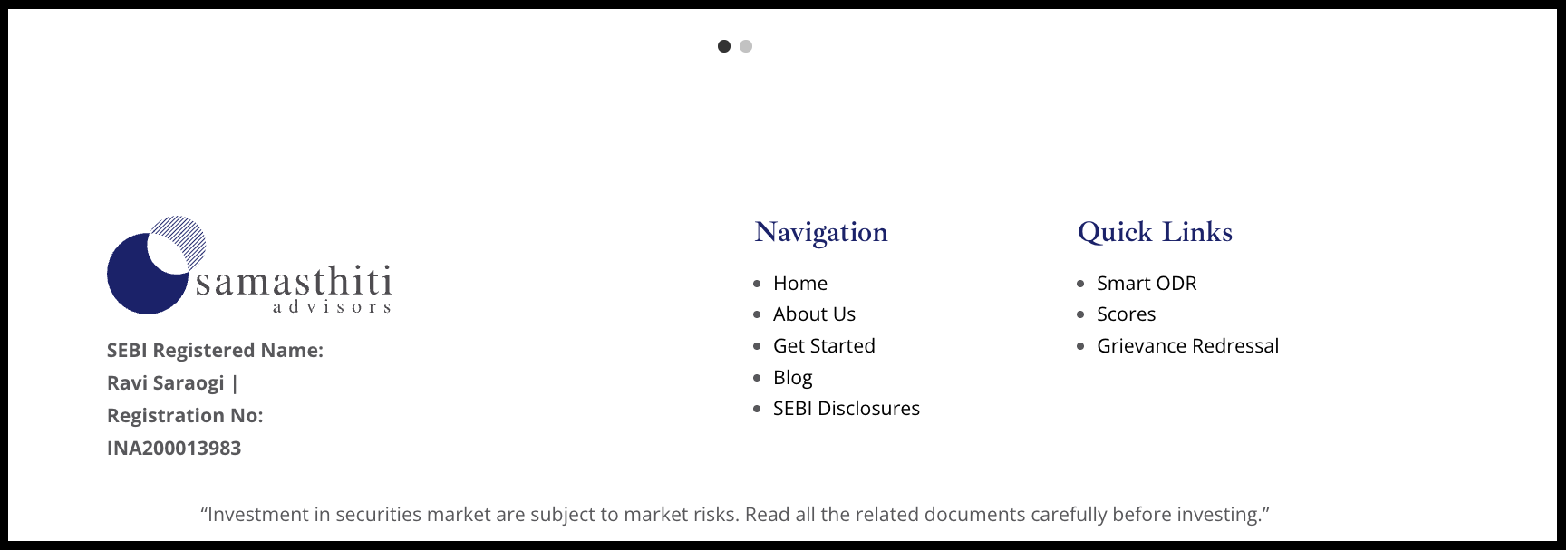
The website describes itself as an independent, zero commission financial planner with no association with financial product companies.
That is a claim about how the firm is paid, and you can test it by asking in writing.
The Services
The site lists financial planning, investment advice, execution support and portfolio monitoring.
It says it helps clients assess existing investments, set goals and build plans.
It also lists insurance planning to help clients prepare for risks and uncertainties.
The site stresses long term client relationships and ongoing planning as needs and markets change.
The Core and Satellite Approach
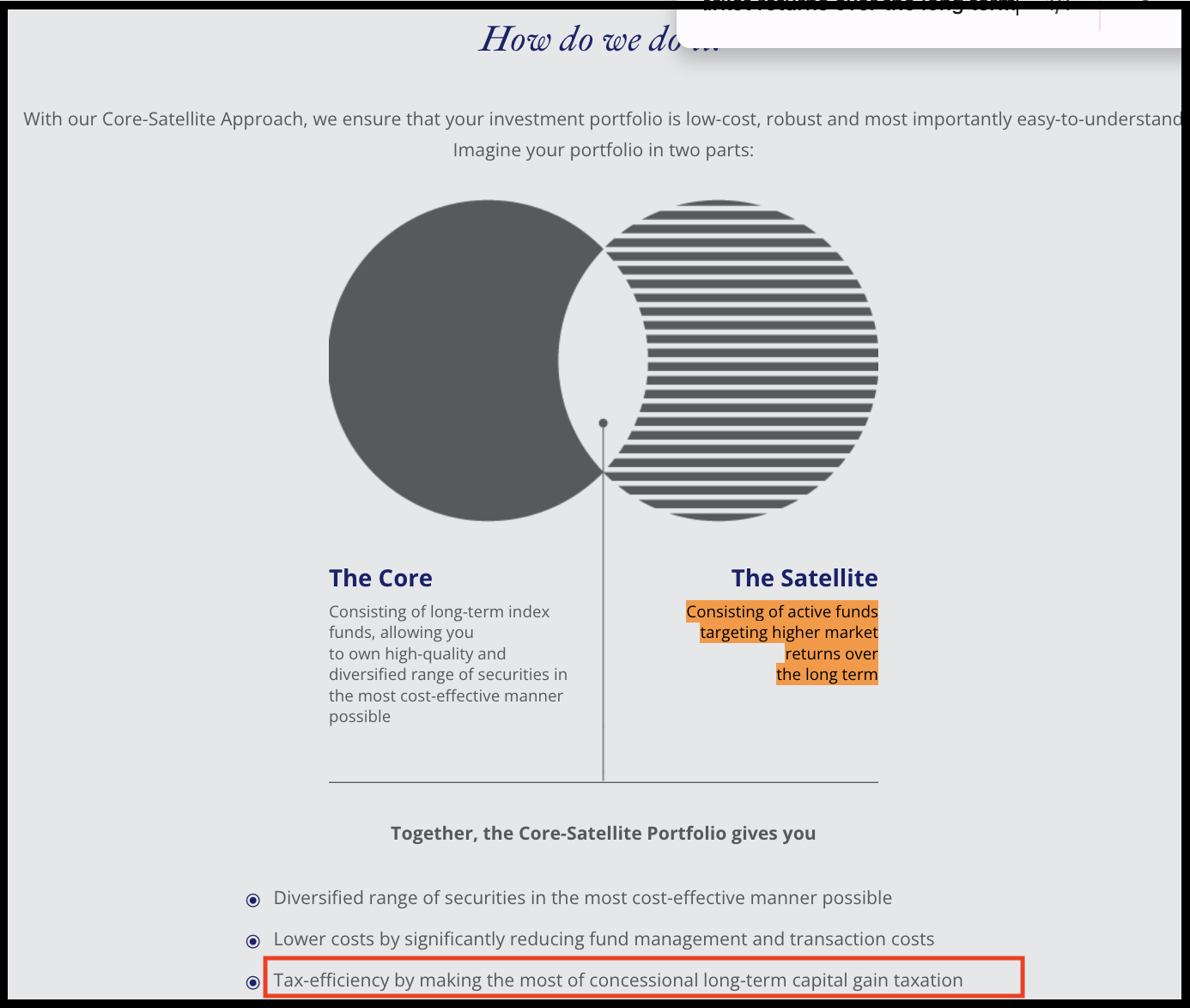
The investment approach combines long term index funds with actively managed funds.
The index funds form the core, and the active funds are the satellite.
The site presents lower costs, diversification and tax efficiency as benefits.
These are reasonable ideas, though the benefit in your case depends on the funds chosen and what they cost.
What Zero Commission Means
Zero commission suggests the adviser earns nothing from the products he recommends.
Under SEBI rules, an investment adviser takes a fee from the client and does not take commissions on products it advises on.
So ask the simple follow up.
Ask how the fee is set and whether any other income comes from the funds you hold.
Execution Support
Execution support means helping you place the investments.
Ask whether you invest in direct plans through your own account, and who has access to it.
Keep control of your logins, and never share passwords.
Is Ravi Saraogi a SEBI Registered Investment Adviser?
The research shows Ravi Saraogi listed as a registered investment adviser.
Each point below is what the listing shows, and you should confirm it yourself before relying on this page.
- Registration number is INA200013983. The INA prefix marks an investment adviser, unlike INH for a research analyst or INP for a portfolio manager.
- Registered name is Ravi Saraogi, an individual. That matters because the person who advises you is the same person who answers for the advice.
- Validity runs from 17 September 2019 and is listed as perpetual. That makes the registration about seven years old.
- Address is D401, The Atrium, Kalakshetra Road, Thiruvanmiyur, Chennai 600041, with the same correspondence address. The email is on the samasthiti domain.
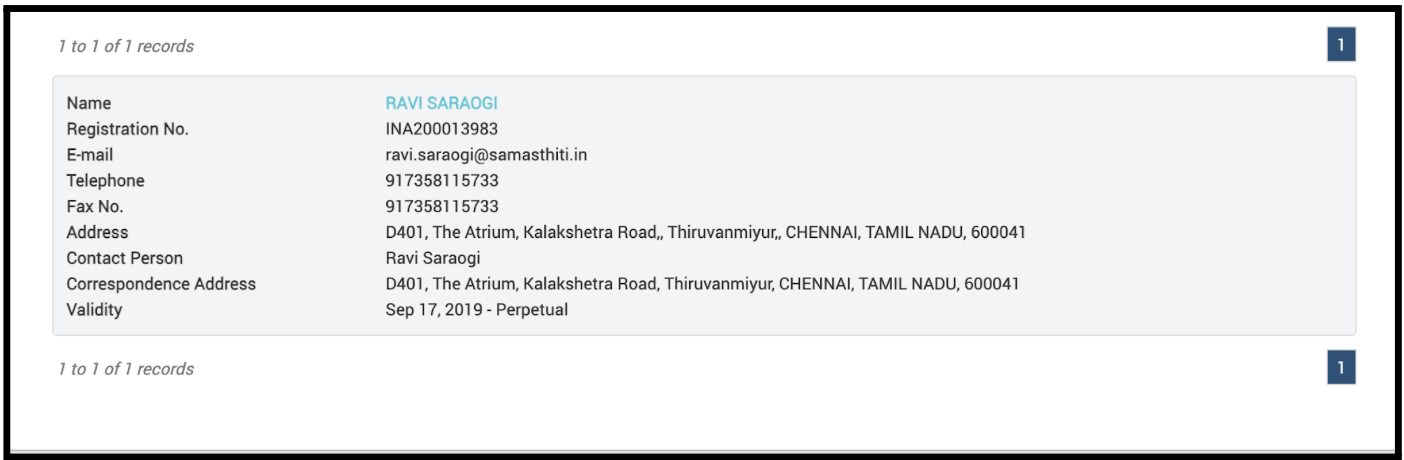
The same number appears against telephone and fax, so confirm a working phone number.
You can verify this in a few minutes.
A SEBI registered IA company verify lets you enter INA200013983, compare the name and category, and see whether the registration is active.
A sebi registration number search on the regulator’s own pages does the same job.
Do it before you pay anyone, and save a dated screenshot.
Registration shows that a person may give investment advice.
It does not describe the quality of advice or the fee.
What Does Ravi Saraogi Investment Adviser Complaints Data Reveal?
The annual table below is as the website shows it. We added the rows ourselves.
|
Financial year |
Carried forward | Received | Resolved | Pending |
|
2021-22 |
0 | 0 | 0 | 0 |
|
2022-23 |
0 | 0 | 0 | 0 |
|
2023-24 |
0 | 0 | 0 |
0 |
| 2024-25 | 0 | 13 | 13 |
0 |
| 2025-26 | 0 | 0 | 0 |
0 |
| 2026-27 | 0 | 0 | 0 |
0 |
|
Total as shown on the site |
0 | 0 | 0 |
0 |
The Total Row Does Not Match
The rows add to 13 received, 13 resolved and none pending.
The total row on the site reads zero for each column.
The table does not explain the gap.
A corrected total would be 13 received and 13 resolved, so it is worth asking the adviser to fix it.
What 13 complaints in One Year Means
All 13 complaints fall in FY 2024-25, and every other year shown has none.
Thirteen is a large number for an individual adviser, and it is concentrated in a single year.
That could reflect one event that affected many clients, or a change in how complaints were routed.
The table does not say, so ask about it directly and ask what changed afterwards.
All 13 are shown as resolved.
That tells you the reported complaints were closed, and it does not tell you whether the clients were satisfied.
The Years Before FY 2021-22
He has been registered since September 2019, but the table starts at FY 2021-22.
The two earlier years, FY 2019-20 and FY 2020-21, are not shown.
That leaves a gap in the history you can review.
Ask whether those years are published elsewhere on the site.
Recent Months
The research notes zero complaints for FY 2025-26 and FY 2026-27, and for each month from April to September 2026.
We did not see the monthly table itself, so check the live page.
SEBI expects advisers to update complaint data by the 7th of each month.
September data should have been up by 7 October.
Zero in recent months looks calm, but it is a short window after a large year.
Ask for the complete picture from the adviser.
If you ever need to raise a case, the guide on a SEBI complaint against investment advisor shows how such cases usually run, and it helps to know that before you commit money.
A search of SEBI’s public records found no SEBI order against Ravi Saraogi as of 17 October 2026.
That is not a clean certificate, because orders can be published later and our search was limited.
Is Samasthiti Advisors Pricing Disclosed On Website?
The website content we reviewed does not show advisory fees or a price for each service.
A visitor cannot compare the cost with other advisers before getting in touch.
The site lists planning, advice, execution support and monitoring, but gives no fee for any of them.
So you cannot tell which services are bundled and which are charged separately.
SEBI allows fees in a fixed fee mode and in an assets under advice mode, each with its own limit.
In the fixed fee mode the cap is ₹1,51,000 per client per family per year.
A Worked Example
Suppose a quote arrives as ₹1,78,180.
That equals the ₹1,51,000 cap plus 18 percent GST, so it would not by itself cross the cap, though the GST treatment should be confirmed in writing.
This is only a worked example and not his price.
It shows why the base fee and GST should appear on separate lines.
Ask How the Fee is Built
A fee might be a flat yearly amount or a share of the assets advised.
Ask which mode applies, what it covers and whether insurance planning is inside or outside it.
Then ask what happens to the fee if you stop midway.
Before You Pay
Take these four steps first, since each costs nothing.
- Ask for the fee in rupees for each service and the period it covers.
- Ask for GST as a separate line.
- Ask for the refund terms if you stop midway.
- Ask for the payment account name and match it to the registered name.
Ravi Saraogi Investment Adviser Policies and MITC: What To Check?
The research could not find an easily identifiable MITC, privacy policy, terms and conditions or refund policy on the website.
That does not mean none exist, and he may share them on request.
Without them, you cannot see the terms of engagement, how your data is handled or what refund applies.
Asked to pay before you have seen the MITC, the terms or a refund policy?
Our team reviews your payment proof and whatever agreement exists, drafts a written grievance to the adviser, and takes it to the right SEBI channel if the reply falls short. Register with us for a free consultation.
1. The MITC and Agreement
The Most Important Terms and Conditions, called the MITC, were standardised for advisers from February 2025.
They form part of the advisory agreement and cover fees, risks, refunds and scope.
SEBI rules say the agreement must be signed and handed to you before advice is given or fees are charged.
Ask for both documents by email before you pay.
2. Privacy
Planning needs a lot of data, such as income, assets, liabilities and goals.
Ask what the adviser holds, how long it is kept and how you can have it deleted.
3. Refunds
Ask for the refund terms in writing before you pay. The site does not state them.
What Does Ravi Saraogi Investment Adviser Claim on Returns and Tax?
The website says the active part of the approach targets higher market returns over the long term.
That is a goal, not a promise, and active funds can also trail the market.
SEBI does not allow assured returns.
Ask the adviser how he measures success for the active funds and against which benchmark.
The Tax Claim
The site also says the approach makes the most of the concessional tax on long term capital gains.
Tax treatment depends on what you hold, how long you hold it and the rules in force at the time.
The statement is general.
Ask how it applies to your own holdings, and whether he is giving tax advice or only describing a feature.
Index Funds and Active Funds
A core of index funds usually costs less than active funds.
Ask for the expense ratio of each fund proposed and the total cost across your portfolio.
Ask also how often the mix changes and what triggers a change.
Does Ravi Saraogi’s SEBI Registration Cover Insurance Planning?
The site lists insurance planning among its services.
Investment advisers are registered by SEBI, while insurance sits under a different regulator.
As far as we know, selling or recommending insurance products is licensed separately.
Ask what authority covers the insurance planning and whether any commission is earned on policies.
Keeping the roles apart
If insurance planning means a needs assessment and not a product sale, the adviser should say so. Ask for that in writing.
Ravi Saraogi Investment Adviser Reviews
The research for this blog did not include client reviews.
We have not described any, and a missing review should not be read as a good or bad sign.
Look for dated reviews on more than one platform.
Any review you read is an individual opinion that we have not verified, and the adviser may dispute it.
What To Check With Samasthiti Advisors Before Investing?
The gaps above can be turned into a short list.
Send these by email so you have a written reply, and wait for the answers before any money moves.
1. What is my fee, with GST?
Ask for the base fee, the GST, the period and the refund terms. Compare any fixed fee with the ₹1,51,000 cap.
2. What happened in FY 2024-25?
Ask what the 13 complaints concerned in general terms and what changed afterwards.
3. Why does the total row read zero?
Ask for a corrected annual table and for the missing years before FY 2021-22.
4. How are you paid, exactly?
Ask for written confirmation that no commission is taken on any product, including insurance.
5. How are disputes settled?
Ask whether the agreement sends disputes to arbitration. Reading about arbitration in share market cases first helps you judge what such a clause would mean for you.
Where to Contact Ravi Saraogi and How To File a Complaint Against Him?
The listing shows an email on the samasthiti domain name and names the adviser as the contact person.
The research does not list a separate grievance officer, which is typical for an individual adviser.
Write to that email so you have a trail.
State your name, payment reference, the issue and the outcome you want in a reasonable time.
If the adviser does not reply or you disagree with the answer, the regulator’s online system is the usual next step.
The page on the SCORES SEBI complaint route covers what to attach and how a case moves after you file.
Keep every reply you get on that system, since they matter if the case has to go further.
For a payment disagreement that stays open, there is another route.
The SMART ODR portal brings in a neutral conciliator to go through your papers with you, so keep receipts and replies together.
Disclaimer
This blog is based on the adviser’s published disclosures and publicly available SEBI records as of 17 October 2026. It does not allege wrongdoing, and the adviser is welcome to share his side. We could not independently confirm his fee levels, the subject of the 13 reported complaints, the current monthly complaint table, how any insurance planning is licensed, or the content of any agreement beyond what the research showed.
Conclusion
Ravi Saraogi has held his SEBI registration since 2019, and all 13 complaints in his disclosure are shown as resolved.
The harder part is that those complaints sit in one year, the total row reads zero, and the website shows no fees or policies.
Before you pay, ask for the fee with GST, the agreement and the MITC, and an explanation of FY 2024-25. Keep every answer in writing.
Check the registration yourself and match the payment account to the registered name.
If he answers openly and quickly, you have a better basis to decide.
If a dispute arises later, write to the adviser first and then use the escalation routes in order.
Keep your receipts, emails and screenshots in one folder.
Report. Recover. Stay Fraud Free.
Frequently Asked Questions
The research shows him as an individual investment adviser under INA200013983, valid from 17 September 2019 and listed as perpetual. Confirm the details on SEBI's website and match his name on any payment page.
The annual table shows 13 complaints received and resolved in FY 2024-25, and none in the other years shown. The total row on the site reads zero, which does not match the rows.
The website content we reviewed shows no fees or service wise pricing. Ask for the fee in rupees, the GST and the refund terms in writing before you pay.
It suggests the adviser earns no commission on the products he recommends. Ask in writing how your fee is set and whether any income comes from products, including insurance.
Write to the adviser first and keep the reply. If it falls short, a complaint can go through SEBI's online system or the dispute resolution portal, and our guides cover those routes.





 Add us as a preferred source on Google »