

Quick Summary
Capital Pride is the trade name of an individual SEBI registered investment adviser, registration INA000008792, valid since 2 November 2017 and perpetual. It lists intraday plans for equity, futures, options and MCX, priced from ₹10,000 a month to ₹26,000 a month. Some plans, if repeated for twelve months, would cross the ₹1,51,000 yearly cap. The monthly complaint table we saw stops at November 2025. We found no SEBI order against the adviser as of 16 October 2026, which is not a clean certificate.
You may have seen Capital Pride advertised for intraday calls in options, futures or commodities, and wondered how much a full year would really cost.
The price list on its website is detailed, and that is exactly why the numbers deserve a slow read.
This blog looks at Capital Pride Investment Adviser through its own disclosures.
We cover the registration, the plan prices against SEBI’s fee cap, the complaint tables and the missing documents, then turn the gaps into questions for the adviser.
What Is Capital Pride and What Investment Advisory Services Does It Offer?
Capital Pride is a trade name used by Neeraj Kumar Jain, who is registered with SEBI as an individual investment adviser.
The registered name is Neeraj Kumar Jain, proprietor of Capital Pride.
The website says it advises across equity, futures, options and MCX segments.
It describes its team as qualified people with experience in financial markets, though it gives no names or qualifications.
The Services on Offer
The plans are Index Option, Stock Option, Stock Cash, Cash Premium, Stock Futures, Future Premium and Equity Combo.
On the commodity side there are MCX Bullion, MCX Metals, MCX Energy and an MCX All in One plan.
Each plan gives calls with defined entry and exit levels.
The website says all trades are for intraday use only, with no holding.
What the Website Says It Does Not Do
Capital Pride states that it offers no profit sharing, no guaranteed services and nothing that is not listed on its website.
It also says advisory fees are not accepted in personal bank accounts.
It says it does not handle client demat accounts, and it warns investors not to share account details with anyone who asks.
Those are sensible statements, and you can hold the adviser to them in writing.
Risk Warnings
The site warns that securities and commodity markets carry market risk.
It also cautions investors against taking loans to pay for subscriptions or investments.
That warning is worth taking seriously.
Intraday trades in options and futures can move fast, and borrowed money turns a loss into a bigger one.
Is Capital Pride Investment Adviser SEBI Registered?
The SEBI listing in the research shows the adviser registered, and the website says the same.
Each point below is what the listing shows, and you should confirm it yourself before relying on this page.
- Registration number is INA000008792. The INA prefix marks an investment adviser, unlike INH for a research analyst or INP for a portfolio manager.
- Registered name is Neeraj Kumar Jain, proprietor of Capital Pride. This is a proprietorship, so the person who advises you is the same person who answers for the advice.
- Validity runs from 2 November 2017 and is listed as perpetual. That makes the registration about nine years old.
- Address on the website is 1st Floor, Prameshwar Singh’s Lane, Mauza Lohanipur, Kadamkuan, Patna, Bihar 800003. The website also lists two email addresses on the capitalpride domain name and a phone number.
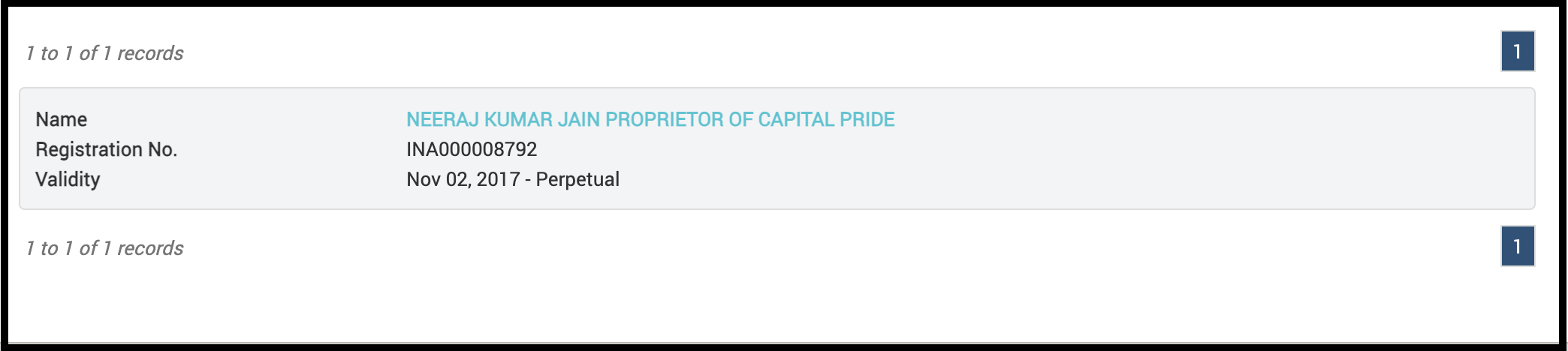
You can check all this yourself in a few minutes.
A SEBI registered investment adviser search lets you enter INA000008792 and compare the name, category and status with what is described here, instead of taking anyone’s word for it.
A SEBI registration number search on the regulator’s own pages does the same job.
Make sure the name on any payment page matches the registered name.
Registration shows that a person is allowed to give investment advice.
It does not describe the quality of advice or the fee.
Capital Pride Advisory Plans & Pricing: Do the Fees Cross SEBI’s Limit?
The website lists subscription prices for monthly, quarterly and half yearly periods.
We took the amounts as displayed and did the yearly arithmetic ourselves.
SEBI sets a ceiling on what an adviser can charge in fixed fee mode.
The cap is ₹1,51,000 per client per family per year, before GST.
The table below shows what a client would pay in a year if the same plan were taken again and again for twelve months.
It is a way to test the price list, not a record of what any client was charged.
|
Plan |
Monthly x 12 | Quarterly x 4 | Half yearly x 2 |
|
Index Option and Stock Option |
₹1,50,000 | ₹1,20,000 | ₹1,00,000 |
|
Stock Cash, Stock Futures |
₹1,20,000 | ₹1,00,000 | ₹90,000 |
| MCX Bullion, Metals, Energy | ₹1,20,000 | ₹1,00,000 |
₹90,000 |
| Cash Premium and Future Premium | ₹2,04,000 | ₹1,80,000 |
₹1,50,000 |
| Equity Combo and MCX All in One | ₹3,12,000 | ₹2,40,000 |
₹1,80,000 |
What the Table Shows
Cash Premium and Future Premium, at ₹17,000 a month, come to ₹2,04,000 over twelve months.
Quarterly, they come to ₹1,80,000.
Equity Combo and MCX All in One, at ₹26,000 a month, come to ₹3,12,000.
Even the half yearly price of ₹90,000, taken twice, comes to ₹1,80,000.
All of those totals are above ₹1,51,000.
Whether any client is actually billed that way is something the website cannot tell us.
Where the Totals Sit Close to the Cap
The monthly Index Option and Stock Option plans total ₹1,50,000 over a year, which is just under the cap.
The half yearly Cash Premium and Future Premium plans also total ₹1,50,000.
These are within the cap before GST.
Remember the cap is per client across all services, so two plans together can pass it.
Combining Plans
The cap covers all advice one client receives from the adviser in a year.
A client who takes Index Option at ₹1,00,000 half yearly twice and adds a half yearly MCX plan of ₹90,000 would pay far more than ₹1,51,000 together.
We cannot say how this is handled at Capital Pride.
Ask how the adviser tracks the yearly total for each client.
GST
The website figures do not say whether GST is included.
If the prices are before GST, an 18 percent addition raises a ₹1,51,000 fee to ₹1,78,180, which is the cap plus GST and not a breach.
If the listed prices already include GST, the base fee is lower.
Ask for the GST line in writing either way.
Plans that Look Alike
The site lists Stock Cash and Cash Premium separately, and it does not explain how the scope differs.
The same goes for Stock Futures and Future Premium.
The premium plans cost more than the plain ones, so the difference should be spelled out.
Ask for a written list of what each plan delivers.
Paid for a plan and unsure if the fee was within SEBI’s limit?
Our team reviews your payment proof and the plan details, drafts a written grievance to the adviser, and takes it to the right SEBI channel if the reply falls short. Register with us for a free consultation.
Also Read: Rio Capital Investment Advisor also offers a ₹90,000 quarterly plan, highlighting the importance of checking annualised fees before renewing.
Is Intraday Option, Futures and MCX Advice from Capital Pride Safe?
Every plan is described as intraday, with calls that carry defined entry and exit levels.
Intraday trading in options and futures is among the fastest moving parts of the market.
SEBI’s own studies on individual derivatives traders have found that most of them lose money over time.
That is general market context and not a statement about this adviser’s results.
What To Ask About Results
The site does not show a track record in the information reviewed.
Ask how the adviser measures results and whether past calls can be seen in full, including the losing ones.
SEBI rules on advertising also restrict claims about past returns.
A cherry picked list of winners is not a record.
Risk Profiling
Intraday options are not suitable for every investor.
Ask how the adviser assesses your risk profile and capacity before accepting your subscription.
Request your risk profile record in writing, so it shows what the adviser knew about you.
The Warning on Loans
The website cautions against borrowing for subscriptions.
You can apply the same caution to the trades themselves.
Never fund a plan or a trade with credit you cannot afford to lose.
That protects you whatever the adviser’s record.
What Do Capital Pride Investment Adviser Complaints Show?
The complaint tables show how many grievances reached the adviser and how they ended.
We read each one and added the sums again.
The monthly dashboard on the website shows the following.
|
Source |
Pending at end of last month | Received | Resolved | Total pending |
|
SEBI SCORES |
0 | 1 | 1 | 0 |
|
Directly from investors |
0 | 0 | 0 |
0 |
| Other sources | 0 | 0 | 0 |
0 |
| Grand total | 0 | 1 | 1 |
0 |
The sums match. One complaint came in through SCORES and was resolved, with none pending and none older than three months.
How Current The Data Is
The dashboard in the research is labelled November 2025.
That is the latest detailed table we could see, though the trend table runs to September 2026.
SEBI expects advisers to update complaint data by the 7th of each month.
September 2026 data should therefore have appeared by 7 October, so the detailed table looks to be several months behind.
The page may have been updated since our research, so check the website again.
Ask the adviser for the current monthly figures.
The Two Tables Do Not Match
The research reports that every entry in the trend table shows zero complaints, including the months after November 2025.
The dashboard, by contrast, shows one complaint received in November 2025.
If the trend table shows zero for November 2025 as well, the two tables conflict.
We could not tell which one reflects the position, and the adviser has not explained.
Resolution Time
The dashboard shows an average resolution time of seven to twenty one days on every row, including rows with no complaints.
That looks like a standing range and not a measured average.
Ask what the figure is based on.
A range with no complaints behind it does not tell you how fast a real case moved.
The SCORES Complaint
The one complaint arrived through SCORES and not directly from an investor.
Many people choose the regulator’s system first, so it does not show that the adviser’s own process failed.
The data also cannot show whether the person tried the adviser first.
We read it as a single resolved matter and nothing more.
If you ever have a complaint of your own, the page on a SEBI complaint against investment advisor shows how such cases usually run, and it helps to know the path before you commit money.
A search of SEBI’s public records found no SEBI order against Neeraj Kumar Jain or Capital Pride as of 16 October 2026.
That is not a clean certificate, because orders can be published later and our search was limited.
Also Read: Ravi Saraogi Investment Adviser records 13 resolved complaints in one financial year, but its annual total fails to reflect them.
Are Capital Pride Privacy Policy, Disclaimer And Terms Clear?
The research could not find Terms and Conditions or the MITC on the website.
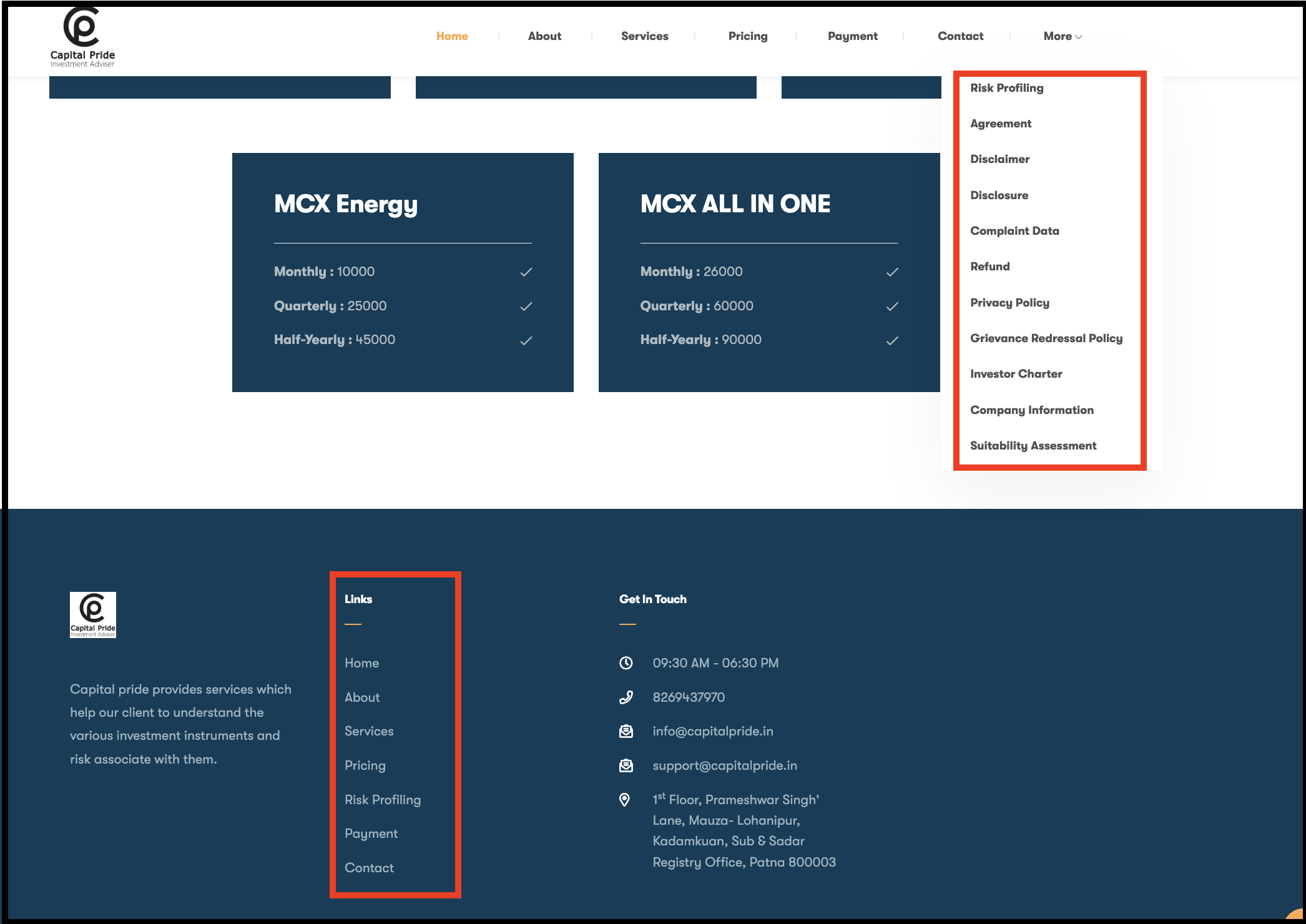
The MITC, short for Most Important Terms and Conditions, has been standardised for advisers since February 2025.
It forms part of the advisory agreement and covers fees, risks, refunds and the scope of the relationship.
Ask for both documents by email before you pay.
SEBI rules say the agreement must be signed and handed to you before advice is given or fees are charged.
Keep the email showing when you received them.
Claims About Strategy and the Team
The homepage uses phrases such as brilliant strategies and says the advice is built on research and risk control.
These are promotional lines, and the content shared does not back them with specifics.
The same goes for the team description.
Ask who will advise you, what their qualifications are and under which registration they work.

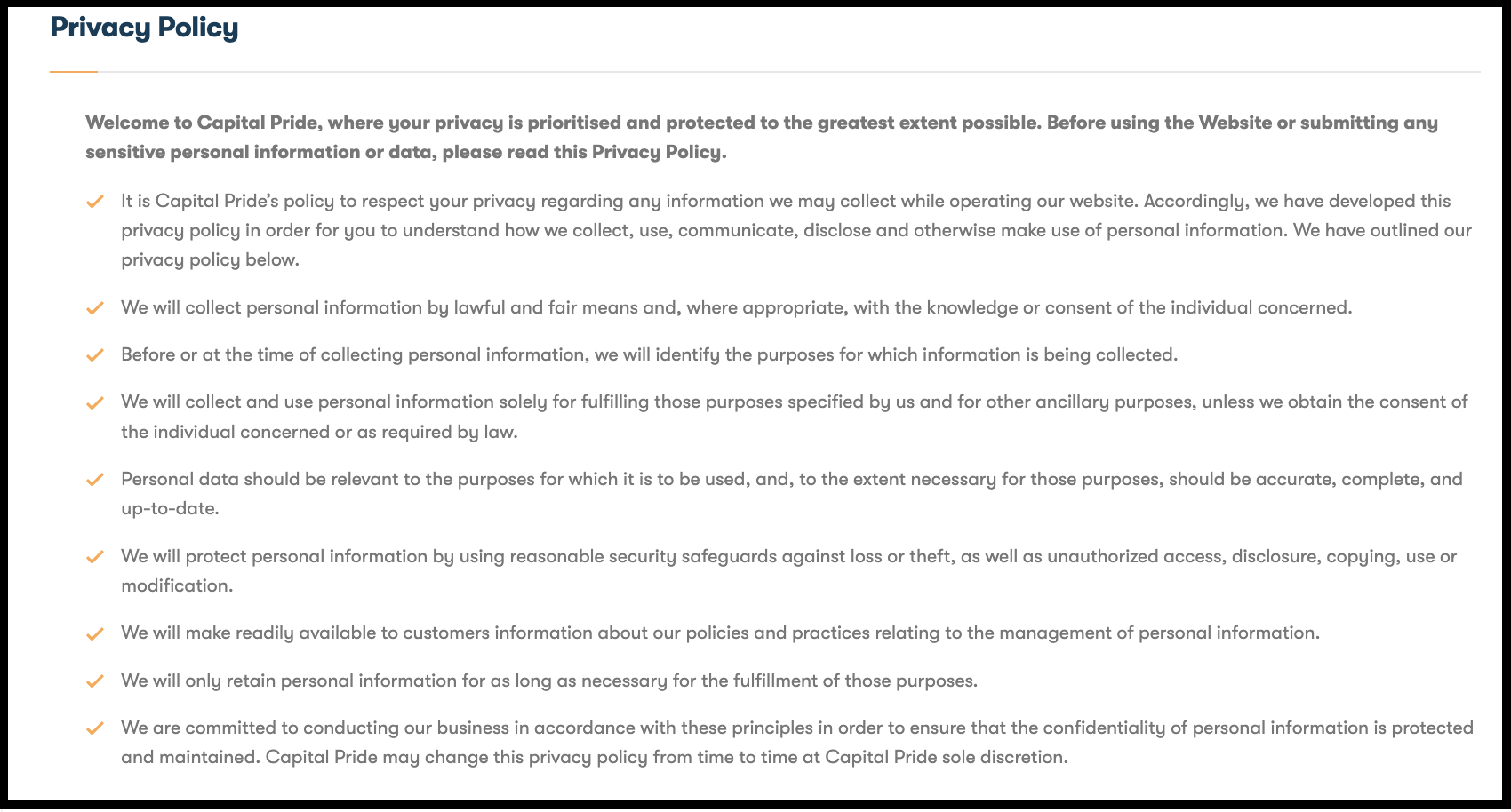
The Privacy Policy
The policy speaks in general terms about collecting, using, protecting and keeping personal data.
It does not clearly list the categories of data collected, the purposes, the sharing practices or how to ask for access or deletion.
Ask what information the adviser holds about you, how long it is kept and how you can have it removed.
Payments
The website says fees are not accepted in personal bank accounts.
Before paying, confirm the account name matches the registered name, and keep the receipt.
Also Read: Renaissance Smart Tech makes portfolio growth claims without clearly disclosing advisory fees or records on the website.
Capital Pride Investment Advisor Reviews
The research for this blog did not include client reviews.
We have not described any, and a missing review should not be read as a good or bad sign.
Look for dated reviews on more than one platform.
Any review you read is an individual opinion that we have not verified, and the adviser may dispute it.
What Should You Verify Before Paying Capital Pride Investment Adviser?
The gaps above can be turned into a short list.
Send these by email so you have a written reply, and wait for the answers before any money moves.
1. What is my total fee for twelve months?
Ask for the full amount across every plan you would take, with GST shown separately. Compare it with the ₹1,51,000 cap.
2. What does each plan deliver?
Ask for the exact calls, timing and format, and how Stock Cash differs from Cash Premium.
3. Can I have the agreement and MITC now?
Ask for both documents before payment, and keep the email as proof of when they arrived.
4. Where is the current complaint data?
Ask for the latest monthly table and an explanation of the difference between the two tables.
5. How are disputes settled?
Ask whether the agreement sends disputes to arbitration. Reading about arbitration in share market cases first helps you judge what such a clause would mean for you.
How to Contact Capital Pride Investment Adviser and File a Grievance?
The website lists two email addresses on its own domain, one for general queries and one for support, along with a phone number.
The information reviewed does not name a separate grievance officer.
Write to the adviser by email so you have a trail.
State your name, payment reference, the issue and the outcome you want in a reasonable time.
If the adviser does not reply or you disagree with the answer, the regulator’s online system is the usual next step.
The page on the SCORES SEBI complaint route covers what to attach and how a case moves after you file.
Keep every reply you get on that system, since they matter if the case has to go further.
For a payment disagreement that stays open, there is another route.
The SMART ODR portal brings in a neutral conciliator to go through your papers with you, so keep receipts and replies together.
Disclaimer
This blog is based on the adviser’s published disclosures and publicly available SEBI records as of 16 October 2026. It does not allege wrongdoing, and the adviser is welcome to share his side. We could not independently confirm how the listed prices are applied to individual clients, whether the prices include GST, the current state of the complaint tables, the reasons behind the reported complaint, or the content of any agreement beyond what the research showed.
Conclusion
Capital Pride Investment Adviser holds a long standing SEBI registration, and its dashboard shows one complaint, resolved.
The harder part is the price list, because several plans would pass the ₹1,51,000 yearly cap if taken for a full year.
Before you pay, ask for your total yearly fee with GST, a written description of each plan, the MITC and the agreement.
Keep every answer in writing.
Check the registration yourself and match the payment account to the registered name.
Never borrow money to fund a plan or a trade.
If a dispute arises later, write to the adviser first and then use the escalation routes in order.
Keep your receipts, emails and screenshots in one folder.
Report. Recover. Stay Fraud Free.
Frequently Asked Questions
The research shows Neeraj Kumar Jain, proprietor of Capital Pride, registered as an individual investment adviser under INA000008792, valid from 2 November 2017 and perpetual. Confirm the status on SEBI's website before you pay.
The website lists plans from ₹10,000 to ₹26,000 a month, with quarterly and half yearly options. Taken for twelve months, some plans total more than ₹1,51,000, so ask for your full yearly fee in writing.
The dashboard we saw is labelled November 2025 and shows one complaint received through SCORES and resolved, with none pending. Ask the adviser for the current monthly figures.
The website says it offers no guaranteed services and no profit sharing. SEBI also does not allow assured returns, so treat any call or message that promises them as a separate matter to question.
The website states that advisory fees are not accepted in personal bank accounts. Check that the account name on any payment page matches the registered name, and keep the receipt.





 Add us as a preferred source on Google »