
Quick Summary
An NSE appeal tribunal told Angel One to pay a client ₹8,96,208 plus 9% interest for unauthorised offline trades that emptied his ₹10 lakh account in a matter of days. Here’s the part that should give you hope. Both the grievance committee and the first arbitrator had already rejected him. The appeal tribunal overturned both. He won for one reason: Angel One couldn’t produce the records proving he placed the trades. Under SEBI’s rules, that made them unauthorised. This page shows you how that works, and what it means for your own case.
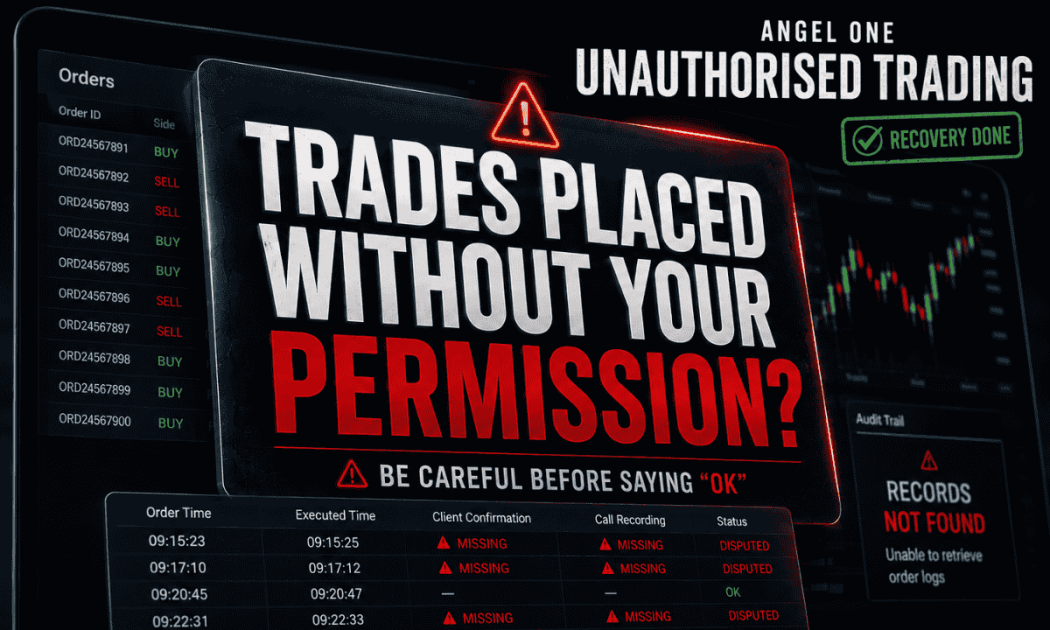
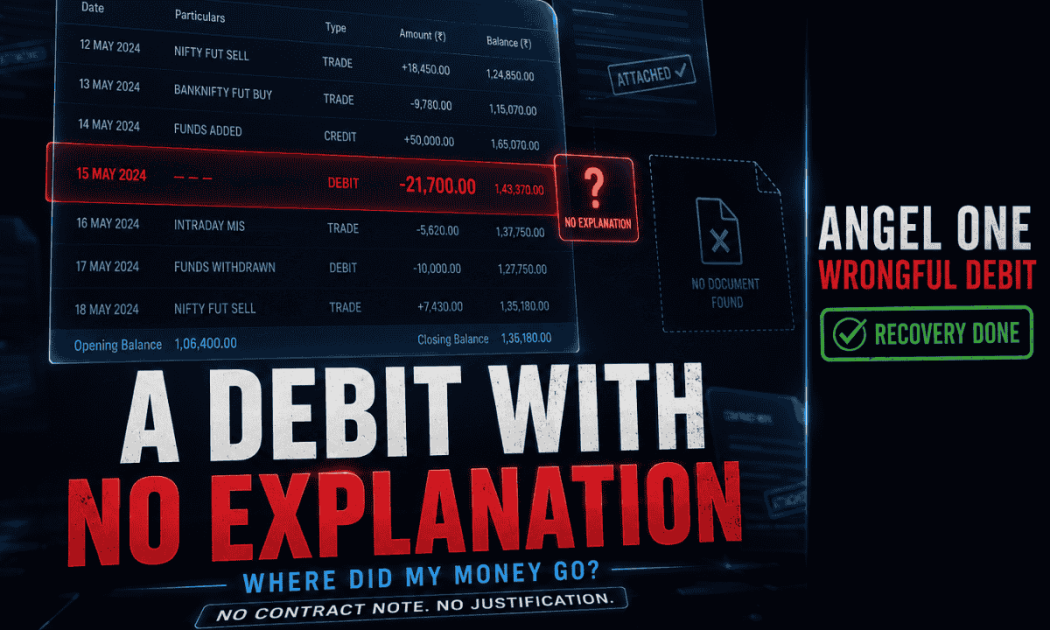
Unauthorised trading is simple to describe and painful to live through. Trades show up in your account that you never placed and never approved.
It’s one of the most common complaints against brokers, and one of the toughest to prove, because the broker holds all the records. That’s the catch.
How do you prove a negative when the other side controls the paperwork?
You can. And when you do, the money is real. An NSE appeal tribunal ordered Angel One to pay ₹8,96,208 in exactly this situation. Here’s how it played out.
Angel One Unauthorised Trading: What the Tribunal Found
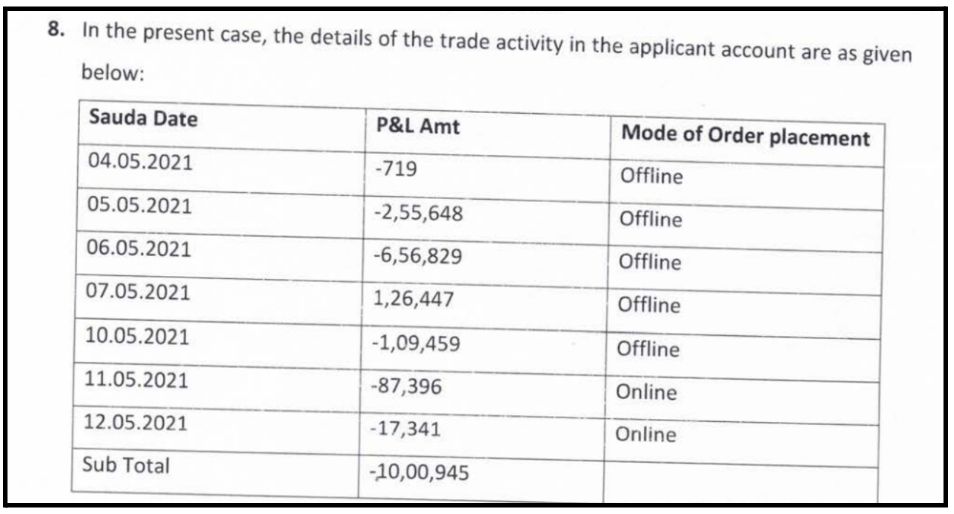
The client opened a trading and demat account with Angel One and moved in ₹10 lakh. Within days, a run of trades in his account had chewed through almost all of it.
He said he never placed them. Angel One said he did, and that he’d confirmed them afterwards.
He took it to the grievance committee. They rejected him. He took it to a first arbitrator. Rejected again. Most people stop here. He appealed.
And on appeal, the tribunal did something clever. It split the disputed trades into two piles, and that split is the whole lesson of this case.
The online trades. Two of them were placed online, through the client’s own login. The tribunal was blunt about these. If a trade came from your account, through your password, you can’t turn around and call it unauthorised. Those two stuck to him.
The offline trades. The other five were placed offline, through Angel One’s authorised person. And this is where the broker ran into trouble.
Why Angel One Lost: The Records That Weren’t There
Here’s the rule that decided it, and it’s worth knowing by heart if this happened to you.
SEBI’s circular dated 22 March 2018 says a broker has to get your confirmation before it executes a trade, unless there’s a technical failure.
And crucially, it puts the burden on the broker to produce the records for any disputed trade. Not on you to disprove it. On them to prove it.
Angel One couldn’t.
It had no evidence of the client placing those offline orders. It reached for a later SEBI circular that had relaxed record-keeping rules during the pandemic, but the tribunal shut that down fast: the relaxation only covered members working from alternate locations, and Angel One never showed it qualified.
So the tribunal landed on the obvious conclusion. Angel One did the offline trades, and it couldn’t prove the client told it to.
Then came the broker’s last card. It argued the client had confirmed the trades months later, by replying “Ok” to an email. The tribunal wasn’t having it. Saying “Ok” to a statement you’ve received is not the same as blessing every trade inside it, and certainly not five months after the fact.
The line the tribunal drew is the one every client in this spot should remember.
A broker has no blanket permission for unauthorized Angel One account handling or trading without your instructions. And when it does trade without them, it owns the loss, even if you were slow to check your messages.
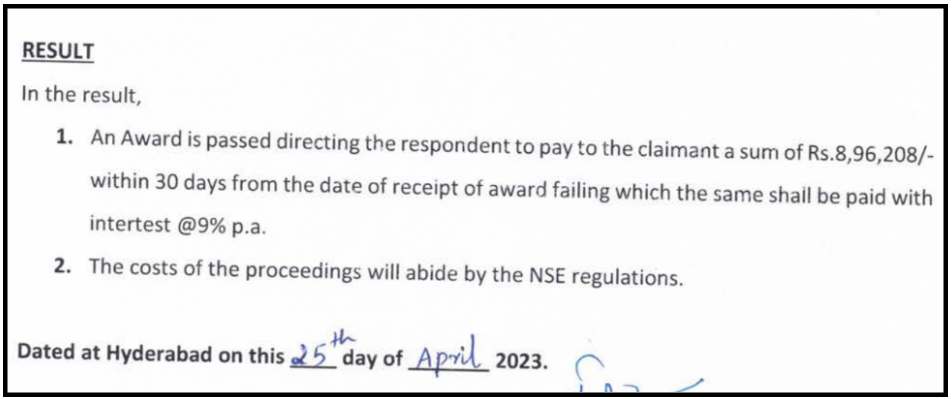
Award to the client: ₹8,96,208 plus 9% interest, the loss on the offline trades after adjusting for one day that had actually gone in his favour.
When the Broker’s Own Records Give It Away
The same principle showed up in a second Angel One case, from a completely different angle, and it’s worth telling because it shows how far this can go.
There, a client disputed trades around a technical glitch. To defend itself, Angel One filed a contract note showing the order time and the trade time as identical, down to the exact second, across hundreds of transactions.
Anyone who’s traded knows that’s not how it works. Orders and executions don’t line up to the second, hundreds of times in a row.
So the tribunal checked the real data with NSE. And the actual times were different. Angel One’s document had shown them as identical.
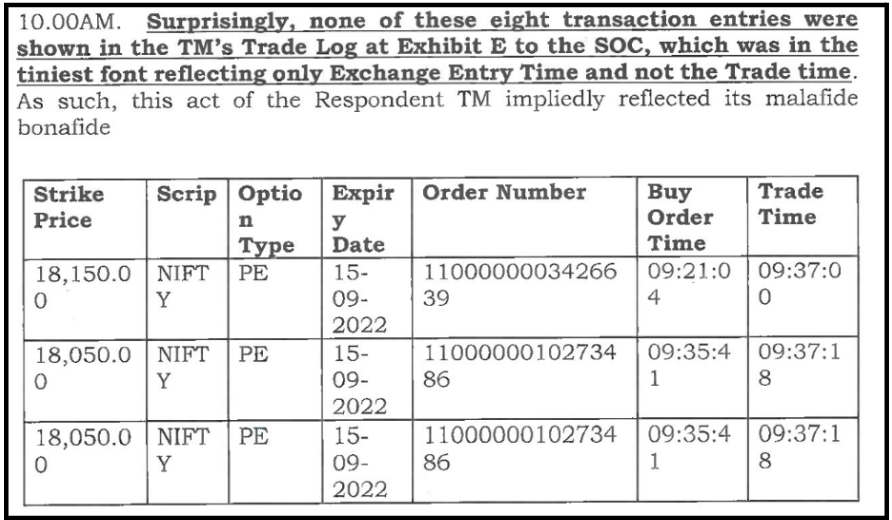
On top of that, the tribunal found Angel One had quietly left out a grievance-committee observation that went against it. It called the broker’s conduct “hopelessly false, frivolous and deplorable,” and said it smacked of “malafide and ulterior motives.” The 84-year-old client walked away with ₹2,76,812 plus 18% interest plus ₹50,000 in costs.
Two cases, one lesson, and it’s the lesson your whole claim should be built on.
You win unauthorised trading disputes when the broker can’t stand behind its own records. Missing order logs. Contract notes that don’t match the exchange. The instant the paper trail cracks, the trades become unauthorised.
Angel One Unauthorised Trading: What to Do If It Happened to You?
If trades appeared in your account that you never placed, understand this up front: the case lives or dies on records, and records have a shelf life. Move.
Pull these together now:
- Your full trade ledger and contract notes for the disputed period, downloaded from Angel One
- Your own record of what you actually placed, if anything
- Every SMS and email Angel One sent about the trades, with the dates intact
- Any call recording, or your written request asking Angel One to produce one
- The date you first noticed, and the date you first objected
The one step that matters most: demand the order logs and call recordings in writing, and do it early. In both winning cases, the broker’s failure to produce these is what sank it.
But a tribunal can only notice a missing record if someone asked for it.
If you never ask, the gap never shows. This is the single most common thing people leave undone, and it’s often the difference between the award and the dismissal.
Don’t confirm what you didn’t authorise. Remember the “Ok” email. Angel One tried to turn a two-word reply into consent for the whole mess. When you write to your broker, be precise about what you are and are not agreeing to. Vague friendliness gets used against you.
If you’re earlier in the process and haven’t filed a formal complaint yet, our page on how to file complaint against angel one covers that whole route. Arbitration is the stage after it.
Did trades show up in your Angel One account that you never placed?
We pull your ledger against the order logs, pin down exactly which trades the broker can’t prove you authorised, and build the claim around the records tribunals actually act on, not around how unfair it felt. Register with us to get assistance around the whole complaint process.
An Honest View of the Odds
Let’s not oversell this. Unauthorised trading claims are winnable, but the data shows both sides of it, so here’s the straight version.
If the trades came through your own login, online, expect to be held responsible. That part is hard to shift, and you saw it happen to the client above with two of his trades. Where you’ve got room is the offline trades, the ones the broker executed and can’t prove you authorised. That’s where the burden flips onto them, and that’s where clients win.
Your case has probably got both kinds tangled together. The real work is separating them, then building the offline claim on the records the broker can’t produce. Done right, that’s what turned a double rejection into a ₹8.96 lakh award on appeal.
Conclusion
The ₹8,96,208 award set the rule in plain terms. When Angel One ran offline trades and couldn’t prove the client authorised them, SEBI’s 2018 circular put the loss on the broker.
The ₹2,76,812 award drove it home. When the broker’s own contract note didn’t match the exchange’s data, the tribunal stopped trusting the records and ruled for the client.
Recovery for unauthorised trading is real. It comes down to whether the broker can back its records, and whether your claim is built to expose the hole when it can’t.
Report. Recover. Stay Fraud Free.
Frequently Asked Questions
Any trade executed in your account without your instruction or consent. Under SEBI's 2018 circular, brokers must get your confirmation before executing a trade except during a technical failure, and the burden sits with the broker to prove you authorised a disputed trade, not with you to disprove it.
Usually not. In the reviewed award, the tribunal held the client responsible for the trades placed online through his own credentials. Claims succeed where trades were executed offline by the broker and the broker can't produce proof that you authorised them.
An NSE appeal tribunal awarded ₹8,96,208 plus 9% interest for unauthorised offline trades. A separate case involving disputed records awarded ₹2,76,812 plus 18% interest and ₹50,000 cost. The amount always depends on the loss you can prove.
The order logs and call recordings. In the winning cases, the broker's inability to produce records proving the client placed the trades is what decided them. Demanding these in writing, early, is the step that most often makes or breaks the claim.

 Add us as a preferred source on Google »

