

Quick Summary
Rajeev Sant (name changed) put in a claim of ₹21,000, the advisory fee he’d handed over, plus every rupee he’d deposited into his trading account. The firm behind it, registered with SEBI as an Investment Adviser, had gone ahead and taken direct control of his account, placing trades on his behalf, precisely the kind of service advisers are barred from offering under SEBI rules. The dispute was taken up through direct negotiation with the firm’s compliance function, following a formal legal notice, and it closed with the full claim recovered: ₹21,000.
Rajeev Sant (name changed) is from Amravati, Maharashtra. He told the caller upfront that he had no time to manage trades himself. That single detail is exactly what the firm used to sell him a service it was never allowed to provide.
Rajeev received an unsolicited call from a representative of a firm registered with SEBI as an Investment Adviser. The representative shared past performance figures claiming other clients had earned strong profits through the firm’s guidance.
He initially declined, explaining he had no time to actively track or manage trades himself. The representative responded with an offer built precisely around that objection, saying the firm could handle his account directly on his behalf.
Trusting the SEBI registration behind that offer, Rajeev agreed and shared his trading account credentials. He paid a service fee of six thousand rupees as instructed.
A Service SEBI Does Not Allow Advisers To Sell
An Investment Adviser is licensed to give advice. An Investment Adviser is explicitly barred from executing trades or handling a client’s account directly. Advice and implementation are required to stay separate functions under SEBI rules.
What Rajeev was sold was precisely the service his adviser was not permitted to offer. He was never told this distinction existed. He was simply told the firm would manage everything for him.
Anyone offered account handling by a firm holding only an advisory licence can file a complaint against an RIA, since this exact service is barred by name in the regulations.
Funded Twice, Then Traded Without A Word
Following the representative’s instructions, Rajeev deposited ten thousand rupees, then a further five thousand rupees into his trading account. Trades began immediately after each deposit.
None of these trades came with prior confirmation or consent from Rajeev. No risk assessment was conducted before any of them. No documentation explained what was being traded or why.
Losses, Then A Demand For More Money To Fix Them
Every rupee deposited into the account was eventually lost through this unmanaged, unauthorised trading. When Rajeev raised the losses, he was told they could be recovered, but only if he deposited a further five thousand rupees.
This is a familiar pattern. A loss is used as the reason to extract another payment, framed as the fix rather than what it actually is, a second attempt at the same failed approach.
A Relationship That Existed Only On WhatsApp Voice Notes
From the first call to the final loss, every interaction happened through WhatsApp voice calls. No email confirmed anything and no written agreement was ever signed. No invoice or fee disclosure was ever issued.
SEBI rules require advisers to maintain records of client communication and to formalise the relationship in writing. None of that existed here at any point.
The Recovery Strategy: How Our Team Won The Case
The core of this case was simple once framed correctly. A licensed adviser had sold and delivered exactly the service its own licence prohibits it from providing.
Step One: We Established The Account Handling Violation As The Central Claim
Every instruction to deposit funds, followed by trades executed without confirmation, was tied directly to the account handling prohibition that applies to all Investment Advisers.
Step Two: We Documented The Complete Absence Of Written Records
No agreement, no invoice, no fee disclosure, and no formal communication trail existed anywhere in the relationship. This absence was built into the complaint as its own distinct violation.
Step Three: We Flagged The Loss Recovery Deposit Demand
The request for an additional five thousand rupees, framed as necessary to recover prior losses, was documented as an attempt to extract further payment under false pretences.
Step Four: We Traced Every Deposit To The Trades That Followed
Each funding instruction was matched against the unauthorised trading activity that occurred immediately after, building a clear and direct line of causation.
Step Five: We Sent A Legal Notice With A Firm Deadline
Our notice set out every regulation breached, from the missing agreement to the prohibited account handling, and gave the firm a defined window to respond.
Step Six: We Pushed Through Direct Negotiation With Compliance
With the violations laid out clearly against specific regulatory provisions, our team engaged the firm’s compliance function directly to move the matter toward a full resolution.
Was Your Account Handled Directly By Your Adviser? Our Team Can Help
We identify the exact regulation your adviser broke, document every deposit and trade, and push it through a formal notice until it is resolved. Register with us.
Final Outcome On Recovery After A Prohibited Account Handling Service
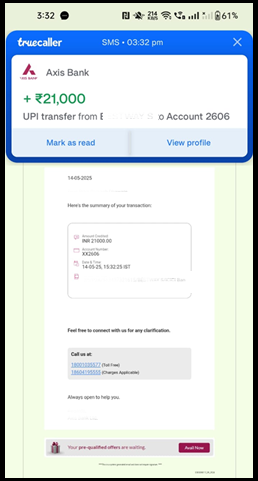
Rajeev’s claim stood at ₹21,000, covering the advisory fee paid and every rupee deposited into the account that was subsequently lost.
Through direct negotiation with the firm’s compliance function, the matter was resolved with a full recovery of ₹21,000.
Conclusion
If an adviser has ever offered to manage your account directly because you said you had no time to trade yourself, that offer itself may be the clearest violation in your case.
Report. Recover. Stay Fraud Free.
Frequently Asked Questions
No. Advisers are licensed to give advice, not to execute trades or handle a client's account. That distinction is written directly into the regulations.
No. A written agreement outlining services, fees, and responsibilities is required before any advisory relationship begins.
Treat this as a warning sign, not a solution. A genuine recovery does not require you to fund the same account that just lost your money.
Yes. It is itself a record keeping violation. Advisers are required to maintain a documented trail of client communication.
A SEBI SCORES complaint is a formal next step if direct engagement with the firm does not resolve the matter.





 Add us as a preferred source on Google »

