

Quick Summary
Initial Claim: ₹5,00,000 Core Violation: A group with no SEBI registration falsely claimed to be SEBI approved analysts, obtained API access to the client’s trading account, and ran undisclosed algorithmic trades that wiped out his capital. Forum Used: Cybercrime portal complaint, followed up and pushed forward by our team. Recovery So Far: ₹50,000 received, with the remaining amount still being pursued. Vishal Kadam (name changed) is from Bhopal, Madhya Pradesh. He filed a cybercrime complaint on his own and received nothing back but a reference number. That silence is where our team stepped in.
Vishal was contacted by individuals claiming to represent a trading firm, each one using a different first name across different calls.
They told him they were SEBI approved analysts, a claim that was never true.
They described a client base in the tens of thousands and referenced a certification meant to signal credibility. None of it was backed by any genuine SEBI registration at any point.
How Scammers Used API Access to Control the Trading Account?
Instead of receiving trading recommendations, Vishal was asked to grant API access to his own trading account. This access let their software connect directly to his account and place trades on its own.
Genuine, licensed advisory relationships never require this level of access.
Handing over API control effectively surrenders the account entirely, with no meaningful way for the client to intervene once trades begin executing.
How Sharing API Access Led to Unauthorised Algo Trading?
The first wave of losses came through trades placed directly on his account, reaching approximately seven lakh rupees over time.
A second wave followed through the so called algorithmic system itself, adding a further loss of close to four and a half lakh rupees.
Throughout this period, Vishal was pushed toward an even larger package priced at twelve lakh rupees, pitched as a six month plan. The phone numbers used to contact him changed repeatedly as the relationship progressed.
Why Unregistered Trading Scam Complaints Get Stuck?
Recognising the scale of what had happened, Vishal filed a complaint through the national cybercrime portal and received a reference number for it. Beyond that, nothing moved.
No acknowledgment followed. No update arrived.
This is a common pattern with complaints against entities that hold no SEBI registration at all.
Without a licensed regulatory relationship to leverage, a standalone cybercrime filing can sit without momentum unless it is actively followed up.
Cases involving entities operating with no registration at all often fall under a broader complaint against SEBI intermediaries, since the fraud typically touches multiple layers of the market ecosystem even without a valid licence anywhere in the chain.
How Our Team Escalated the Cybercrime Complaint for Recovery?
With no genuine SEBI registration to anchor a regulatory complaint against, this case needed a different kind of pressure applied consistently over time.
Step One: We Reconstructed The Full Contact History
Every phone number, every name used, and every claim made across the relationship was compiled into a single timeline, showing the pattern of shifting identities clearly.
Step Two: We Separated The Two Loss Events
The direct account losses and the algorithmic trading losses were documented as two distinct events, each with its own trail of authorization requests and resulting trades.
Step Three: We Followed Up Directly On The Stalled Cybercrime Complaint
Rather than leaving the existing reference number to sit unattended, our team engaged directly to push for movement on a complaint that had already gone unanswered for too long.
Step Four: We Built A Parallel Documentation Package
Alongside the cybercrime follow up, we compiled a complete record of the API access grant, the trading losses, and the escalating package pricing, ready to support further escalation if needed.
Step Five: We Opened Direct Contact With The Individuals Involved
Using the documented evidence as leverage, our team made direct contact through the available channels, working toward a resolution outside the stalled official process.
Filed A Cybercrime Complaint That Went Nowhere? Our Team Can Help
We pick up where a stalled complaint left off, build the documentation the case needs, and keep the pressure on until money actually moves.
Recovery Progress: How We Secured ₹50,000 from a Trading Loss
Vishal’s claim stood at ₹5,00,000, reflecting the scale of loss caused by the unauthorised trading and the algorithmic system run on his account.
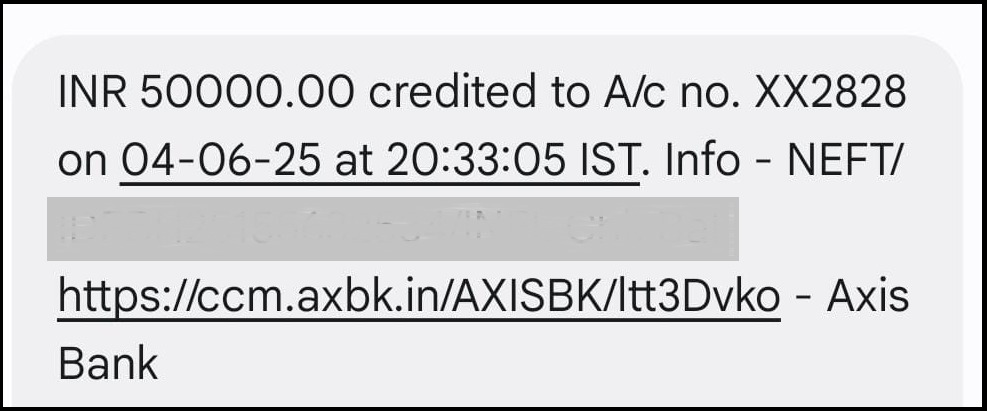
The recovery is in progress. A first installment of ₹50,000 has been received, and our team continues to pursue the remaining amount with the individuals involved.
Conclusion
If a cybercrime complaint about a trading fraud goes quiet, that reference number is not the end of the road.
Stalled portal complaints rarely move on their own, but active follow-ups, solid evidence, and direct persistence make a real difference.
Unregistered scams require hands-on escalation to turn a dead-end complaint into actual, trackable recovery.
Report. Recover. Stay Fraud Free.
Frequently Asked Questions
No. Genuine advisory relationships involve recommendations, not direct software access to execute trades on your account without your specific confirmation.
SEBI's own website lists registered research analysts, investment advisers, and brokers by registration number. A claim of registration should always be verified independently, never taken on the caller's word.
A reference number confirms filing, not progress. Active follow up is often needed to move a complaint forward, especially against entities with no traceable regulatory registration.
Frequent identity changes are a recognised pattern used to avoid accountability and make a case harder to document. Save every number and name used, even if they seem minor.
Yes, though the path looks different. Recovery often comes through direct pressure and documentation rather than a formal regulatory process, since no licence exists to leverage.





 Add us as a preferred source on Google »

