

Quick Summary
Initial Claim: ₹50,000, the total fees paid across a registration charge and three follow up payments Core Violation: A firm registered as a Research Analyst used a small demo profit to sell a guaranteed return promise, framed its own fee as money that would return through the market, and priced a three month package above the annual fee ceiling. Forum Used: Direct negotiation with the firm’s compliance team, following a formal legal notice. Recovery Secured: ₹35,000, roughly 70 percent of the claim. Neha Ambekar (name changed) is from Belgaum, Karnataka. She was not told her registration fee was a fee at all. She was told it was money she would get back through the market.
Neha received a call from a representative of a firm registered with SEBI as a Research Analyst. He offered a trial trade to demonstrate the firm’s capability before asking for any commitment.
That trial showed a small profit of about a thousand rupees.
On the back of that result, she was asked to pay a registration fee of five thousand rupees, described not as a cost but as an amount that would come back to her through market returns.
A fee is a fee. Framing it as money that will return through trading blurs the client’s own capital with the firm’s charges, and it sets up an expectation SEBI rules do not allow any research analyst to create.
How a Short-Term Package Exceeded SEBI’s Annual Fee Cap?
Once she was engaged, Neha was pushed toward a larger package, described as a three month plan priced at ₹1,55,000. SEBI caps annual research analyst fees at ₹1,51,000 per client.
A three month package should sit well under a quarter of that yearly figure. Instead, this one alone exceeded the entire annual ceiling, for a service meant to last only a fraction of the year.
Package pricing like this can be reported when you report a research analyst to SEBI for exceeding the fee ceiling, since the math against the annual cap is usually straightforward to demonstrate.
Trapped in Instalments While Losses Continued to Grow
Unable to pay the full package amount upfront, Neha transferred funds in three separate instalments across the following weeks, totalling forty five thousand rupees on top of the original registration fee.
Trades placed against her capital during this period showed no stop loss discipline at any stage.
No lot sizing guidance was given for any recommendation. Losses accumulated steadily with no defensive strategy offered at any point.
Capital Wiped Out: 90% Loss with Zero Invoice Proof
By the end of the engagement, Neha had lost close to her entire starting capital of fifty thousand rupees.
None of the fee payments she made were ever formally acknowledged with a receipt or invoice.
The representatives continued pressing her to invest further even as her account balance fell, using the same recovery language that had drawn her in with the original demo trade.
How We Built a Multi-Point Legal Case Against the Firm
The fee cap breach and the deceptive framing of the registration charge gave this case two independent, clearly documentable violations to build on.
Step One: We Separated The Fee From The Trading Loss
Every payment Neha made was isolated from her trading capital loss, so each violation could be argued on its own footing rather than blurred together the way the firm had originally presented them.
Step Two: We Calculated The Fee Cap Breach Against The Package Price
The three-month package price was measured directly against the SEBI annual ceiling, making the breach immediately visible without needing further interpretation.
Step Three: We Documented The Guaranteed Return Language
The promise that the registration fee itself would return through market profits was recorded as a distinct violation, separate from any general guaranteed profit claims made later.
Step Four: We Flagged The Missing Risk Management As Its Own Breach
The complete absence of stop-loss guidance and lot size instructions was documented independently, since both are required elements of proper advisory conduct.
Step Five: We Sent A Legal Notice With A Firm Deadline
Our notice laid out every violation with the exact SEBI clause it breached and gave the firm a defined window to respond before further escalation.
Step Six: We Pushed Through Direct Negotiation With Compliance
With the fee cap math and the documented promises laid out clearly, our team engaged the firm’s compliance function directly to move the matter toward resolution.
Told Your Fee Would Come Back Through Trading? Our Team Can Help
We will separate what you paid in fees from what you lost in trading, check the math against SEBI’s own fee ceiling, and push it through a formal notice until it is resolved.
Final Outcome: How FraudFree Recovered ₹35,000 in Deceptive Advisory Fees?
Neha’s claim stood at ₹50,000, covering every fee payment made across the registration charge and the three instalments that followed.
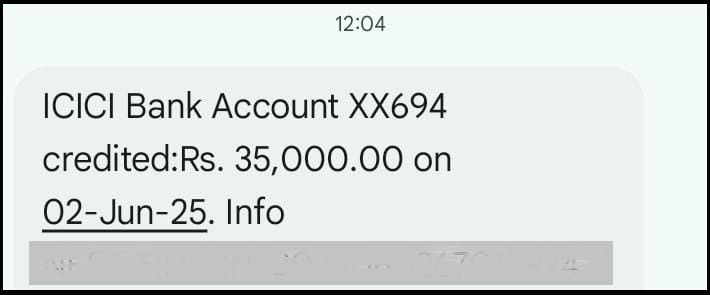
Through direct negotiation with the firm’s compliance team, the matter was resolved with a recovery of ₹35,000, close to 70 percent of what she had originally paid.
Conclusion
Advisory charges must always be clearly distinguished from your trading capital.
When a firm tells you a fee will return through market profits, they are blurring the line between service costs and investment returns to make the upfront payment seem riskless.
SEBI rules prohibit research analysts from making profit guarantees or framing fees as recoverable investments.
If you paid advisory fees based on promises of guaranteed trading returns, filing a SEBI SCORES complaint or escalating through the SMART ODR complaint portal gives you a direct, formal mechanism to challenge this misrepresentation for recovery.
Frequently Asked Questions
No. A fee is a service charge, not an investment. Framing it as recoverable through market returns creates a guarantee SEBI rules do not permit.
Compare the package price against SEBI's annual ceiling for the client relationship. A short term package priced near or above that yearly figure is a clear warning sign.
No. A single controlled demo trade proves nothing about how real recommendations will perform with your own capital at risk.
Instalments are still fees. Keep every transfer record, since a documented payment trail matters regardless of how the total was split.
A SEBI SCORES grievance is available as a formal next step once a legal notice has gone unanswered.





 Add us as a preferred source on Google »

