

Quick Summary
A demat account issue usually falls into one of two very different buckets. The first is technical: a login error, a frozen status, or a KYC mismatch, almost always fixable within days once you know which entity froze it. The second is far more serious: someone else running your account, using your OTP, or draining your holdings while calling it “advisory.” Real cases below recovered between 71% and 100% of claims once the evidence showed control had shifted away from the account holder. Here’s how to tell which one you’re dealing with, and what actually gets it fixed.
You’re ready to place a trade, the market is moving, and suddenly your demat account won’t cooperate. A login error, a mysterious “frozen” status, a transfer that just gets rejected.
In that moment it stops feeling like a gateway to your investments and starts feeling like a locked door.
Here’s the thing most people don’t realise until they’ve dug in: not every demat account problem is the same kind of problem.
Some are simple compliance checks. Others mean someone else has been quietly running your account. Getting the two confused wastes time you don’t have.
Why Is My Demat Account Frozen or Showing a Login Error?
Most login failures are correctable and don’t mean you’ve lost anything.
Common causes include entering the wrong client code or password, a forgotten PIN that just needs a reset through OTP or registered email, an OTP that never arrives because your contact details are outdated, or an account temporarily locked after repeated failed attempts or incomplete KYC.
Other culprits are server downtime or app glitches, unstable internet, restrictions on logging in from multiple devices at once, or an outdated app with overly strict browser settings.
A frozen account sounds scarier but is usually just as fixable.
KYC non-compliance is the most common trigger: an outdated PAN, Aadhaar, or mobile number, or a missing nominee, and depositories like NSDL or CDSL will freeze the account until it’s updated.
Dormancy kicks in if you haven’t traded or logged in for 12 to 24 months, treated as a safety lock rather than a punishment, and reactivating usually takes just a few clicks.
Less commonly, a freeze can come from legal or regulatory orders, tax authority instructions, or a SEBI investigation, which is rarer for most retail investors.
If you wake up to a frozen account, don’t assume the worst. Check your KYC status, review recent account activity, and contact your broker. In most cases, the fix is far simpler than the fear it creates. That said, don’t sit on it either.
Transaction delays should be raised with your Depository Participant immediately if shares aren’t credited by T+1. Freezes tied to KYC or PAN should be fixed right away to restore access.
Dormant accounts should be reactivated within 12 to 24 months to avoid a full fresh KYC.
DRF rejections need quick correction and resubmission. And if you ever see transactions you didn’t authorise, call your Depository Participant immediately to freeze the account and stop further misuse; that’s no longer a technical issue, it’s the second bucket.
When It’s Not a Glitch, It’s Someone Else Running Your Account
Account handling is not bad advice; it’s the removal of your decisions. You’re told not to trade yourself, that experts will manage everything, and all you need to do is add funds. Three real settled cases show exactly what that looks like and what it recovered.
In one case, the client was told to say only “yes” on recorded calls and nothing else, no questions, no doubts on the record, just consent. His account was run entirely by the firm, wiped out, and his withdrawals were blocked. That case recovered ₹1,42,000 against a ₹2,00,000 claim, a 71% recovery.
In another, a broker’s representative directly collected the client’s one-time passwords to open and operate the account herself, then gave him trading calls on index derivatives with zero assessment of his risk profile. No legitimate firm ever needs your OTP. That case recovered ₹36,000 against a ₹50,000 claim.
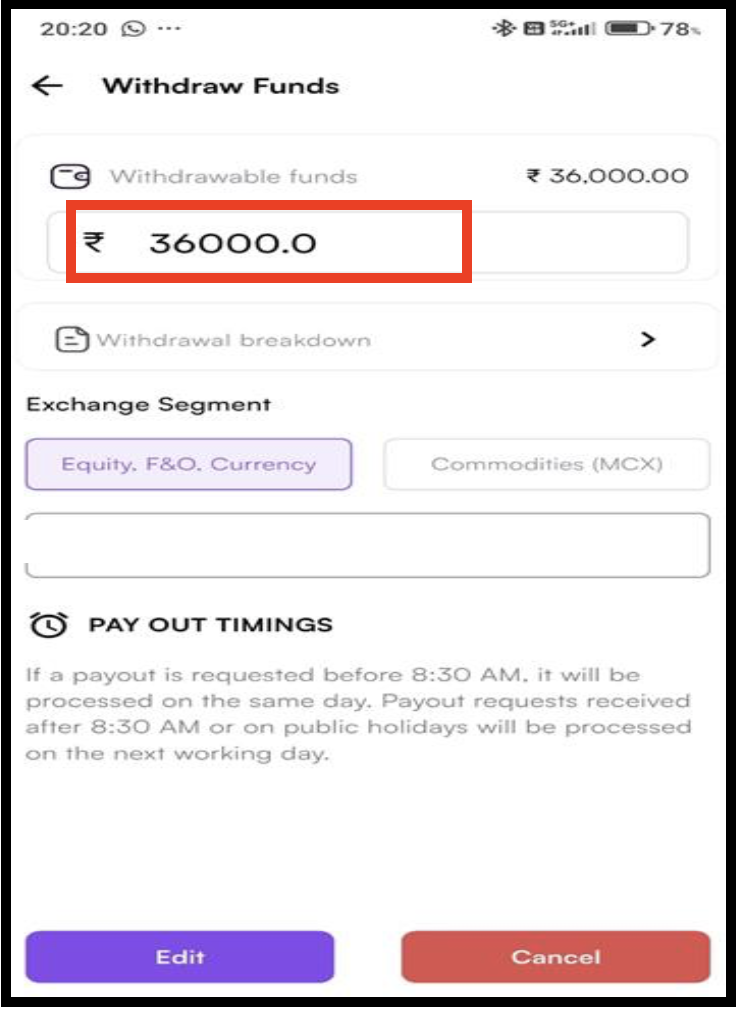
A third case combined full account handling with heavy brokerage churning and recovered ₹3,40,000 against a ₹4,45,000 claim, a 76.4% recovery, the highest of the three, because the evidence of control (blocked withdrawals, a collected OTP, a coached consent recording) sits in records rather than memory, which is exactly why these cases tend to recover well once documented.
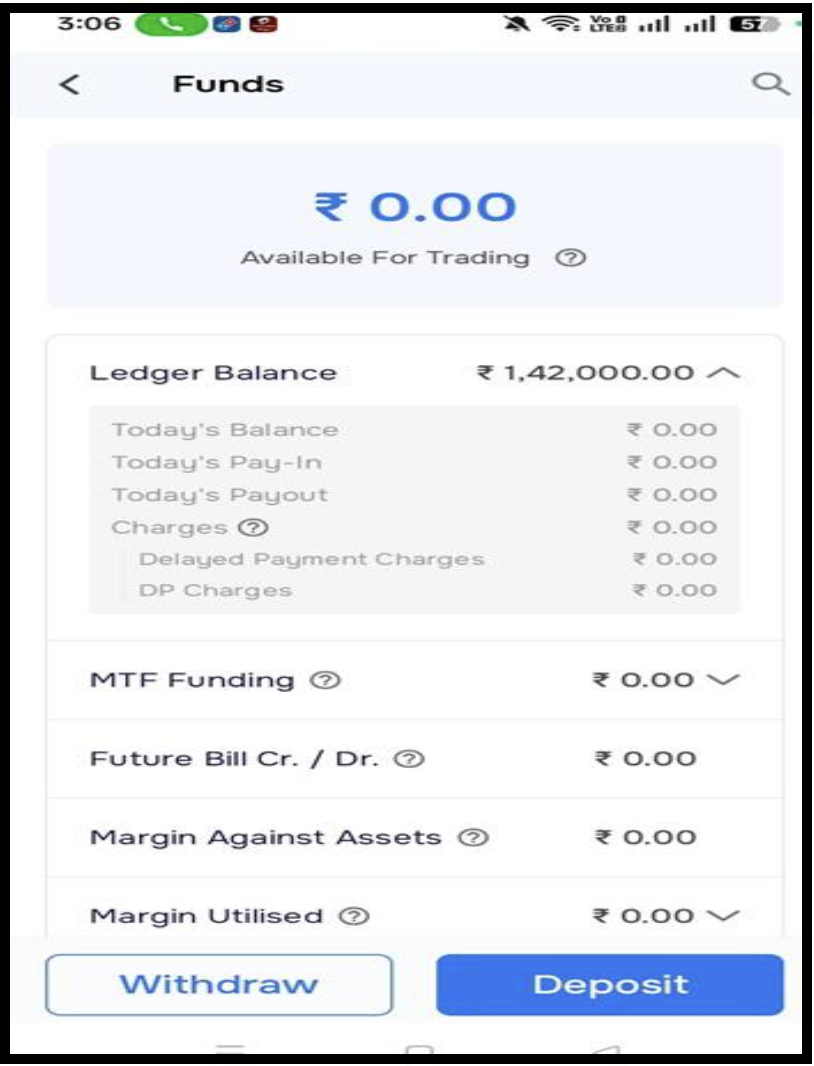
The signs that separate being advised from being handled are worth knowing before you’re in the middle of one: you were told not to trade on your own judgement, someone asked for your OTP or login, someone told you to only say “yes” on calls, your withdrawal requests were blocked or cancelled, or trades appeared that you don’t remember placing.
Any one of these shifts your situation from a dispute about advice to a dispute about control, and control is the easier one to prove because it shows up in account-opening records, chat history, and withdrawal logs rather than anyone’s recollection of a phone call.
When “Research Team” Meant Total Control
Praveen (name changed), a family man from a district in Maharashtra, lived through a version of this that ended with his savings gone entirely. A group reached out over WhatsApp and email introducing themselves as “hum research team hain,” a research team.
He logged in as asked and let them get to work. By the end, in his own words, “ab kuch nahi bacha,” there was nothing left.
The trades were never his. “Ye le lo, wo le lo”, take this, take that, was the whole of it, no pre-trade or post-trade confirmation, ever.
The pattern gave away the motive: heavy quantities of at-the-money options, a hundred, two hundred lots at a stretch, chosen specifically because they generated more brokerage, not because they served his goals.
A broker may act only on a client’s specific instructions, with proper confirmation before and after, under the Code of Conduct in the SEBI (Stock Brokers) Regulations, 1992.
Trading a client’s account without that consent is unauthorised trading regardless of outcome, and a “research team” has no business operating a client’s account, only recommending, never executing.
His contract notes, ledger entries, and trade records became the proof, documenting every transaction, lot size, and brokerage charge that told the real story.
A Similar Case, Told Plainly
Kailash (name changed) opened an account with a full-service broker who told him plainly they would handle his account and take positions on his behalf.
He added ₹5,000, made a small profit on day one, then added roughly ₹50,000 more after being encouraged to fund bigger profits.
Within two days, both the profit and the entire capital were wiped out. Stockbrokers exist to provide a trading platform, and full-service brokers may add research tips through a registered analyst, but no stockbroker is permitted to handle a client’s account, and no broker may ever ask for login credentials, regardless of how routine the request sounds.
Can a Broker Legally Ask for Your Login Credentials?
No. Not your password, not your OTP, not your TPIN. Ever. The manipulation into sharing them rarely happens all at once, it builds gradually through calls about fast-moving markets, “we’ll manage it faster than you can,” and the emotional pressure of recent losses.
Small early profits create confidence, questions stop getting asked, and OTP requests start feeling routine, especially in volatile F&O trading where large positions build quickly.
Once someone else holds your credentials, they can see your full portfolio, bank linkage, nominee details, and idle funds, initiate trades, and in many setups request fund transfers.
The most serious cost is often invisible until it’s too late: you lose your ability to dispute unauthorised trades, because the system will show them as placed from your account, potentially your own IP address.
Verbal consent claimed after the fact does not satisfy SEBI’s requirement for documented, per-trade authorisation, and a Power of Attorney signed at account opening does not give a broker blanket authority either; it has a defined, limited scope, and each trade still needs your specific approval.
If credentials have already been shared and unfamiliar trades are showing up, screenshot everything immediately: transaction history, balances, any message where credentials were requested.
Change your password right away and disable remote access if it was granted.
Also Read: Groww Technical Glitch
What to Gather and How to Get Your Money Back?
Whether your situation is account handling, credential misuse, or a straightforward emptied account, the evidence that actually wins these cases is largely the same: the account-opening record showing whether an OTP or referral link was involved, your chat history showing instructions not to trade on your own or a promise to “handle everything,” withdrawal requests and how they were responded to, your contract notes and statements compared against what you actually authorised, and every payment record tied to the firm’s promises.
A formal written complaint to the broker’s compliance officer comes first, then SEBI SCORES if that goes unresolved, then SMART ODR, and exchange arbitration if it’s still not settled.
If your dispute also involves the specific question of unauthorised trading rather than account handling itself, that distinction changes which evidence to lead with.
The complete step-by-step process, with timelines and what to attach at each stage, is covered in full in our guide: file a complaint against your stock broker.
Is someone else running your account, or did they collect your OTP to open it?
We establish exactly who was placing the trades, document the loss of control, and build the complaint around records the firm can’t argue with.
Register with us to get assistance.
Conclusion
Whether your demat account issue is a simple technical glitch or a serious case of unauthorized account handling, taking prompt action is key.
Remember that no legitimate broker will ever ask for your passwords, TPIN, or OTPs to manage your portfolio.
If your account has been compromised or misused, immediately secure your chat logs, contract notes, and banking records as evidence.
Report. Recover. Stay Fraud Free.
Frequently Asked Questions
No. A frozen account restricts transactions, not ownership. Your holdings remain safe, and corporate benefits like dividends and bonus shares continue to be credited even during a freeze. Resolving the KYC or compliance issue that caused it restores full access.
Yes, though recovery depends on your evidence and how quickly you acted. Preserve all account records and communication immediately, then file a written complaint with the broker's compliance officer. The sooner you document everything, the stronger your position.
No. SEBI requires documented, per-trade authorisation, not a general claim of verbal consent after the fact. The broker must produce specific proof you approved each individual trade before it was executed.
Running a client's account and placing trades on their behalf falls outside a broker's licensed role entirely. A firm doing this informally, without the separate registration and agreements that kind of arrangement legally requires, is operating outside its authority, and that is the core of an account-handling complaint.
No legitimate registration process requires your OTP to be shared with a representative. A one-time password exists specifically to confirm actions are genuinely yours, and handing it over gives someone else the ability to operate your account as if they were you.




 Add us as a preferred source on Google »

