

Quick Summary
Wealthy Ways holds a genuine SEBI Research Analyst registration, and no penalties or SEBI orders exist against it on record, a fair point in its favour. But three things complicate the picture: its ₹1,77,000 annual fee sits above SEBI’s own ₹1,51,000 price ceiling, its complaints jumped from 2 to 23 in a single year with several still unresolved, and independent user comments allege losses following its calls. This page weighs all of it honestly, no verdict handed to you, just the evidence.
You have either heard from a Wealthy Ways representative promising steady profits, or you are already a client hearing something else entirely: loss-recovery assurances.
Either way, one question keeps circling back: Can you actually trust this firm with your money?
This page answers that with evidence, not promises, three specific things worth knowing before you decide anything further.
Wealthy Ways Is Genuine or Not
This question has one narrow answer, and it’s worth separating from everything else on this page.
Wealthy Ways is a real, operating entity, not a fake outfit hiding behind a made-up name.
It has a physical office, a working website, an app, and it sells a specific product, options calls, to paying subscribers. In that sense, yes, it’s genuine.
But “genuine” only means it exists and does what it claims to do.
It says nothing about whether doing business with it is a good idea, and that’s a completely different question, answered below.
If you want the full licensing record before going further, it’s on our page: Wealthy Ways SEBI registered.
Can You Trust Wealthy Ways in India?
This is the harder question, and it needs evidence, not a one-word answer.
Being a real firm operating legally in India doesn’t automatically mean it treats its subscribers fairly.
Three specific things in its own record are worth weighing before you decide, each one checkable, none of them a guess.
Red Flag One: A Fee Above SEBI’s Own Ceiling
The first piece of evidence is the simplest to check, because it’s just arithmetic against a published rule, nothing to interpret, nothing to take on faith.
Wealthy Ways charges close to ₹1,77,000 a year for its flagship subscription.
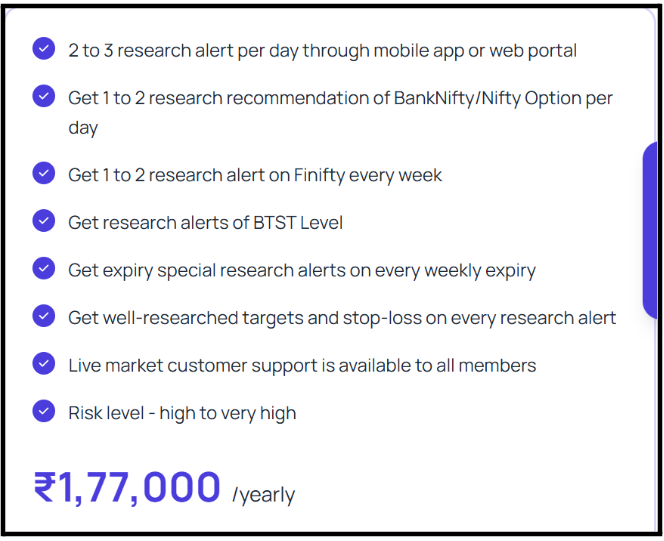
SEBI caps the maximum fee a Research Analyst may charge at ₹1,51,000 per annum per family for individual and HUF clients, a rule that exists specifically to stop advisories from charging retail investors more than the regulator considers reasonable.
At ₹1,77,000, the firm’s own pricing already sits above that regulatory ceiling.
That’s not a matter of opinion or a grey area, it’s one published number sitting above another published number.
And the fee carries a second problem beyond the cap itself, the math of actually affording it in the first place. This is the part most subscribers never sit down and calculate before paying.
If your trading capital is ₹5 lakh and the subscription costs ₹1.8 lakh aprx., you are already down roughly 36 percent before placing a single trade, purely from the fee.
That means over a third of your capital is gone the moment you subscribe, and every trade you place afterward has to first climb back out of that hole before it can generate any real profit for you.
Run the same math on a larger account, and the percentage shrinks, which is exactly why this fee structure tends to attract subscribers with smaller trading capital, the people who can least afford to lose over a third of it upfront.
Any advisory service needs to justify that math, and few genuinely can.
Red Flag Two: Complaints Rising Fast, With a Growing Backlog
The second piece of evidence comes straight from the firm’s own mandatory disclosure, not from outside allegations.
Every SEBI-registered Research Analyst is required to publish this data publicly, which means nobody had to dig for it, it’s sitting on the firm’s own compliance page for anyone to check.
| Year | Carried Forward | Received | Resolved | Pending |
|---|---|---|---|---|
| FY 2024-25 | 0 | 2 | 2 | 0 |
| FY 2025-26 | 0 | 23 | 13 | 10 |
| FY 2026-27 | 10 | 16 | 20 | 6 |
Here’s how to actually read this table, because the columns tell a fuller story than any single number on its own. “Carried Forward” is last year’s unresolved backlog entering the new year. “Received” is new complaints filed that year.
“Resolved” is how many got closed, from either the backlog or the new batch. “Pending” is what’s left over, heading into the next year.
Read that way, the pattern is clear.
FY 2024-25 started clean, 2 complaints, both resolved, nothing carried over.
Then FY 2025-26 saw complaints jump to 23, more than a tenfold rise, and even with 13 resolved, 10 complaints were still pending at year end, the first sign of a backlog forming.
FY 2026-27 tells you whether that backlog got fixed or just kept rolling.
It started with those 10 carried over, added 16 more, resolved 20 total, but still ended the year with 6 complaints unresolved. The backlog didn’t disappear, it shrank a little and then quietly persisted into a third year of public disclosure.
A single bad review can be one person’s bad day.
Red Flag Three: User Comments Alleging Losses
The third piece is the softest evidence, unverified, but consistent with everything above it.
Independent comments on social media allege losses following the firm’s recommendations, including one user citing a loss of around ₹20,000.
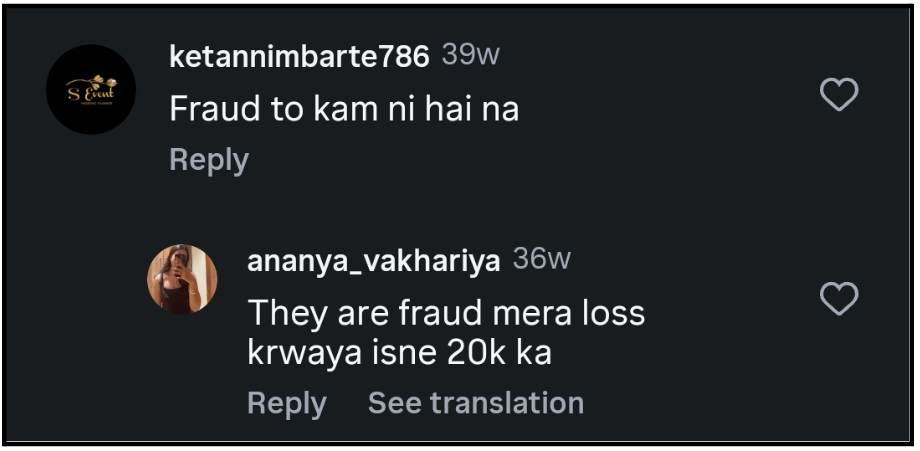
These remain individual, unverified claims, not regulatory findings, but they echo the same fee-versus-outcome tension the complaint data already shows.
Every documented voice behind this, named and screenshotted where available, is examined in full on our page: Wealthy Ways reviews.
Also Read: Can you trust Love Sharma trading advisor?
Wealthy Ways Office Location: Two Conflicting Records
One inconsistency surfaced while compiling this record, and it deserves honesty rather than a guess.
Some sources list the firm’s registered office in Puri, Odisha, while another source lists Kolkata, West Bengal, addresses tied to the same proprietor, Adarsh Dey research analyst.
This page cannot resolve that conflict with confidence, and the safest move is the same one this page recommends for everything else, verify the current registered address directly on SEBI’s Recognised Intermediaries portal before relying on any address shown here or elsewhere.
Also Read: Can you trust Stock Market Research and Services, repeated app logins, cited directly as a real frustration.
The Case That Shows What Happens When Trust Runs Out
Numbers and red flags are one kind of evidence. A real outcome is another, and one exists here.
One of our own clients paid Wealthy Ways representatives across several transactions after being shown demo trades and other clients’ profit screenshots, and ended up ₹7,80,000 in losses.
Structured evidence and formal SEBI SCORES escalation recovered ₹5,00,000 of it.
The complete story, every warning sign it revealed, and the exact evidence sequence that worked, is told in full on our page: recovery from Wealthy Ways.
What to Keep in Mind Before You Subscribe to Anyone Like This
Whatever you decide about Wealthy Ways specifically, these checks apply to any high ticket advisory service.
Verify the registration yourself, directly on SEBI’s portal, never from a screenshot shown to you.
Ask for audited performance, not screenshots, since selective wins prove nothing about the real track record. Run your own cost-to-capital math before paying any fee this size.
Remember that SEBI’s own data shows roughly 9 in 10 individual F&O traders lose money, a systemic risk no advisor can remove.
Get the refund policy, call count, and support terms in writing.
Already paying and one of these red flags feels uncomfortably familiar?
Tell us what you were promised and what actually happened. We will tell you plainly whether the gap between the two is something you can act on.
Does Your Experience With Wealthy Ways Match the Evidence Above?
Reading someone else’s red flags is one thing.
Recognising your own situation inside them is another entirely, and if that just happened while reading this page, the next move matters more than anything above it.
Trust questions eventually become action questions, and the action here is a formal complaint, not another payment.
The full filing route, from your first written complaint through SCORES and beyond, is walked through fully in our guide: how to complaint against Wealthy Ways.
Disclaimer: The fee and complaint figures above are taken from the firm’s own publicly disclosed information, shared here for informational purposes only.
The user reviews referenced are publicly available comments from unknown individuals, not verified or endorsed by us in any way. Every reader should independently research and verify any firm before trusting it with their money.
Conclusion
Wealthy Ways holds a real, verifiable registration.
That much is true and fair to say.
It is equally true that its fee breaches SEBI’s own ceiling, its complaints rose tenfold in a year, and independent users allege losses.
Registration alone was never the full answer to whether you should trust a firm, and this record proves exactly why.
Weigh the evidence, verify what you can yourself, and decide with the complete picture in front of you.
Report. Recover. Stay Fraud Free.
Frequently Asked Questions
The firm holds a genuine SEBI registration with no penalties on record, but its ₹1,77,000 fee exceeds SEBI's ₹1,51,000 cap, and its complaints rose from 2 to 23 in a year. Weigh both the registration and the conduct record before deciding.
The fee itself is not illegal to charge, but it sits above SEBI's prescribed ceiling of ₹1,51,000 per annum per family for a Research Analyst, which is a red flag worth raising directly with the firm before paying.
No SEBI orders or penalties appear against the firm in the public record as of the time of writing. This is a genuine positive, though it does not guarantee future conduct given the rising complaint trend.
The firm's own disclosure shows complaints jumping from 2 in FY 2024-25 to 23 in FY 2025-26. The exact cause is not stated in the disclosure itself, but the scale of the rise is a pattern worth taking seriously before subscribing.
Yes, as shown in a documented case where ₹5,00,000 was recovered against a ₹7,80,000 loss through organised evidence and SEBI SCORES escalation. Outcomes depend on evidence quality and how quickly you act.





 Add us as a preferred source on Google »

