Imagine this: You get a message saying your parcel is stuck and needs a small payment. Or a call claiming there’s a courier in your name that couldn’t be delivered.
You pause for a second and think, “Maybe I did order something?”
That tiny moment of doubt is exactly what scammers rely on.
Courier scams in India have quietly become one of the most common frauds and highlight the growing risks of Cyber Crime in everyday digital life.
And what is the scary part?
They do not target only careless people. They usually target everyone, like students, working professionals, parents, and even people who are usually very careful online.
So, if you are wondering what these scams actually are and how you can avoid them, let’s find out together.
What Are Courier Scams?
Courier scams are a type of fraud in which scammers impersonate delivery companies or logistics partners.
They may contact you through SMS, WhatsApp, email, or phone calls, claiming that a parcel is registered under your name, phone number, or address, but that something has gone wrong with the delivery.
The issue they mention can vary; sometimes they say there is a pending delivery charge, a customs problem, a failed delivery attempt, or that the parcel needs confirmation before it can be released.
So why do courier scams work so well in India?
The simple reason is that most of us regularly receive packages, whether from Amazon, Flipkart, Myntra, food delivery services, important documents, or even gifts from friends and family.

Because online shopping and deliveries are so common, hearing the word “courier” immediately feels normal and believable.
Scammers understand this behaviour and use it to their advantage, knowing that a small moment of trust or curiosity is often enough to get people to click a link, share information, or make a payment.
Common Types of Courier Scams in India
There are several types of courier scams. Over time, a few patterns keep repeating, such as:
1. Fake Delivery Messages
In this type of courier scam, you receive a message saying your delivery is pending because of unpaid charges. There is usually a link asking you to pay a small amount to “reschedule” or “confirm”.
The amount feels harmless. The link looks official. That is the trap.
2. Customs or GST Payment Scams
Some messages claim your parcel is stuck at customs and needs GST or clearance fees. The message often sounds urgent, and that is why it pushes you to act quickly.
Once the payment is made, there is no parcel, no response, no refund.
3. Missed Delivery Alerts
You are told that delivery was attempted but failed. To reschedule, you are asked to click a link or reply with details. That link is often designed to steal personal information.
4. Calls Claiming to Be From Courier Companies
Every one of us regularly gets delivery calls. So, some scammers call you through a genuine-looking contact number. They also use genuine courier company names to look real.
They usually ask for OTPs, Aadhaar details, or bank confirmation to “release” a parcel. This is never legitimate because no real courier asks for such information.
5. Fake Tracking Websites
Scammers often create fake courier tracking pages that look almost identical to real ones, like India Post or DHL.
It usually begins with a normal-looking SMS, WhatsApp message, or email saying your parcel is delayed or stuck due to unpaid fees.
When you click the link, it opens a cloned website with familiar logos and layouts, so it doesn’t raise suspicion right away.
Sometimes, people land on these pages through Google ads or top search results.
Once there, urgent warnings about returns or penalties pressure users to pay or share details before they get a chance to verify anything.
Real Courier Scam Cases in India
Courier scams have been rising across India, with fraudsters impersonating courier companies and claiming that a suspicious or illegal package has been sent in the victim’s name.
Victims are often pressured with threats of police action or legal trouble to make immediate payments.
Several real cases reported across different cities show how convincing and financially damaging these scams can be.
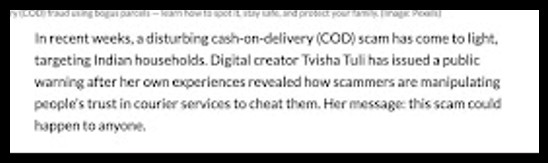
1. Fraudulent COD Parcel Scam Tricks Families Across India
In India, scammers are sending fake cash-on-delivery (COD) packages through well-known courier networks. One of the influencers has exposed this fake COD parcel scam.
People receive parcels they never ordered, often with familiar courier names like Delhivery or Blue Dart attached and are asked to pay before delivery.
Once the payment is made, the parcel often contains worthless items, unrelated to any order, and the tracked shipment turns out to be bogus.
This shows how easily people fall for seemingly legitimate deliveries.

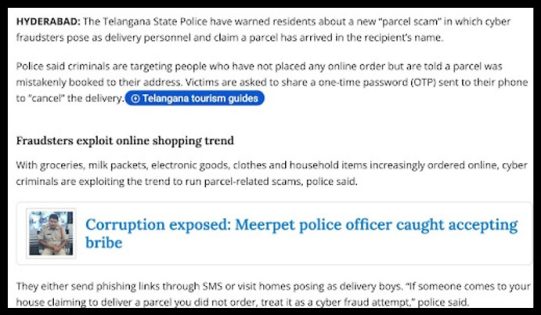
2. Hyderabad Police Warn of Parcel OTP Scam
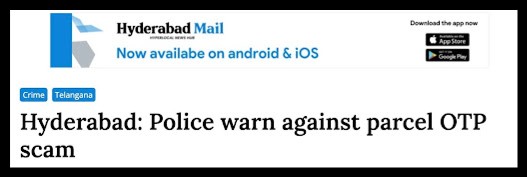
In Hyderabad, police have warned residents about a parcel OTP scam where attackers pose as delivery personnel and claim a parcel has been mistakenly sent to someone’s address.
The scammers manipulate victims into sharing the OTP sent to their phones to “cancel” or “reschedule” the delivery.
Once you share the OTP, fraudsters can hack accounts or misuse the number for financial fraud.
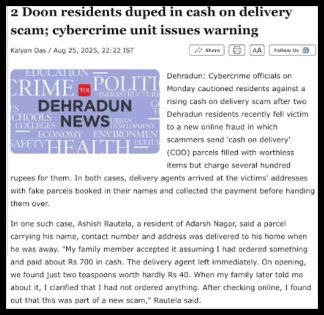
3. Dehradun Residents Duped in Fake Parcel COD Scheme
In Dehradun, two residents were victims of a cash-on-delivery scam where fake parcels arrived at their homes under the guise of legitimate courier shipments.
Scammers sent worthless goods and still collected money at delivery. Cases like these show that you should never receive a parcel that you have not ordered.
Even if the scammers say that someone has sent the parcel for you, always check with the person first and then only receive the parcel.
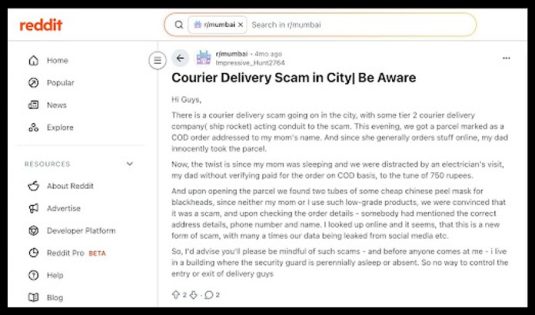
4. Mumbai COD Delivery Scams
Many people in Mumbai have shared their experiences across online platforms. Many of them complained that unsolicited COD parcels were delivered in their names with a demand for money at the doorstep.
In one such case, a parcel arrived at a person’s address marked as COD with a delivery charge.
Even though the person had not ordered anything. After opening it, they found that there were cheap and irrelevant products in the package.
This is a clear sign that personal details had been leaked or misused to target them.
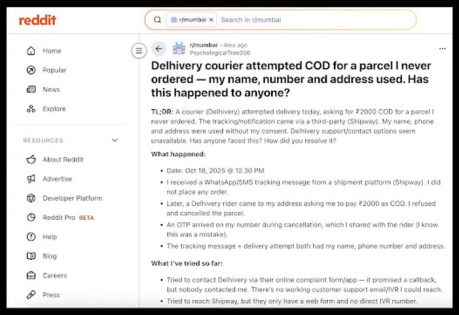
5. OTP Sharing and Personal Data Misuse Incident
Another pattern flagged by users online involves fake delivery attempts. This one person received a WhatsApp/SMS tracking message from a shipment platform (Shipway) even though they did not place any order.
Then, a Delhivery rider came to their address and asked to pay ₹2000 as COD. They refused and cancelled the parcel. But they received an OTP for cancellation and shared it by mistake.
The person’s personal data, name, phone, and address have been used without consent.
So, in cases like these, scammers could misuse the identity or attempt other scams like SIM or OTP attacks and UPI scams.
How to Identify a Courier Scam?
There are a few signs that usually give these scams away.
- The Sender Feels Off: Random mobile numbers, strange email IDs, or poorly written messages should make you pause.
- Everything Feels Urgent: The scammers create urgencies like you have to pay within one hour, or this is the last chance, or the parcel will be returned today. Real courier companies do not threaten you like this.
- Links Don’t Match Official Websites: Even if the page looks real, the web address often isn’t. One extra letter or an unusual domain is a big warning sign.
- Payment Requests Feel Informal: UPI IDs, personal wallet links, or direct payment requests are not how professional courier companies operate.
- Requests for OTPs or Bank Details: This is a hard rule: no genuine delivery service will ever ask for your OTP, PIN, or login details.
How to Avoid Courier Scams in Everyday Life?
You just need to be a little cautious when you receive such calls or messages.
- Always Verify on Official Apps or Websites: If you get a message, don’t click the link. Open the courier’s official app or website yourself and check.
- Use Official Customer Care Numbers: Never call back the number that contacted you. Look up the official helpline online.
- Ignore Links That Feel Suspicious: Spelling mistakes, odd URLs, or unfamiliar domains are usually signs of trouble.
- Don’t Share Personal or Financial Details: No matter how convincing the caller sounds, you should never share OTPs, bank details, or ID information.
- Double-Check With the Sender: If someone claims a parcel was sent to you, ask the person who might have shipped it.
Following these precautions can help you protect yourself from Cyber Crime and reduce the chances of falling victim to courier fraud.
What do I do if I Got Scammed Online?
If something has already gone wrong, do not panic; act quickly.
- Stop Responding Immediately: Cut off communication with the scammer.
- Contact Your Bank or UPI App: Report the transaction as fraud. Quick action can sometimes limit damage.
- Report a Cyber Crime complaint online: File a complaint at the National Cyber Crime Portal.
- Inform the Courier Company: They can flag the issue and help warn others.
- File a Police Complaint: Carry screenshots, messages, payment proofs, and call logs.
The sooner you report, the better the chances of preventing further harm.
Need Help?
If you have been scammed or even if you just feel something isn’t right, you don’t have to figure it out alone. You can reach out to us now.
We help people who have been affected by scams to:
- Understand clearly what kind of scam it is
- Figure out what evidence actually matters.
- Organise their case so nothing important is missed.
- Get proper guidance on cybercrime complaints and police reporting.
Taking the right steps early can reduce stress, limit damage, and make the process far less overwhelming.
Conclusion
Courier scams in India do not succeed because people are careless. They succeed because they feel normal and regular.
So next time a message pops up asking you to act quickly, pause for a moment.
Verify first, trust official sources, and remember: No parcel is more important than your safety.
Stay alert. Stay informed. And do not let scammers rush you into a mistake.