
A lot of investors feel reassured the moment they see one line on a website- “SEBI Registered Research Analyst.” It sounds official, regulated, and safe.
But here’s the real question:
Does SEBI registration automatically mean that everything else, refund policy, disclosures, terms, service structure, is investor-friendly?
But registration alone doesn’t answer every question.
Before subscribing to any research service, it’s important to understand how it operates, what its policies say, and whether its structure aligns with investor protection norms.
In this article, we take a closer look at Ethical Research Analyst based on publicly available information from its website.
If you are considering subscribing to Ethical Research Analyst, or any similar research service, this review will help you ask the right questions before paying any subscription fee.
Ethical Research Analyst Review
If you’ve been exploring stock market research services, chances are you’ve come across names that claim to be SEBI-registered, professional, and reliable.
Ethical Research Analyst is one such platform.
On the surface, it presents itself as an SEBI-registered research entity offering paid stock market recommendations through SMS and subscription plans. That immediately creates a sense of legitimacy.
But here’s the thing: in the stock market, registration alone doesn’t answer every question.
Before subscribing to any research service, it’s important to pause and ask: What exactly am I paying for?
How transparent are their policies? What happens if I want to exit?
The idea is simple: help you think clearly before making a financial decision.
How Services Are Delivered?
According to the FAQ section on the website, Ethical Research Analyst states: “All calls are given by SMS only.”
“Account gets active only after payment is received in our bank accounts.”
“You can receive the tips through SMS with name of ‘Ethical Research’ or chat room.”

This indicates that the primary mode of delivering recommendations is through SMS and possibly chat-based communication.
From an investor’s point of view, this raises a few practical considerations:
- Are detailed disclosures attached with each recommendation?
- Is risk profiling completed before activating the service?
- Are terms acknowledged formally before payment?
The delivery model itself is not inherently problematic. However, clarity around onboarding, documentation, and risk acknowledgement becomes important when services are subscription-based.
Is Ethical Research Analyst Safe?
That’s the real question, right?
When money is involved, especially in the stock market, “safe” doesn’t just mean legally registered. It means transparency, consistent disclosures, and fair policies. It means knowing your rights as an investor.
Ethical Research Analyst does show SEBI registration details on its website and offers subscription-based research calls. But safety isn’t judged by one line on a footer.
It depends on the overall structure, refund rules, contractual clauses, conflict disclosures, and onboarding process.
So instead of jumping to conclusions, let’s break it down calmly and see how everything is structured.
We’ll start with the most basic layer of trust, SEBI registration.
Ethical Research SEBI Registration Status
On its website footer, Ethical Research Analyst displays the following: SEBI Research Analyst No: INH000018179
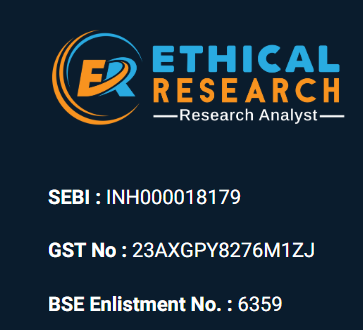
This indicates that the entity is registered under SEBI’s Research Analyst Regulations, 2014. In simple terms, this means it has obtained regulatory approval to provide research recommendations in the securities market.
At this stage, many investors feel reassured. And that’s understandable. Even the official SEBI website displays the same.
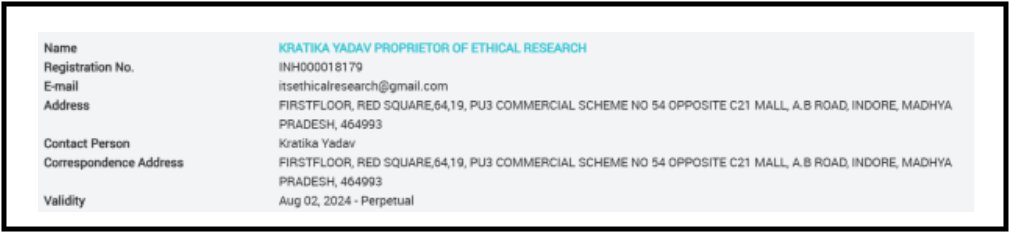
But while reviewing the Disclosure page on the same website, another registration number appears: INH000018719

Now, the difference may look minor, just two digits rearranged. However, registration numbers are official identifiers. Investors often verify them directly on SEBI’s registry before subscribing to paid services.
Because of that, such details are generally expected to remain consistent across all official communications.
This brings us to an important clarification.
What SEBI-registered Research Analyst Can Do?
SEBI registration allows a research analyst to operate legally. It confirms that the entity has been granted permission under the regulatory framework.
A Research Analyst is required to display the correct registration number wherever it operates.
However, a registration number is only the baseline for compliance, not a guarantee of ethical conduct or profit.
Under the SEBI Guidelines for Research Analyst operations, these entities are strictly prohibited from promising “guaranteed returns” or managing a client’s demat account directly.
The regulatory framework is designed to ensure that recommendations are based on objective analysis, yet many registered firms still face scrutiny for aggressive sales tactics or hidden fee structures that catch retail investors off guard.
However, SEBI registration does not guarantee:
- Profit on recommendations
- Accuracy of every call
- Risk-free trading
- Automatic refund rights
In short, registration is a license to operate, not a performance certificate.
That’s why it becomes equally important to examine the company’s policies and service structure beyond just the registration number.
What Is Not Permitted for a SEBI-Registered Research Analyst?
In the Indian stock market, a SEBI registration number is often seen as a badge of credibility. But it’s important to understand one thing clearly: registration does not grant safety.
Below is a clear breakdown of what a SEBI-registered Research Analyst is strictly prohibited from doing under the regulatory framework.
- A Research Analyst cannot promise guaranteed profits, fixed daily income, or “assured” monthly returns. Any claim suggesting a specific or fixed return is a serious red flag.
- A Research Analyst is legally barred from guaranteeing recovery of previous trading or investment losses. An RA cannot claim their strategy is risk-free or that experience alone eliminates the possibility of loss.
- Research Analysts cannot charge fees based on a percentage of profits or link their compensation to the size of your capital in a performance-based manner.
- Aggressive solicitation tactics, including repeated unsolicited calls, spamming, or creating false urgency are not permitted.
How to Report a Research Analyst?
If you believe your concern has not been addressed properly, there is a structured process available.
Step 1: Write to the Company
Start by sending a written complaint to the company’s official email or support channel. Clearly mention:
- Your subscription details
- Date of payment
- Nature of the issue
- What resolution are you seeking
Keep records of all communication.
Step 2: File a Complaint on SEBI SCORES
If the matter is not resolved satisfactorily, you can approach the SEBI SCORES (SEBI Complaints Redress System) portal.
Through SCORES, investors can file complaints against SEBI-registered intermediaries, including Research Analysts.
You will need:
- Registration number of the entity
- Payment proof
- Screenshots of relevant policies or communications
- Written complaint copy
SEBI forwards the complaint to the concerned entity for a response and monitors the resolution process.
Step 3: Escalate & File a Complaint in Other Portals
If the response remains unsatisfactory, further escalation mechanisms may be available under the regulatory framework.
The key point is simple: documentation matters. The clearer your evidence, the stronger your case.
Now, if you’re unsure about your situation or need guidance on the next step, here’s what you can do.
Need Help?
If you’re confused about your rights as an investor or unsure whether a research service has followed the proper process, you don’t have to figure it out alone.
Many investors feel stuck when policies are complex, refunds are denied, or disclosures are unclear.
The key is not panic; it’s documentation and clarity.
Register with us, and we will help you to:
- Understand your available options
- Organise your evidence properly
- Draft a structured complaint
- Take the right next steps under the regulatory framework
Apart from these,
- File a complaint in Smart ODR: Assistance in navigating the Online Dispute Resolution platform for quicker resolutions when eligible.
- Monitoring SEBI complaint status: We will also check SCORES regularly to see the advisor’s response and the status of the SEBI complaint. Responses to SEBI’s requests for more information or clarification should be made as quickly as possible.
Sometimes, simply reviewing the terms carefully and responding in writing makes a big difference.
Conclusion
Ethical Research Analyst presents itself as a SEBI-registered research entity offering subscription-based stock market recommendations.
That registration does provide regulatory recognition, and at the time of writing, there is no publicly available SEBI enforcement order against the entity.
However, for RA, registration is only one part of the bigger picture. Safety in financial services is not determined by a single line on a website footer.
It depends on how policies are structured, how clearly disclosures are written, and how fairly investor rights are handled in practice.
While reviewing the publicly available information, certain aspects such as the refund structure, consistency in disclosures, and contractual wording deserve careful attention before subscribing.
These observations do not automatically imply wrongdoing, but they do underline why investors should read beyond the headline claim of being “SEBI registered.”
Before committing money to any research service, it is important to feel comfortable with the terms, understand the exit rules, and verify regulatory details independently.
In the stock market, careful reading and informed decision-making often protect investors far better than assumptions based on branding alone.