
Quick Summary
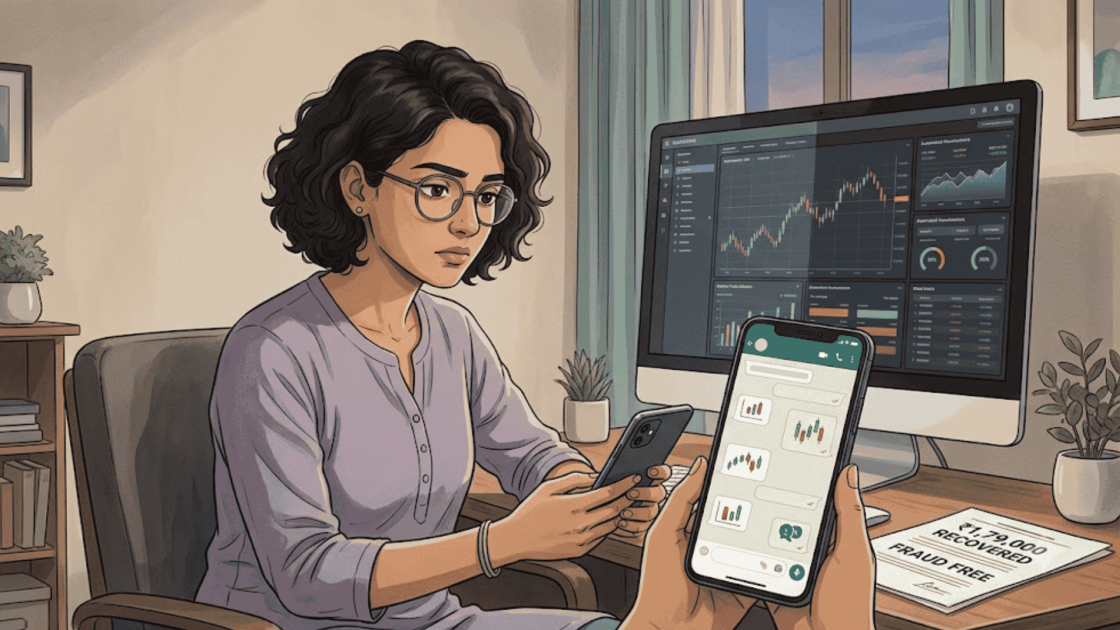
Farah Ansari (name changed) paid 1,58,000 for what was sold as SEBI compliant algorithmic trading software. There was no algorithm behind it at all. Her claim reached 3,58,000. The firm ran two demo trades to build trust, then switched entirely to manual tips over WhatsApp. Our team recovered 1,79,000, a 50 percent share.
Farah (name changed) came to us after paying ₹1,58,000 for what she believed was automated algorithmic trading software.
The pitch sounded convincing. During the sales demo, the firm ran two trades that appeared to be placed by the algo, both of which made profits. They also showed past performance figures to build confidence. Farah paid in instalments and expected the software to handle the trading for her.
But after those two demo trades, something changed.
The software simply disappeared from the conversation. Instead, Farah started receiving manual trading tips on WhatsApp and was told to place the trades herself through her broker account. There was no functioning algorithm.
What she had paid for as automated software had effectively become a manual tip service.
Then the losses started.
When Farah questioned the results, the firm told her to sell her existing equity holdings to fund a recovery attempt. That decision created another layer of loss. Soon after she began questioning the advice, the firm stopped responding.
The bigger issue was that the firm was not even SEBI-registered to provide investment advice.
Legal Strategy: How FraudFree Built the Case?
We did not treat the losses alone as the strongest part of the case. We focused on what Farah was actually promised and what she actually received.
Step 1: Document the software-to-WhatsApp switch
We mapped the conversations and timestamps to show exactly when the software stopped being discussed, and manual trade instructions began. This made the product switch difficult to explain away.
Step 2: Confirm the registration status
We checked the firm’s SEBI registration status and confirmed that it had no registration permitting it to provide investment advice. This strengthened the case.
Step 3: Trace the equity sale instruction
We preserved the message where Farah was told to sell her existing holdings for a recovery attempt. This showed that the advice had caused harm beyond the original payment.
Step 4: File with the product switch as the lead argument
We built the complaint around one simple question: Where was the algorithm Farah had paid for?
The firm later claimed that the manual tips were only temporary because the software was being upgraded. We asked them to produce evidence that the software had ever functioned beyond those two initial demo trades.
They could not.
How FraudFree Secured a 50% Recovery?
Once the software-to-manual-tip switch was clearly documented, the firm’s explanation became difficult to sustain.
The evidence showed what Farah was promised, what she received, and how the service changed after payment. With no evidence of a functioning algorithm being produced, the firm agreed to settle.
Farah recovered ₹1,79,000 against her ₹3,58,000 claim, securing a 50% recovery.
For us, the turning point was not simply proving that Farah lost money. It was proving that the product she paid for was never actually delivered as promised.
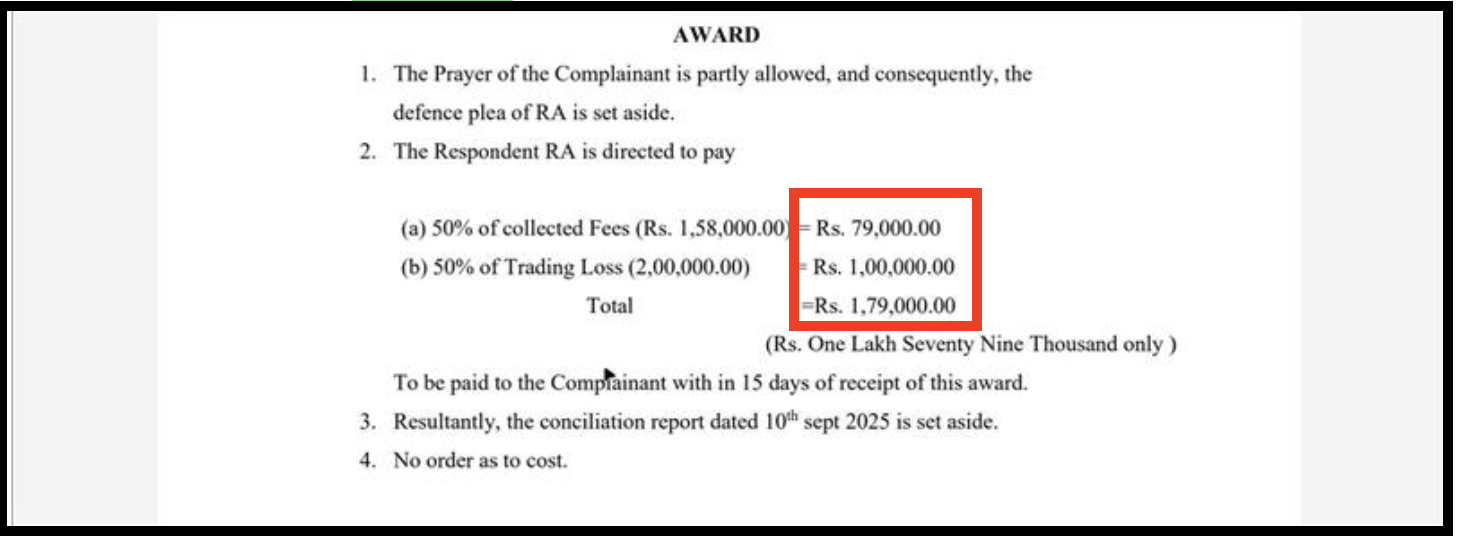
The settlement addressed both the misrepresented product and the unregistered status of the firm that sold it.
Bought Automated Trading Software That Didn’t Work?
Don’t let misleading software claims stand. We help you gather proof of false assurances and navigate official resolution channels to recover your funds.
Register with us now.
Conclusion
A product switch mid-relationship, from software to manual instructions, is a misrepresentation worth documenting on its own. It rarely comes alone.
If you were sold automated software that quietly became manual tips over chat, save the exact point where that shift happened. It often anchors the strongest part of the claim.
Beyond SCORES, our team raises general complaints against SEBI intermediaries for unregistered firms.
Also, we escalate through the SMART ODR portal, where a firm goes quiet.
Report. Recover. Stay Fraud Free.
Frequently Asked Questions
Genuine automated software runs continuously without needing a person to relay individual trade instructions. If tips start arriving manually over chat, that is a strong signal worth documenting.
No. A working demo does not prove an ongoing algorithm exists. What matters is whether the software continued functioning after the sale was made.
That instruction itself became part of the complaint. Document any advice pushing you to liquidate other assets, since it often signals an attempt to fund losses elsewhere.
Yes. An unregistered firm was never permitted to offer this kind of advice at all, which adds to the misrepresentation claim rather than replacing it.





 Add us as a preferred source on Google »

