
Quick Summary
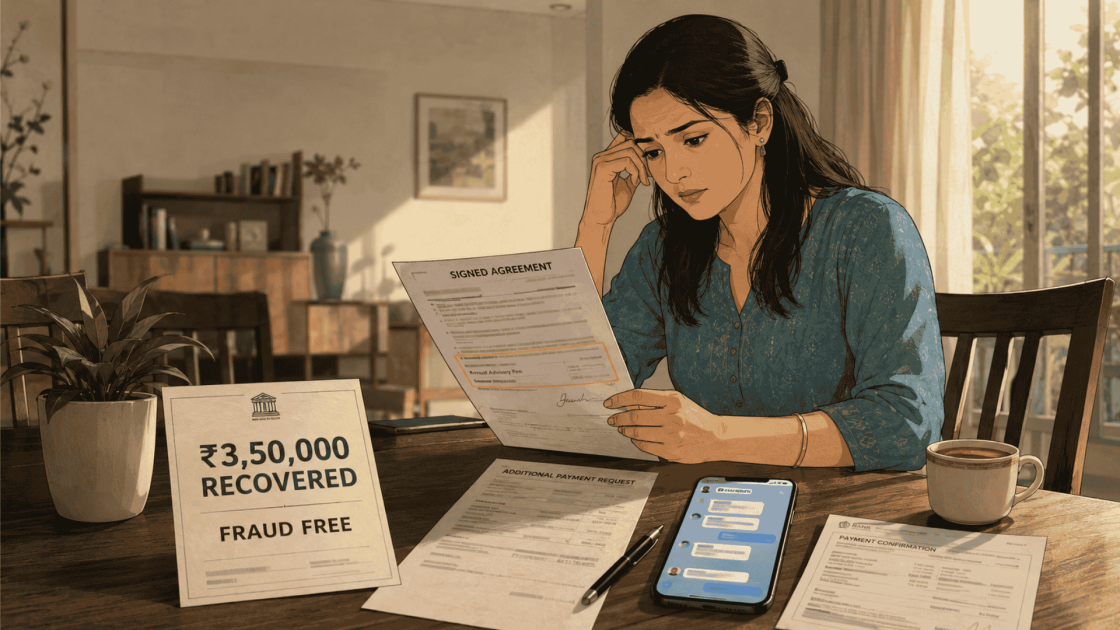
Ritu Bansal (name changed) signed up for a fixed annual advisory package that was later raised mid term without her written agreement. Her total claim reached 8,87,500. The fee hike came with a threat to stop service unless she paid the new amount. Our team recovered 3,35,000 for Ritu, a 37.7 percent share.
Ritu (name changed) signed an annual agreement with a SEBI-registered investment adviser in mid 2024 for a fixed fee of ₹3,50,000, covering portfolio strategy calls and quarterly reviews for the full year.
Five months into the contract, the adviser informed her that the fee was being revised upward due to what they called increased market volatility and service costs. She was asked to pay an additional ₹2,50,000 to continue receiving calls.
Ritu initially declined, pointing to the fixed fee stated in her signed agreement. The adviser’s team responded that calls would stop immediately unless the additional amount was paid within the week.
Under pressure and worried about losing access to positions she had built based on the adviser’s earlier recommendations, Ritu paid the additional amount. A further top-up request followed two months later, bringing her total payments to ₹8,87,500.
A fixed fee agreement cannot be revised mid-term without the client’s written consent. Threatening to withdraw service unless a client accepts a unilateral fee increase is a coercive practice that breaches the original contract terms.
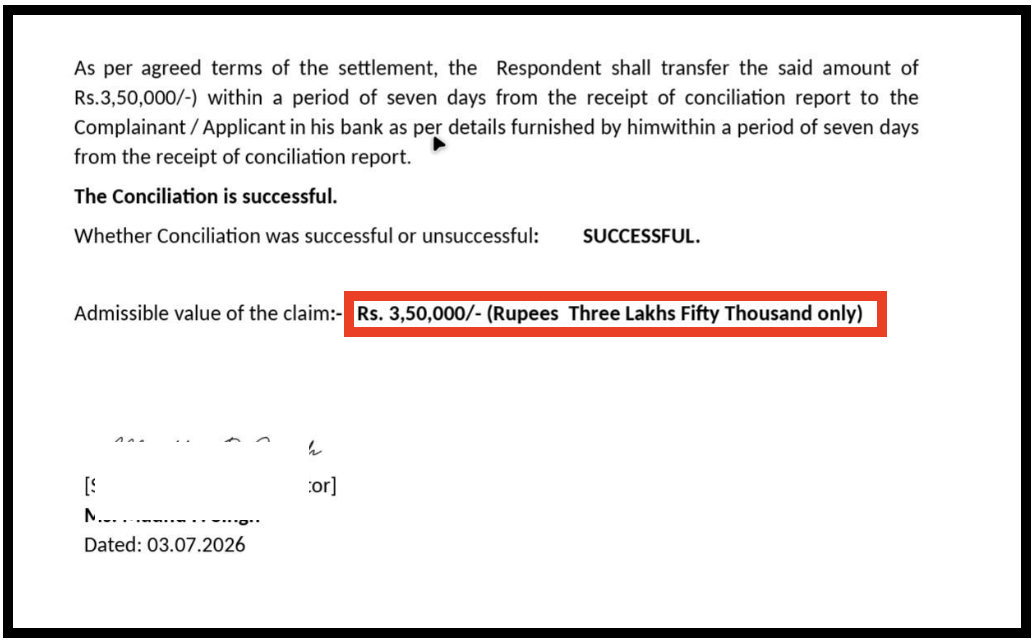
Our team understood the case and, with the right steps, helped in the recovery of ₹3,50,000.
Legal Breakdown: Why This Violates SEBI Regulations
We started with the original signed agreement showing the fixed fee of ₹3,50,000, since this formed the baseline for the entire dispute.
Step 1: Establishing Contractual Baselines
We confirmed the exact fee and service period stated in the signed agreement, which contained no clause allowing a mid-term revision.
Step 2: Documenting Coercive Timelines
We compiled the messages where the adviser explicitly linked continued service to Ritu accepting the additional payments.
Step 3: Separating the Payments by Consent
We distinguished the original consented payment from the two additional payments made under pressure, treating them as the core of the excess claim.
Step 4: Filing via SEBI SCORES Portal
Our complaint through the SEBI SCORES portal presented a clear before and after picture, with the threat messages timestamped alongside each additional payment.
The adviser argued that Ritu had ultimately agreed to pay, which they treated as consent. We countered that agreement made under threat of losing an already paid service is not the same as free consent to a contract change.
Final Recovery of ₹3,50,000
The regulator’s review favoured Ritu’s documented timeline of threats and payments. She recovered ₹3,50,000 of her ₹8,87,500 claim, a 37.7 percent share.
The lower recovery share reflects that a portion of her claim related to market losses rather than the fee dispute itself. The case closed within sixteen weeks.
Facing Unfair Fee Increases or Threat of Service Interruption?
A signed agreement cannot be altered unilaterally. If your registered investment adviser or broker is demanding extra fees under threat of stopping service, the FraudFree team is here to help you take action.
We evaluate your signed contract, document coercive demands, and file structured complaints on platforms like SEBI SCORES and SMART ODR to fight for your money back.
Conclusion
A fee agreed at the start cannot simply be changed midway because the adviser decides to charge more. And a threat to stop the service does not mean you agreed to the new fee.
Keep every message where the firm demands an unexpected payment or threatens to stop the service. Those messages can become some of the strongest evidence in your complaint.
If the firm continues demanding payment even after you raise a complaint, do not stop there. Our team can help you file a complaint in SMART ODRwhen needed to take the matter further.
Report. Recover. Stay Fraud Free.
Frequently Asked Questions
Agreement made under a threat to withdraw service is not treated the same as genuine consent, and can still support a valid complaint.
Written messages or emails stating that calls or service will stop unless a new payment is made are strong, direct evidence.
A large part of her claim reflected market losses on positions rather than the fee itself, which lowered the overall recovery percentage.
Document the threat rather than simply comply. Speak with our team before making a payment you are not contractually required to make.





 Add us as a preferred source on Google »

