Imagine getting a phone call that destroys your entire life’s savings in a single sentence.
That’s what happened to Bharat Shah one ordinary day in 2024. He was a 72-year-old retired man from Mumbai. He was not a trader, not an investor, just a regular person who managed his family’s inherited wealth carefully for 36 years.
His wife was equally simple. They ran a guesthouse for cancer patients in Mumbai. They didn’t think about markets. They didn’t chase profits. They just wanted to keep what their parents had left them safe.
Then the phone rang.
“Sir,” the voice from Globe Capital’s Risk Management System said, “your account has a debit balance of ₹35 crore. If you don’t pay this amount immediately, we will sell all your shares. Everything will be gone.”
At that moment, Bharat’s world collapsed. The portfolio that had been untouched for 36 years was about to be wiped out. And the scariest part?
He had absolutely no idea how it happened.
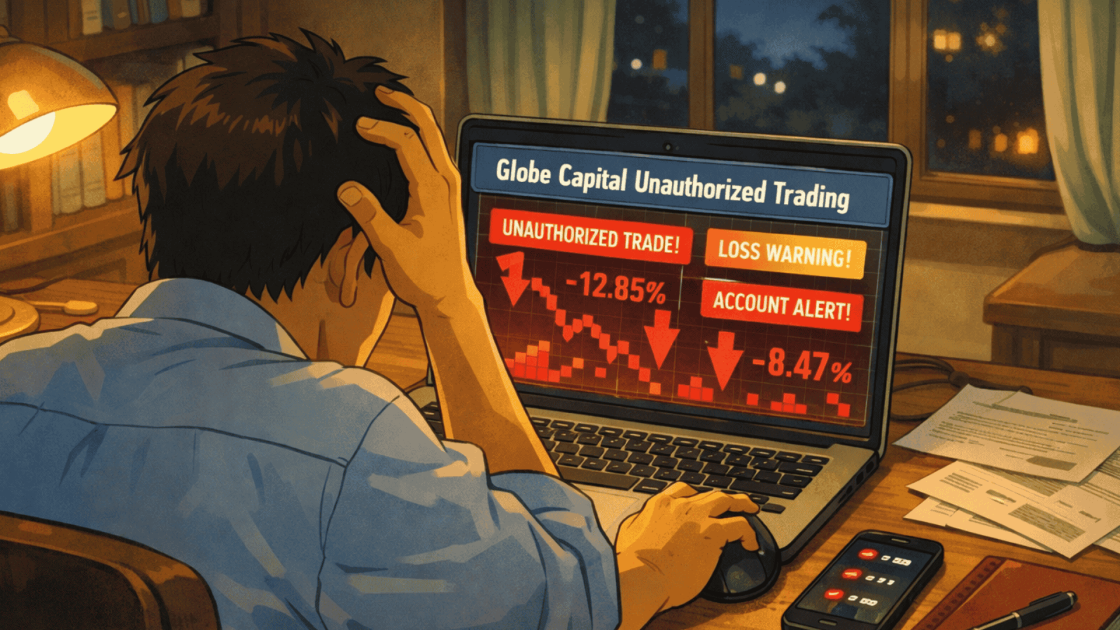
Globe Capital Unauthorized Trading Case
Globe Capital Market Limited is a SEBI-registered stockbroker operating in India. On the surface, they look completely legitimate. They’re registered with the regulator.
They have proper licenses. They manage accounts for thousands of investors. From the outside, there’s nothing that screams “danger.”
But according to recent investigations and FIR filings, Globe Capital is allegedly running one of the most sophisticated unauthorized trading schemes targeting elderly investors.
And here’s the scariest part: they’re using the very rules meant to protect investors as weapons against them.
The company has become infamous not just for this single case, but because data shows they have the highest number of fraud-related complaints among brokers in India over the last three years, specifically for unauthorized trading and churning.
The Phone Call That Changed Everything
The story doesn’t begin with greed or ambition to make quick money. It begins with a simple conversation between friends.
In 2020, an old man named Bharat trusted his friend, who told him, “Bharat, why don’t you move your shares to Globe Capital?
They’re a reputable broker. They’ll manage everything. You don’t need to do anything. Just hand over your portfolio and relax.”
It sounded perfect. Bharat didn’t want to trade. His wife didn’t want to trade. They just wanted their inherited shares to be safe and well-managed. So they agreed.
They opened demat accounts with Globe Capital and transferred the shares they’d inherited from Bharat’s father back in 1984. These weren’t just any shares but a legacy. A gift from a parent to their child.
These shares had been sitting untouched for 36 years because Bharat and his wife were focused on their social work which was running a guest house for cancer patients in Mumbai.
They had bigger things on their mind than the stock market.
The portfolio’s value was around ₹35 crore. Not a small amount that one can afford to lose. Once the accounts were opened, Globe Capital assigned relationship managers to handle the accounts.
Their names were Akshay Bariya and Karan Siro.
These relationship managers became something more than just office workers. They became personal guides and trusted advisors. This is where the manipulation began, but it was so subtle that Bharat didn’t see it coming.
The relationship managers started calling regularly. Then they started visiting Bharat’s home in Mumbai. They’d bring their laptops, sit with him and his wife, and discuss the portfolio.
Everything felt friendly and professional.
They’d say things like: “Don’t worry, sir, we know exactly what to do with your portfolio. Just trust us.”
Bharat trusted them as they were employees of a registered broker. Then came the fateful request: “Sir, we need your OTP to validate your account and set up proper portfolio management. It’s just a formality. Can you please share your OTP?”
He gave them the OTP.
That was the moment everything changed. That OTP was not a formality but a key. And Bharat had just handed the keys to his entire ₹35 crore portfolio to people who had very different plans for it.
What happened next was carefully hidden from Bharat for four years.
Instead of “portfolio management,” Globe Capital started doing something completely different. They started high-frequency trading, derivatives trading and F&O trading (futures and options: the riskiest type of trading).
Meanwhile, Bharat received professional-looking statements every month. These statements showed profits. Sometimes they claimed 18% returns. Bharat felt reassured. He thought: “My friend was right. These guys are managing things perfectly.”
But here’s the truth that took him four years to discover was “Those statements were fake.”
The real trading data told a completely different story. His account had massive losses and mounting debt. The shares were being pledged without his clear understanding. His portfolio was being used as collateral for aggressive derivatives trading.
But Bharat never saw the real numbers. Only the fake profit statements reached him.
Key Regulatory Violations by Globe Capital Market Limited
Now, let me explain exactly what rules were broken.
This is important because these rules exist specifically to protect people like Bharat. Understanding these violations helps you spot similar fraud attempts.
Unauthorized Trading By Globe Capital
When you open an account with a broker, there’s one fundamental rule: “the broker can only do what you tell them to do.”
If you say, “Buy this stock,” they buy it. If you say “stay out of derivatives,” they stay out. It’s your money. You control it.
However, Globe Capital started trading in Bharat’s account without his explicit instructions. The relationship managers decided what to trade, how much to trade, and when to trade.
Bharat’s role was reduced to just pressing “yes” on calls that came after the decisions were already made.
This isn’t guidance. This isn’t portfolio management. This is the broker taking control of the account and making Bharat just a puppet who rubber-stamps their decisions.
Why does this matter?
Because when something goes wrong, the broker can blame the client, saying, “You agreed to it.” But the client never really agreed. They just didn’t know enough to say no.
Missing F&O Risk Disclosure
Derivatives trading (F&O) is extremely risky. You can lose more than you invested. You can even lose your entire portfolio.
Because of this danger, SEBI has made a strict rule: before any investor can trade derivatives, they must receive written risk disclosure documents. Not just a verbal promise.
Not a casual conversation, but proper written documents that explain the risks in detail.
The broker must also call the investor and discuss these risks. This call must be recorded, and the investor must acknowledge, in writing, that they understand the risks.
It’s not optional. It’s mandatory.
Did Bharat receive written risk disclosure documents? According to reports, he didn’t. Or if he did, they weren’t explained properly. He certainly didn’t have a recorded conversation about F&O risks.
He didn’t sign anything acknowledging that he understood derivatives could wipe out his portfolio.
Yet derivatives trading happened in his account. Aggressive F&O trading was done the whole time.
This violation alone shows how recklessly the broker operated. They were trading in the most dangerous segment without ensuring the client knew what they were risking.
Pre-Trade Confirmation Rule Violated
Before executing any trade, the broker must confirm with you: “Is this trade OK? Do you want to go ahead?” This is like asking “May I?” before doing something important. It’s a protection mechanism.
The relationship managers would call Bharat and ask for OTP confirmation. “Sir, we need your OTP for this trade,” they’d say.
But the problem was this: by the time they asked for confirmation, the decision had already been made. The research was done by them. The stock was chosen by them. The quantity was also decided by them.
Bharat’s job was just to provide the OTP and say yes. He wasn’t really confirming a trade he had decided on. He was confirming a trade that was already decided for him.
This made the confirmation meaningless. It was a formality being misused as a loophole.
Brokerage Churning
“Churning” is when a broker trades excessively, not because it’s good for the client, but because it’s good for the broker.
Every trade generates commission for the broker. So some brokers deliberately create unnecessary trades just to increase their commissions.
This is like a mechanic who keeps “finding new problems” with your car so he can do more repairs and earn more money.
In Bharat’s case, data showed high-frequency trading. Trades were happening multiple times a day, and the same stocks were being bought and sold repeatedly.
But Bharat never wanted to trade. He wanted to hold his inherited portfolio.
This wasn’t portfolio management. This was churning, which was done to create trades for commission.
And the person paying for this excessive trading wasn’t the broker, but it was Bharat. Every unnecessary trade created a loss that came out of his wealth.
Circular Trading Pattern
Circular trading is when a broker repeatedly trades with the same counterparty (trading partner) over and over. Buy from them, sell to them, buy again, sell again.
The purpose isn’t profit but to create the illusion of trading activity and generate commissions.
It’s like you and your friend constantly exchanging the same items back and forth. No real value is created. But if someone charges you for every exchange, they make money while you both lose.
Investigation reports for Bharat’s case showed that many trades were executed with the same counterparty repeatedly.
The circular pattern was clear. But Bharat didn’t know about this pattern. He was seeing fake profit statements, not the real trading details.
Wrong Share Pledging
Share pledging is when you give your shares to the broker as collateral, just like using your house as security for a loan. It’s legitimate, but it needs proper consent.
The broker must explain clearly: “We’ll pledge your shares. This means if your trading account loses money, we can sell these shares to recover our losses.”
According to the FIR, Bharat’s shares were pledged. But was this explained properly?
Did he know that his inherited shares would be liquidated if the trading account went into a loss?
The evidence suggests he didn’t fully understand what pledging meant. He thought his shares were just being held safely. He didn’t realize they were now collateral for aggressive derivatives trading.
This is crucial because it shows how one small detail can transform the entire nature of your portfolio from “safe long-term holdings” to “high-risk trading collateral.”
False Statements
Your broker must send you accurate statements showing exactly what happened in your account. This is how you monitor your account and catch problems early.
Bharat received monthly statements showing healthy returns. 18% profits claimed. Everything looked good. But when real data was examined later, it told a completely different story.
The account was in massive loss. The ₹35 crore was bleeding away.
These weren’t accidental mistakes. These were intentionally false statements designed to keep Bharat calm while the fraud continued.
NSE Notices Ignored
The National Stock Exchange (NSE) is the watchdog. When they see unusual trading patterns, they send notices asking brokers to explain. Brokers must respond honestly and ensure the client knows about these inquiries.
NSE noticed the suspicious trading and sent multiple notices to Globe Capital.
But here’s the shocking part: Globe Capital responded to these notices in Bharat’s name, without his knowledge or permission.
The exchange thought Bharat had approved these explanations, but in reality, Bharat didn’t even know the notices existed. Globe Capital was covering its tracks by impersonating the client.
This is not just a violation. This is forgery, which is a criminal act.
How to Protect Yourself From Such Brokers?
Now that you understand how the fraud worked, let me give you practical ways to spot if your broker is doing something similar.
These are warning signs you should never ignore:
1. Relationship Managers Asking For Your OTP
A legitimate broker never needs your OTP. Your OTP is like your personal signature. If a relationship manager is asking for your OTP, they’re asking for the keys to your account.
Never share your OTP. Not for any formality, validation, or anything else.
If a broker insists they need it, that’s a massive warning sign. Stop dealing with that broker immediately.
2. High-Frequency Trading In Your Account
If you opened an account for long-term holding and your broker suddenly starts showing dozens of trades every month, something’s wrong.
High-frequency trading is for active traders who make conscious decisions. If you’re not an active trader, this shouldn’t happen.
Check your trading activity. Go to your demat account online and see every trade that’s happened.
If there are many trades you didn’t initiate, call your broker immediately and demand an explanation. Ask them to stop and get this request in writing.
3. Perfect Profit Statements
Real stock market returns fluctuate. Some months are good, and some are bad.
If your broker shows you a consistent, smooth, perfect profit curve, especially while doing risky derivatives trading, then be aware that something’s fishy.
Real traders experience volatility. Perfect returns are a sign of manipulated statements.
Compare your broker’s statements with the actual trading data available on NSE/BSE websites. Download statements directly from the exchange, not from your broker.
If numbers don’t match, that’s your red flag.
4. Reluctance to Put Things in Writing
Legitimate brokers document everything. They send written confirmations, risk disclosures, and explanations about pledging.
They keep all the records. If your broker relies on verbal promises and casual phone calls, that’s dangerous.
Insist on written communication for everything. Don’t trust phone conversations and casual promises.
Everything important should be in writing. If your broker refuses, walk away.
5. You Can’t Access Your Own Account Freely
You should always be able to log into your demat account and trading account and see exactly what’s happening. You should be able to download statements, check your holdings, and review your trading history.
If your broker is controlling your account access, or if you’re always told, “Let me handle that,” it’s a red flag.
Make sure you have independent access to your accounts through the NSE/BSE websites. Download statements directly from there.
Don’t depend on your broker for information about your account.
6. Pledging Your Shares Without Clear Understanding
Share pledging is serious. It means your shares can be sold if your trading account goes into a loss.
Before pledging happens, you must receive:
- Written explanation of what pledging means
- Clear information about when your shares can be sold
- Your explicit written approval
- Confirmation emails with details
If this doesn’t happen, it’s a red flag.
You should always check if any shares in your demat account are pledged. Most demat account statements show pledging status.
If shares are pledged but you don’t remember approving it, that’s a major red flag.
Contact your broker immediately and ask for documentation of when and why this happened.
Globe Capital Reviews
When researchers looked at SEBI complaint data over the last three years, they found that Globe Capital had the highest number of fraud-related complaints compared to other major brokers.
Brokers with the highest complaint rates for unauthorized trading:
1. Globe Capital
2. SMC Trading
3. Choice Broking
4. Motilal Oswal
5. Anand Rathi
Notice who’s at the top? This isn’t random but a pattern. This tells you which brokers are most likely to engage in unauthorized trading.
What’s the complaint about in most cases?
It is usually Type 4 complaints, which means unauthorized trading, churning, and account mismanagement.
This data is public. It’s available on the SEBI website. Before opening an account with any broker, you should check their complaint history.
If they’re getting hundreds of Type 4 complaints, that’s a red flag.
But there’s another case that shows you the system can work if you fight for justice.
How To Register a Complaint Against Your Broker?
If you have a dispute with your broker and don’t know how to move ahead, you can register with us, and we’ll walk with you through the whole complaint journey.
1. Collecting & Arranging Documents
We help you list and arrange all the proof you have. This includes trade reports, ledgers, contract notes, call recordings, emails, WhatsApp chats, and screenshots, so your complaint rests on solid evidence.
We draft easy‑to‑understand complaints in your name. The format is tailored to what SEBI SCORES usually expect, so your complaint is clear and less likely to face issues because of poor drafting.
4. File a complaint in SMART ODR
If the broker does not resolve the issue, we will help you move it to the next level. This can mean going to the exchange or preparing for the next stage of the process in the right way.
5. Ongoing Case Support
After registration, we track the progress of your case with you. We remind you of timelines and help you draft replies whenever the broker, exchange, or regulator asks for more details.
6. Arbitration in Stock Market
If your matter reaches counseling or arbitration, we help you prepare. We assist you in putting your side in simple language and keeping your documents ready, so you feel confident.
When you register with us, you don’t have to struggle with rules, formats, or portals on your own. You focus on getting your money and your peace of mind back, while we handle the technical and procedural heavy lifting.
Conclusion
Here’s the hard truth: The financial system assumes you’ll monitor your own account.
The rules are there. SEBI is there. The exchanges are there.
But they all assume that investors are paying attention and checking statements. They assume you’re asking questions and you know what’s happening in your account.
If you’re an investor in India, especially if you’re managing inherited wealth or retirement savings, this case should shake you awake.
It should make you paranoid and make you check your account today before it gets too late.
Because somewhere, someone is getting a phone call telling them their life savings are gone. And it could have been prevented if they’d been paying attention.
Don’t be that person. Your money is your responsibility and your fight.
The system will only listen if you speak loudly enough.